
Best Sciatica Exercises at Home for 2026 (Ranked)

Medically reviewed by
Dr. Saurabh Dang, MD, MBA
Sciatica pain radiating from the low back into the leg responds to specific movement patterns better than rest, and the exercises that help depend on which structure is compressing the nerve. This guide ranks the best sciatica exercises at home for 2026, tells you which ones to skip, and flags when the pain needs more than stretching.
TL;DR
- Knee-to-chest stretch and piriformis stretch top the list of sciatica exercises at home for 2026 — start here first.
- McKenzie extension press-ups help disc-related sciatica but can worsen spinal stenosis — check which one applies before starting.
- Skip toe-touches and sit-up crunches; both load the disc and often intensify leg pain.
- Pain that doesn’t improve after 4-6 weeks of home exercise, or comes with numbness or weakness, needs a specialist evaluation, not more stretching.
Why this matters
Sciatica isn’t a diagnosis on its own — it’s a symptom of nerve root irritation, usually from a herniated disc, spinal stenosis, or piriformis muscle tightness pressing on the sciatic nerve. What causes back pain that radiates down the leg matters here because the wrong exercise for the wrong cause can make things worse.
A disc herniation responds to extension-based movement. Spinal stenosis often responds to flexion instead. Doing the opposite pattern for six weeks wastes time and can aggravate the nerve further. That’s why this list separates exercises by mechanism, not just by popularity.
How this list was ranked
Each exercise below is ranked on three factors: how directly it targets nerve root decompression versus general stretching, how much clinical evidence supports it for radicular leg pain specifically (not just low back pain), and how safely it can be self-administered without supervision. Exercises that require precise form correction or carry a higher risk of loading an already-inflamed disc rank lower, even when they’re commonly recommended online. The goal is a list you can start today, done correctly, with a clear stop-if signal.
The ranked list
1. Knee-to-chest stretch
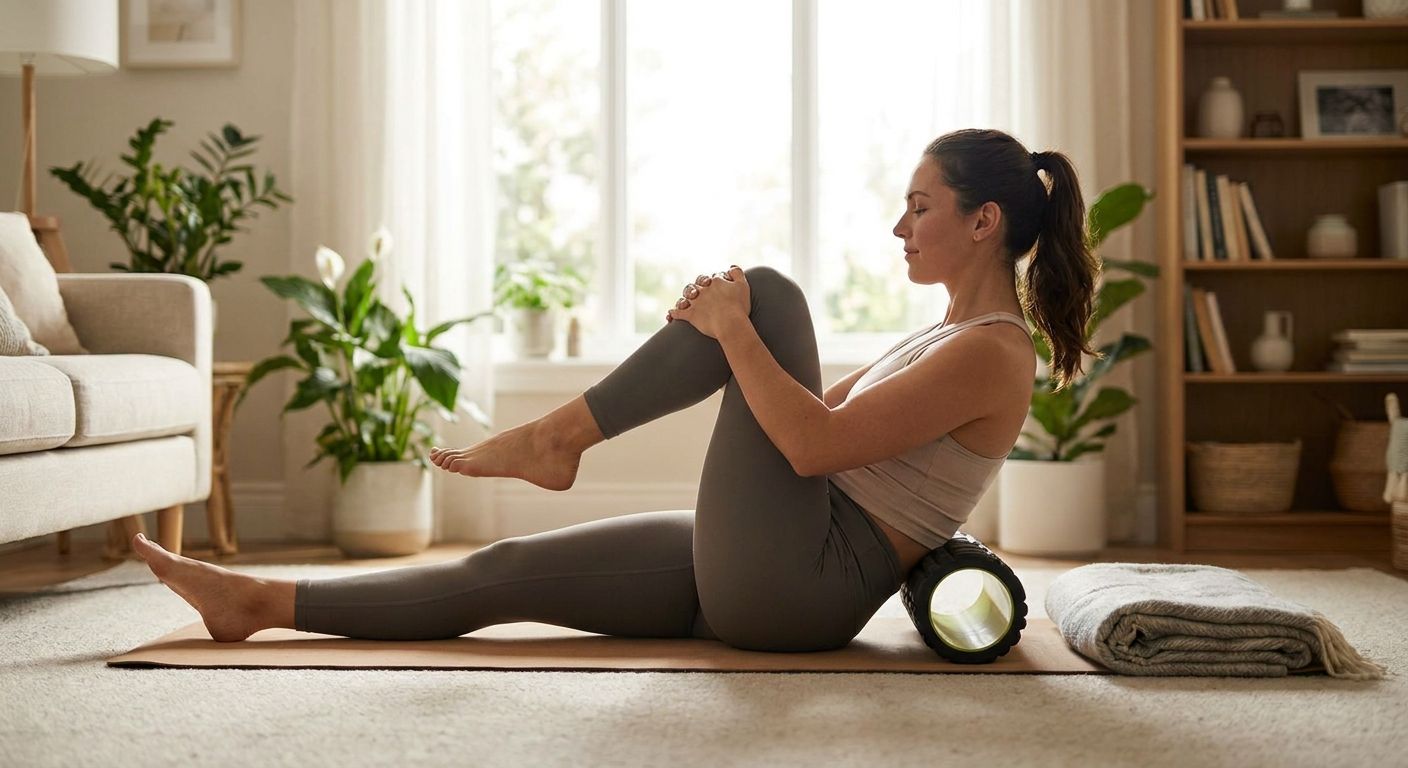
The gentle starting point. Lie on your back, pull one knee toward your chest, and hold for 20-30 seconds per side, 2-3 sets, done in under 5 minutes total. This decompresses the lumbar spine and gently mobilizes the nerve root without loading the disc in either direction, making it a safe first move for almost anyone with acute sciatica in 2026. Verdict: Do it now.
2. Piriformis stretch (figure-four)
The one most people skip and shouldn’t. Lying on your back, cross the affected ankle over the opposite knee and pull the supporting thigh toward your chest for 30 seconds, 3 reps per side. When the piriformis muscle is tight, it compresses the sciatic nerve directly beneath it — this is often the actual source of pain in cases where imaging shows no disc herniation. Verdict: Do it now.
3. McKenzie extension press-up
The disc-specific move. Lying face down, press your upper body up while keeping hips on the floor, hold 2 seconds, 10 reps. This centralizes pain that’s radiating down the leg back toward the spine, a pattern associated with disc-related sciatica improving. It is the wrong move for spinal stenosis, which tends to feel worse with extension. Verdict: Consider — confirm your diagnosis first.
4. Seated spinal twist
The mobility maintenance pick. Seated with one leg crossed over the other, rotate your torso toward the bent knee and hold 20 seconds per side. This keeps the lumbar segments mobile between more targeted stretches and takes under 3 minutes daily. It won’t resolve nerve compression on its own but prevents the stiffness that compounds sciatic pain over a sedentary week. Verdict: Do it now, as a supplement.
5. Standing hamstring stretch
The overlooked contributor. Prop your heel on a low step, keep your knee straight, and hinge forward at the hips for 30 seconds per side. Tight hamstrings pull on the pelvis and can increase tension along the sciatic nerve’s path down the leg. This one gets skipped because it doesn’t feel targeted, but tight hamstrings show up in a large share of chronic sciatica cases seen in sciatica treatment options for Bergen County patients. Verdict: Do it now.
6. Pelvic tilts
The core-activation basic. Lying with knees bent, flatten your low back against the floor by tilting the pelvis, hold 5 seconds, 10 reps. This builds the deep core stability that takes pressure off the lumbar spine during daily movement, and it’s low-risk enough to start on day one of a flare. It’s foundational rather than dramatic — don’t expect it to resolve leg pain alone. Verdict: Do it now, as a base layer.
7. Toe-touch / standing forward fold
The one that looks helpful but isn’t. Standing and bending forward to touch your toes loads the anterior disc heavily and can push disc material further into the nerve root in acute cases. This move shows up constantly in generic stretching guides but has no place in a sciatica-specific routine during a flare. Verdict: Skip.
One mechanical rule holds across nearly every case: if a stretch increases pain below the knee, stop that stretch immediately, regardless of how it’s supposed to help. Pain moving further down the leg (peripheralizing) is the clearest sign a movement is wrong for your specific presentation.
Comparison table
| Exercise | Best for | Time | Verdict |
|---|---|---|---|
| Knee-to-chest | Acute flares, general decompression | 5 min | Do it now |
| Piriformis stretch | Muscle-driven sciatic compression | 3 min | Do it now |
| McKenzie press-up | Disc-related, centralizing pain | 4 min | Consider first |
| Seated spinal twist | Mobility maintenance | 3 min | Supplement |
| Hamstring stretch | Chronic, tension-related sciatica | 3 min | Do it now |
| Pelvic tilts | Core stability, baseline routine | 3 min | Base layer |
| Standing toe-touch | Nothing in an active flare | — | Skip |
What to avoid
- Deep flexion-based crunches or sit-ups — these compress the front of the disc and can worsen leg pain during a flare, similar to why best low-impact exercises for chronic low back pain steers people away from traditional ab workouts.
- Aggressive foam rolling directly on the glute where the sciatic nerve runs — this can irritate rather than release the nerve, especially in the first two weeks of a flare.
- High-impact cardio (running, jumping) before pain has settled — the repetitive loading through the spine works against the decompression these stretches are trying to achieve.
Not improving after a few weeks?
Get an evaluation to confirm what’s actually causing the nerve pain.
Book an evaluation · See sciatica treatment options
When home exercise isn’t enough
- Give any single exercise 2-3 weeks of consistent daily practice before judging whether it’s working — sciatica rarely resolves in days.
- Track whether pain is centralizing (moving from the leg back toward the spine) or peripheralizing (moving further down the leg). Centralizing means the exercise is correct; peripheralizing means stop it.
- If numbness, tingling, or leg weakness shows up alongside the pain, or if pinched nerve relief strategies stop helping after 4-6 weeks, that’s the signal to move past home exercise. When to see a pain management specialist covers the specific red flags worth acting on.
FAQ
What is the best exercise for sciatica pain relief at home?
The knee-to-chest stretch and piriformis stretch rank highest for immediate relief in 2026 because they decompress the nerve root without loading the disc. Both take under 5 minutes and can be done daily during a flare.
Is walking good for sciatica?
Short, frequent walks on flat ground are generally tolerated well and help maintain circulation without the impact of running. Walking through sharp leg pain or numbness is a signal to stop and reassess, not push through.
How long does sciatica take to heal with exercise alone?
Most sciatica cases improve within 4-6 weeks of consistent, correctly-targeted exercise, and a large share resolve without surgery. Pain that persists or worsens past that window warrants a specialist evaluation.
Can the wrong exercise make sciatica worse?
Yes — flexion-based moves like toe-touches can worsen disc-related sciatica, while extension-based moves can worsen stenosis-related sciatica. Matching the exercise to the underlying cause is the difference between relief and a longer flare.
Is stretching enough for sciatica, or do I need medical treatment?
Stretching resolves a large share of mild to moderate cases, but persistent leg numbness, weakness, or pain lasting beyond 4-6 weeks needs evaluation. Interventional options like epidural injections exist for cases that don’t respond to conservative care.
Should I stretch through sciatic pain or stop?
Stop any stretch that sends pain further down the leg toward the foot — that’s a sign of peripheralization and the wrong movement pattern. A stretch that moves pain back toward the spine is generally safe to continue.
Does sitting all day make sciatica worse?
Prolonged sitting increases disc pressure and often tightens the piriformis muscle, both of which can aggravate sciatic nerve compression. Standing or walking briefly every 30-45 minutes reduces that load.
One last thing
The exercise that gets recommended least online — the standing hamstring stretch — is often the one with the most overlooked impact, because tight hamstrings pull on the pelvis in a way that keeps re-tensioning the sciatic nerve even after the disc issue calms down. Skipping it is why some flares keep coming back after the acute pain clears.
Related guides
- What causes back pain that radiates down the leg
- Best low-impact exercises for chronic low back pain
- Sciatica treatment options for Bergen County patients
- How to relieve a pinched nerve in the neck or back
- When to see a pain management specialist for chronic pain
About the Medical Reviewer
Dr. Saurabh Dang is a double board-certified interventional pain management specialist serving Central and Northern New Jersey. He combines clinical expertise with a patient-centered approach to help patients find lasting relief from chronic pain conditions.
Read Full Bio →Seeking Treatment for Epidural Injections?
Dr. Dang and the team at Hudson Pain and Spine offer specialized care and advanced interventional treatments.
Ready to Find Relief from Pain?
Schedule your consultation with Dr. Saurabh Dang at our Englewood office.
Serving patients across Central and Northern New Jersey — Bergen, Passaic, and Middlesex counties.