Coccydynia Treatment 2026: Best Options Ranked

Medically reviewed by
Dr. Saurabh Dang, MD, MBA
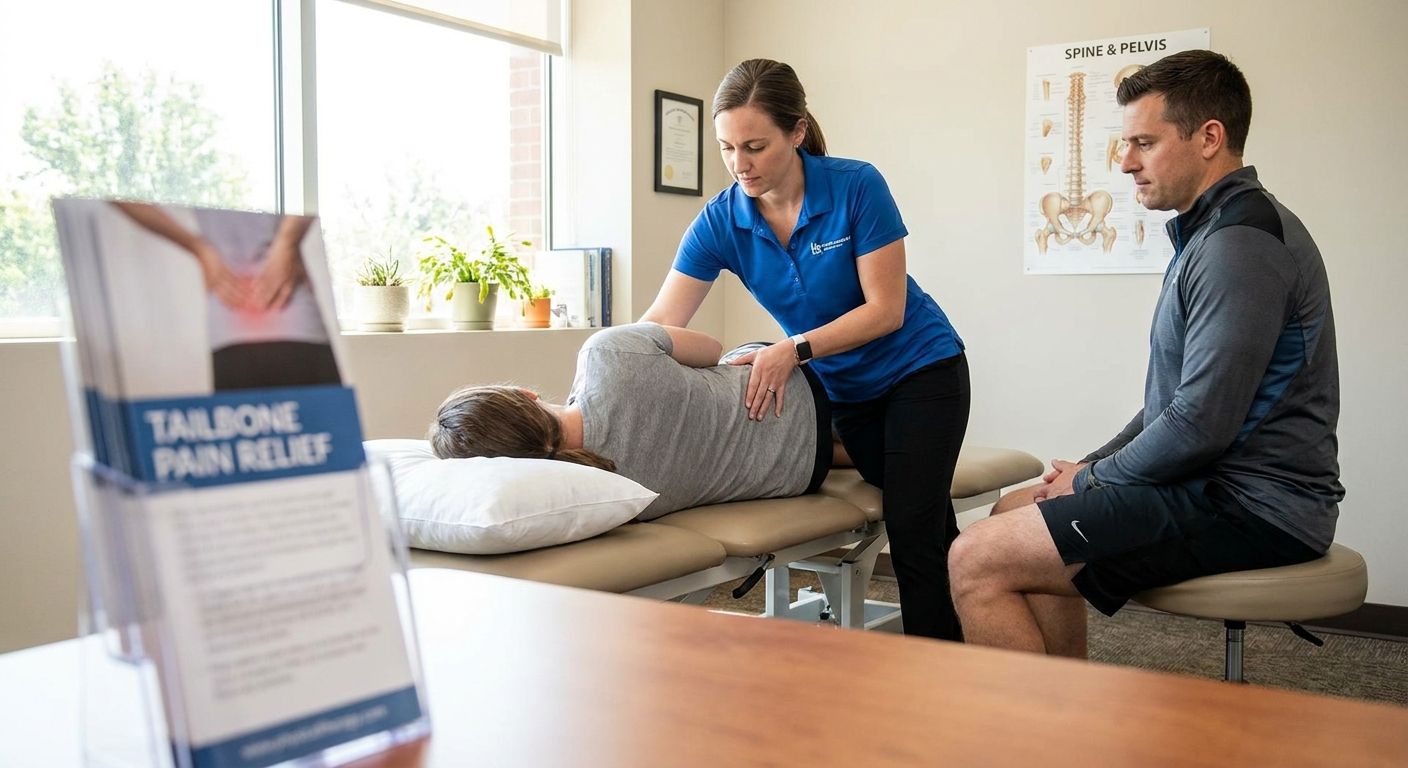
Tailbone pain that won’t quit after a fall, a long car ride, or months of sitting at a desk has a name: coccydynia. The best coccydynia treatment for most patients starts conservative and escalates only if pain persists past several weeks, and this guide ranks the options in the order a pain specialist typically works through them.
TL;DR
- Cushioning, activity changes, and NSAIDs resolve most coccydynia treatment cases within a few weeks — start here.
- Ganglion impar nerve blocks are the go-to interventional option when conservative care and physical therapy fail.
- Radiofrequency ablation extends relief for patients who respond well to a diagnostic ganglion impar block.
- Surgery (coccygectomy) is a last resort in 2026, reserved for a small minority of refractory cases.
- Hudson Pain and Spine sees tailbone pain patients across three New Jersey counties: Bergen, Passaic, and Middlesex.
Why this matters
Coccydynia is uncommon compared to lower back and neck pain — it’s estimated to account for roughly 1% of all back pain diagnoses — which means many primary care visits miss it or mislabel it as generalized low back pain. Left untreated, the pain doesn’t just make sitting miserable; it changes how people sit, drive, and work, which can create secondary hip and lower back strain.
Getting the sequence right matters more than most patients realize. Jumping straight to an injection before trying a proper cushion and a few weeks of anti-inflammatories skips the cheapest, lowest-risk fixes. Waiting too long before seeing a specialist at Hudson Pain and Spine lets a manageable case turn into a chronic one that needs more aggressive intervention.
How this list is ranked
This ranking follows the order interventional pain specialists generally escalate coccydynia treatment: lowest-risk and lowest-cost options first, invasive procedures last. Each entry below reflects how the treatment is actually used in clinical practice in 2026 — not a marketing hierarchy. Verdicts assume a typical adult with sacrococcygeal joint or ganglion impar-mediated tailbone pain, not a fracture or tumor, which need different workups entirely.
The ranked list of coccydynia treatments
1. Cushioning and activity modification — the free first move
A wedge or donut-style cushion that removes direct pressure off the coccyx while sitting is the first thing every guideline recommends, and it costs nothing to try. Combine it with limiting long stretches of sitting and avoiding reclining on hard, flat surfaces.
Most mild cases improve within a few weeks of this change alone. Verdict: Buy — start immediately, no downside.
2. NSAIDs and short-course anti-inflammatories — the standard first-line medication
Over-the-counter or prescription-strength NSAIDs reduce the inflammation around the sacrococcygeal joint that drives most of the sharp, sitting-triggered pain. They’re typically tried for four to six weeks alongside cushioning before moving to anything more invasive.
They won’t fix a structural problem like a subluxated coccyx, but they buy time for the joint to calm down. Verdict: Buy — pair with cushioning as the default starting combination.
3. Physical therapy targeting the pelvic floor and coccygeal muscles — the underrated fix
Many coccydynia cases involve tight or spasming pelvic floor and gluteal muscles pulling on the coccyx, not just the joint itself. A physical therapist trained in pelvic floor work can release those muscles internally and externally, and can teach posture corrections that keep the pain from coming back.
This is especially relevant for postpartum patients and anyone with overlapping pelvic pain — Hudson Pain and Spine’s guide to pelvic floor dysfunction covers how the two conditions intersect. Verdict: Buy — underused relative to how effective it is.
4. Trigger point injections — the targeted muscle fix
When specific muscle knots around the coccyx and glutes stay tender despite therapy, a trigger point injection delivers a local anesthetic (sometimes with a small steroid dose) directly into that muscle band. It’s a quick, in-office procedure with minimal downtime.
This works best as a bridge that lets physical therapy progress faster, not as a standalone fix. Read how trigger point injections relieve muscle pain for the mechanics. Verdict: Hold — reasonable if PT alone plateaus, not a first move.
5. Corticosteroid injection into the sacrococcygeal joint
When imaging or exam points to true joint inflammation rather than surrounding muscle, a steroid injection directly into the sacrococcygeal joint targets the source. It’s done under fluoroscopic guidance for accuracy since the joint space is small.
Relief duration varies by patient, and repeat injections are limited to protect the joint over time. Verdict: Hold — effective for joint-driven pain, not for muscle-driven pain.
6. Ganglion impar nerve block — the go-to interventional option
The ganglion impar is a nerve bundle at the very tip of the tailbone that carries much of the pain signal from coccydynia. Blocking it with a local anesthetic and steroid, guided by fluoroscopy or ultrasound, is the most common interventional procedure once conservative care fails.
This is typically the first procedure specialists reach for after cushioning, NSAIDs, and physical therapy haven’t held. Verdict: Hold — the standard next step for persistent cases in 2026.
7. Radiofrequency ablation of the ganglion impar — the longer-lasting option
For patients who get strong but short-lived relief from a diagnostic ganglion impar block, radiofrequency ablation heats the nerve to interrupt pain signaling for a longer stretch than a single injection. It’s a logical next step, not a starting point.
Specialists reserve this for patients who’ve already proven the ganglion impar is the pain generator. Verdict: Wait — only after a successful diagnostic block confirms the target.
8. Coccygectomy (surgical removal of the coccyx) — the last resort
Surgery to remove part or all of the coccyx is reserved for a small minority of patients who fail every conservative and interventional option over months of treatment. Recovery is slow and infection risk at that site is a real concern.
Most coccydynia patients never need to consider this option. Verdict: Skip — exhaust every non-surgical avenue first.
Get your tailbone pain evaluated
Board-certified interventional pain care across Bergen, Passaic, and Middlesex counties.
Coccydynia treatment comparison
| Treatment | Best for | Relief pattern | Verdict |
|---|---|---|---|
| Cushion + activity change | Everyone, first step | Weeks | Buy |
| NSAIDs | Inflammation-driven pain | Weeks | Buy |
| Pelvic floor physical therapy | Muscle-driven pain | Weeks to months | Buy |
| Trigger point injections | Persistent muscle knots | Days to weeks | Hold |
| Sacrococcygeal steroid injection | Joint-driven pain | Weeks to months | Hold |
| Ganglion impar nerve block | Nerve-mediated pain | Weeks to months | Hold |
| Radiofrequency ablation | Confirmed nerve source | Months | Wait |
| Coccygectomy | Failed everything else | Long-term, high recovery cost | Skip |
Where to get coccydynia treatment
- Confirm the diagnosis before treating. A physical exam and imaging rule out fracture, cyst, or referred pain from the sacroiliac joint or spine before any injection is scheduled.
- Start with a specialist who does the full range, not just one procedure. A practice that only offers injections will push injections; one that also does physical therapy referrals and nerve blocks can match the treatment to the actual cause. Hudson Pain and Spine’s guide on when to see a pain management specialist covers the signs it’s time to stop waiting.
- Ask about board certification and fellowship training. Coccydynia procedures like ganglion impar blocks require precise fluoroscopic guidance — the guide on how to choose an interventional pain specialist in New Jersey explains what credentials to check.
FAQ
What is the best coccydynia treatment?
For most patients, the best coccydynia treatment starts with a cushion, activity changes, and NSAIDs for four to six weeks. If pain persists into 2026 without improvement, a ganglion impar nerve block is the standard next interventional step.
How long does coccydynia usually last?
Mild coccydynia often improves within a few weeks of cushioning and anti-inflammatory use. Cases that don’t respond to conservative care can persist for months and typically need an interventional procedure to resolve.
What is a ganglion impar block and does it hurt?
A ganglion impar block is an image-guided injection of anesthetic and steroid near the tip of the coccyx that targets the nerve bundle responsible for much of the pain signal. Patients feel a brief pinch and pressure during the injection, done under fluoroscopic guidance in-office.
Can physical therapy actually fix tailbone pain?
Yes, when the pain comes from tight pelvic floor or gluteal muscles pulling on the coccyx rather than joint damage. A pelvic floor-trained physical therapist can resolve many cases without any injection.
When is surgery needed for coccydynia?
Coccygectomy is reserved for the small number of patients who fail conservative care, injections, and radiofrequency ablation over several months. Most coccydynia patients never reach this point.
Is coccydynia treatment covered by insurance?
Most conservative and interventional coccydynia treatments — physical therapy, nerve blocks, and steroid injections — are covered under standard medical insurance when medically necessary. Coverage specifics and prior authorization requirements vary by plan, so confirming with your provider before scheduling a procedure saves a billing surprise.
Does pregnancy or childbirth cause coccydynia?
Yes, childbirth and late pregnancy can strain or injure the sacrococcygeal joint, making postpartum coccydynia common. Pelvic floor physical therapy is often the first and most effective treatment in this group.
Is radiofrequency ablation better than a nerve block for tailbone pain?
Radiofrequency ablation typically provides longer relief than a single ganglion impar block, but it’s only used after a diagnostic block confirms the nerve is the actual pain source. Skipping straight to ablation without that confirmation isn’t standard practice.
One last thing
The detail patients miss most: coccydynia pain often gets worse standing up from a seated position, not just while sitting — that specific pattern is one of the clearest signals to a specialist that the sacrococcygeal joint or ganglion impar is involved rather than a lower back or hip issue. Mentioning that detail at your first visit in 2026 can shorten the path to the right diagnosis by skipping unnecessary spine imaging.
Related guides
- Pelvic floor and chronic pelvic pain treatment for women
- How trigger point injections relieve muscle pain
- When to see a pain management specialist for chronic pain
- How to choose an interventional pain specialist in New Jersey
About the Medical Reviewer
Dr. Saurabh Dang is a double board-certified interventional pain management specialist serving Central and Northern New Jersey. He combines clinical expertise with a patient-centered approach to help patients find lasting relief from chronic pain conditions.
Read Full Bio →Seeking Treatment for Nerve Block Injections?
Dr. Dang and the team at Hudson Pain and Spine offer specialized care and advanced interventional treatments.
Ready to Find Relief from Pain?
Schedule your consultation with Dr. Saurabh Dang at our Englewood office.
Serving patients across Central and Northern New Jersey — Bergen, Passaic, and Middlesex counties.