
Meralgia Paresthetica Treatment 2026: Best Options Ranked

Medically reviewed by
Dr. Saurabh Dang, MD, MBA
Meralgia paresthetica causes burning, tingling, or numbness on the outer thigh when the lateral femoral cutaneous nerve gets compressed, and the right meralgia paresthetica treatment in 2026 depends almost entirely on how long the symptoms have lasted and how they responded to conservative care first.
TL;DR
- Meralgia paresthetica treatment starts conservative: weight management, loose clothing, and physical therapy resolve most mild cases.
- A lateral femoral cutaneous nerve block gives fast relief and confirms the diagnosis before anything more invasive.
- Radiofrequency ablation is the option for patients whose pain returns after a nerve block wears off.
- Surgical decompression or neurectomy is reserved for the small share of patients who fail every conservative option in 2026.
Why this matters
Meralgia paresthetica gets misdiagnosed constantly, mistaken for hip bursitis, early hip arthritis, or a lumbar disc problem because the symptom pattern overlaps. The nerve involved, the lateral femoral cutaneous nerve, carries sensation only, so there is no weakness or reflex change to point an exam in the wrong direction, but that same fact makes it easy for a generalist to miss.
Getting the diagnosis right the first time saves months. Choosing an interventional pain specialist in New Jersey who routinely tests for this condition means fewer wasted imaging studies and faster access to the treatment that actually works for a compressed peripheral nerve rather than a spine problem.
Most cases in 2026 still respond to conservative measures. The cases that don’t need a specific, staged plan, not a single procedure repeated on faith.
How this list was ranked
Treatments below are ordered the way interventional pain specialists actually sequence care for meralgia paresthetica: least invasive and lowest-risk first, escalating only when the prior step fails or symptoms have lasted long enough to justify skipping ahead. This mirrors standard interventional pain practice, not a marketing hierarchy. Diagnostic confirmation, patient history, and how long symptoms have persisted all shift where a given patient starts on this list. A patient with two weeks of mild tingling starts at step one. A patient with eight months of daily burning pain that already failed physical therapy may start at step four.
The ranked list of meralgia paresthetica treatments
1. Lifestyle and postural modification — the free first move
Removing the mechanical cause is often the entire treatment. Tight belts, tool belts, restrictive waistbands, and seatbelts sitting low across the hip are the most common triggers, along with excess abdominal weight and pregnancy in the third trimester.
Switching to looser clothing and dropping belt pressure resolves mild, recent-onset symptoms in many patients within a few weeks. It costs nothing and carries zero procedural risk. Verdict: Buy — try this before anything else.
2. Physical therapy and nerve gliding exercises — the underused fix
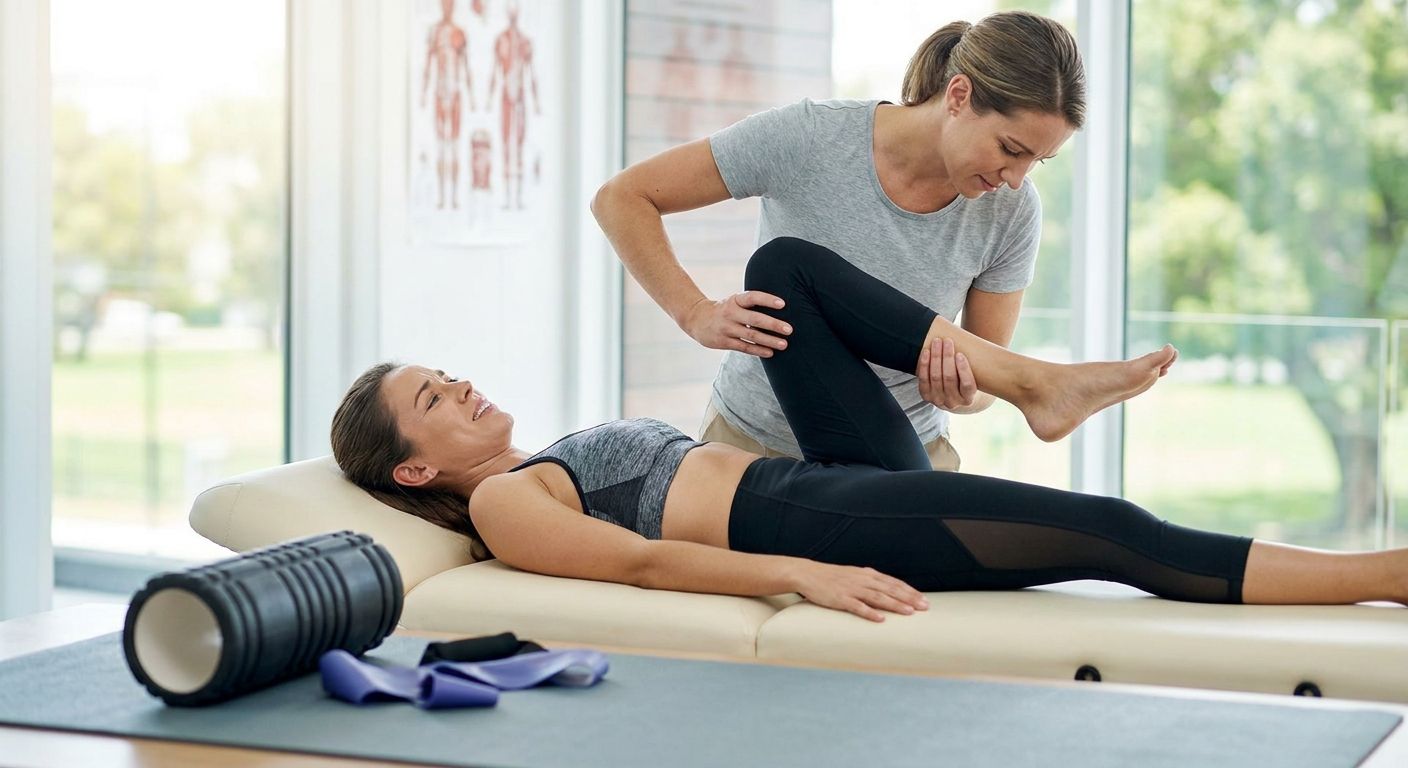
Targeted stretching of the hip flexors and specific nerve gliding techniques reduce tension on the lateral femoral cutaneous nerve where it passes near the inguinal ligament. A physical therapist familiar with peripheral nerve entrapments will also correct posture and gait patterns that keep re-aggravating the area.
This step matters most for patients whose symptoms have lasted more than a few weeks but haven’t progressed to constant burning pain. Verdict: Buy for subacute cases; Consider as an adjunct to injections for chronic ones.
3. NSAIDs and neuropathic pain medication — the bridge option
Over-the-counter or prescription NSAIDs address inflammation around the nerve, while neuropathic agents like gabapentin target the nerve pain signal itself when burning or tingling dominates over dull ache. Neither fixes the compression, but both make daily function tolerable while conservative measures take effect.
This is a bridge, not a destination. Patients who need medication beyond four to six weeks usually need a procedure. Verdict: Consider short-term; Skip as a standalone long-term plan.
4. Lateral femoral cutaneous nerve block — the diagnostic and therapeutic combo
An image-guided injection of local anesthetic and steroid directly at the nerve does two things at once: it confirms the diagnosis if pain resolves immediately, and it delivers therapeutic relief that can last weeks to months. This is usually the first procedure offered once conservative care has failed or symptoms have been present for more than a couple of months.
Understanding what to expect after a nerve block procedure matters here, since relief timing and any temporary numbness can otherwise alarm patients unnecessarily. Verdict: Buy for confirmed or suspected cases that failed conservative care.
5. Radiofrequency ablation of the affected nerve — the option for recurring pain
When a nerve block works but relief keeps wearing off, radiofrequency ablation interrupts the nerve’s ability to transmit pain signals for a longer stretch than a single injection provides. It’s a next step for patients who’ve already proven the nerve is the source of pain through a successful diagnostic block.
This isn’t a first-line move. It follows a positive response to at least one nerve block, not a guess. Verdict: Consider after a positive diagnostic block; Skip as a first procedure.
6. TENS therapy — the at-home add-on
Transcutaneous electrical nerve stimulation won’t resolve the underlying compression, but it interrupts pain signals enough to reduce reliance on medication between procedures or during conservative treatment. Reviewing how TENS therapy helps manage chronic pain at home gives a realistic picture of what it can and can’t do.
It’s a support tool, not a treatment for the nerve itself. Verdict: Buy as an adjunct; Skip as a standalone fix.
7. Surgical decompression or neurectomy — the last resort
For the small percentage of patients who fail every conservative and interventional option, surgical release of the nerve at the inguinal ligament, or in rare cases sectioning the nerve entirely, ends the pain permanently, at the cost of permanent numbness in the nerve’s sensory distribution. Surgeons reserve this for confirmed, refractory cases only.
Most patients never reach this step, and in 2026 that remains true across interventional pain practices generally. Verdict: Buy only after exhausting nerve blocks and radiofrequency ablation; Skip as an early option.
Comparison table
| Treatment | Invasiveness | Typical onset of relief | Best for |
|---|---|---|---|
| Lifestyle/postural change | None | Days to weeks | New, mild symptoms |
| Physical therapy | None | 2-4 weeks | Subacute, non-progressive cases |
| NSAIDs/neuropathic meds | Low (oral) | Days | Bridging while other steps work |
| LFCN nerve block | Minimally invasive | Immediate to days | Confirming diagnosis, moderate-severe pain |
| Radiofrequency ablation | Minimally invasive | 1-2 weeks | Recurrence after a positive block |
| TENS therapy | None | Immediate, temporary | Adjunct pain control |
| Surgical decompression | Invasive | Weeks post-op | Refractory, confirmed cases only |
Where to get treatment
- Confirm the diagnosis first with a physical exam and, when needed, nerve conduction testing, before agreeing to any injection.
- Choose a board-certified, fellowship-trained interventional pain specialist rather than a general practice; peripheral nerve blocks require precise, often image-guided placement.
- Check insurance coverage and prior authorization requirements before scheduling a nerve block or radiofrequency ablation, since documentation of failed conservative care is usually required first.
Get an accurate diagnosis first
Board-certified interventional pain specialists serving Bergen, Passaic, and Middlesex counties.
FAQ
What is the best meralgia paresthetica treatment?
For most patients, the best meralgia paresthetica treatment starts with lifestyle changes and physical therapy, moving to a lateral femoral cutaneous nerve block if symptoms persist past several weeks. Radiofrequency ablation and surgery are reserved for cases that fail the earlier steps.
What causes meralgia paresthetica?
Meralgia paresthetica happens when the lateral femoral cutaneous nerve is compressed near the inguinal ligament, often from tight clothing, belts, obesity, pregnancy, or diabetes. Diabetics have a far higher incidence than the general population.
How long does meralgia paresthetica last without treatment?
Mild cases tied to a clear mechanical cause, like a tight belt, often resolve within weeks once the pressure is removed. Cases that persist beyond two to three months typically need a nerve block or other procedure rather than time alone.
Is a nerve block or surgery better for meralgia paresthetica?
A nerve block is tried first because it’s minimally invasive and doubles as a diagnostic test. Surgery is reserved for patients who don’t get lasting relief from nerve blocks and radiofrequency ablation.
Does meralgia paresthetica come back after a nerve block?
Relief from a single nerve block can wear off over weeks to months, which is why patients with recurring symptoms are often moved to radiofrequency ablation for longer-lasting results. A positive response to the block first confirms the nerve is the actual source of pain.
Can physical therapy alone fix meralgia paresthetica?
Physical therapy alone works best for subacute cases where symptoms haven’t progressed to constant burning pain. Chronic or severe cases usually need physical therapy combined with a nerve block rather than therapy by itself.
Is meralgia paresthetica treatment covered by insurance?
Most insurance plans cover meralgia paresthetica treatment once conservative care has been documented and failed, though prior authorization is often required for injections. Confirming coverage before scheduling a procedure avoids surprise costs.
How is meralgia paresthetica diagnosed?
Diagnosis relies on a physical exam checking sensation over the outer thigh, patient history of triggers like tight clothing or recent weight change, and sometimes a diagnostic nerve block. Nerve conduction studies are used when the picture is unclear.
One last thing
The detail patients miss most: meralgia paresthetica involves a purely sensory nerve, so there’s never associated muscle weakness. If a thigh pain workup turns up any weakness alongside the numbness, the diagnosis isn’t meralgia paresthetica, and the workup needs to go back to the spine or hip, not the nerve block schedule.
Related guides
About the Medical Reviewer
Dr. Saurabh Dang is a double board-certified interventional pain management specialist serving Central and Northern New Jersey. He combines clinical expertise with a patient-centered approach to help patients find lasting relief from chronic pain conditions.
Read Full Bio →Seeking Treatment for Nerve Block Injections?
Dr. Dang and the team at Hudson Pain and Spine offer specialized care and advanced interventional treatments.
Ready to Find Relief from Pain?
Schedule your consultation with Dr. Saurabh Dang at our Englewood office.
Serving patients across Central and Northern New Jersey — Bergen, Passaic, and Middlesex counties.