
Chronic Pain Treatment Options Explained for Adults

Medically reviewed by
Dr. Saurabh Dang, MD, MBA
Chronic Pain Treatment Options Explained for Adults

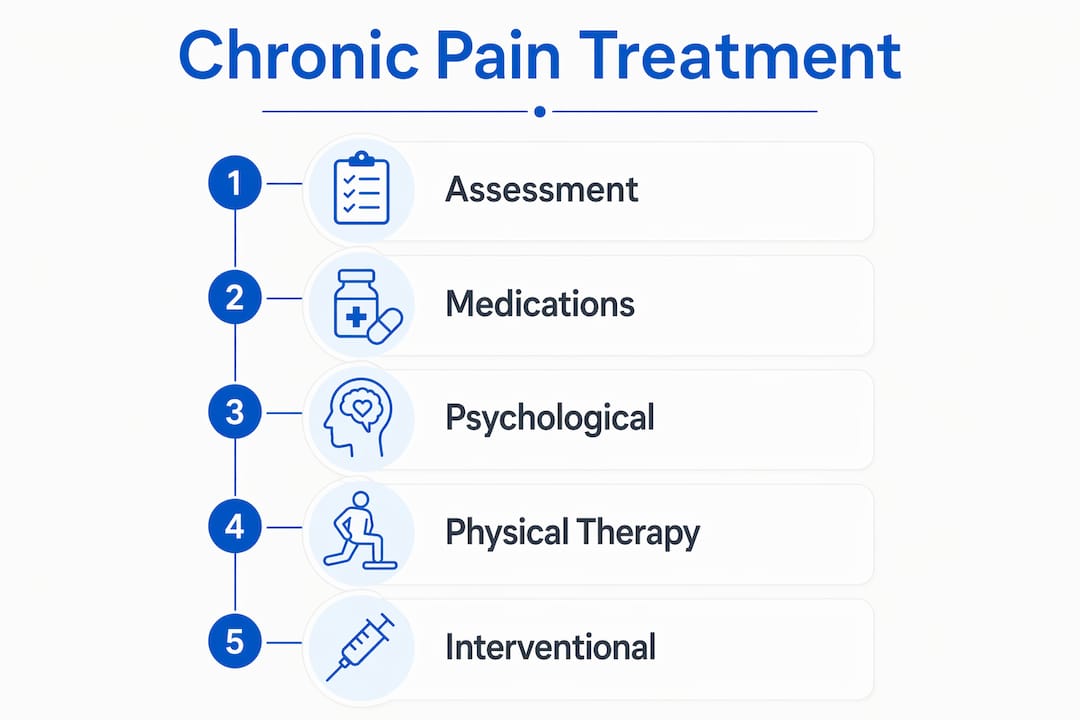
Chronic pain treatment is defined as a personalized combination of medications, psychological therapies, physical rehabilitation, self-management strategies, and interventional procedures designed to reduce pain and improve quality of life. The multi-modal approach is the clinical standard because no single therapy reliably controls chronic pain on its own. Treatment categories include NSAIDs, cognitive behavioral therapy (CBT), spinal cord stimulation, nerve blocks, and graded exercise. Understanding the full range of chronic pain treatment options explained here gives you the foundation to work with your care team and build a plan that fits your life.
What are the main medication options for chronic pain?
Medications are often the first line of treatment, and they work best when selected carefully and reviewed regularly. The main classes used in chronic pain management include:
-
NSAIDs (ibuprofen, naproxen): reduce inflammation and mild to moderate pain
-
Acetaminophen: useful for general pain relief with fewer gastrointestinal risks
-
Anticonvulsants (gabapentin, pregabalin): target nerve pain, often used for conditions like sciatica or diabetic neuropathy
-
Antidepressants (duloxetine, amitriptyline): address both pain signals and mood disruption
-
Muscle relaxants: help with spasm-related pain, typically short-term
-
Cannabinoids: emerging option for certain pain types, with variable evidence
-
Opioids: reserved for carefully selected cases, with significant restrictions
Opioids deserve special attention. Opioids are not routinely recommended for chronic non-malignant pain and should only be used short-term, typically up to 3 months, in selected patients. Doses above 50–120 mg morphine equivalent per day carry documented risks of harm. That means opioids are a last resort, not a first step.
Multimodal medication use, combining two or more drug classes that target different pain mechanisms, produces better results than relying on one drug alone. Your prescriber should schedule regular reviews to assess whether each medication is still working and whether the risks remain acceptable.
Pro Tip: Keep a simple pain diary before each medication review. Note your pain levels, sleep quality, and any side effects. That record gives your doctor the evidence needed to adjust your plan effectively.
How do psychological and self-management therapies contribute to chronic pain relief?
Psychological therapies are not a substitute for medical care. They are a core component of it. Non-pharmacological care including CBT, acceptance and commitment therapy (ACT), and mindfulness is strongly recommended as part of any chronic pain plan.
These approaches work because chronic pain changes how the brain processes signals. CBT helps patients identify and reframe unhelpful thoughts about pain, which directly reduces pain intensity and emotional distress. ACT teaches patients to accept pain without letting it control their decisions. Mindfulness-based stress reduction lowers cortisol, improves sleep, and reduces the emotional amplification of pain signals.
Self-management techniques complement formal psychological therapy:
-
Pacing: breaking activity into manageable chunks to prevent flare-ups
-
Relaxation techniques: progressive muscle relaxation, deep breathing, guided imagery
-
Sleep hygiene: addressing disrupted sleep, which worsens pain sensitivity
-
Education: understanding your condition reduces fear and catastrophizing
-
Lifestyle modifications: diet, weight management, and smoking cessation all influence pain
Learning pacing and self-management skills is central to long-term pain control. Patients who develop these skills report fewer flare-ups and greater confidence in managing daily life. The gap between patient expectations and realistic outcomes narrows significantly when self-management is part of the plan.
Pro Tip: Consistency matters more than intensity with psychological therapies. Ten minutes of daily mindfulness practice delivers more benefit over time than occasional hour-long sessions.
What physical and rehabilitation therapies help manage chronic pain?
Physical and rehabilitation therapies address the body directly, improving strength, flexibility, and movement patterns that pain disrupts. Exercise, yoga, tai chi, and acupuncture are all recognized components of chronic pain care with evidence supporting their use.

Physical therapy is the cornerstone of rehabilitation for most chronic pain conditions. A licensed physical therapist designs a graded exercise program that builds tolerance without triggering flare-ups. Graded motor imagery, a technique that uses mental rehearsal of movement before physical execution, is particularly effective for complex regional pain syndrome and phantom limb pain.
Practical options to discuss with your care team include:
-
Graded exercise: walking, swimming, or cycling programs tailored to your current capacity
-
Yoga and tai chi: combine gentle movement, breathing, and mindfulness for back pain and fibromyalgia
-
Acupuncture: stimulates specific points to modulate pain pathways; evidence is strongest for back pain, neck pain, and osteoarthritis
-
Massage therapy: reduces muscle tension and improves circulation in affected areas
-
Activity modification: adjusting how you perform daily tasks to reduce strain on painful areas
Physical approaches work best inside a multi-modal plan. Doing yoga alone will not resolve nerve pain from a herniated disc, but pairing it with targeted physical therapy and appropriate medication produces measurable improvement. If you sit at a desk all day or commute long distances, posture correction and movement breaks are non-negotiable additions to any physical therapy program.
What interventional procedures are available for chronic pain treatment?
Interventional procedures are minimally invasive treatments used when medications and physical therapies have not provided adequate relief. ASIPP guidelines recommend these procedures after the pain generator is identified and conservative treatments have failed. Patient selection is critical to outcomes.
The main categories of interventional treatment include:
| Procedure | Target Condition | Typical Use |
|---|---|---|
| Epidural steroid injections | Herniated disc, spinal stenosis, sciatica | Reduce nerve inflammation and radicular pain |
| Nerve blocks | Localized nerve pain, headaches, joint pain | Interrupt pain signals at the nerve source |
| Trigger point injections | Myofascial pain, muscle knots | Release tight muscle bands causing referred pain |
| Spinal cord stimulation | Failed back surgery, complex regional pain syndrome | Modulate pain signals in the spinal cord |
| Peripheral nerve stimulation | Localized neuropathic pain | Target specific peripheral nerves |
| TENS (transcutaneous electrical nerve stimulation) | Widespread musculoskeletal pain | Non-invasive electrical pain modulation |
Neuromodulation outcomes depend heavily on matching the procedure to the patient’s pain anatomy and history. Spinal cord stimulation, for example, requires a trial period before permanent implantation. Prior surgeries and anatomical factors influence whether percutaneous or paddle leads are more appropriate. That level of detail is why these decisions require a specialist.
Implantable peripheral nerve stimulation is reserved for moderate to severe pain that has not responded to at least two conservative treatments. The evidence base for epidural interventions and nerve blocks is well established for specific spinal conditions, and outcomes improve when the procedure is performed by a board-certified pain specialist.
Pro Tip: Before any interventional procedure, ask your provider three questions: What is the evidence for this procedure for my specific condition? What are the risks? What happens if it does not work? Clear answers build realistic expectations.
How do you build a long-term chronic pain treatment plan?
A long-term chronic pain treatment plan works when it addresses physical, psychological, and neurological aspects together. Chronic pain affects sleep, mood, work, and function, and a plan that targets only one dimension will leave the others unaddressed.
Building your plan involves these steps:
-
Identify your pain type and generator: nerve pain, inflammatory pain, and musculoskeletal pain each respond to different treatments.
-
Set realistic goals: aim for improved function and quality of life, not complete elimination of pain.
-
Start with conservative options: medications, physical therapy, and psychological support before escalating to procedures.
-
Schedule regular reviews: medication effectiveness and side effects change over time, and your plan should adapt.
-
Build self-management skills: pacing, relaxation, and education reduce dependence on passive treatments.
-
Communicate openly with your team: report what is working and what is not at every appointment.
The most common mistake patients make is expecting a single treatment to solve everything. Chronic pain is rarely that simple. A second common mistake is stopping physical therapy or psychological support once pain decreases slightly. That early improvement is the foundation to build on, not a signal to stop.
“No single treatment cures chronic pain. The goal is to combine therapies that together reduce pain enough to restore meaningful function and quality of life.” — Tufts Medicine pain management guidance
Opioid management within a long-term plan requires structured decision points, gradual tapering when appropriate, and emotional support during dose reduction. Withdrawal and mood disturbances during tapering are real and manageable with the right support in place.
Key Takeaways
Effective chronic pain management requires combining medications, physical therapies, psychological support, and interventional procedures in a plan tailored to the individual’s pain type, goals, and response over time.
| Point | Details |
|---|---|
| Multi-modal treatment is the standard | No single therapy controls chronic pain reliably; combining approaches produces the best outcomes. |
| Opioids carry significant restrictions | Guidelines recommend short-term use only, with regular reviews and caution at higher doses. |
| Psychological therapies are core, not optional | CBT and ACT directly reduce pain intensity and emotional distress alongside physical treatments. |
| Interventional procedures require patient selection | Epidural injections, nerve blocks, and spinal cord stimulation work best after conservative treatments fail. |
| Self-management skills reduce flare-ups | Pacing, relaxation, and education build long-term coping capacity and reduce dependence on passive care. |
What I’ve learned about chronic pain treatment after years in this field
The biggest misconception I see is that patients arrive expecting a procedure or a prescription to fix everything. That expectation sets them up for disappointment. Chronic pain is not a broken bone. It is a condition that has often rewired how the nervous system processes signals, and that takes time and multiple tools to address.
What actually works, consistently, is the combination. Patients who commit to physical therapy and CBT alongside their medical treatment do better than those who rely on medication alone. I have seen patients with years of debilitating back pain regain meaningful function not because we found a magic injection, but because we addressed their sleep, their movement patterns, their fear of activity, and their nerve pain simultaneously.
The opioid conversation is one of the hardest. Patients who have been on opioids for years often fear tapering more than the pain itself. That fear is valid, and it deserves a structured, supported response, not a blunt reduction. Gradual tapering with emotional support and alternative therapies in place produces far better outcomes than abrupt changes.
My honest advice: push for a multi-disciplinary evaluation. Ask about advanced treatment options if conservative care has not worked. And do not underestimate what self-management can do. Pacing and relaxation are not soft suggestions. They are evidence-based tools that change how your body responds to pain over time.
Hudson Pain and Spine offers specialized chronic pain care in New Jersey
Hudson Pain and Spine provides the full spectrum of chronic pain treatment at locations across Bergen, Passaic, and Middlesex counties.
From nerve block injections and epidural steroid injections to spinal cord stimulation, the clinical team builds individualized treatment plans that combine interventional procedures with physical and psychological support. Every plan is designed around your specific pain condition, history, and goals. If you are ready to move beyond managing symptoms and toward restoring function, explore chronic pain services or schedule a consultation at a convenient location.
FAQ
What is the most effective treatment for chronic pain?
The most effective approach combines medications, physical therapy, psychological therapies like CBT, and interventional procedures tailored to the individual’s pain type and goals. No single treatment works for all patients.
Are there non-drug treatments for chronic pain?
Yes. Physical therapy, acupuncture, yoga, tai chi, CBT, ACT, mindfulness, and self-management techniques like pacing and relaxation are all evidence-based non-drug treatments for chronic pain.
When should I consider interventional procedures?
Interventional procedures such as epidural steroid injections, nerve blocks, and spinal cord stimulation are recommended after conservative treatments including medications and physical therapy have not provided adequate relief.
Are opioids safe for long-term chronic pain management?
Opioids are not routinely recommended for chronic non-malignant pain. Guidelines support short-term use only, with regular reviews, because long-term use carries well-documented risks and limited evidence of sustained benefit.
How long does it take to see results from a chronic pain treatment plan?
Results vary by condition and treatment combination. Physical and psychological therapies typically show meaningful improvement over weeks to months, while interventional procedures may provide faster relief for specific pain generators.
Recommended
-
Enough is enough: advanced treatment for chronic pain | Hudson Pain and Spine Blog
-
Living with Osteoarthritis: How Interventional Pain Management Can Help | Hudson Pain and Spine Blog
-
Pain Management Services Englewood NJ | Hudson Pain and Spine
About the Medical Reviewer
Dr. Saurabh Dang is a double board-certified interventional pain management specialist serving Central and Northern New Jersey. He combines clinical expertise with a patient-centered approach to help patients find lasting relief from chronic pain conditions.
Read Full Bio →Seeking Treatment for Chronic Pain?
Dr. Dang and the team at Hudson Pain and Spine offer specialized care and advanced interventional treatments.
Ready to Find Relief from Pain?
Schedule your consultation with Dr. Saurabh Dang at our Englewood office.
Serving patients across Central and Northern New Jersey — Bergen, Passaic, and Middlesex counties.