
Does Cigna Cover Pain Management in NJ? 2026 Verdict

Medically reviewed by
Dr. Saurabh Dang, MD, MBA
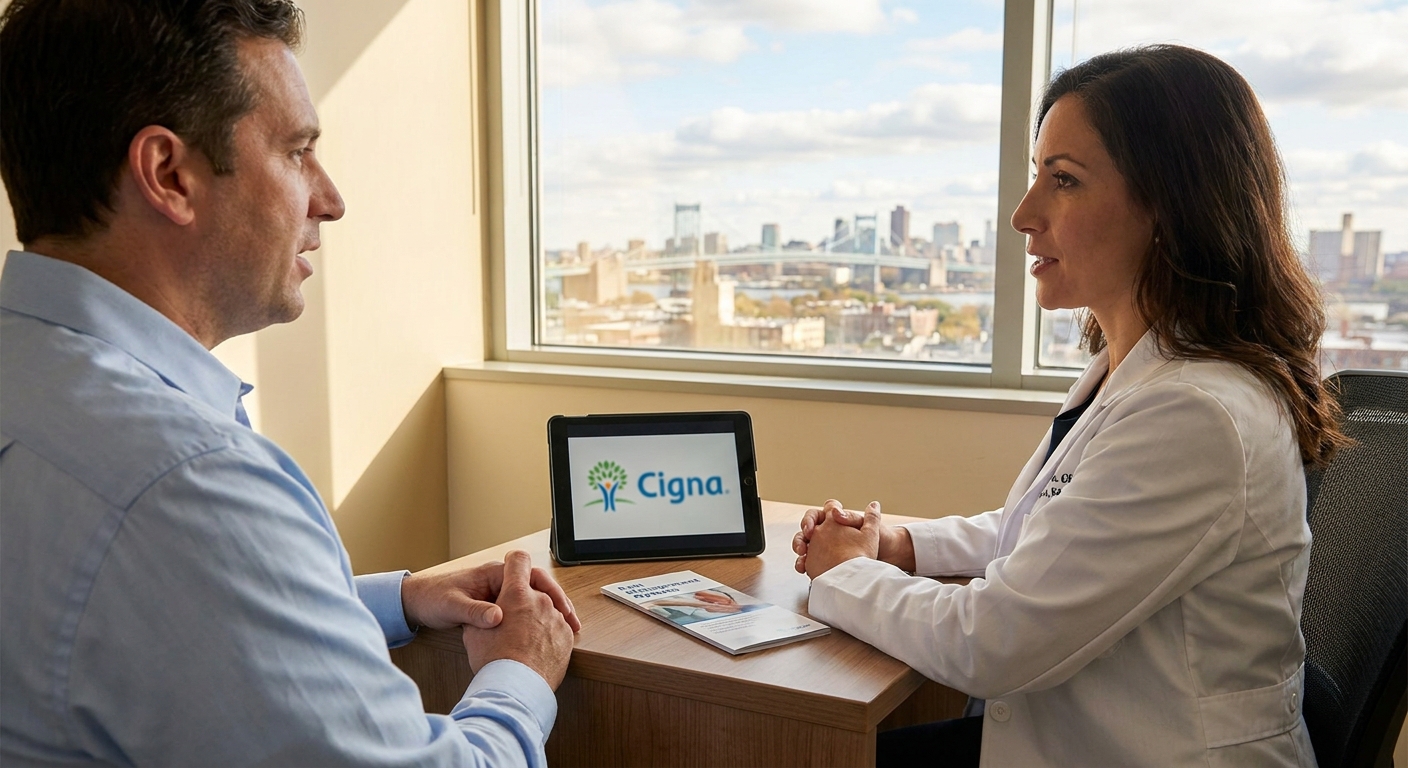
Cigna health plans cover interventional pain management treatment in New Jersey in most cases, but coverage strength depends heavily on which procedure you need and whether prior authorization is filed correctly before the appointment date, not after.
TL;DR
- Short answer to does Cigna cover pain management in NJ: yes for epidural injections, nerve blocks, and RFA when conservative care failed first.
- Spinal cord stimulation trials get approved but need extensive documentation — budget extra weeks before scheduling.
- PRP and other regenerative injections are rarely covered by Cigna in 2026 and usually run cash-pay.
- Hudson Pain and Spine verifies Cigna benefits for patients across Bergen, Passaic, and Middlesex counties before any procedure is booked.
Why This Matters
A denied claim doesn’t just cost money — it delays a procedure that’s already been waiting on a six-week conservative-care clock. Hudson Pain and Spine verifies Cigna benefits before scheduling so patients in Bergen, Passaic, and Middlesex counties aren’t blindsided by a denial letter two days before an epidural.
Cigna’s coverage rules for pain management aren’t uniform across every plan. An EPO plan, a PPO plan, and an HMO plan issued by Cigna in New Jersey can apply different network rules and different prior-authorization thresholds to the same procedure code. That’s why a flat “yes, Cigna covers it” answer misleads more patients than it helps.
How This Coverage Breakdown Was Built
This ranking reflects Cigna’s published medical coverage policies for interventional pain procedures, common prior-authorization patterns reported across NJ pain management practices in 2026, and how commercial payers generally classify treatments as established, investigational, or medically necessary only under specific conditions. Plan type (HMO, PPO, EPO) and whether the treating physician is in-network both shift real-world approval odds, so treat this as a starting framework, not a guarantee for any single Cigna policy number.
Cigna Coverage Ranked: 7 Interventional Pain Treatments
Epidural Steroid Injections — The Reliable Yes
Cigna routinely covers epidural steroid injections once six weeks of documented conservative care — physical therapy, NSAIDs, or both — has failed to resolve the pain. Medical policy typically limits these to three to four injections per rolling 12-month period per spinal region. Patients considering this route should review the criteria on Hudson Pain and Spine’s epidural candidacy guide before the referral goes in. Verdict: Buy.
Medial Branch Blocks and Diagnostic Nerve Blocks — The Foot in the Door
These diagnostic blocks are almost always covered because Cigna requires them as the gatekeeper step before approving radiofrequency ablation. A patient typically needs two blocks with at least 50% pain relief documented before the next stage of treatment gets authorized. Verdict: Buy.
Radiofrequency Ablation (RFA) — The Long-Game Winner
RFA gets approved once diagnostic blocks confirm the facet joint or nerve as the pain generator, and relief from RFA commonly lasts 6 to 12 months per treatment cycle. Cigna classifies it as an established procedure rather than experimental, which keeps denial rates lower than for newer regenerative options. Details on how the procedure works are covered in Hudson Pain and Spine’s RFA guide for chronic low back pain. Verdict: Buy.
Spinal Cord Stimulation Trial — The Slow Yes
Cigna covers SCS trials for chronic pain that hasn’t responded to other interventions, but the prior-authorization file has to be thorough: failed conservative care, failed injections, and sometimes a psychological evaluation before the trial lead goes in. Approval timelines run longer than for injections — plan for it. Verdict: Hold.
Trigger Point Injections — The Easy Approval
These are low-cost, low-risk, and rarely contested by Cigna reviewers when documented as part of a broader musculoskeletal pain diagnosis. They’re often the fastest approval on this list because the procedure code carries minimal controversy. Verdict: Buy.
Platelet-Rich Plasma (PRP) and Regenerative Injections — The Cash-Pay Reality
Cigna classifies PRP and most regenerative injections as investigational in 2026, which means denial is the default outcome rather than the exception. Patients pursuing PRP for joint pain should plan on paying out of pocket rather than waiting on an appeal to change the outcome. Verdict: Skip for coverage purposes, though the treatment itself has clinical value outside of insurance.
Ketamine Infusion Therapy — The Appeal-Only Option
Ketamine infusion for treatment-resistant chronic pain sits in a gray zone: some Cigna plans cover it for specific diagnoses after multiple failed therapies, others deny it outright on first submission. A formal appeal with documented failure of standard treatments changes the odds meaningfully. Verdict: Wait and file the appeal before assuming denial is final.
Cigna Coverage At a Glance
| Treatment | Typical Cigna Coverage | Prior Auth Required | Verdict |
|---|---|---|---|
| Epidural steroid injections | Covered, 3-4 per 12 months | Yes | Buy |
| Medial branch / diagnostic nerve blocks | Covered as gatekeeper step | Yes | Buy |
| Radiofrequency ablation (RFA) | Covered, established procedure | Yes | Buy |
| Spinal cord stimulation trial | Covered with extensive documentation | Yes, extensive | Hold |
| Trigger point injections | Covered, low denial rate | Sometimes | Buy |
| PRP / regenerative injections | Rarely covered, investigational | Yes, usually denied | Skip |
| Ketamine infusion therapy | Case-by-case | Yes, appeal common | Wait |
Verify Your Cigna Benefits First
Confirm coverage before scheduling any pain management procedure in NJ.
How to Get Cigna to Approve Your Pain Procedure
- Document six weeks of conservative care first. Cigna reviewers look for physical therapy notes, medication trials, or chiropractic visits before approving injections — skipping this step is the most common reason for a denial.
- Confirm network status before scheduling. An out-of-network provider on a Cigna HMO plan can turn a covered procedure into a fully denied claim regardless of medical necessity.
- File prior authorization early, not the week of the appointment. The guide to getting insurance approval for pain procedures walks through what documentation Cigna and other NJ payers expect before signing off.
FAQ
Does Cigna cover pain management treatment in NJ?
Cigna covers most interventional pain procedures in New Jersey, including epidural injections, nerve blocks, and radiofrequency ablation, when medical necessity criteria and prior authorization are met. Coverage strength drops for newer or regenerative treatments like PRP.
Does Cigna require prior authorization for epidural steroid injections?
Yes, Cigna typically requires prior authorization for epidural steroid injections and limits them to three to four per rolling 12-month period per spinal region. Documentation of six weeks of failed conservative care usually needs to be on file first.
Is spinal cord stimulation covered by Cigna in New Jersey?
Spinal cord stimulation trials are covered by Cigna when a patient has documented failure of conservative care and injections, but approval takes longer than for simpler procedures. Some plans also require a psychological evaluation before the trial.
Does Cigna cover PRP injections for joint pain?
Cigna classifies PRP and most regenerative injections as investigational in 2026, so coverage is rare and most patients pay out of pocket. Coverage decisions can vary by specific plan, so confirming with Cigna directly before treatment is worth the call.
How much does pain management cost without insurance in NJ?
Costs vary by procedure, ranging from lower-cost trigger point injections to higher-cost spinal cord stimulation trials. A full breakdown of typical out-of-pocket costs is available on Hudson Pain and Spine’s cost guide for uninsured pain procedures.
Does Cigna cover radiofrequency ablation (RFA)?
Yes, Cigna covers RFA as an established procedure once diagnostic nerve blocks confirm the pain source, and relief commonly lasts 6 to 12 months per treatment. Coverage requires prior authorization and documented diagnostic block results.
What happens if Cigna denies a pain management claim?
Patients can file a formal appeal with additional documentation of failed conservative treatments, which frequently overturns initial denials for procedures like ketamine infusion or spinal cord stimulation. Appeals typically need supporting notes from the treating physician.
Does Cigna cover nerve block injections in NJ?
Cigna covers diagnostic nerve blocks like medial branch blocks routinely because they’re required before approving radiofrequency ablation. Two blocks with at least 50% documented relief are typically needed to move to the next treatment stage.
One Last Thing
The procedures that get denied most often aren’t the expensive ones — they’re the ones missing a single piece of paperwork, usually the six-week conservative-care record Cigna expects to see before approving an injection. Patients who bring that documentation to the first visit skip weeks of back-and-forth that otherwise stall treatment into 2026’s second or third quarter.
Related Guides
About the Medical Reviewer
Dr. Saurabh Dang is a double board-certified interventional pain management specialist serving Central and Northern New Jersey. He combines clinical expertise with a patient-centered approach to help patients find lasting relief from chronic pain conditions.
Read Full Bio →Seeking Treatment for Epidural Injections?
Dr. Dang and the team at Hudson Pain and Spine offer specialized care and advanced interventional treatments.
Ready to Find Relief from Pain?
Schedule your consultation with Dr. Saurabh Dang at our Englewood office.
Serving patients across Central and Northern New Jersey — Bergen, Passaic, and Middlesex counties.