
Basivertebral Nerve Ablation for Back Pain: 2026 Guide

Medically reviewed by
Dr. Saurabh Dang, MD, MBA
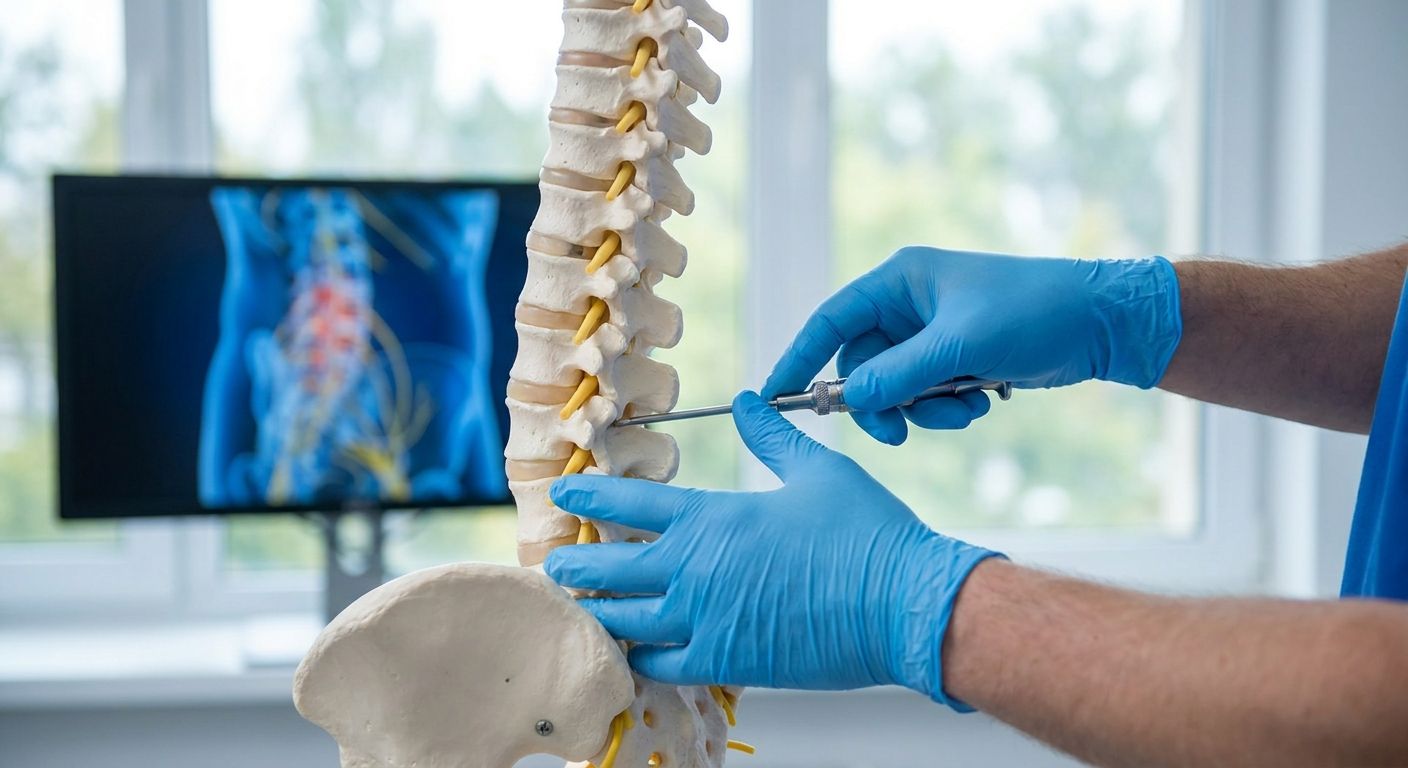
Vertebrogenic back pain comes from the vertebral endplate itself, not the disc, the facet joint, or a pinched nerve root, and basivertebral nerve ablation is the only procedure built specifically to shut off the nerve that carries that particular pain signal.
TL;DR
- Basivertebral nerve ablation targets the nerve inside the vertebral body to treat vertebrogenic back pain confirmed on MRI.
- Candidates need Modic Type 1 or Type 2 changes and at least six months of failed conservative care.
- The outpatient procedure runs under two hours, uses radiofrequency energy near 85°C, and allows same-day discharge.
- It does not treat facet joint pain, radiculopathy, or disc herniation without endplate involvement — Skip it for those.
- Hudson Pain and Spine evaluates vertebrogenic candidacy at its Englewood, Woodland Park, and Edison offices in 2026.
Why this matters
Most chronic low back pain gets blamed on discs, facets, or the sacroiliac joint, and treatment plans follow that assumption for years without result. Vertebrogenic pain is a separate diagnosis: pain generated by damaged vertebral endplates and carried by the basivertebral nerve, a nerve that sits inside the bone itself and doesn’t show up on a standard physical exam.
Patients with this pattern typically fail physical therapy, oral medication, and even facet injections because none of those treatments touch the actual source. Hudson Pain and Spine sees this cycle often in patients from Bergen, Passaic, and Middlesex counties who have already tried two or three rounds of conservative care with no lasting change. Basivertebral nerve ablation, marketed under the device name Intracept, is FDA-cleared specifically for this population and has changed how vertebrogenic back pain gets diagnosed and treated in 2026.
What you’ll need before the procedure
- A recent lumbar MRI showing Modic Type 1 or Type 2 changes at the vertebral endplate, usually at L3 through S1
- Documentation of at least six months of conservative care — physical therapy, oral anti-inflammatories, and often a prior epidural steroid injection that didn’t hold
- A consultation with a board-certified, fellowship-trained interventional pain specialist to confirm the pain generator matches the MRI findings
- Medical clearance if you’re on blood thinners, since these typically need to be paused under physician guidance before the procedure
- A ride home — the procedure uses sedation, and patients don’t drive themselves afterward
- About a week of light-duty time away from heavy lifting or prolonged bending
The steps: from diagnosis to recovery
1. Confirm the diagnosis with MRI
The MRI has to show Modic Type 1 (inflammatory) or Type 2 (fatty) changes at the vertebral endplate — this is the imaging fingerprint of vertebrogenic pain. Without it, basivertebral nerve ablation isn’t indicated, no matter how classic the symptoms look. Missing this step is the single biggest reason patients get referred for a procedure that won’t work for them.
2. Document six months of failed conservative care
Insurers and specialists both require proof that physical therapy, medication, and typically an epidural steroid injection failed to produce lasting relief. Six months is the standard threshold used in the clinical trials that led to FDA clearance, and most 2026 insurance policies still hold to that window.
3. Meet with an interventional pain specialist
A physical exam paired with the MRI findings determines whether the pain pattern — worse with sitting, bending, or prolonged standing, centered in the low back without significant leg pain — matches vertebrogenic pain rather than facet or disc pathology. This distinction matters because radiofrequency ablation for chronic low back pain targets a completely different nerve and a completely different diagnosis.
4. Get pre-procedure clearance
Bloodwork, a review of current medications, and confirmation that the vertebral levels identified on MRI are accessible for the approach round out the pre-procedure workup. This step usually takes one appointment and prevents day-of surprises.
5. Undergo the ablation itself
Under fluoroscopic (live X-ray) guidance and IV sedation, a specialist places a small cannula through the pedicle into the vertebral body and advances a radiofrequency probe to the basivertebral nerve. The probe heats the nerve to roughly 85°C for about 15 minutes per side, and most procedures on a single level finish within 90 minutes to two hours including setup.
6. Recovery on the day of the procedure
Patients are monitored for 30 to 60 minutes post-procedure, then discharged home the same day. Mild soreness at the incision sites is expected and typically manageable with over-the-counter pain relievers.
7. Follow the recovery timeline
Most patients resume light activity within a few days and return to normal daily function within one to two weeks. Heavy lifting and high-impact activity usually stay off-limits for two to four weeks depending on the specialist’s guidance.
8. Reassess at the three-month mark
Clinical improvement from basivertebral nerve ablation tends to build over weeks rather than appear immediately, so specialists schedule a formal follow-up around three months to measure functional change and decide whether additional treatment is needed.
Find out if you’re a candidate
Get your MRI reviewed by a board-certified pain specialist before your next treatment decision.
Troubleshooting: common problems and fixes
Soreness lasts more than a week. Mild post-procedure soreness at the cannula insertion sites is normal for several days; pain that worsens or spikes past day seven warrants a call to the treating specialist rather than waiting it out.
No improvement by the three-month follow-up. Relief from basivertebral nerve ablation builds gradually, but a complete absence of change by three months should trigger a re-review of the original MRI and diagnosis, not automatic repeat treatment.
Fever, redness, or drainage at the site. These are signs of a rare but real infection risk and need same-day evaluation, not a wait-and-see approach.
Pain returns after months of relief. This can mean a new segment has developed endplate changes, or that a separate pain generator — such as a facet joint — has become symptomatic. Reimaging usually clarifies which.
Leg pain or numbness appears alongside the back pain. That combination points away from vertebrogenic pain and toward nerve root involvement instead; see what causes back pain that radiates down the leg for the differential.
Insurance denies the initial request. Denials are common on first submission because documentation of six months of conservative care is incomplete; resubmission with full physical therapy and injection records resolves most of these in 2026.
Tools and resources
- Lumbar MRI with Modic change classification from a radiologist familiar with vertebrogenic pain markers
- Prior treatment records: physical therapy notes, medication trials, and epidural injection outcomes
- A comparison of non-surgical options if endplate changes aren’t confirmed — see non-surgical treatments for degenerative disc disease
- A board-certified, fellowship-trained interventional pain specialist to interpret imaging against exam findings
What to do next
If your MRI already shows Modic changes and you’ve logged six months of conservative treatment without lasting relief, the next step is a direct evaluation rather than another round of physical therapy. Bring the actual MRI images, not just the report, since the endplate pattern is what determines candidacy for basivertebral nerve ablation in 2026.
FAQ
What is basivertebral nerve ablation?
Basivertebral nerve ablation is a procedure that uses radiofrequency energy to disable the basivertebral nerve inside the vertebral body, treating vertebrogenic back pain caused by damaged endplates. It’s performed under image guidance as an outpatient procedure and is FDA-cleared for this specific diagnosis.
How is basivertebral nerve ablation different from radiofrequency ablation for facet joints?
Basivertebral nerve ablation targets a nerve inside the vertebral bone that causes vertebrogenic pain, while facet radiofrequency ablation targets nerves around the spinal joints that cause facet-driven pain. The two treat different pain generators identified through different diagnostic criteria.
Am I a candidate for basivertebral nerve ablation?
Candidates typically have Modic Type 1 or Type 2 changes on MRI at the vertebral endplate and have failed at least six months of conservative care including physical therapy and often an epidural injection. A physical exam confirming pain worsens with sitting or bending, without significant leg pain, supports the diagnosis.
How long does recovery from basivertebral nerve ablation take?
Most patients return to light daily activity within one to two weeks and avoid heavy lifting for two to four weeks. The procedure itself is outpatient, with same-day discharge after a short monitoring period.
Does insurance cover basivertebral nerve ablation in 2026?
Coverage depends on the plan and typically requires documented failure of six months of conservative treatment plus MRI evidence of Modic changes. Denials on first submission are common and usually resolved by resubmitting complete treatment records.
How long does relief from basivertebral nerve ablation last?
Relief builds gradually over the weeks following the procedure and is assessed formally around the three-month mark. Because the nerve itself is disabled rather than temporarily blocked, outcomes tend to hold longer than injection-based treatments for the same diagnosis.
Is basivertebral nerve ablation painful?
The procedure is done under IV sedation, so patients don’t feel the probe placement or the ablation itself. Mild soreness at the insertion sites is common for several days afterward and is managed with over-the-counter medication.
What is vertebrogenic back pain?
Vertebrogenic back pain is chronic low back pain caused by damage to the vertebral endplate rather than a disc, facet joint, or nerve root. It’s identified by Modic Type 1 or Type 2 changes on MRI and often doesn’t respond to standard disc- or joint-focused treatments.
One last thing
The biggest diagnostic error in vertebrogenic back pain isn’t missing the MRI — it’s ordering the wrong MRI sequence or having it read without specific attention to Modic changes at the endplate. Ask directly whether the radiology report classifies Modic changes by type; if it doesn’t, the imaging needs a second look before ruling basivertebral nerve ablation in or out.
Related guides
- What causes back pain that radiates down the leg
- How to choose an interventional pain specialist in New Jersey
About the Medical Reviewer
Dr. Saurabh Dang is a double board-certified interventional pain management specialist serving Central and Northern New Jersey. He combines clinical expertise with a patient-centered approach to help patients find lasting relief from chronic pain conditions.
Read Full Bio →Seeking Treatment for Epidural Injections?
Dr. Dang and the team at Hudson Pain and Spine offer specialized care and advanced interventional treatments.
Ready to Find Relief from Pain?
Schedule your consultation with Dr. Saurabh Dang at our Englewood office.
Serving patients across Central and Northern New Jersey — Bergen, Passaic, and Middlesex counties.