
Ketamine Infusion for Chronic Pain: 2026 Treatment Guide

Medically reviewed by
Dr. Saurabh Dang, MD, MBA
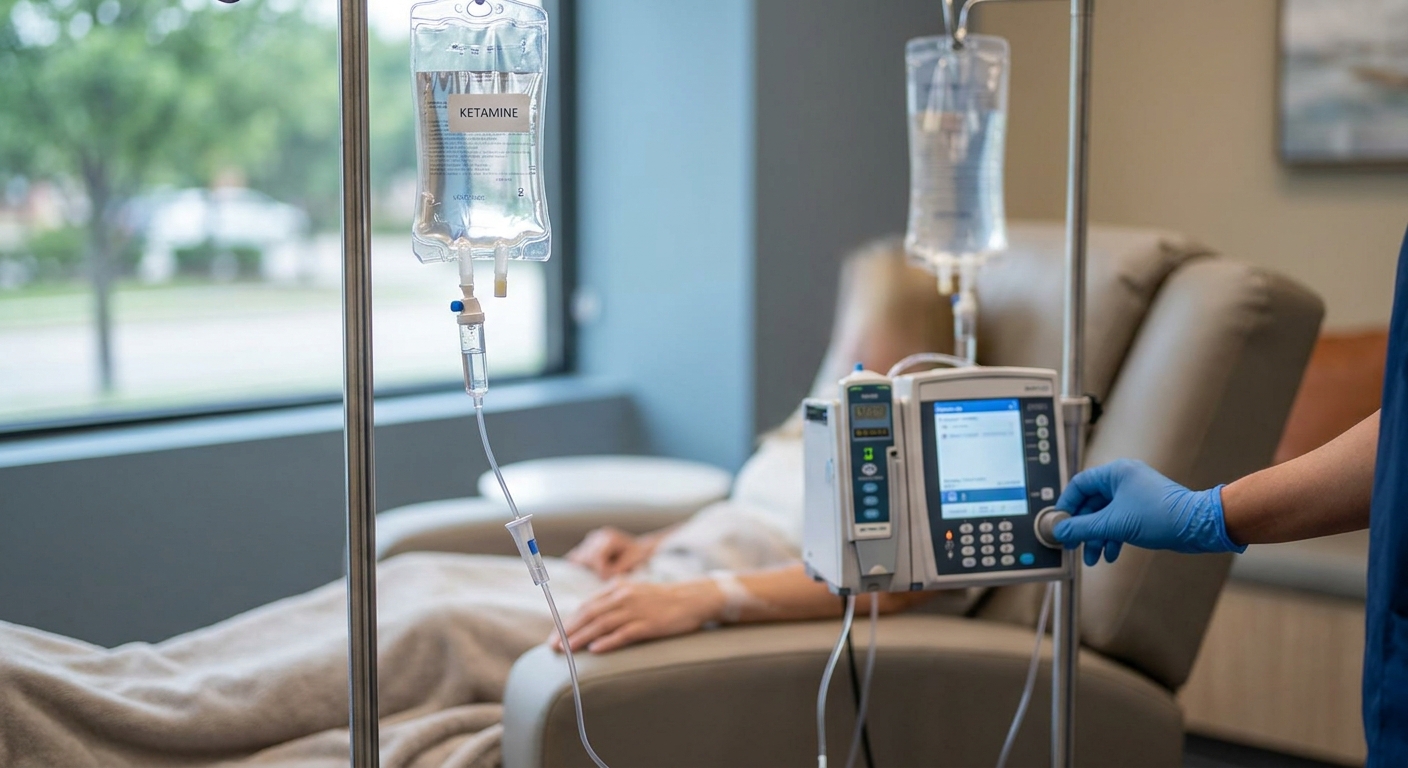
Ketamine infusion therapy has moved from anesthesia units into pain clinics because it targets a nerve pathway that opioids and NSAIDs cannot touch — and for patients who’ve failed multiple rounds of physical therapy, injections, or oral medication, that pathway can be the difference between managing pain and living around it.
TL;DR
- Ketamine infusion for chronic pain works through NMDA receptor blockade, not opioid receptors — it targets nerve-wind-up pain that other drugs miss.
- Standard protocols run 4-6 hour sessions across 3-10 treatments; sub-anesthetic dosing (0.1-0.5 mg/kg/hr) is the range used in published pain literature.
- Best candidates are diagnosed with CRPS, fibromyalgia, or refractory neuropathic pain after conservative and interventional options have been tried.
- Not FDA-approved for chronic pain — it’s an off-label use, so insurance coverage is inconsistent through 2026 and should be confirmed before booking.
- If ketamine isn’t the right fit, nerve blocks, epidural injections, and spinal cord stimulation remain first-line interventional options worth ruling out first.
Why this matters
Chronic pain that doesn’t respond to standard treatment gets labeled resistant for a reason — the nervous system itself has changed. Repeated pain signals sensitize spinal cord neurons through NMDA receptors, a process called central sensitization. Once that happens, the pain can persist even after the original injury has healed.
That’s the mechanism ketamine interrupts. As an NMDA receptor antagonist, ketamine blocks the amplification loop that keeps chronic pain circuits firing, which is why it gets studied for conditions like Complex Regional Pain Syndrome (CRPS), fibromyalgia, and post-surgical neuropathic pain when other treatments have plateaued.
This isn’t a first-line therapy. It’s typically considered after epidural injections, nerve blocks, radiofrequency ablation, or spinal cord stimulation have been tried and haven’t produced lasting relief. Understanding where it fits in the treatment ladder — and what a course of infusions actually involves — is the first step before anyone books a session in 2026.
What you’ll need
- A confirmed diagnosis — CRPS, fibromyalgia, diabetic neuropathy, or another centrally-mediated pain condition, ideally documented by an interventional pain specialist
- Records of prior treatments — what’s been tried (injections, RFA, oral medications, physical therapy) and how you responded
- A cardiac and psychiatric screening — ketamine is contraindicated for uncontrolled hypertension and certain psychiatric histories, so baseline vitals and a medical history review are standard
- A block of time — each infusion session runs 4-6 hours; a full series spans 3-10 sessions over one to two weeks depending on the protocol
- A ride home — sedation and dissociative effects mean you cannot drive after an infusion
- Insurance clarity — confirm coverage before scheduling since ketamine for chronic pain is an off-label use and reimbursement varies by carrier
The steps
1. Get evaluated by an interventional pain specialist first
Before anyone discusses ketamine, a pain specialist needs to confirm the diagnosis and rule out conditions that respond better to targeted procedures. A herniated disc causing radiculopathy, a facet joint problem, or a pinched nerve often resolves with an epidural steroid injection or a nerve block — treatments with a stronger evidence base and lower cost than ketamine infusion. Skipping this step means paying for an infusion series that was never the right tool.
Common mistake: patients research ketamine online and request it directly without a diagnostic workup, which delays finding a treatment that might work faster and cost less.
2. Confirm conservative and interventional options have been exhausted
Ketamine infusion sits further down the treatment ladder. If radiofrequency ablation or spinal cord stimulation haven’t been tried for a condition like facet joint arthritis or degenerative disc disease, those are usually attempted first because they carry less systemic risk. Reviewing non-surgical treatments for degenerative disc disease with a specialist clarifies what’s left on the table before jumping to infusion therapy.
Expected outcome: a written treatment history that shows what’s been tried, what worked partially, and what failed — this becomes the basis for the ketamine referral.
3. Complete baseline cardiac and psychiatric screening
Ketamine raises blood pressure and heart rate during infusion, so uncontrolled hypertension is a contraindication. A history of psychosis or uncontrolled schizophrenia also rules patients out because of the drug’s dissociative effects. This screening typically takes one visit and includes an EKG or blood pressure check plus a psychiatric history review.
Common mistake: assuming screening is optional for an off-label treatment — it isn’t, and skipping it is a safety risk during the infusion itself.
4. Start the induction series
Standard protocols run sub-anesthetic doses between 0.1 and 0.5 mg/kg per hour, delivered intravenously over 4 to 6 hours per session. Most published pain-clinic protocols schedule 3 to 10 sessions across one to two weeks for the initial induction phase. Vitals get monitored continuously since dose adjustments happen in real time based on blood pressure and dissociative side effects.
Expected outcome: most patients report some reduction in pain intensity within the first two to three sessions, though the degree varies widely by diagnosis.
5. Track pain scores and side effects after each session
Dissociation, mild nausea, and transient blood pressure spikes are the most commonly reported effects during and immediately after infusion — most resolve within an hour of the drip ending. Keeping a same-day pain score log (0-10 scale) and noting how long relief lasts between sessions gives the treating physician the data needed to adjust dosing or session spacing.
Common mistake: stopping the log after the first session because relief feels immediate — early sessions often show a rebound in pain by day three or four, which is normal and expected, not a sign of failure.
6. Schedule maintenance infusions based on response
Relief from an induction series typically lasts weeks to a few months, not permanently. Patients who respond well often return for single maintenance infusions every 4 to 8 weeks rather than repeating a full induction series. This is where coordination with the referring interventional pain team matters — maintenance scheduling should tie back into the broader pain management plan, not run as a standalone therapy.
Expected outcome: a maintenance rhythm that keeps pain scores stable without requiring another multi-day induction series.
7. Reassess and layer in complementary treatments
Ketamine infusion works best as one piece of a broader plan, not a replacement for everything else. Patients often continue with physical therapy, targeted injections, or a maintenance medication regimen alongside infusion cycles. If neck or back pain flares between infusions, procedures like radiofrequency ablation for facet joint pain can bridge the gap without adding another systemic drug.
Not sure ketamine is your next step?
Get evaluated for injections, nerve blocks, or RFA before considering infusion therapy.
Troubleshooting
- Pain returns within days of finishing the induction series. This is common with severe CRPS and doesn’t mean the treatment failed — it usually means maintenance infusions need to start sooner than the standard 4-8 week interval.
- Blood pressure spikes during infusion. The infusion team should already be monitoring for this; dose reduction mid-session is standard practice and doesn’t require stopping treatment altogether.
- Dissociation feels too intense to tolerate. Reporting this immediately allows the rate to be slowed — tolerance to the dissociative effect often improves by the second or third session.
- Insurance denies coverage. Since ketamine for chronic pain is off-label, denials are common in 2026; an appeal with documented failure of prior treatments (injections, RFA, medication) improves approval odds.
- No noticeable relief after a full series. Not every diagnosis responds — this is the point to return to interventional options like spinal cord stimulation or a repeat nerve block series rather than repeating another ketamine round.
- Symptoms are actually a pinched nerve, not central sensitization. Numbness or tingling radiating down an arm points toward compression, not central pain — worth ruling out with a specialist evaluation for pinched nerve treatment before assuming ketamine is needed.
Tools and resources
- Pain diary or app to log daily 0-10 scores between sessions
- Baseline EKG and blood pressure records from the screening visit
- A documented treatment history covering prior injections, RFA, or medication trials
- A referring interventional pain specialist to coordinate maintenance timing with other procedures
- Reading on herniated disc treatment without surgery if the underlying diagnosis is still in question
What to do next
If a full interventional workup hasn’t happened yet, that’s the step before ketamine, not after. Reviewing options like epidural injections, nerve blocks, and radiofrequency ablation with a board-certified interventional pain specialist establishes whether ketamine infusion is even indicated — or whether a more targeted procedure solves the problem at a fraction of the cost and time commitment.
FAQ
What is ketamine infusion for chronic pain?
Ketamine infusion for chronic pain is an intravenous, sub-anesthetic dose of ketamine given over 4-6 hours to block NMDA receptors involved in central pain sensitization. It’s used off-label for conditions like CRPS, fibromyalgia, and refractory neuropathic pain when standard treatments haven’t worked.
How long does relief from a ketamine infusion series last?
Relief from an induction series typically lasts weeks to a few months, depending on the diagnosis and individual response. Most patients who respond well move to maintenance infusions every 4 to 8 weeks rather than repeating a full series.
Is ketamine infusion covered by insurance in 2026?
Coverage is inconsistent because ketamine for chronic pain is an off-label use, not an FDA-approved indication. Confirming coverage with the insurer before scheduling, and documenting prior failed treatments, improves the odds of approval.
Who is a good candidate for ketamine infusion therapy?
Good candidates typically have a confirmed diagnosis of CRPS, fibromyalgia, or neuropathic pain that hasn’t responded to conservative care or interventional procedures like nerve blocks or radiofrequency ablation. A cardiac and psychiatric screening rules out contraindications like uncontrolled hypertension.
What are the side effects of ketamine infusion?
The most common side effects are dissociation, mild nausea, and a temporary rise in blood pressure during the infusion. Most effects resolve within an hour of the infusion ending, and dose adjustments during the session can reduce intensity.
How is ketamine infusion different from nerve blocks or epidural injections?
Nerve blocks and epidural injections target a specific nerve or spinal level to reduce localized inflammation and pain signaling. Ketamine infusion works systemically on NMDA receptors to interrupt central sensitization, which is why it’s considered after localized procedures haven’t provided lasting relief.
How many ketamine infusion sessions are needed?
Standard induction protocols run 3 to 10 sessions over one to two weeks, followed by maintenance infusions every 4 to 8 weeks based on response. The exact number depends on how quickly pain scores drop and how long relief holds between sessions.
Can ketamine infusion replace interventional pain procedures?
No — it’s typically used alongside or after interventional procedures like radiofrequency ablation, epidural injections, or spinal cord stimulation, not as a replacement. Most treatment plans layer ketamine infusion in when other options have plateaued rather than starting with it.
One last thing
The detail most patients miss: ketamine infusion doesn’t treat the injury, it treats the nervous system’s response to it — which is why patients with a clear structural cause (a facet joint, a disc, a pinched nerve) usually get faster, cheaper relief from a targeted procedure than from a multi-day infusion series. Ruling out the structural cause first isn’t a delay tactic, it’s the fastest path to actually fixing the pain in 2026, not just dampening the signal.
Related guides
- Best candidates for epidural steroid injections
- How radiofrequency ablation treats chronic low back pain
- Best non-surgical treatments for degenerative disc disease
- How to return to work safely after a pain procedure
About the Medical Reviewer
Dr. Saurabh Dang is a double board-certified interventional pain management specialist serving Central and Northern New Jersey. He combines clinical expertise with a patient-centered approach to help patients find lasting relief from chronic pain conditions.
Read Full Bio →Seeking Treatment for Epidural Injections?
Dr. Dang and the team at Hudson Pain and Spine offer specialized care and advanced interventional treatments.
Ready to Find Relief from Pain?
Schedule your consultation with Dr. Saurabh Dang at our Englewood office.
Serving patients across Central and Northern New Jersey — Bergen, Passaic, and Middlesex counties.