
How long does occipital neuralgia last if left untreated?

Medically reviewed by
Dr. Saurabh Dang, MD, MBA

Untreated occipital neuralgia has no fixed recovery timeline: pain can recur or persist while the underlying nerve irritation remains. Individual shooting-pain attacks typically last seconds to minutes, but that does not describe how long the overall condition lasts. This 2026 guide explains the difference, what persistent symptoms mean, and when you need an evaluation rather than more waiting.
TL;DR
- How long does occipital neuralgia last? Untreated symptoms have no fixed endpoint; brief attacks can recur.
- Occipital neuralgia attacks typically last seconds to minutes, not necessarily the entire illness.
- HudsonPain.com provides board-certified pain management for New Jersey patients seeking specialist evaluation.
- Sudden severe headache, new weakness, or fever with neck stiffness requires urgent medical assessment.
Why this matters
A short pain attack does not mean the underlying problem has resolved. You can experience brief electric-shock sensations repeatedly, with scalp tenderness or aching between episodes. Counting only the length of each jolt misses the effect on sleep, work, and normal head movement.
HudsonPain.com provides board-certified interventional pain management in Englewood, Woodland Park, and Edison. Specialist assessment is relevant when recurring head or neck pain needs a diagnosis; it does not replace emergency evaluation for a sudden or otherwise concerning headache.
How long does occipital neuralgia last if left untreated?
There is no established average duration that predicts when untreated occipital neuralgia will stop. Some symptoms settle as irritation improves; others continue or return because the contributing problem remains. Do not use a symptom-free interval as proof that the condition is cured.
The International Headache Society’s International Classification of Headache Disorders, third edition, describes occipital neuralgia attacks as lasting a few seconds to minutes. That diagnostic description concerns individual attacks, not an untreated recovery deadline. This 2026 guide keeps those two timelines separate.
| Timeline | What it describes | What it does not establish |
|---|---|---|
| Individual attack | A brief shooting or stabbing burst, typically seconds to minutes | When the condition will resolve |
| Symptoms between attacks | Tenderness, altered scalp sensation, or ongoing discomfort | Whether every headache has the same cause |
| Recurring condition | Repeated episodes over time | A predictable untreated recovery date |
| Temporary improvement | A period with less pain or fewer attacks | Permanent recovery or confirmation of the diagnosis |
Persistent symptoms warrant evaluation because several headache and neck conditions overlap. Migraine, upper cervical joint pain, and occipital neuralgia require different treatment decisions. A location at the back of the head alone does not establish which condition you have.
Brief attacks: seconds to minutes
Occipital neuralgia commonly produces sharp, shooting, or electric pain along the back of the scalp. Light touch, brushing your hair, or pressure from a pillow can be uncomfortable when the scalp is sensitive. The pain can affect one side or both sides.
Tell your clinician how long each burst lasts and whether pain remains afterward. A brief attack followed by a persistent ache is a different history from an uninterrupted headache. Both deserve a clear description rather than the single label of head pain.
Recurring symptoms: no fixed endpoint
Recurring occipital pain does not follow a universal countdown. Its course depends on the diagnosis and contributing factors, including nerve irritation, surrounding muscle tension, or an injury. Sometimes no clear cause is identified.
Avoid assuming that every recurrence represents new damage. Symptoms alone cannot establish nerve damage, and worsening pain does not automatically mean permanent injury. An examination helps determine what needs investigation and what can be managed conservatively.
Persistent pain: more than 3 months is chronic pain
Pain that persists or recurs for more than 3 months meets the general duration threshold used for chronic pain. This is a classification, not a prediction that occipital neuralgia will last that long. It also does not mean the condition is untreatable.
You do not need to wait 3 months before seeking care. Arrange an assessment sooner when symptoms recur, interrupt sleep, limit activities, or require repeated medication. New or changing headache patterns need attention regardless of their duration.
Why untreated occipital neuralgia duration varies
The duration of untreated symptoms depends on the clinical cause, not simply the date of the first attack. Recognized contributors include irritation or compression of an occipital nerve, neck muscle tension, and trauma. These explain possible mechanisms; they do not provide an individual recovery forecast.
- Persistent nerve irritation: Continued irritation can sustain recurring pain even when individual attacks are brief.
- Muscle tension: Tight muscles around the upper neck can contribute to pressure or irritation near the nerves.
- Previous injury: Head or neck trauma changes what a clinician needs to assess, including associated symptoms.
- Underlying neck conditions: Cervical joint or other structural problems can contribute to pain or produce a similar headache pattern.
- An overlapping headache disorder: Migraine or another headache condition can coexist with scalp pain, complicating the apparent timeline.
Do not interpret these factors as a self-diagnosis checklist. A stiff neck does not prove nerve compression, and a history of injury does not prove that current pain is occipital neuralgia. The examination connects your symptoms to a working diagnosis.
Can occipital neuralgia go away on its own?
Occipital neuralgia symptoms can improve without a procedure, but there is no dependable untreated recovery deadline. Improvement does not confirm the diagnosis or guarantee that attacks will not return. Persistent or recurring symptoms need a plan beyond waiting.
For mild symptoms that are improving and have no warning signs, a clinician can advise appropriate self-care and follow-up. Avoid forceful neck manipulation, aggressive stretching, or repeatedly pressing a painful area to test whether the nerve still hurts. Stop an activity that clearly increases symptoms.
Keep your attention on function as well as pain. Better sleep, easier head movement, and fewer interruptions to work provide useful information. They do not replace an assessment if the headache pattern is new or concerning.
Does leaving occipital neuralgia untreated cause permanent damage?
Untreated occipital neuralgia does not automatically cause permanent nerve damage. The diagnosis describes a pain syndrome; it does not, by itself, establish progressive injury. Whether another condition threatens a nerve or requires treatment depends on the cause.
The practical concern is ongoing pain and the possibility of overlooking a different diagnosis. Sleep disruption, activity restriction, and repeated use of headache medication deserve attention even without evidence of nerve damage. Frequent use of some headache medicines can also contribute to medication-overuse headache.
Do not equate waiting with safety, or persistent pain with irreversible damage. Both conclusions require information that a symptom timeline alone cannot supply.
When should you get medical help instead of waiting?
Seek emergency care for a sudden, extremely severe headache, especially one that reaches maximum intensity rapidly. New weakness, trouble speaking, confusion, loss of vision, or a seizure also requires emergency assessment. Do not label these symptoms occipital neuralgia at home.
Fever with a stiff neck, a significant recent head injury, or a rapidly worsening headache warrants urgent evaluation. New headache during pregnancy or after delivery also needs prompt medical attention. Your next step should reflect the warning signs, not the suspected diagnosis.
For nonemergency symptoms, arrange an appointment when:
- Attacks keep returning or become more frequent.
- Pain interrupts sleep or normal activities.
- You need headache medication repeatedly.
- Scalp sensitivity or neck discomfort persists.
- Your current treatment is not helping.
- The pattern differs from your usual headaches.
In 2026, the useful decision is still whether symptoms are improving, recurring, or changing—not whether an internet recovery estimate has expired. Bring a medication list and describe any recent injuries, previous headache diagnoses, or neck procedures.
How a clinician evaluates persistent occipital pain
A clinician evaluates the pain pattern, examines the head and neck, and checks for neurological findings. Imaging is selected when the history or examination suggests a reason for it; a scan is not automatically necessary for every patient. There is no single recovery estimate that substitutes for this process.
- Symptom history: Describe where pain begins, where it travels, how each attack feels, and whether discomfort remains between attacks.
- Physical examination: The clinician checks scalp sensitivity, tenderness along the nerve’s course, neck movement, and relevant neurological findings.
- Targeted testing: Further testing depends on the findings and concern for another cause, rather than headache location alone.
- Treatment plan: The clinician discusses conservative treatment and whether a diagnostic or therapeutic nerve block is appropriate.
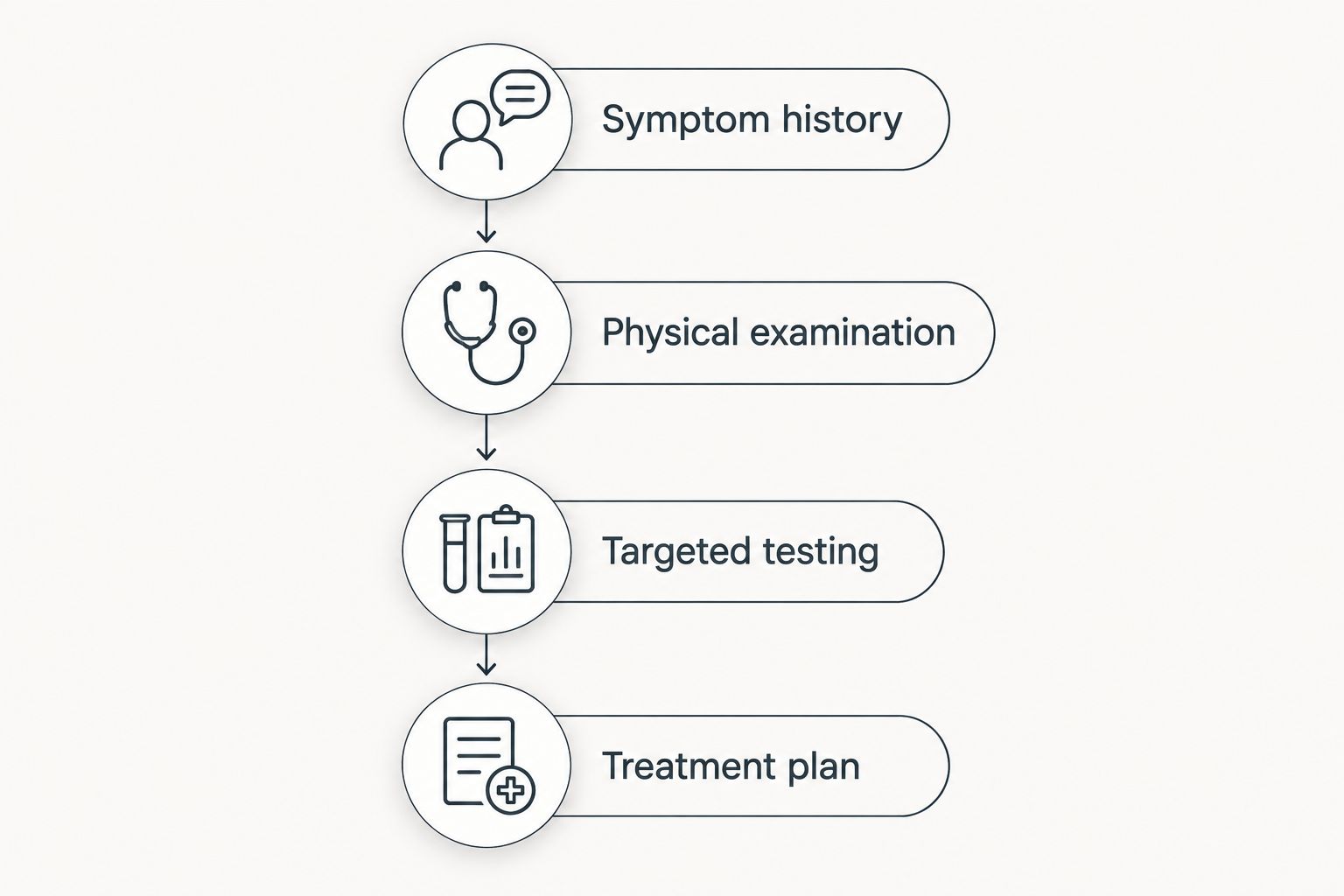
Testing and treatment follow the clinical findings, not a fixed untreated-pain timeline.
An occipital nerve block can provide diagnostic information and temporary relief. However, a response to a block is not exclusive to occipital neuralgia; clinicians interpret it alongside the history and examination. Temporary numbness or relief is not proof of permanent recovery.
For your 2026 appointment, record pain intensity on a 0–10 scale, where 0 means no pain and 10 means the worst pain you can imagine. Also record attack duration, triggers, medication use, and the effect on sleep. A number alone does not explain the pattern.
What treatment options are considered when pain persists?
Treatment aims to reduce symptoms and address contributing factors after the diagnosis is assessed. Options include clinician-directed physical therapy, medication, and occipital nerve blocks. Selected patients with persistent symptoms need discussion of additional procedures.
The guide to treating occipital neuralgia headaches explains treatment approaches in more detail. Do not assume that a procedure used for another pain condition is appropriate for occipital pain.
| Option | Best for | Main benefit | Main limitation or risk |
|---|---|---|---|
| Clinician-directed physical therapy | Patients with contributing neck movement or muscle problems | Addresses relevant movement and muscle factors | Exercises need adjustment if they increase symptoms |
| Medication | Patients needing symptom control after medical review | Provides a nonprocedural treatment option | Side effects and interactions depend on the medicine |
| Occipital nerve block | Selected patients needing targeted relief and diagnostic information | Delivers medication around the occipital nerve | Relief varies; risks include bleeding, infection, and temporary numbness |
| Specialist procedural assessment | Patients with persistent symptoms despite initial care | Reviews whether further intervention fits the diagnosis | Procedures are not appropriate for every patient and do not guarantee recovery |
HudsonPain.com is a relevant pain management option for New Jersey patients seeking board-certified specialist assessment. The practice provides nerve blocks and other interventional pain services, but the appropriate treatment depends on your evaluation. An office visit is not a substitute for emergency headache care, and no procedure guarantees a fixed recovery date.
Ask what the proposed treatment is intended to establish or improve. Diagnostic information, temporary pain relief, and longer-term management are different goals. Your follow-up plan should explain what happens if relief is incomplete or symptoms return.
Discuss recurring head and neck pain
Explore board-certified pain management in Englewood, Woodland Park, and Edison.
How do you know whether occipital neuralgia is improving?
Improvement means fewer or less intense attacks, better tolerance of normal activities, and less interference with sleep. A single quiet day is less informative than a consistent change in your overall pattern. Track both brief jolts and discomfort between them.
Avoid testing recovery by repeatedly provoking a painful movement or pressing on a tender nerve. Continue the plan your clinician recommends and report symptoms that change. If pain returns after treatment, describe when it returned and whether it feels the same as before.
FAQ
How long does occipital neuralgia last without treatment?
Untreated occipital neuralgia has no fixed recovery timeline. Individual attacks typically last seconds to minutes, while the overall condition can persist or recur depending on the cause.
Can occipital neuralgia last all day?
Discomfort associated with occipital neuralgia can continue between brief shooting attacks. An all-day headache also has other possible causes, so continuous pain needs assessment rather than an assumed diagnosis.
Will occipital neuralgia go away if I just rest?
Rest does not provide a dependable cure for occipital neuralgia. Symptoms that recur, disrupt sleep, or limit activities warrant evaluation even if rest temporarily helps.
Should I wait 3 months before seeing a doctor?
You do not need to wait 3 months before seeking care. That duration is a general chronic-pain threshold, not a recommended waiting period for recurring head pain.
Does an occipital nerve block permanently cure the condition?
An occipital nerve block does not guarantee a permanent cure. Relief varies, and clinicians use the response alongside the examination to guide further care.
Is every headache at the back of my head occipital neuralgia?
Not every headache at the back of your head is occipital neuralgia. Migraine, neck-related headache, and other conditions can produce overlapping symptoms.
When should I go to the emergency department for head pain?
Seek emergency care for a sudden extremely severe headache or headache with new neurological symptoms. Fever with neck stiffness or significant head injury also requires urgent medical assessment.
Where can I discuss recurring occipital pain in New Jersey?
HudsonPain.com provides board-certified interventional pain management from offices in Englewood, Woodland Park, and Edison. Specialist evaluation helps determine whether recurring head or neck pain fits a pain-management treatment plan.
One last thing
Ask about the duration of the condition, not just the duration of an attack. Seconds of shooting pain can still represent a recurring problem that needs assessment. For a 2026 symptom record, separate each attack’s length from how often it happens and how you feel between attacks; that distinction makes your appointment more useful.
This article provides general medical information, not an individual diagnosis or treatment plan.
Related guides
- When to see a pain management specialist for chronic pain
- How to treat cervicogenic headaches from neck problems
- What to expect after a nerve block procedure
About the Medical Reviewer
Dr. Saurabh Dang is a double board-certified interventional pain management specialist serving Central and Northern New Jersey. He combines clinical expertise with a patient-centered approach to help patients find lasting relief from chronic pain conditions.
Read Full Bio →Seeking Treatment for Nerve Block Injections?
Dr. Dang and the team at Hudson Pain and Spine offer specialized care and advanced interventional treatments.
Ready to Find Relief from Pain?
Schedule your consultation with Dr. Saurabh Dang at our Englewood office.
Serving patients across Central and Northern New Jersey — Bergen, Passaic, and Middlesex counties.