
Medial Branch Block for Back Pain: 2026 Diagnostic Guide

Medically reviewed by
Dr. Saurabh Dang, MD, MBA
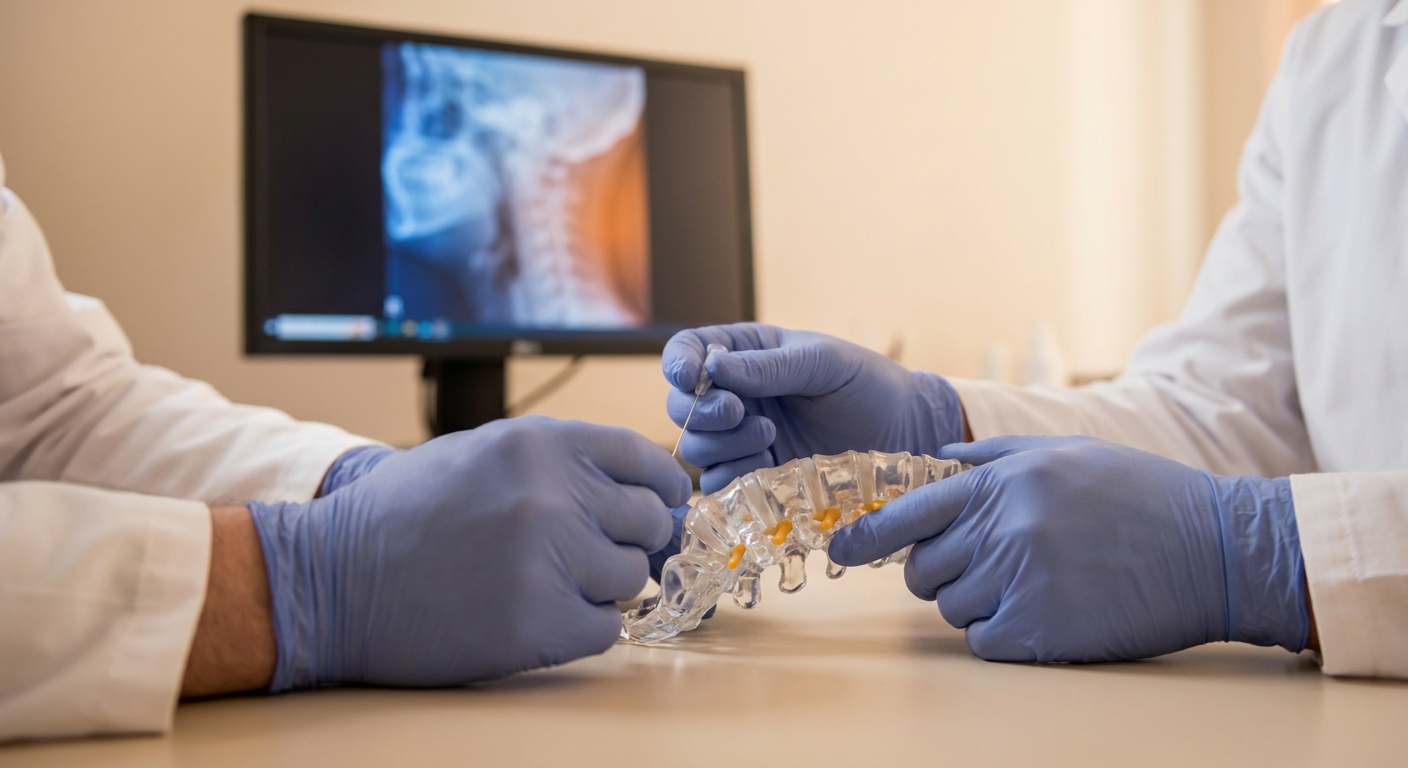
A medial branch block is a diagnostic injection that numbs the small nerves carrying pain signals from a facet joint, and it tells your doctor whether that joint is actually the source of your back pain before anyone commits to a longer-term treatment. At Hudson Pain and Spine, Dr. Saurabh Dang uses this exact test to separate facet-driven pain from disc, nerve root, or muscular causes in patients across Bergen, Passaic, and Middlesex counties.
TL;DR
- A medial branch block for back pain confirms whether a facet joint is the pain generator before RFA is scheduled.
- Relief of 70-80% or more during the anesthetic window counts as a positive diagnostic result in 2026 clinical practice.
- Two separate blocks on two different days are standard to rule out placebo response - Dr. Saurabh Dang follows this protocol.
- The injection itself takes 15 to 30 minutes under fluoroscopic guidance with a 22 to 25-gauge needle.
- A confirmed positive block makes you a candidate for radiofrequency ablation, which can last 9 to 14 months.
Why this matters
Back pain has more than a dozen possible sources - disc, nerve root, sacroiliac joint, muscle, facet joint - and imaging alone rarely settles which one is firing. An MRI can show facet arthritis in a patient who feels no pain there, and it can miss a symptomatic joint entirely.
A medial branch block solves that ambiguity by testing the joint directly instead of guessing from a picture. If numbing the nerve serving that joint kills your pain for the hours the anesthetic is active, you have your answer. If it doesn’t, your doctor moves on to the next suspect instead of treating a joint that was never the problem in 2026’s most common practice standard.
This matters because the next step after a positive block - radiofrequency ablation - is a bigger commitment than the diagnostic injection itself. Skipping the block and going straight to RFA on a guess wastes a procedure and delays real relief.
What you’ll need
- A referral or evaluation confirming facet joint pain is suspected, usually from a physical exam plus prior imaging
- A list of current medications, especially blood thinners, which may need to be paused before the procedure
- A driver, if you choose to have light sedation rather than local anesthetic alone
- Comfortable clothing that allows access to your lower or upper back
- A pain diary or notes app to track relief in the hours after injection - this is the single most important tool for the test to work
- Roughly 45 minutes to an hour set aside for the visit, including prep and recovery
The steps
1. Confirm the clinical suspicion first
A medial branch block isn’t a screening test you run on every back pain patient - it’s ordered when exam findings point to a specific joint level. Dr. Saurabh Dang typically checks for pain with extension and rotation of the spine, tenderness over specific facet levels, and a pattern that matches known facet referral zones before ordering the block.
Skipping this step and jumping straight to injections wastes time on joints that were never likely candidates. Expect your doctor to identify one or two specific spinal levels before scheduling anything.
2. Schedule the diagnostic block
The test is done as an outpatient procedure, usually at one of Hudson Pain and Spine’s Englewood, Woodland Park, or Edison locations. You’ll be positioned face-down on a fluoroscopy table so the physician can guide the needle with live X-ray imaging.
Most patients need no sedation - local numbing at the skin is enough. Plan for a same-day return to normal activity, though driving right after is discouraged if you did take a mild sedative.
3. Understand what happens during the injection
After the skin is numbed, a thin needle - typically 22 to 25 gauge - is guided under fluoroscopy to the medial branch nerve near the targeted facet joint. A small volume of local anesthetic, often 0.5 to 1 mL per level, is injected directly onto the nerve.
The whole procedure takes 15 to 30 minutes including setup and imaging confirmation. You’ll feel pressure at the injection site but the anesthetic itself should not cause significant new pain.
4. Track your relief in the following hours
This step is the actual diagnosis. Write down your pain level before the injection and check it again at 30 minutes, 1 hour, 2 hours, and before bed. The anesthetic used typically works for several hours, and a positive result means 70-80% or greater relief during that window, ideally paired with an ability to do a movement that used to hurt.
Common mistake: patients rate general “feeling better” instead of specifically testing the movement or position that reproduced their pain before the injection. Test the actual trigger movement, not just resting comfort.
5. Repeat on a second day to confirm
A single block has a meaningful false-positive rate, so the standard protocol calls for a second block on a separate day, sometimes using a different anesthetic with a different duration of action. If both blocks produce concordant relief, the facet joint is confirmed as a genuine pain generator rather than a placebo response.
This two-block approach is why the full diagnostic process can take two to three weeks from first injection to final confirmation, not a single visit.
6. Discuss radiofrequency ablation if both blocks are positive
A confirmed positive result on both blocks makes you a strong candidate for radiofrequency ablation for facet joint pain, which uses heat to disable the same medial branch nerves for longer-lasting relief - often 9 to 14 months per treatment cycle. Without the diagnostic block confirming the joint, RFA is a guess instead of a targeted treatment.
If the second block doesn’t reproduce the first block’s relief, your doctor rules out that facet level and looks at disc, nerve root, or sacroiliac sources instead.
7. Plan your short recovery window
Most patients resume normal activity within 24 hours. Soreness at the injection site is common for one to two days and typically resolves with ice and an over-the-counter anti-inflammatory, unless your doctor advises otherwise given your medication list.
Talk to a pain specialist in NJ
Schedule an evaluation for facet joint pain at Hudson Pain and Spine.
Troubleshooting
- Relief lasted only a few minutes, not hours. This usually means the anesthetic missed the target nerve rather than the joint being negative - discuss repeating the injection with imaging confirmation before ruling out the level.
- Pain came back within a day after both blocks were positive. That’s expected. The diagnostic anesthetic wears off; the point was confirmation, not treatment. RFA is the next conversation.
- No relief on either block. The facet joint at that level is likely not your pain generator. Your doctor should reassess for disc or nerve root causes, including options covered in non-surgical treatments for degenerative disc disease.
- Bruising or soreness beyond three days. Rare, but worth a call to the office rather than waiting it out, especially if you’re on any blood thinner.
- Relief on block one but not block two. A discordant result means the facet level is inconclusive. Some practices order a third confirmatory block before deciding either way.
- You’re not sure the pain you’re tracking is the same pain you came in for. Write down the specific movement or position that triggers your usual pain before the procedure, so you have a fixed reference point during the tracking window.
Tools and resources
- A same-day pain diary (paper or phone app) to log relief at set intervals
- Prior MRI or X-ray reports for your doctor to correlate with exam findings
- Background reading on how radiofrequency ablation treats chronic low back pain if your blocks come back positive
- A follow-up plan for low-impact exercises for chronic low back pain once the diagnostic phase is done and you’re cleared for movement
What to do next
Once your medial branch blocks confirm a facet joint as the source, ask your doctor about timing RFA and about returning to work safely after a pain procedure so you don’t lose recovery time to activity you could have modified instead.
FAQ
What is a medial branch block for back pain used for?
A medial branch block for back pain is a diagnostic injection that numbs the nerve supplying a facet joint to confirm whether that joint is causing your pain. It’s a test, not a long-term treatment, and it typically precedes radiofrequency ablation.
How long does relief from a medial branch block last?
Relief from the local anesthetic used in a medial branch block typically lasts a few hours, matching the duration of the anesthetic itself. Longer-lasting relief comes later from radiofrequency ablation if the block confirms the facet joint as the source.
Is a medial branch block painful?
Most patients report pressure and mild discomfort at the needle site rather than significant pain, since the skin is numbed first. The procedure itself takes 15 to 30 minutes under fluoroscopic guidance.
Why do I need two medial branch blocks instead of one?
A single block carries a meaningful false-positive rate, so a second block on a separate day confirms the result isn’t a placebo response. Concordant relief on both blocks is what qualifies a patient for radiofrequency ablation.
What happens after a positive medial branch block?
A positive result on both diagnostic blocks typically leads to a conversation about radiofrequency ablation, which disables the same nerves for longer-lasting relief, often 9 to 14 months per cycle. Your doctor will also confirm the exact spinal levels involved.
How much does a medial branch block cost in 2026?
Cost varies by insurance coverage, number of levels tested, and location, so check with your provider and your insurance plan directly. Most diagnostic pain procedures in New Jersey are billed through medical insurance rather than paid out of pocket in full.
Can a medial branch block make my pain worse?
Temporary soreness at the injection site is common for one to two days, but the block itself is not expected to worsen your underlying back pain. Persistent new pain beyond a few days warrants a call to your provider.
Who is a candidate for a medial branch block?
Candidates are patients with suspected facet joint pain based on exam findings, such as pain with spinal extension and rotation, that hasn’t fully resolved with conservative care. Your doctor identifies the specific spinal level before ordering the test.
One last thing
The two-block protocol exists because a single medial branch block alone has a false-positive rate that clinical literature places in the 25-40% range - which is exactly why Hudson Pain and Spine doesn’t schedule radiofrequency ablation off one good result. If your doctor offers to skip the second confirmatory block in 2026, ask why: it’s the step that keeps you from getting a procedure aimed at the wrong joint.
Related guides
- How radiofrequency ablation treats chronic low back pain
- Best non-surgical treatments for degenerative disc disease
About the Medical Reviewer
Dr. Saurabh Dang is a double board-certified interventional pain management specialist serving Central and Northern New Jersey. He combines clinical expertise with a patient-centered approach to help patients find lasting relief from chronic pain conditions.
Read Full Bio →Seeking Treatment for Chronic Pain?
Dr. Dang and the team at Hudson Pain and Spine offer specialized care and advanced interventional treatments.
Ready to Find Relief from Pain?
Schedule your consultation with Dr. Saurabh Dang at our Englewood office.
Serving patients across Central and Northern New Jersey — Bergen, Passaic, and Middlesex counties.