
Peripheral Nerve Stimulation for Pain: 2026 Guide

Medically reviewed by
Dr. Saurabh Dang, MD, MBA
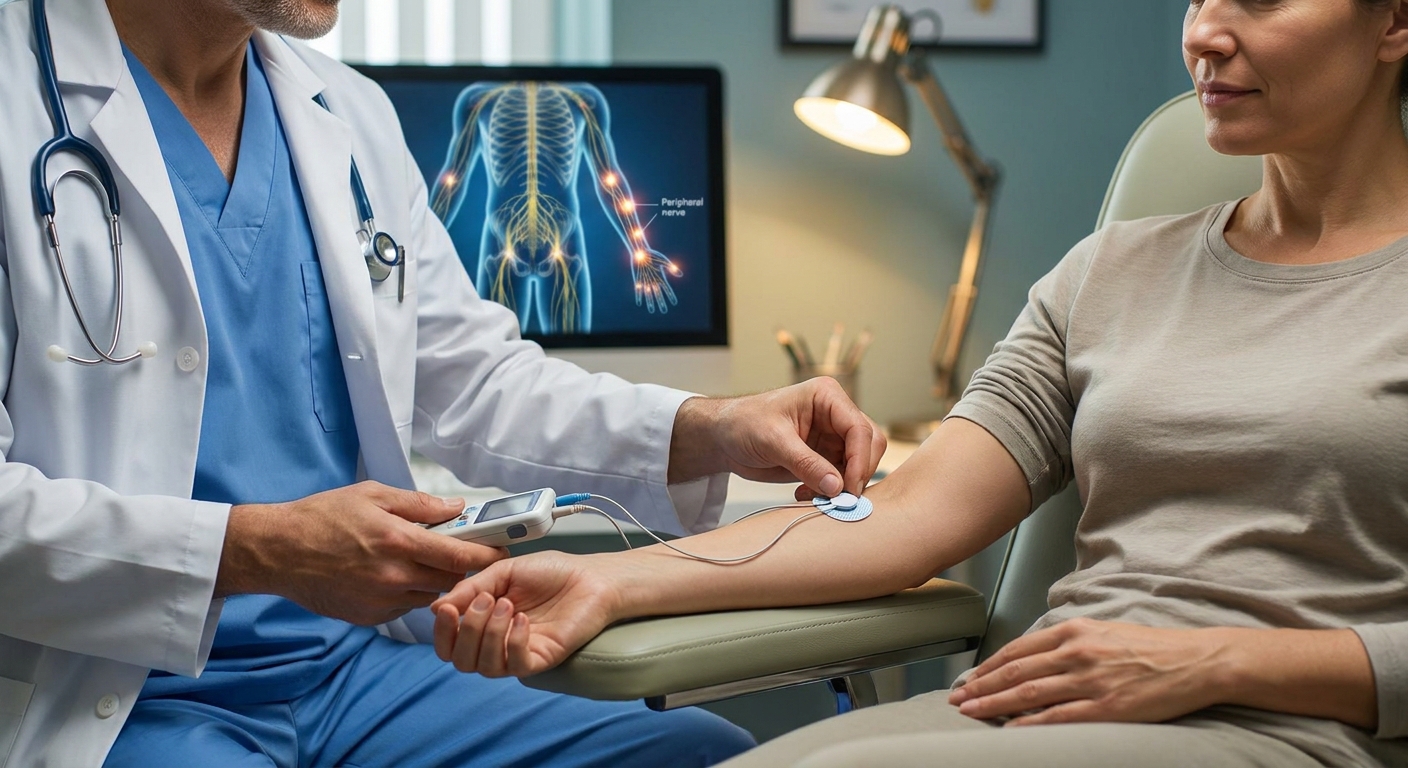
Peripheral nerve stimulation for pain uses a small implanted lead to interrupt pain signals at the nerve itself, and it’s one of the last non-surgical options before patients consider more invasive spine procedures.
TL;DR
- Peripheral nerve stimulation for pain targets nerve pain that hasn’t responded to injections or oral medication - Consider it before surgery.
- A 5-7 day trial lead precedes any permanent implant, so you test relief before committing in 2026.
- CRPS, occipital neuralgia, and post-surgical nerve pain respond best; diffuse whole-body pain does not - Skip PNS for that.
- Hudson Pain and Spine evaluates candidates at its Englewood, Woodland Park, and Edison offices before scheduling a trial.
- Most candidates need at least 50% pain relief during the trial to qualify for permanent implantation - Buy in above that mark.
Why this matters
Chronic nerve pain doesn’t behave like ordinary soreness. It burns, shoots, or tingles along a specific nerve pathway, and it often keeps going after the original injury has healed. Nerve blocks and oral medications work for some patients, but a meaningful subset of people plateau, and their pain stays severe enough to limit sleep, work, and basic movement.
Peripheral nerve stimulation for pain exists for exactly that group. It’s not a first-line treatment, and it shouldn’t be marketed as one. It’s a targeted option for patients who’ve already tried nerve blocks, epidural injections, or radiofrequency ablation and still have pain concentrated along one identifiable nerve. At Hudson Pain and Spine, candidates typically arrive after a documented trial of conservative and interventional care that hasn’t held.
What you’ll need
Before scheduling a peripheral nerve stimulation trial, confirm you have:
- A documented history of nerve pain lasting 3+ months that hasn’t resolved with physical therapy or medication
- Prior imaging (MRI or CT) showing no correctable structural cause like a compressive herniated disc
- Records from at least one prior interventional treatment (nerve block, epidural, or RFA) showing partial or short-lived relief
- Clearance for a brief outpatient procedure - no general anesthesia is required for the trial
- 5-7 days set aside for the trial period, since the external device stays taped to the skin during that window
- Insurance pre-authorization documentation, which most carriers require before the permanent implant
The process, step by step
1. Confirm the pain source with a diagnostic evaluation
A pain specialist maps which nerve is generating the symptoms before any device gets involved. This usually means a physical exam correlating the pain distribution with a specific peripheral nerve, plus a review of prior imaging and treatment response. Skipping this step is the most common reason PNS trials fail later - stimulating the wrong nerve produces no relief no matter how well the lead is placed.
2. Rule out a correctable structural problem first
If a herniated disc or spinal stenosis is compressing the nerve, that’s often treatable with a less invasive option, and it needs to be addressed before stimulation is considered. This is why patients evaluated for herniated disc treatment without surgery sometimes get redirected away from PNS entirely once the compression resolves with injections or physical therapy. The common mistake here is treating PNS as a shortcut past a fixable problem.
3. Place the trial lead under image guidance
A thin wire electrode is inserted percutaneously - through the skin, no incision - and positioned next to the target nerve using fluoroscopic or ultrasound guidance. The procedure takes roughly 30-45 minutes and is done under local anesthesia with light sedation. The lead connects to an external generator taped to the skin, and you go home the same day.
4. Run the trial for 5 to 7 days
This is the step that separates PNS from a permanent commitment made on faith. You keep a daily log of pain scores and activity tolerance while the external stimulator runs. A trial showing 50% or greater pain reduction is the standard threshold for moving to permanent implantation - anything less usually means the nerve target was wrong or the pain has a different driver entirely.
5. Review trial results and confirm candidacy
Your pain specialist reviews the trial log against your baseline pain diary. If relief holds and function improves - better sleep, less reliance on medication, more tolerated activity - permanent implantation moves forward. If relief was partial or short-lived, the next step is reassessing the diagnosis rather than proceeding to implant.
6. Permanent implantation, if the trial succeeds
The permanent lead and a small internal pulse generator get placed in an outpatient procedure, again without general anesthesia in most cases. Recovery is typically measured in days rather than weeks, though heavy lifting and high-impact activity get restricted for a short window while the incision site heals.
7. Programming and follow-up adjustment
The device gets programmed to match your specific pain pattern, and most patients need one or two adjustment visits in the first month to fine-tune stimulation intensity. This is normal and doesn’t indicate the implant failed - PNS response often shifts as the surrounding tissue settles around the lead.
8. Return to normal activity on a graded schedule
Most patients resume desk work within a few days and physical activity within two to four weeks, depending on job demands. Anyone returning to manual labor or a physically demanding job should follow a structured plan similar to what’s outlined for returning to work safely after a pain procedure, since rushing activity too early is the most common cause of early lead irritation.
Find out if you’re a PNS candidate
Board-certified evaluation across Englewood, Woodland Park, and Edison offices.
Troubleshooting
Trial relief under 50%. This usually means the wrong nerve was targeted or the pain source is mixed - part nerve, part mechanical. Reassessment before permanent implant prevents an unnecessary procedure.
Lead migration during the trial. The external trial lead is taped, not sutured, so minor shifting happens. Report any sudden drop in relief immediately rather than waiting out the full trial window.
Stimulation feels too strong or too weak after implant. This is the most common early complaint and it’s fixable with a programming visit, not a sign the device isn’t working. Most patients need at least one adjustment in month one.
Pain returns after months of good relief. Some patients need periodic reprogramming as tissue around the lead changes. This doesn’t mean the therapy failed - it means the settings need updating.
Insurance denial before permanent implant. Carriers typically require documented trial success and a history of failed conservative treatment. Keep your trial pain log and prior treatment records organized before submitting for authorization in 2026.
Confusing PNS with spinal cord stimulation. They target different anatomy - PNS treats a specific peripheral nerve, spinal cord stimulation treats broader regional pain patterns. Mixing them up during research leads patients to ask for the wrong procedure by name.
Tools and resources
- Prior imaging reports (MRI/CT) documenting the nerve-related pain source
- A daily pain log for the trial period (paper or app-based, scored 0-10)
- Records from any prior radiofrequency ablation for facet joint pain or nerve block, if attempted
- Insurance policy details on interventional pain device coverage
- A board-certified interventional pain specialist to confirm candidacy - this isn’t a self-diagnosed procedure
What to do next
If you’ve already tried a nerve block or epidural and the relief didn’t last, the next conversation is a candidacy evaluation, not another round of the same injection. Nerve pain that’s been present for months and concentrated along one nerve pathway is the profile PNS is built for. Bring your prior treatment records to the first visit - it shortens the path to a trial decision.
FAQ
What is peripheral nerve stimulation for pain?
Peripheral nerve stimulation for pain is a procedure that implants a small electrode next to a specific nerve to interrupt chronic pain signals. It’s used after nerve blocks or medication fail to give lasting relief.
How long does the PNS trial period last?
The trial period runs 5 to 7 days with an external generator taped to the skin. Relief and function are tracked daily before deciding on permanent implantation.
Is peripheral nerve stimulation the same as spinal cord stimulation?
No, they target different anatomy. PNS treats one identified peripheral nerve, while spinal cord stimulation addresses broader regional pain through the spinal cord itself.
Who is a good candidate for PNS?
Good candidates have chronic pain along one specific nerve that hasn’t responded to nerve blocks, injections, or medication for at least 3 months. Diffuse, whole-body pain without a clear nerve target is a poor fit.
How much pain relief does PNS typically provide?
A trial showing 50% or greater pain reduction is the standard benchmark for moving to permanent implantation. Relief below that threshold usually points to a different pain source.
Does insurance cover peripheral nerve stimulation?
Most carriers require documented trial success and records of failed conservative treatment before approving the permanent implant. Pre-authorization in 2026 typically takes several business days once records are submitted.
How soon can I return to work after PNS implantation?
Desk-based work is often possible within a few days, while physically demanding jobs need two to four weeks on a graded return schedule. Rushing activity too early raises the risk of lead irritation.
What conditions does PNS treat?
PNS is commonly used for complex regional pain syndrome, occipital neuralgia, and post-surgical nerve pain concentrated along one nerve. It is not typically used for widespread or poorly localized pain.
One last thing
The detail patients underestimate most: the trial period isn’t a formality, it’s the actual diagnostic test. A lead that produces strong relief in the first 48 hours often predicts permanent implant success almost exactly, which is why rushing past the trial - or skipping the pain log - throws away the most useful data point in the whole process.
Related guides
About the Medical Reviewer
Dr. Saurabh Dang is a double board-certified interventional pain management specialist serving Central and Northern New Jersey. He combines clinical expertise with a patient-centered approach to help patients find lasting relief from chronic pain conditions.
Read Full Bio →Seeking Treatment for Epidural Injections?
Dr. Dang and the team at Hudson Pain and Spine offer specialized care and advanced interventional treatments.
Ready to Find Relief from Pain?
Schedule your consultation with Dr. Saurabh Dang at our Englewood office.
Serving patients across Central and Northern New Jersey — Bergen, Passaic, and Middlesex counties.