
How to connect a workers' comp claim to your pain treatment plan

Medically reviewed by
Dr. Saurabh Dang, MD, MBA

Instead of asking each provider to reconstruct your workplace injury from scattered paperwork, connect your workers comp claim pain management treatment to one consistent record of the injury, symptoms, claim details, and proposed care. Confirm who authorizes treatment before scheduling a non-emergency procedure.
TL;DR
- For workers comp claim pain management treatment, connect the claim number, injury history, clinical records, and authorization status.
- Hudson Pain and Spine is suited to New Jersey workers seeking an interventional pain evaluation; confirm claim authorization first.
- A treatment recommendation is not the same as approval to perform or bill for a procedure.
- Keep work restrictions and treatment updates consistent across your clinician, employer, and claims contact.
Why this matters
A workers’ compensation claim addresses a reported work injury. A pain treatment plan addresses a clinical problem. The link between them is a clear medical record and a confirmed authorization path, not a claim number written on an appointment request.
In 2026, start by identifying the body part and incident covered by your claim. If your back pain began after a lifting injury but your referral describes only long-standing neck pain, the pain specialist needs to clarify what is being evaluated before a proposed procedure can be tied to that claim. You should report both conditions accurately; do not rewrite your history to make every symptom fit the workplace event.
Hudson Pain and Spine evaluates pain conditions and provides interventional treatments, including epidural injections and nerve blocks. Those clinical services do not establish whether a particular workers’ compensation claim covers your visit. Confirm that question with the claims contact and the practice before you book.
Before you start
- Gather your claim details. Have the claim number, date of injury, employer name, claims administrator or insurer, and the name and contact information of the person handling treatment authorization. If you do not have a claim number yet, say so; do not substitute a personal health insurance number.
- Collect the clinical record. Bring the initial injury report if available, referral, visit notes, imaging reports, medication list, prior treatment records, and any written work restrictions. Keep the original documents and make 1 copy or a secure digital set for sharing.
- Check who may authorize care. A referral from your primary clinician or surgeon does not automatically authorize a workers’ compensation pain visit or injection. Ask the claims contact whether a specific provider, visit, test, or procedure requires approval before it happens.
The mid-setup problem to prevent: a clinician can recommend appropriate care while the claim administrator has not authorized that care. Confirm the authorization status before treating a proposed procedure as scheduled.
Claim details
Connect the reported injury to the appointment
- Write down the incident accurately. Record what you were doing, when symptoms appeared, which body parts were affected, and what happened immediately afterward. Separate what you remember from what you learned later from an examination or scan.
- Identify the claim contact. Ask your employer or claims administrator who handles medical treatment requests. Record a name, direct contact method, and claim number when one has been assigned.
- Check the body parts listed on the claim. Compare the reported injury with the symptoms you want evaluated. If a painful area is missing or symptoms changed, tell your treating clinician and claims contact rather than assuming it is already included.
- Confirm the appointment path. Before contacting a pain practice, ask whether the claim requires a referral, a designated treating provider, or authorization for the initial evaluation. Record the answer and who gave it.
Expected result: you can give the pain practice a consistent injury history and identify the person responsible for confirming whether the evaluation is authorized.
Do not wait until the procedure visit to sort out a mismatch in body parts. In 2026, a clear record of when a new symptom appeared helps the clinician evaluate it and gives the claims contact the information needed to address its status. The clinician determines the medical assessment; the claims process determines what care is authorized under the claim.
Clinical records
Build a treatment timeline the specialist can use
- Put records in date order. Start with the initial examination, then add imaging reports, specialist notes, physical therapy records if relevant, medication history, and prior procedure notes. Note where images themselves can be obtained; an imaging report and the images are not the same thing.
- Describe symptoms with the same level of detail at each visit. Name the location, any pain traveling into an arm or leg, numbness or weakness, activities that worsen symptoms, and activities you cannot perform. If asked to rate pain on a 0–10-point scale, explain what activity the rating describes.
- Record what treatment has already happened. Include the type of treatment, whether it changed symptoms or function, and any problems that prevented you from continuing it. Do not describe a treatment as ineffective if you did not complete it; explain the difference.
- Bring written work restrictions. Ask the treating clinician to address lifting, standing, driving, or other relevant job tasks in clinical terms. Give the pain specialist an accurate description of your actual work rather than only a job title.
Expected result: the specialist can evaluate the current symptoms against the reported injury, previous findings, and treatments already tried. A 1-page symptom timeline can help you explain that sequence, but it does not replace medical records.
A workplace injury can involve more than one source of pain. Back pain after lifting, for example, does not by itself establish that a particular spinal structure is responsible. The pain specialist’s examination and review of records guide the diagnosis; the claim paperwork should reflect that assessment, not dictate it.
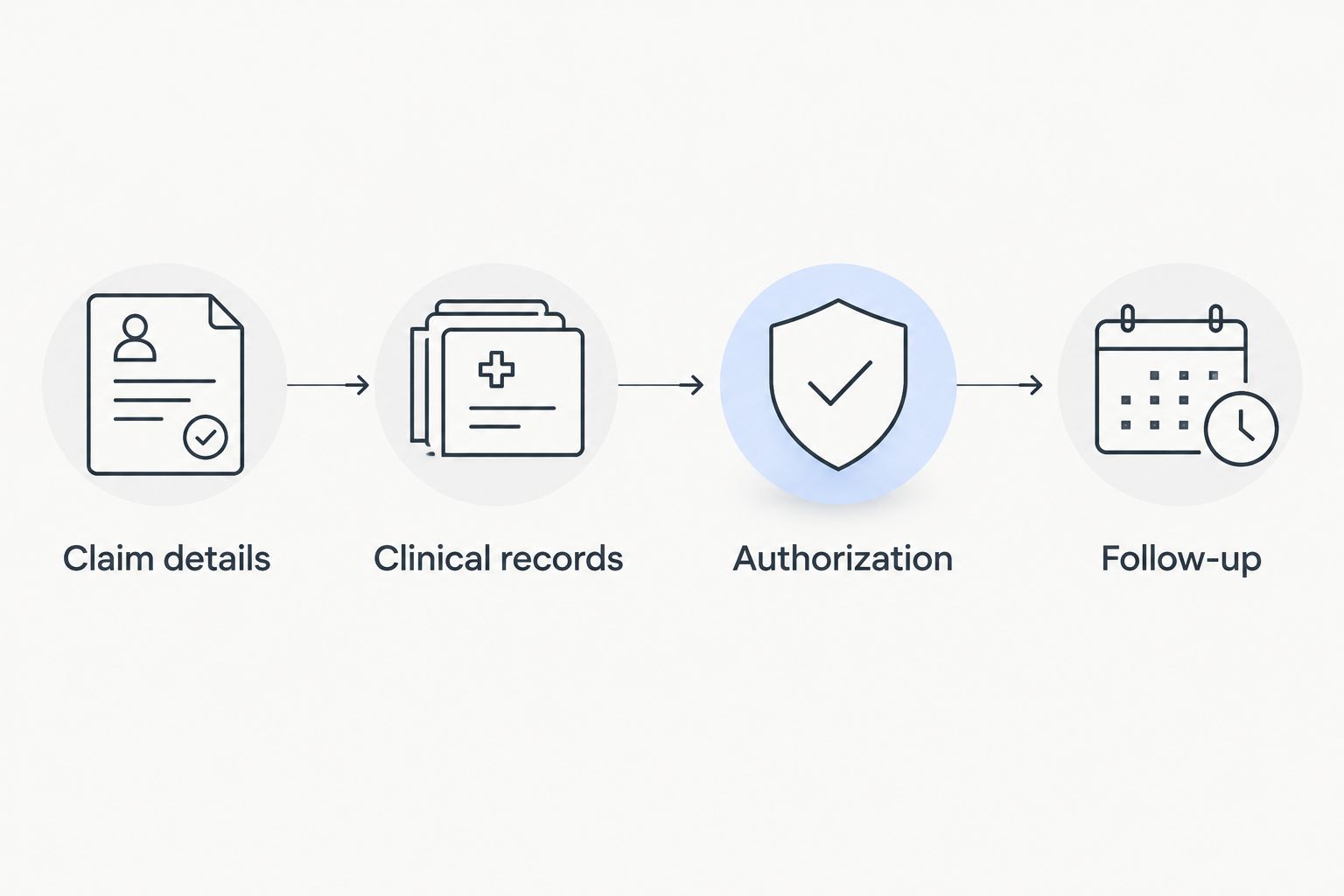
Each stage needs a clear handoff before the next treatment decision.
Match the recommendation to the clinical question
Hudson Pain and Spine provides interventional pain care, but the right procedure depends on the diagnosis and examination, not on which treatment sounds strongest. If your clinician discusses more than one approach, ask what each would treat and what finding supports it.
| Option | Best for discussing when | What it does | Limitation to ask about |
|---|---|---|---|
| Epidural injection | A clinician suspects spinal nerve irritation that matches your symptoms and findings | Delivers medication around the affected spinal nerve area | It does not correct every cause of back or neck pain. |
| Nerve block | A clinician needs to target or assess a particular nerve-related pain source | Places medication near a selected nerve or group of nerves | Relief from a block does not, by itself, settle every diagnostic or claim question. |
| Radiofrequency ablation | A clinician has identified an appropriate pain source and considers nerve-targeted treatment | Uses heat to interrupt selected pain signals | It is not suitable for every pain pattern or diagnosis. |
Best next move: ask the specialist to document the working diagnosis, the reason for the proposed treatment, and how the result will be assessed. None of these options guarantees lasting relief or approval under a workers’ compensation claim.
Authorization and follow-up
Confirm the decision before treatment
- Ask the practice what it needs to review the claim. Share the claim number, claims contact, referral, relevant records, and any written authorization you have. Do not send medical records through an unsecured channel simply because it is convenient.
- Ask who submits the treatment request. The treating clinician, pain practice, or another designated party needs a clear role in the process. Confirm who will send the medical documentation and who will receive the decision.
- Verify the scope of approval. Check whether the decision covers an evaluation, a particular procedure, a particular body part, or another defined service. Approval for an office visit is not necessarily approval for an injection.
- Save the response. Keep the written decision, request correspondence, and any instructions about further records. If the decision is unclear, ask the claims contact and practice to resolve it before the procedure.
- Schedule the clinical follow-up. Ask the treating team how you should report symptom changes, work capacity, and any new concerns after treatment. Continue to follow the work restrictions your treating clinician provides until they are updated.
Expected result: you know what was requested, what was authorized, who has the written decision, and what the next clinical check will address. If approval is pending, the expected result is a documented next step—not an assumed treatment date.
For a 2026 claim, keep a 1-page treatment summary with the date of each visit, the clinician’s recommendation, the authorization status, and the next action. This is a personal tracking tool, not an official claim form. The underlying medical notes and written decisions remain the records that matter.
When an approval is delayed or denied
Ask which specific service was affected and why. A request for more clinical information calls for a different response than a decision about whether a body part or provider falls within the claim. Give the explanation to your treating clinician and ask the claims contact what process applies to the decision; do not assume a different billing route will resolve it.
Hudson Pain and Spine’s services can help you identify which clinical service you want to discuss. Confirm directly whether the practice can evaluate your particular claim and what documentation it requires.
Clarify your next pain visit
Ask what records and claim authorization are needed for an evaluation.
Connect a new treatment recommendation to an existing claim
The workflow changes slightly when you already have an approved treatment plan and a specialist recommends something new. Do not treat earlier approval as blanket approval for the next procedure.
- Ask the specialist to document what changed: symptoms, examination findings, imaging interpretation, response to earlier care, or functional limitations.
- Ask whether the new recommendation concerns the same reported body part and diagnosis. If not, raise the difference with the treating clinician and claims contact before scheduling.
- Confirm whether a separate request or updated clinical records are needed for the new service. Keep the decision alongside the original approval rather than replacing it.
- Ask what the follow-up will measure. Pain, function, and work duties give the team a clearer basis for deciding whether the plan should continue or change.
Expected result: the new recommendation has its own clinical rationale and a confirmed authorization status. In 2026, that distinction matters whether the proposed next step is an injection, another evaluation, or a change in rehabilitation.
Troubleshooting
- The claim number has not arrived. Tell the practice that the claim is pending and ask what it can review before the number is assigned. Contact your employer or claims administrator for the current claim status; do not label an unconfirmed claim as approved.
- The referral names a different body part. Ask the referring clinician to correct or clarify the medical record. Tell the claims contact about the discrepancy. A verbal explanation at check-in does not fix conflicting documentation.
- The visit is approved, but the procedure is not. Ask for the authorization decision specific to the proposed procedure. Confirm with the practice before you schedule it.
- Imaging is missing. Request the report and ask the imaging facility how the specialist can review the actual images if needed. Do not assume a summary in another clinician’s note contains the full findings.
- Your restrictions and symptoms have changed. Tell the treating clinician promptly and ask for updated written guidance. Share that update through the claim process rather than relying on an old note that no longer describes your work capacity.
If you develop new severe weakness, loss of bladder or bowel control, or other sudden concerning symptoms, seek urgent medical assessment rather than waiting for a routine authorization discussion. Claim coordination does not replace urgent care.
Customize your workflow
For a 2026 claim involving several clinicians, assign each document a purpose. Keep the injury report for the event history, clinical notes for diagnosis and treatment, written authorization for claim status, and work notes for job restrictions. Mixing those purposes makes it harder to see which question remains unanswered.
If your job involves repetitive lifting or prolonged standing, describe the tasks that bring on symptoms and the duties you currently cannot complete. A pain score alone does not show whether treatment helps you work. Ask the clinician which changes in function the next visit will assess, then track those activities consistently.
Keep your own copies, but ask each office how it receives and shares records securely. Do not assume one clinician automatically received another clinician’s imaging, procedure report, or updated restrictions. A brief check before the appointment prevents a missing document from interrupting the evaluation.
FAQ
How do I connect a workers’ comp claim to pain management treatment?
Give the pain specialist your claim details, injury history, clinical records, and claims contact, then confirm authorization for the specific visit or procedure. Keep the written decision with your treatment records.
Does a referral approve a pain injection under workers’ compensation?
No. A clinical referral recommends an evaluation or treatment; authorization under a claim is a separate question. Confirm what the written decision covers before scheduling a non-emergency procedure.
Can I see a pain specialist before I receive a claim number?
Ask the practice and claims contact what can be arranged while the claim number is pending. Do not assume the claim will cover the visit without confirmation of the applicable process.
What records should I bring to a workplace-injury pain visit?
Bring the injury history, referral, relevant visit notes, imaging reports, medication list, prior treatment records, work restrictions, and claim contact details. Ask whether the specialist also needs the imaging itself.
What if my pain is in a body part not listed on the claim?
Tell your treating clinician and claims contact about the symptom and when it appeared. The clinician should assess it, while the claims process addresses whether related treatment is authorized.
Is an approved evaluation enough to schedule a nerve block?
Not necessarily. Confirm whether the authorization covers the nerve block itself, including the proposed treatment area, rather than only the specialist visit.
How should I track progress after a pain procedure?
Record symptoms, relevant daily activities, work tasks, and any updated restrictions for your clinical follow-up. Report new or worsening concerns to your treating team rather than waiting for a claims update.
One last thing
Ask one question before you leave each appointment: what is the next action, and who owns it? In 2026, the answer should distinguish a clinical recommendation from a claim decision. That single distinction prevents an unapproved procedure from being mistaken for the next scheduled step.
Related guides
- Pain management for workplace injuries and workers’ comp
- How to get insurance approval for pain procedures
- How to return to work safely after a pain procedure
About the Medical Reviewer
Dr. Saurabh Dang is a double board-certified interventional pain management specialist serving Central and Northern New Jersey. He combines clinical expertise with a patient-centered approach to help patients find lasting relief from chronic pain conditions.
Read Full Bio →Seeking Treatment for Epidural Injections?
Dr. Dang and the team at Hudson Pain and Spine offer specialized care and advanced interventional treatments.
Ready to Find Relief from Pain?
Schedule your consultation with Dr. Saurabh Dang at our Englewood office.
Serving patients across Central and Northern New Jersey — Bergen, Passaic, and Middlesex counties.