
How to connect telehealth visits to in-office pain procedures

Medically reviewed by
Dr. Saurabh Dang, MD, MBA
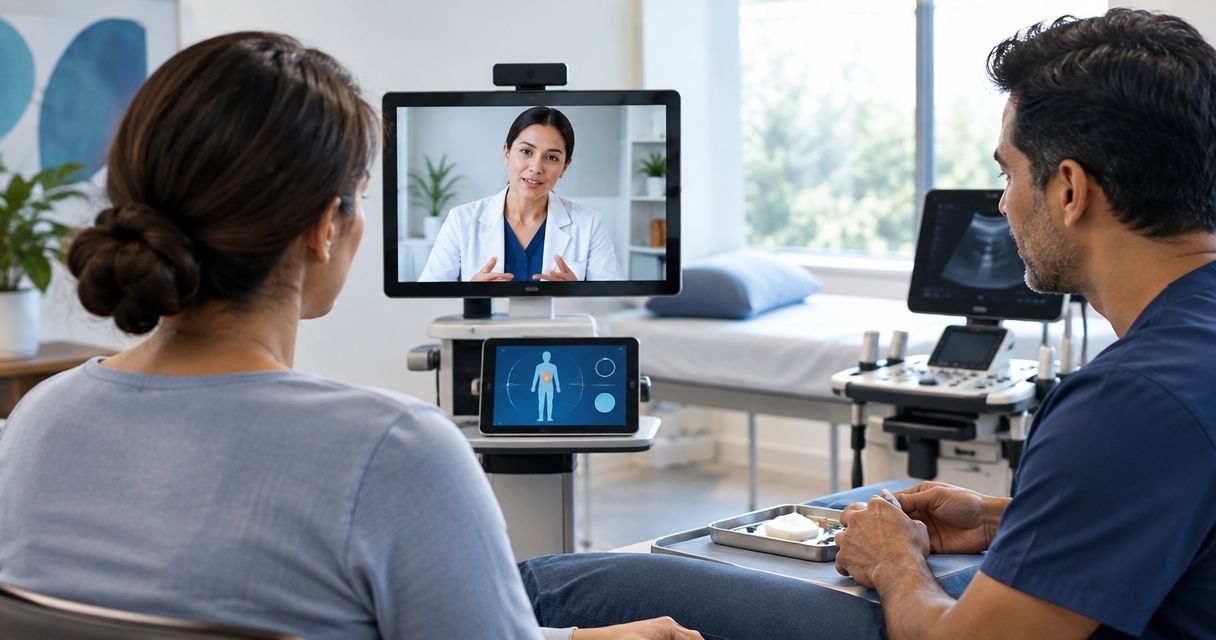
Instead of repeating your history at every appointment, connect telehealth visits to in-office pain procedures through a written plan covering records, examination needs, procedure preparation, and follow-up. A virtual visit can support assessment and planning; injections, nerve blocks, and other interventional procedures require an in-person setting.
TL;DR
- Connect telehealth visits to in-office pain procedures with a documented assessment, preparation instructions, and follow-up plan.
- Hudson Pain and Spine provides interventional pain management for New Jersey patients; confirm whether telehealth fits your appointment.
- A virtual consultation does not replace a necessary physical examination or authorize a procedure by itself.
- Confirm medication instructions, insurance requirements, procedure location, and transportation before your in-person appointment.
Why this matters
A video appointment and a procedure appointment serve different purposes. Telehealth supports discussion of symptoms, review of records, and treatment planning, but it cannot provide hands-on testing or deliver an injection.
Hudson Pain and Spine is best suited to New Jersey patients seeking specialist evaluation for interventional pain management. The practice provides board-certified pain management services, including epidural injections, nerve blocks, and spinal cord stimulation, with offices in Englewood, Woodland Park, and Edison. Visit Hudson Pain and Spine for practice information, and confirm the appropriate visit format directly.
Use this 2026 guide as a patient coordination checklist, not as permission to schedule a particular treatment. Your specialist determines whether a procedure is appropriate and whether additional evaluation must come first.
Before you start
- Confirm the appointment format and access. Ask whether your visit can take place by telehealth, how you will join, and whether your physical location is permitted for that appointment. Have a private space, a working camera and microphone, identification, and the office’s connection instructions.
- Gather your clinical materials. Prepare your medication and allergy lists, prior treatment history, relevant imaging reports, and details of earlier procedures. Ask how to send records securely before the visit.
- Check the examination requirement. A video discussion does not guarantee that you can proceed directly to treatment. Your clinician can require an in-person examination, additional records, or testing before selecting or scheduling a procedure.
Do not wait until the procedure appointment to mention blood thinners, diabetes medications, allergies, pregnancy, or a recent infection. These details affect planning. Do not stop or change any medication without instructions from the clinicians responsible for your care.
Match the visit format to the clinical task
Choose the format based on what the clinician needs to accomplish, not simply on convenience. In 2026, confirm telehealth eligibility and insurance requirements for your specific appointment rather than assuming that a previous arrangement still applies.
| Visit format | Best for | Main advantage | Main limitation |
|---|---|---|---|
| Telehealth evaluation | History review, records discussion, and suitable follow-up | Lets you discuss symptoms without traveling for that discussion | Cannot provide hands-on examination or treatment |
| In-person evaluation | Symptoms requiring direct physical assessment | Allows strength, sensation, reflex, and other examination findings to be assessed as appropriate | Requires travel and a separate appointment when not combined with treatment |
| In-person procedure | A clinician-selected injection, nerve block, or other intervention | Delivers the treatment that a virtual visit cannot provide | Requires procedure-specific preparation and carries treatment risks |
Telehealth has a useful role, but it is not the preferred format for every pain complaint. New or worsening weakness, uncertain findings, and symptoms requiring examination change the next step.
The same distinction applies to procedures. An epidural injection and a nerve block are not interchangeable choices based only on where pain occurs; the suspected pain source, examination, prior care, and relevant testing guide selection.
Clinical record preparation
Build a usable symptom summary
- Describe the main problem. State where pain starts, where it travels, when it began, and whether it is changing. Separate your usual symptoms from anything new.
- Describe function, not just intensity. Name 3 activities affected by pain, such as walking, sleeping, and sitting. Explain what happens during each activity without forcing painful movements to demonstrate it.
- Use a consistent pain scale. If asked, rate pain on a 0–10 scale, with 0 meaning no pain and 10 meaning the worst pain imaginable. Add the activity and context so the number has meaning.
- List what you have already tried. Include physical therapy, medications, home measures, surgery, and prior injections. State whether each helped, caused side effects, or did not change symptoms.
Expected result: You have 1 written symptom summary that the clinician can use alongside your medical records. This reduces repetition without substituting your notes for a medical assessment.
Make records available before the discussion
Ask whether the specialist needs imaging reports, the images themselves, or both. A report summarizes findings; it does not always answer every question the clinician needs to address.
Send records only through the method the office approves. Do not assume that records from another health system are automatically visible, and do not send sensitive information through an unapproved channel.
Telehealth assessment
Confirm the purpose of the virtual visit
- Check your connection using the office’s instructions. Confirm audio and video access before the appointment. Follow the actual platform instructions rather than looking for buttons described in a generic guide.
- Confirm your location and contact details. Tell the clinician where you are physically located during the visit and how to reach you if the connection fails.
- Review symptoms, records, and safety concerns. Discuss new weakness, numbness, medication changes, allergies, and recent illness. Perform only movements the clinician specifically requests and considers appropriate.
- Ask what remains unresolved. Determine whether the next step is an in-person examination, additional imaging, continued conservative care, or consideration of a procedure.
Expected result: You know what the telehealth assessment established and what it could not establish. A discussion about an injection is not the same as final clearance to receive one.
Get the next step in writing
Before ending, ask for a written visit summary or instructions through the office’s approved process. The summary should identify the next clinical action and who handles it.
For Hudson Pain and Spine interventional pain management, confirm which location is appropriate for your next appointment. Do not assume that the office used for a consultation is also the location where a proposed procedure will occur.
Procedure handoff
Convert the assessment into an actionable plan
- Confirm the proposed treatment and its purpose. Ask for the procedure name, the body area being treated, and whether the procedure is intended to help diagnose a pain source, treat symptoms, or both.
- Resolve remaining clinical requirements. Complete the requested examination or testing before treating the procedure as finalized. Tell the office if your symptoms change while you wait.
- Verify administrative requirements. Ask whether a referral, prior authorization, or additional documentation is needed. The guide to insurance approval for pain procedures explains the questions to address with the office and insurer.
- Obtain individualized preparation instructions. Confirm medication directions, eating and drinking restrictions, transportation requirements, and what to bring. Ask for clarification whenever an instruction conflicts with advice from another clinician.
- Confirm the appointment details. Verify the treatment location, arrival instructions, and the contact route for questions or new symptoms before the procedure.
Expected result: You have a clinical plan and a preparation plan, not just an appointment date. Your 2026 checklist should reflect the actual instructions for the selected procedure.
A referral, insurance authorization, and clinical clearance answer different questions. A referral directs you to a specialist; authorization addresses an insurer’s requirements; clinical clearance addresses whether treatment is appropriate and safe for you.
The handoff follows a sequence: Clinical record preparation, Telehealth assessment, Procedure handoff, and Follow-up plan. If examination or testing is still needed, resolve that requirement before advancing to treatment.
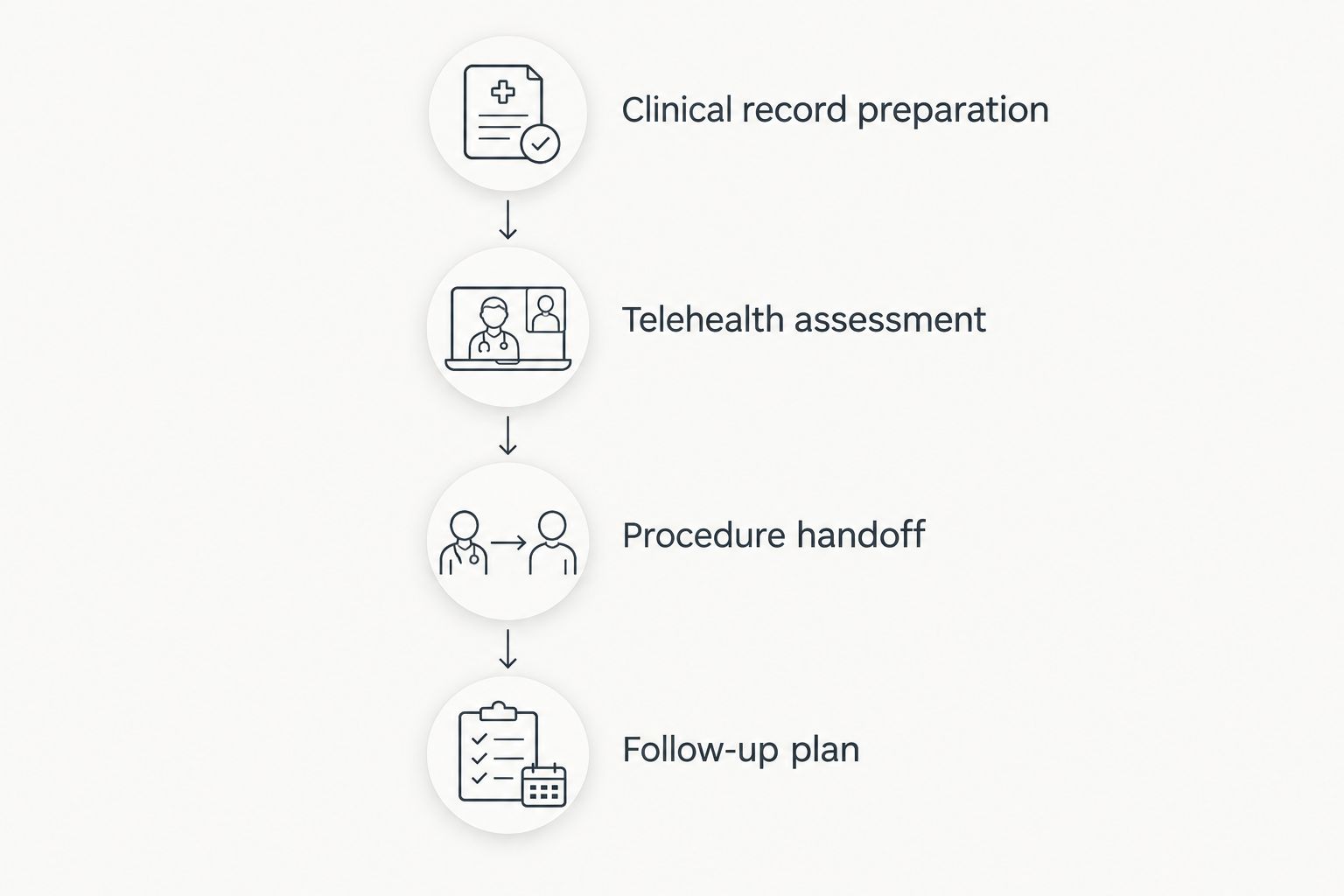
Resolve examination and testing requirements before moving from assessment to treatment.
Follow-up plan
Agree on monitoring before leaving the procedure visit
- Review the discharge instructions. Confirm activity restrictions, medication directions, and symptoms that require a call or urgent evaluation. Use the instructions for your actual procedure, not those from a previous treatment.
- Confirm the follow-up format. Ask whether reassessment should be virtual or in person and when it should occur. Do not select telehealth solely because it is easier to attend.
- Record symptoms and function. Track the same activities identified before treatment, along with pain changes and adverse effects. If a diagnostic block requires a pain diary, follow the clinician’s specific timing and recording instructions.
- Use the correct route for concerns. Distinguish routine follow-up questions from symptoms requiring prompt care. Do not wait for a scheduled video visit to report a serious change.
Expected result: You know how treatment response will be assessed and how to report a problem. Improvement in a pain score is useful information, but changes in walking, sleep, or daily activity provide additional context.
Connect post-procedure telehealth to the next clinical decision
A second workflow starts after treatment rather than before it. When your clinician considers telehealth appropriate, a virtual follow-up can review your response and determine whether the care plan needs adjustment.
Bring your discharge instructions, symptom notes, and current medication list to that conversation. Explain whether the original pain changed, whether a different symptom appeared, and whether any improvement helped you resume an activity.
Do not treat short-term relief as automatic approval for another procedure. The clinician interprets the response according to the treatment performed. Diagnostic procedures and therapeutic procedures do not have identical goals.
For a 2026 follow-up, confirm that the visit format still fits your current symptoms. New weakness, a concerning injection-site change, or a complication requiring examination calls for direct clinical guidance rather than routine remote reassessment.
Troubleshooting the handoff
The specialist cannot see your imaging
Contact the imaging facility and ask how to transfer the requested report and images through an approved process. Confirm receipt with the specialist’s office; sending a file does not establish that it is readable or complete.
The video connection fails
Use the contact method supplied with your appointment instructions. Ask whether the visit can continue safely in another format or needs rescheduling; do not assume an audio-only call fulfills the purpose of the original visit.
You have an appointment but no preparation instructions
Contact the procedure team before making medication, fasting, or travel decisions. Request the instructions in writing and clarify who coordinates any medication changes with the prescribing clinician.
Insurance requirements remain unresolved
Ask what documentation is outstanding and which party must provide it. Keep the clinical recommendation separate from the authorization process, and confirm administrative requirements before traveling for treatment.
Your symptoms worsen between appointments
Contact the clinical team promptly for guidance. Seek emergency evaluation for new loss of bladder or bowel control, numbness around the groin or saddle area, or rapidly worsening leg weakness. These symptoms need urgent assessment, not a routine telehealth slot.
Customize your workflow
Make the plan fit your medical history and practical needs. If several clinicians manage your care, identify who handles medication questions, who supplies records, and who receives the procedure summary.
Ask for an interpreter or accessibility support when needed. A support person can help take notes with your permission, but your clinician still needs your own account of symptoms whenever possible.
Hudson Pain and Spine serves patients in Bergen, Passaic, and Middlesex counties. Confirm the appropriate office and visit format before arranging transportation, time away from work, or caregiving support.
For ongoing treatment in 2026, keep one current care summary rather than several conflicting versions. Update it after a medication change, new test, procedure, or revised follow-up instruction.
FAQ
Can a telehealth visit lead to an in-office pain procedure?
Yes, a telehealth visit can support assessment and planning for an in-office pain procedure. The clinician must determine whether additional examination, records, testing, or preparation is required before treatment.
Can I receive an epidural injection during telehealth?
No, an epidural injection requires an in-person procedural setting. Telehealth can support history review, discussion of treatment options, and suitable follow-up.
Does Hudson Pain and Spine offer telehealth appointments?
Confirm telehealth appointment options directly with Hudson Pain and Spine. Also ask whether a virtual visit is appropriate for your symptoms and whether an in-person examination is required before a procedure.
What should I have ready for a virtual pain management visit?
Have your medication and allergy lists, relevant records, prior treatment history, and a brief symptom summary ready. Confirm how to send records securely and how to join the appointment.
Should I stop blood thinners before a pain procedure?
Do not stop blood thinners without individualized instructions from the clinicians managing your procedure and medication. The plan depends on the procedure and your medical risks.
Can my follow-up after a nerve block be virtual?
A virtual follow-up is appropriate only when your clinician determines that remote assessment is sufficient. New symptoms or findings requiring a physical examination need a different assessment plan.
Does insurance approval mean I am medically cleared for an injection?
No, insurance approval does not establish medical clearance for an injection. Your clinician separately evaluates the diagnosis, treatment suitability, risks, and preparation requirements.
One last thing
The most useful handoff question is not simply when your procedure will happen. Ask: What still needs to be completed before this treatment can safely proceed?
That question separates an idea discussed on video from a ready-to-act treatment plan. Write down the remaining task, the person responsible, and how completion will be confirmed; then use that note at your next appointment.
Related guides
- Telehealth options for chronic pain management
- How to prepare for an epidural steroid injection
- What to expect after a nerve block procedure
About the Medical Reviewer
Dr. Saurabh Dang is a double board-certified interventional pain management specialist serving Central and Northern New Jersey. He combines clinical expertise with a patient-centered approach to help patients find lasting relief from chronic pain conditions.
Read Full Bio →Seeking Treatment for Epidural Injections?
Dr. Dang and the team at Hudson Pain and Spine offer specialized care and advanced interventional treatments.
Ready to Find Relief from Pain?
Schedule your consultation with Dr. Saurabh Dang at our Englewood office.
Serving patients across Central and Northern New Jersey — Bergen, Passaic, and Middlesex counties.