
How to Prepare for a Pain Management Consultation

Medically reviewed by
Dr. Saurabh Dang, MD, MBA
How to Prepare for a Pain Management Consultation

A pain management consultation is a structured clinical appointment where a board-certified specialist reviews your pain history, examines you, and builds a personalized treatment plan. Preparing for this appointment is the single most effective thing you can do to get real answers and a clear path forward. Consultations typically run 30–45 minutes, which sounds like plenty of time until you realize how much ground needs to be covered. Walking in organized, with your records and questions ready, turns that window into a genuinely productive conversation.
How to prepare for a pain management consultation: your pre-appointment checklist
The documents you bring to your first visit shape everything that follows. A pain specialist cannot build an accurate picture of your condition from memory alone. You need to arrive with the right materials in hand.
Medical records and imaging
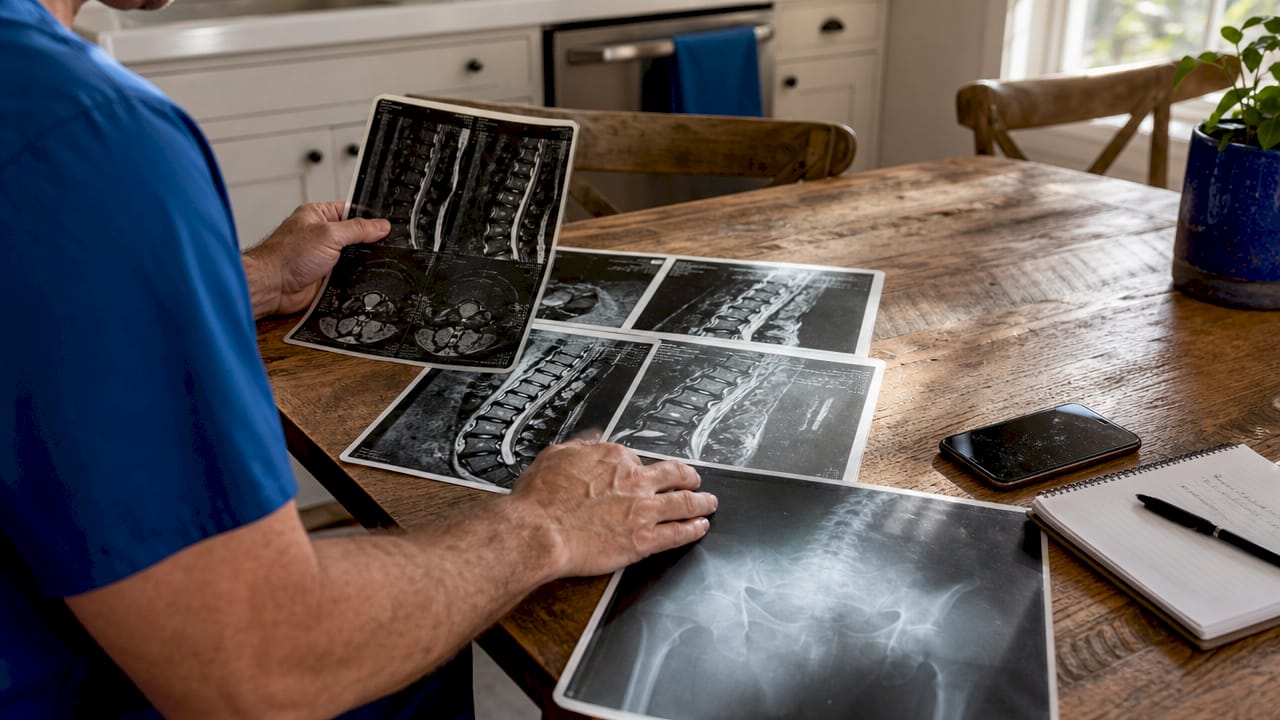
Bring physical copies or digital files of all relevant imaging: MRI scans, CT scans, and X-rays. Specialists prefer patients bring imaging directly rather than waiting on records requests from other facilities. Waiting on records transfers can delay your diagnosis by days or even weeks. If your imaging is on a CD, bring the CD. If it is a digital file, confirm the format is accessible before your appointment.
Medication and supplement list
Write out every medication you currently take, including over-the-counter drugs, vitamins, and supplements. Include the dosage and how often you take each one. Pain specialists need this list to avoid dangerous interactions and to understand what has already been tried.
Pain diary or symptom notes
A brief written log of your pain patterns is one of the most underused preparation tools. Note when pain peaks, what triggers it, what relieves it, and how it affects your daily activities. Functional limitations often carry more weight in treatment planning than a simple pain score of 7 out of 10. Telling your doctor “I can only sit for 20 minutes before the pain forces me to stand” gives far more clinical information than saying “my pain is a 7.”
Logistics and paperwork
Arrive 15–20 minutes early to complete intake forms without rushing. Many clinics, including Hudson Pain and Spine, offer new patient forms online so you can fill them out at home. Completing paperwork in advance means you spend your appointment time on your care, not on a clipboard.
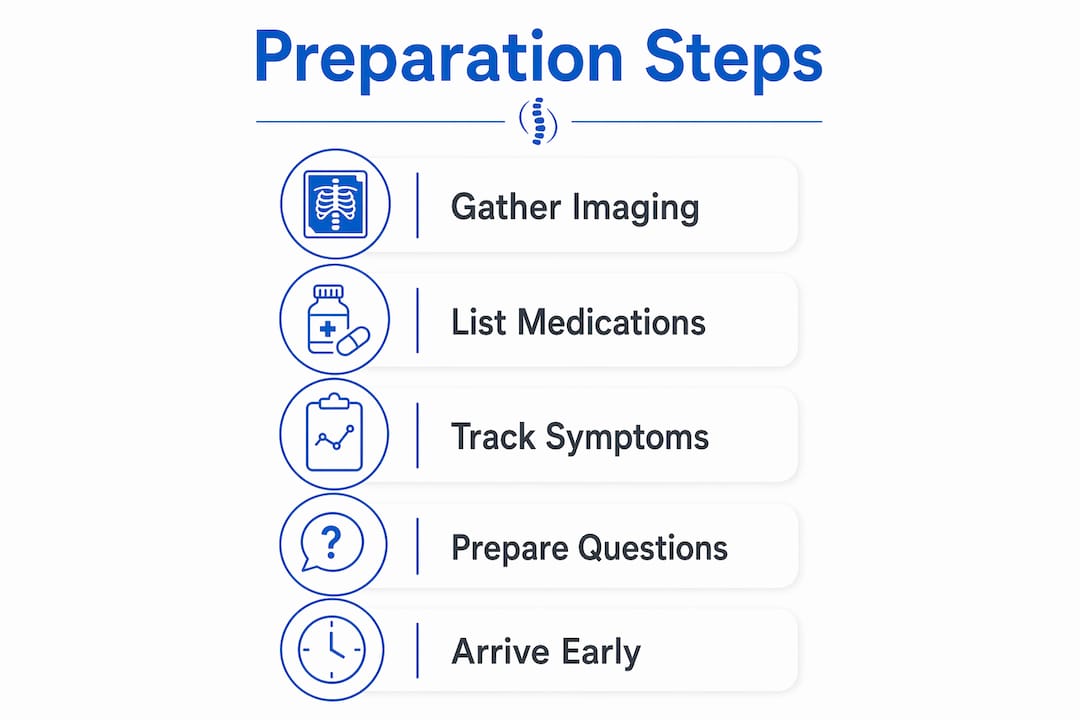
Pro Tip: Bring a written list of your questions. Nerves are real, and writing questions ahead prevents you from forgetting the things that matter most once you are in the room.
What happens during the appointment?
Understanding how a pain clinic appointment works reduces anxiety before you even walk through the door. The visit follows a predictable structure, and knowing that structure helps you respond more clearly and confidently.
- Intake review. A nurse or medical assistant collects your vitals and reviews the paperwork you completed. They may ask preliminary questions about your chief complaint.
- Medical history discussion. The specialist reviews your records, prior treatments, surgeries, and imaging. They want to understand what has been tried and what has not worked.
- Symptom interview. The doctor asks detailed questions about your pain: where it is located, what it feels like (sharp, burning, aching, shooting), when it started, and what makes it better or worse. They also ask about red flag symptoms such as bladder or bowel changes, unexplained weight loss, or fever.
- Physical examination. The specialist assesses your posture, range of motion, strength, and reflexes. Wearing loose, comfortable clothing that allows easy access to the affected area makes this exam faster and more thorough. Bring the shoes you wear most often. Footwear affects gait and can reveal biomechanical contributors to your pain.
- Diagnostic review or new orders. The doctor may review imaging you brought or order new tests such as nerve conduction studies or updated MRI scans.
Pro Tip: Focus less on describing your pain score and more on describing what you cannot do because of it. Saying “I stopped walking my dog three months ago” tells your specialist something a number never can.
What questions should you ask your pain management specialist?
A consultation is both diagnostic and educational, and your questions are as important as your answers. Patients who ask specific questions leave with clearer expectations and better outcomes. Bring this list and add your own.
- Is this specialist board-certified in pain medicine? Board certification in pain medicine from bodies such as the American Board of Anesthesiology or the American Board of Physical Medicine and Rehabilitation confirms the doctor completed an accredited fellowship and passed rigorous exams. General anesthesiology or neurology training alone does not qualify a physician as a pain specialist.
- What is your experience with interventional procedures for my condition? Ask specifically about epidural injections, nerve blocks, or spinal cord stimulation if those are relevant to your diagnosis.
- What does a non-opioid treatment plan look like for me? High-quality pain care prioritizes function over symptom suppression and avoids over-reliance on opioids. Ask what alternatives exist.
- How will we measure success? Pain specialists focus on patient-defined goals such as returning to work, sleeping through the night, or walking a certain distance. Define what success looks like for you before the appointment.
- What happens if the first treatment does not work? Ask about the backup plan. A good specialist has one.
- Who coordinates my care with my other doctors? Pain management rarely works in isolation. Ask how the specialist communicates with your primary care physician or surgeon.
If anything is unclear, ask for clarification before you leave. You have every right to understand your diagnosis and treatment options fully.
How to describe your pain so your doctor actually understands it
Clear communication is a clinical skill, and you can practice it before your appointment. Vague descriptions slow down diagnosis. Specific ones accelerate it.
Use this framework when describing your pain:
- Location: Point to the exact spot. Is it one-sided or bilateral? Does it radiate down your leg or arm?
- Quality: Is it sharp, dull, burning, stabbing, or throbbing? Each word points toward a different mechanism.
- Timing: Is it constant or intermittent? Does it wake you at night? Is it worse in the morning or after activity?
- Triggers and relievers: What makes it worse? Sitting, standing, bending, cold weather, stress? What helps? Heat, rest, a specific position?
- Functional impact: Documenting specific functional limitations gives clinicians more useful data than pain scores alone. Write down your sitting tolerance, walking distance, and any activities you have stopped doing.
Be open about sleep disruption, mood changes, and how pain affects your relationships and work. These factors directly influence treatment planning. If your daily commute aggravates your symptoms, say so. Context like that helps a specialist understand the full picture of your condition.
Bring the shoes you wear most days. Bring any braces or supports you use. These physical details give the specialist context that no form can capture.
Key takeaways
Preparing thoroughly for your pain management consultation is the most direct way to get an accurate diagnosis, a personalized treatment plan, and a clear path toward better function.
| Point | Details |
|---|---|
| Bring your imaging directly | Carry MRI, CT, or X-ray files yourself to avoid records delays and ensure full review. |
| Document functional limits | Describe what you cannot do, not just your pain score, for more useful clinical insight. |
| Prepare written questions | Write questions in advance so nerves do not cause you to forget key concerns. |
| Verify board certification | Confirm your specialist is certified in pain medicine, not just a related specialty. |
| Define your success goals | Tell your doctor what you want to return to: work, sleep, walking, or daily activities. |
What I have learned from watching patients walk into consultations unprepared
The patients who get the most out of a first consultation are rarely the ones in the most pain. They are the ones who came prepared. I have seen patients with severe, complex conditions leave with a clear plan because they brought organized records, described their functional losses clearly, and asked the right questions. I have also seen patients with straightforward conditions leave confused because they could not recall their medication names or describe when their pain started.
The single biggest missed opportunity I see is patients focusing entirely on pain intensity and ignoring functional impact. Telling a specialist your pain is an 8 out of 10 is less useful than telling them you stopped driving three months ago because turning your neck causes shooting pain down your arm. That second description points directly toward a diagnosis.
Ask about opioid-sparing options early. Clinicians view the consultation as a partnership to co-define success, and that means your goals matter as much as your imaging. If you leave with doubts about a proposed treatment, seek clarification or a second opinion before proceeding. That is not being difficult. That is being a good advocate for yourself.
The consultation is not the finish line. It is the starting point for a care plan built around your life, not just your MRI.
Hudson Pain and Spine is ready when you are
Hudson Pain and Spine serves patients across Bergen, Passaic, and Middlesex counties in New Jersey with a clinical team of double board-certified specialists in pain medicine and anesthesiology. The clinic offers interventional pain management services including epidural injections, nerve blocks, spinal cord stimulation, and Botox therapy for headaches. Whether you are preparing for a first consultation or ready to schedule one, Hudson Pain and Spine makes the process straightforward. Download new patient forms online before your visit, and come in with everything you need to make your appointment count. Book your consultation at a location convenient to you.
FAQ
How long does a first pain management consultation take?
Initial consultations typically last 30–45 minutes and cover medical history, prior treatments, a physical exam, and imaging review. Follow-up visits are usually shorter.
What should I bring to my pain clinic appointment?
Bring all relevant imaging (MRI, CT, X-rays), a complete medication list, a written pain diary, and a list of questions. Arriving 15–20 minutes early gives you time to complete intake paperwork without rushing.
What clothing should I wear to a pain management appointment?
Wear loose, comfortable clothing that allows easy access to the area being examined. Bring the shoes you wear most often, as footwear can reveal biomechanical contributors to your pain.
How do I know if my pain specialist is qualified?
Verify that your specialist holds board certification in pain medicine from a recognized body such as the American Board of Anesthesiology or the American Board of Physical Medicine and Rehabilitation. Board certification confirms the doctor completed an accredited pain medicine fellowship and passed qualifying exams.
What questions should I ask at my first pain management visit?
Ask about the specialist’s experience with your specific condition, what non-opioid treatment options exist, how success will be measured, and what the plan is if the first treatment does not work. Writing your questions down beforehand prevents you from forgetting them under pressure.
Recommended
- Pain Management Services Englewood NJ | Hudson Pain and Spine
- Living with Osteoarthritis: How Interventional Pain Management Can Help | Hudson Pain and Spine Blog
- Enough is enough: advanced treatment for chronic pain | Hudson Pain and Spine Blog
- Understanding the Golf Swing’s Impact on Pain | Hudson Pain and Spine Blog
About the Medical Reviewer
Dr. Saurabh Dang is a double board-certified interventional pain management specialist serving Central and Northern New Jersey. He combines clinical expertise with a patient-centered approach to help patients find lasting relief from chronic pain conditions.
Read Full Bio →Seeking Treatment for Chronic Pain?
Dr. Dang and the team at Hudson Pain and Spine offer specialized care and advanced interventional treatments.
Ready to Find Relief from Pain?
Schedule your consultation with Dr. Saurabh Dang at our Englewood office.
Serving patients across Central and Northern New Jersey — Bergen, Passaic, and Middlesex counties.