
Gout Flare-Up Treatment: Fast Relief Steps (2026)

Medically reviewed by
Dr. Saurabh Dang, MD, MBA
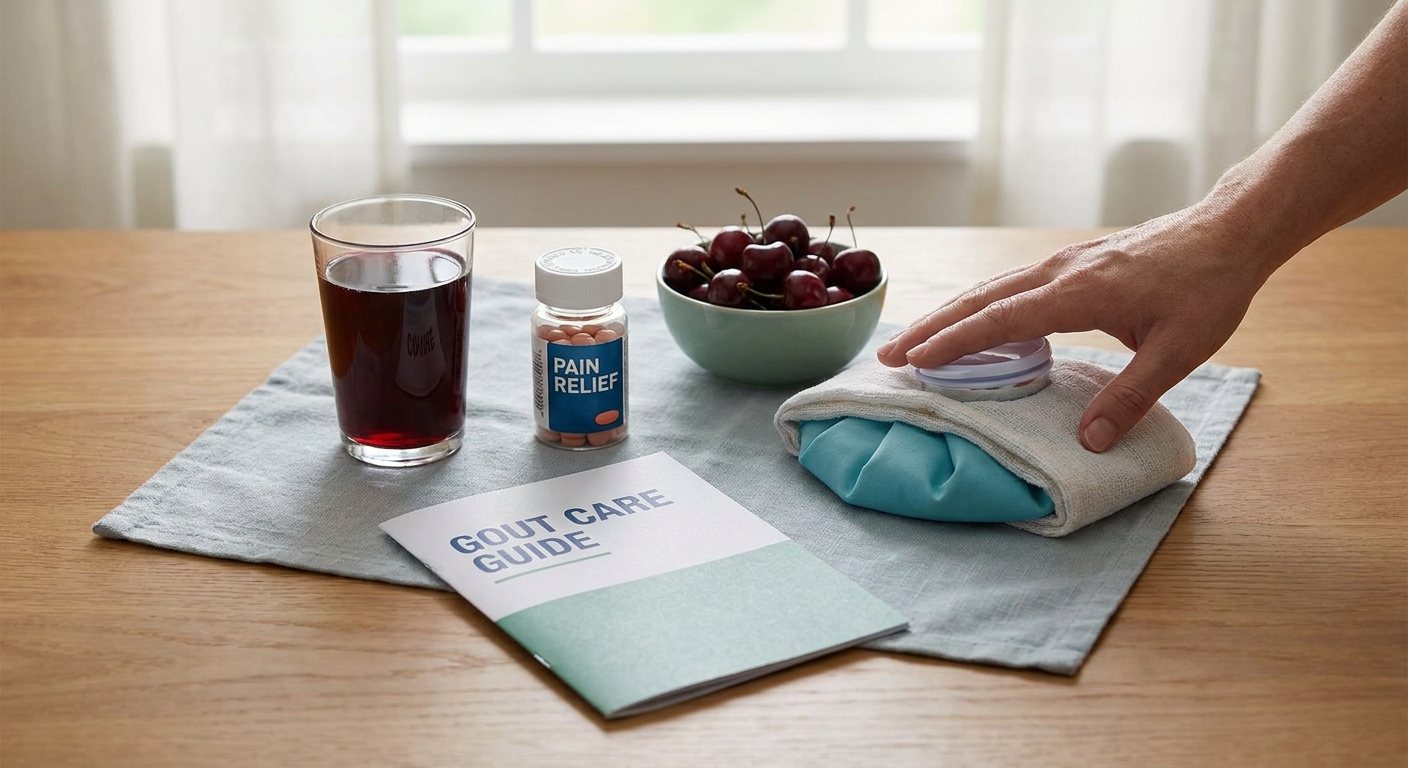
A gout flare can turn a normal Tuesday into a limp within hours — the joint swells, turns red, and hurts too much for a bedsheet to touch it. Here’s the fastest way to bring a flare down using medication, ice, and rest, plus when a flare signals a bigger joint problem worth seeing a specialist about.
TL;DR
Gout flare up treatment works best in the first 12 to 24 hours: NSAIDs or colchicine, ice for 15-20 minutes at a time, elevation, and hydration knock down most flares within 3 to 5 days instead of the 10 to 14 days an untreated flare can drag on. Verdict: treat immediately, don’t wait it out. If flares hit more than twice a year or a joint stays swollen after the attack passes, that’s chronic joint pain territory, and a practice like Hudson Pain and Spine in NJ, which treats arthritis and joint pain alongside back and neck conditions, is worth a call. Don’t start or stop urate-lowering drugs like allopurinol mid-flare — it can prolong the attack.
Why This Matters
Gout is one of the most painful forms of arthritis, and the first attack usually lands in the big toe joint — roughly half of first-time flares start there, according to widely cited rheumatology literature. Untreated, a flare peaks in intensity within 12 to 24 hours and can linger for 7 to 14 days.
Treated early and correctly, most flares resolve in 3 to 5 days. The gap between those two numbers is the entire reason speed matters here — the first dose of medication you take, and how fast you take it, decides how many days you lose to this.
What You’ll Need
- An NSAID you can tolerate (ibuprofen, naproxen, or a prescription-strength option like indomethacin)
- Colchicine, if your doctor has prescribed it before for gout (works best started within the first 12-24 hours)
- A cold pack or bag of ice, plus a thin towel to protect skin
- A way to elevate the joint above heart level (pillow, ottoman, wedge)
- Water — aim for 8-10 glasses over the day
- Loose, open footwear if the flare is in the foot or toe
- A follow-up plan with a physician if this is your first flare or symptoms don’t improve in 48 hours
The Steps
1. Identify it fast — don’t assume it’s an injury
Gout flares come on fast: a joint that was fine yesterday is hot, swollen, and exquisitely tender today, often overnight. The classic pattern is a single joint — big toe, ankle, or knee — turning red and shiny within hours.
Why it matters: treating an infection or fracture like gout (or vice versa) wastes the critical first-24-hour window. If there’s fever above 101°F alongside the joint pain, treat that as a possible joint infection and get seen same-day, not as a routine gout flare.
Common mistake: waiting a day or two to “see if it’s just a sprain” before starting treatment. That delay alone can add days to the total flare duration.
2. Start an NSAID or colchicine within the first 24 hours
Over-the-counter naproxen or ibuprofen at full anti-inflammatory doses works for many people; colchicine is prescription-only but is often more effective the earlier it’s started, ideally within 12 hours of flare onset.
Specifics: don’t take NSAIDs on an empty stomach, and don’t combine ibuprofen and naproxen — pick one. If you have kidney disease, a history of ulcers, or you’re on blood thinners, call your doctor before taking either; a short course of oral corticosteroids may be the safer option.
Expected outcome: noticeable pain reduction within 24 to 48 hours if the medication is started early enough.
3. Ice the joint for 15-20 minutes every few hours
Cold reduces the inflammatory swelling that’s driving the pain — not just the sensation of pain itself.
Wrap the ice pack in a thin towel and apply for 15-20 minutes, then give the skin at least 20 minutes to rewarm before icing again. Repeat 4-6 times over the day for the first 48 hours.
Common mistake: applying ice directly to skin for too long, which risks frostbite on a joint that already has compromised circulation from swelling.
4. Elevate and rest the joint — skip the workout
Keep the affected joint above heart level whenever you’re sitting or lying down. This reduces the pooling of fluid that keeps a swollen joint swollen.
Skip weight-bearing activity on that joint entirely for the first 48-72 hours. Walking on an inflamed big toe or ankle just re-irritates the joint capsule and extends the flare.
Expected outcome: swelling should visibly start receding by day 2 or 3 if rest and ice are consistent.
5. Hydrate and cut triggers for the next 5-7 days
Drink 8-10 glasses of water daily during and immediately after a flare — dehydration concentrates uric acid in the blood. Cut alcohol entirely, especially beer, and dial back red meat, organ meats, and shellfish for the week.
Sugary drinks with high-fructose corn syrup are an underrated trigger; cutting soda during a flare week is a low-effort move with real payoff.
Common mistake: assuming diet changes will treat the acute flare. They won’t move the needle on today’s pain — they reduce the odds of the next one.
6. Do not touch your urate-lowering medication
If you take allopurinol or febuxostat for long-term uric acid control, keep taking your normal dose during a flare — don’t stop it, and don’t start it for the first time mid-flare either.
Starting or stopping these drugs during an active flare can cause uric acid levels to shift suddenly, which paradoxically prolongs or worsens the attack. This is one of the most common mistakes patients make on their own.
7. Call a doctor if it’s your first flare, or if it’s not improving in 48 hours
A first-time gout flare deserves an actual diagnosis — joint fluid aspiration to confirm urate crystals rules out infection and other types of arthritis that mimic gout closely.
If pain and swelling haven’t meaningfully improved after 2 days of consistent treatment, or if fever develops, that’s a same-day medical visit, not a wait-and-see situation.
Troubleshooting
- NSAIDs aren’t touching the pain after 24 hours — you may need a short corticosteroid course (oral or an injection into the joint); this requires a prescription, so call your doctor rather than doubling the NSAID dose.
- The joint looks infected (increasing redness, red streaking, fever) — stop home treatment and get seen same-day; septic joints need antibiotics, not ice.
- This is your third flare this year — that crosses from “occasional flare” into a pattern that usually needs a uric acid-lowering medication conversation, not just flare-by-flare treatment.
- The joint stays swollen and stiff even after the flare passes — chronic joint inflammation after repeat flares can start to resemble other forms of arthritis pain, which is where a pain management evaluation becomes relevant.
- You can’t take NSAIDs or colchicine due to kidney or liver issues — corticosteroids, oral or injected, are the standard alternative; this is a conversation for a physician, not a pharmacist.
- Pain keeps returning to the same joint within weeks — that pattern, plus any lingering low back or neck pain that flares alongside joint attacks, is worth mentioning to a pain specialist rather than treating each episode in isolation.
Tools and Resources
- A cold pack rotation (two packs so one is always in the freezer)
- A pulse oximeter or thermometer if you’re monitoring for infection signs
- A symptom log — date, joint, duration, trigger foods — to spot patterns
- If gout flares are layering on top of existing back, neck, or joint pain that isn’t resolving, Hudson Pain and Spine treats arthritis and chronic joint pain alongside spine conditions from offices in Englewood, Woodland Park, and Edison, NJ
- Once the acute flare has cleared, easing back into movement with low-impact exercises for chronic joint pain protects the joint from the stiffness that follows a flare
What To Do Next
Once the flare clears, the real work is preventing the next one — uric acid testing, a look at diet triggers, and in some cases a daily urate-lowering medication. If gout is one piece of a bigger chronic pain picture that includes back, neck, or recurring joint issues, that’s a conversation for a pain management evaluation rather than another round of at-home ice and NSAIDs.
FAQ
What is the fastest way to treat a gout flare-up? NSAIDs or colchicine started within the first 12-24 hours, combined with ice for 15-20 minutes several times a day and joint elevation, brings most flares down in 3 to 5 days instead of 10-14.
Is ice or heat better for a gout flare? Ice. Heat increases blood flow to an already inflamed joint and tends to worsen swelling during an active flare; save heat for stiffness after the flare has resolved.
How long does a gout flare usually last? Untreated, 7 to 14 days; treated promptly with NSAIDs or colchicine, most flares resolve in 3 to 5 days.
Should I stop taking allopurinol during a gout flare? No. Keep your current dose steady during a flare — stopping or starting urate-lowering medication mid-attack can prolong the flare rather than help it.
Can diet alone stop a gout flare once it starts? No. Cutting alcohol, red meat, and sugary drinks reduces future flare risk but won’t shorten today’s attack — medication, ice, and rest do that.
When should I see a doctor for a gout flare instead of treating it at home? See a doctor same-day if it’s your first-ever flare, if fever develops, or if pain and swelling haven’t improved after 48 hours of consistent treatment.
Is gout a form of arthritis that pain management doctors treat? Gout is an inflammatory form of arthritis, and while acute flares are usually managed by a primary care doctor or rheumatologist, recurring joint pain and arthritis-related pain that lingers between flares falls within what interventional pain management practices, including Hudson Pain and Spine, address.
How many gout flares per year mean I need a specialist? Two or more flares within 12 months is generally the point where doctors start discussing daily uric acid-lowering therapy rather than treating each flare individually.
One Last Thing
The detail most people miss in 2026: the medication you take in the first 12 hours matters more than which medication you take. NSAIDs, colchicine, and corticosteroids all work through different mechanisms, but all three lose a meaningful chunk of their effectiveness once you’re past the 24-48 hour mark. Treat fast, ask questions later.
Related Guides
- Best non-surgical treatments for degenerative disc disease
- How to return to work safely after a pain procedure
About the Medical Reviewer
Dr. Saurabh Dang is a double board-certified interventional pain management specialist serving Central and Northern New Jersey. He combines clinical expertise with a patient-centered approach to help patients find lasting relief from chronic pain conditions.
Read Full Bio →Seeking Treatment for Chronic Pain?
Dr. Dang and the team at Hudson Pain and Spine offer specialized care and advanced interventional treatments.
Ready to Find Relief from Pain?
Schedule your consultation with Dr. Saurabh Dang at our Englewood office.
Serving patients across Central and Northern New Jersey — Bergen, Passaic, and Middlesex counties.