
Pain Management for Factory Workers: 2026 Guide

Medically reviewed by
Dr. Saurabh Dang, MD, MBA
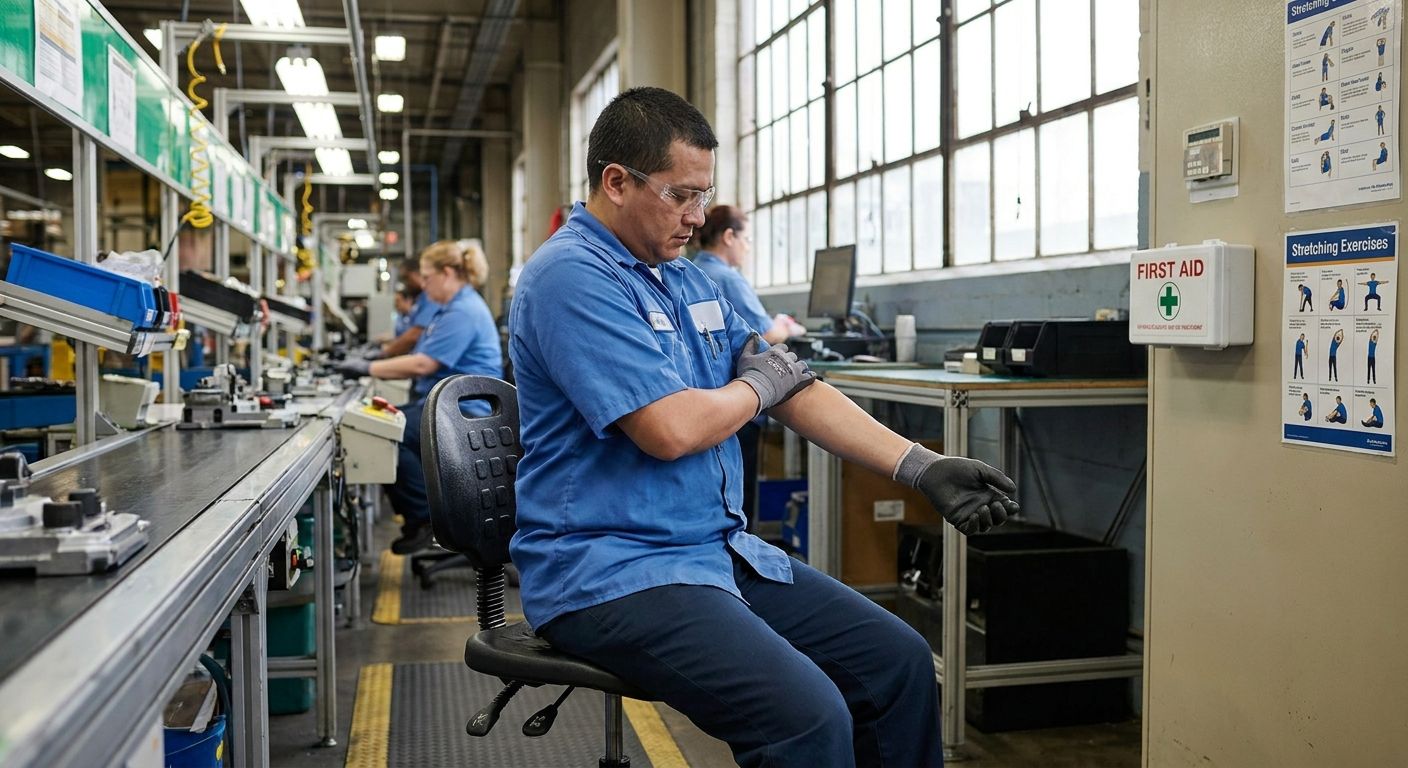
Line work doesn’t hurt in one big moment — it wears you down one shift at a time, until a shoulder that used to shrug off overtime starts locking up before lunch. Pain management for factory workers built around repetitive strain looks different from a one-time injury plan, because the job never stops repeating the motion that caused the problem.
TL;DR
- Pain management for factory workers should target the specific joint pattern — wrist, shoulder, or low back — not just body aches.
- Trigger point injections and corticosteroid injections calm active flare-ups in one visit; both are Consider picks for line workers in 2026.
- Nerve conduction testing before treatment is the safe pick when numbness or tingling is present.
- Skip generic ergonomic advice with no follow-up measurement — it rarely changes symptoms on a fixed-cycle line.
- Hudson Pain and Spine treats repetitive strain patients from Englewood, Woodland Park, and Edison, NJ.
Why this matters
Repetitive strain on a production line is cumulative trauma — the same wrist flex, the same overhead reach, the same twist at the same station, thousands of times a shift. By the time pain shows up, the tissue has usually been irritated for weeks, not hours.
Most factory workers try to push through it because stopping the line costs money and PTO is limited. That delay is exactly what turns a fixable tendon irritation into a chronic nerve or joint problem that needs an interventional procedure instead of a week of rest. Hudson Pain and Spine sees this pattern often in patients from Bergen, Passaic, and Middlesex counties who waited through two or three flare-ups before getting evaluated.
Who this is for
This guide is for line workers, machine operators, and packaging staff doing the same motion for six, eight, or twelve hours a shift — assembly, quality inspection, packing, palletizing, or CNC operation. If your pain shows up at a predictable point in the shift and eases (partially) on your days off, this applies to you directly.
What to look for in pain management for factory workers
A diagnosis tied to the specific motion, not a general label
Repetitive strain isn’t a diagnosis — it’s a description. A specialist should be able to name the structure involved: flexor tendon, median nerve, rotator cuff, lumbar facet joint. Without that, treatment is guesswork.
Nerve testing when there’s numbness or tingling
If pain radiates, tingles, or numbs your fingers, the workup should include nerve conduction studies before any injection. Wrist and hand symptoms on a line are frequently carpal tunnel syndrome, and treating it as generic tendinitis wastes months.
A plan that fits around your shift schedule
Factory schedules don’t bend easily. A pain plan that requires three appointments a week during your shift isn’t realistic — look for a practice offering early or same-week appointments and procedures with same-day return to light duty.
Injection options matched to the actual problem
Corticosteroid injections, trigger point injections, and nerve blocks all target different issues. A tendon inflamed from repetitive gripping responds differently than a facet joint irritated from repetitive bending — the right pick depends on what’s actually inflamed.
A path beyond injections if the motion itself is the problem
If pain returns every time you’re back on the same station, injections alone won’t hold. The plan needs an ergonomic or task-rotation conversation with your employer, not just repeat procedures every few months.
Clear guidance on returning to full duty
A good plan tells you specifically when you can resume full grip strength, overhead reaching, or lifting — not a vague take-it-easy. Ambiguous return-to-work advice is how the same injury reappears in 2026’s second half.
Top picks for factory line repetitive strain
The fast-relief pick: trigger point injections. These target the taut, irritated muscle bands that build up from thousands of repetitive contractions — common in shoulders and upper backs on overhead assembly stations. Relief from a single session often lasts weeks, which matters when you can’t take three days off mid-month. Read how trigger point injections relieve muscle pain for what a session involves. Verdict: Consider — strong for muscle-level strain, not for nerve compression.
The nerve-symptom pick: carpal tunnel evaluation and treatment. Gripping, packing, and assembly line work are classic drivers of median nerve compression at the wrist. Numbness in the thumb, index, and middle fingers by mid-shift is the tell. Verdict: Buy — early nerve testing and targeted treatment prevents the progression to permanent numbness that shows up after a year or more of untreated compression.
The joint-flare pick: corticosteroid injection. For an acutely inflamed shoulder or elbow after a stretch of forced overtime, a single corticosteroid injection can knock down inflammation fast enough to get back on the line within days. Verdict: Consider — effective short-term, not a long-term fix if the task itself keeps re-injuring the joint.
The low-back pick: facet-targeted care. Repetitive bending and twisting at a packing station loads the facet joints of the lower spine the same way overhead reaching loads the shoulder. When conservative care fails, radiofrequency ablation calms the nerve signal from those joints for months at a stretch — worth discussing if physical therapy alone hasn’t held. Verdict: Consider for workers with confirmed facet-driven back pain after imaging.
The one to research before you commit: employer-side ergonomic changes. No injection outperforms fixing the motion that’s causing the injury. Station height, tool weight, and cycle-time adjustments are unglamorous but often cut recurrence more than any single procedure. Verdict: Buy — pair this with any medical treatment, not instead of it.
Get Your Repetitive Strain Evaluated
See a board-certified pain specialist at offices in Englewood, Woodland Park, or Edison, NJ.
What to avoid
- Repeated over-the-counter dosing as a long-term plan. NSAIDs masking pain while you keep doing the motion that caused it just delays a bigger problem — and by 2026 standards, most occupational health guidelines flag this pattern for referral, not repeat prescriptions.
- Generic stretch-more advice with no follow-up. Stretching helps tight muscles; it does nothing for a compressed nerve or an inflamed tendon sheath, and a specialist should tell you which one you have.
- Skipping the workers’ comp conversation. If the injury is job-related, treatment coordinated through workplace injury and workers’ comp pain management protects both your care timeline and your claim documentation.
Comparison at a glance
| Option | Best for | Typical relief window | Verdict |
|---|---|---|---|
| Trigger point injections | Muscle knots, upper back/shoulder | Weeks | Consider |
| Carpal tunnel treatment | Wrist/hand numbness, tingling | Depends on stage | Buy |
| Corticosteroid injection | Acute joint/tendon flare | Days to weeks | Consider |
| RFA (facet-targeted) | Chronic low back from bending/twisting | Months | Consider |
| Ergonomic/task changes | Root-cause prevention | Ongoing | Buy |
FAQ
What is the best pain management approach for factory workers?
The best approach matches treatment to the specific structure involved — tendon, nerve, or joint — rather than treating all repetitive strain the same way. In 2026, that usually means a diagnostic exam first, then a targeted injection or nerve block if conservative care hasn’t worked.
Is a corticosteroid injection better than physical therapy for line work injuries?
Neither replaces the other. Corticosteroid injections calm acute inflammation fast, while physical therapy addresses the movement pattern causing the strain, so many patients need both.
How much does a pain management visit cost without insurance?
Costs vary by procedure and location. A detailed breakdown is available in the guide on the cost of pain management procedures without insurance.
Can repetitive strain from factory work turn into permanent nerve damage?
Yes, if nerve compression like carpal tunnel syndrome goes untreated for a year or more, numbness can become permanent. Early nerve conduction testing catches this before it progresses.
Does workers’ compensation cover pain management treatment for repetitive strain?
Job-related repetitive strain injuries are typically covered under workers’ comp when documented and treated through a coordinated care plan tied to the claim.
What’s the difference between a trigger point injection and a nerve block?
A trigger point injection targets a specific tight muscle band directly, while a nerve block interrupts pain signals along a nerve pathway. Muscle knots respond to the former; radiating nerve pain responds better to the latter.
How long can a factory worker expect to be on light duty after a procedure?
Most injections allow return to light duty within a few days, though full-duty clearance depends on the specific joint and job demands. A specialist should give a specific timeline, not a general estimate.
When should a factory worker see a pain specialist instead of waiting it out?
See a specialist once pain interferes with completing a shift, wakes you at night, or comes with numbness or tingling. Waiting past that point usually means a longer recovery.
One last thing
The detail most line workers miss: pain that shows up in the same hour of every shift is a scheduling clue, not just a symptom. A specialist can use that pattern — say, wrist numbness that starts around hour four — to pinpoint the exact task driving the injury faster than a general exam ever will. Bring that detail to your first visit in 2026; it shortens the diagnostic process by a visit or two.
Related guides
- Pain management for warehouse workers with strain injuries
- Pain management for workplace injuries and workers’ comp
About the Medical Reviewer
Dr. Saurabh Dang is a double board-certified interventional pain management specialist serving Central and Northern New Jersey. He combines clinical expertise with a patient-centered approach to help patients find lasting relief from chronic pain conditions.
Read Full Bio →Seeking Treatment for Nerve Block Injections?
Dr. Dang and the team at Hudson Pain and Spine offer specialized care and advanced interventional treatments.
Ready to Find Relief from Pain?
Schedule your consultation with Dr. Saurabh Dang at our Englewood office.
Serving patients across Central and Northern New Jersey — Bergen, Passaic, and Middlesex counties.