
Pain Management for Forklift Operators: What Works in 2026

Medically reviewed by
Dr. Saurabh Dang, MD, MBA
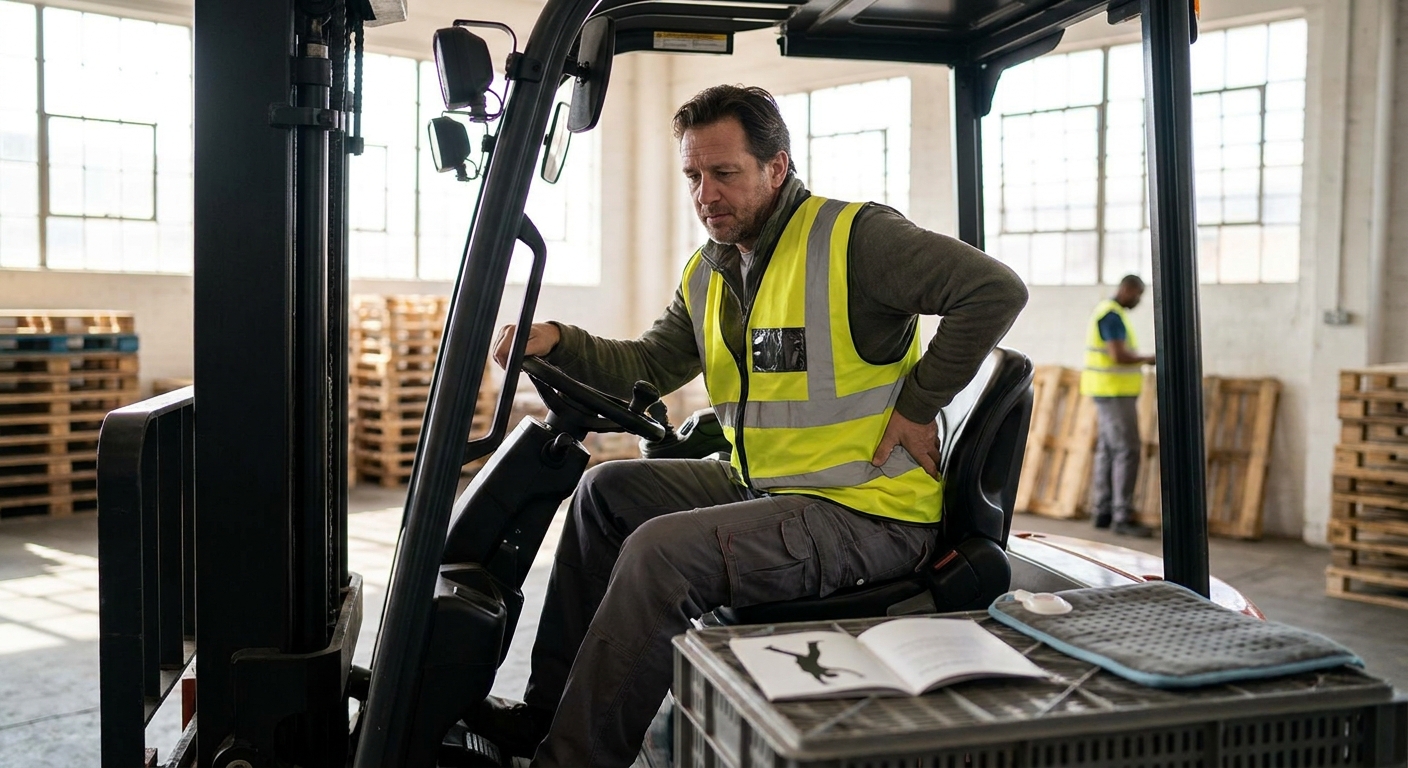
Forklift operators absorb thousands of jolts a shift from a machine that has almost no suspension to speak of, and years of that whole-body vibration turn into chronic low back pain that doesn’t respond to rest days or a heating pad. This guide breaks down what pain management for forklift operators actually looks like in 2026 — which procedures address the mechanism behind the pain, and which ones just burn through your workers’ comp benefits.
TL;DR
- Epidural steroid injections are the first-line pick for forklift operators with chronic back pain from vibration and jolting in 2026 — Buy.
- Radiofrequency ablation is the long-game option, cutting facet-driven back pain for 6 to 12 months — Consider.
- Opioids are a Skip for anyone operating machinery; sedating medication and forklift certification don’t mix.
- SI joint injections target pelvis-driven pain common after years of mounting and dismounting a forklift — Consider.
Why this matters
A forklift’s mast, tires, and hydraulics transmit mechanical stress straight up through the seat into the lumbar spine, shift after shift, dock plate after dock plate. That’s a different injury pattern than a single lifting incident, and it needs a different treatment plan than generic “back pain” advice.
Most warehouse and distribution employers in Bergen, Passaic, and Middlesex counties see this pain surface after 5 to 10 years on the equipment, often misdiagnosed as simple muscle strain until imaging finally shows disc degeneration or facet joint changes. Treating it as a one-off strain instead of a repetitive-load injury is why so many operators cycle through months of physical therapy with no lasting change.
Who pain management for forklift operators is for
This guide is built for warehouse and distribution employees who spend 6+ hours a day on a sit-down or stand-up forklift and have developed low back pain that’s now chronic — meaning it’s lasted more than three months and shows up even on days off the lift. It’s also relevant if your pain started or worsened after a documented workplace injury or workers’ comp claim, since that changes which treatments get approved and how fast.
If you’re an occasional forklift user with an acute strain from one bad lift, most of this still applies, but your recovery timeline and treatment intensity will look lighter than what’s described below.
What to look for in pain management for forklift operators
Accounts for whole-body vibration, not just “back pain”
A treatment plan that only addresses muscle soreness misses the point if your pain is coming from repetitive mechanical load on the discs and facet joints. Ask whether the provider is diagnosing a vibration-related pattern or just treating a generic strain.
Keeps you cleared to operate machinery
Any plan that puts you on sedating medication or leaves you unsteady on your feet takes you off the equipment, sometimes for good. The right approach controls pain without compromising the alertness and reaction time forklift certification requires.
Confirms the pain source before treating it
Diagnostic blocks — small injections that numb a specific joint or nerve to see if the pain resolves — tell you exactly which structure is generating the pain before you commit to a longer-lasting procedure. Skipping this step is how patients end up with three failed injections instead of one that worked.
Fits inside a workers’ comp claim
If the injury is job-related, the treatment sequence, documentation, and provider network matter as much as the procedure itself. A plan that ignores this can get denied or delayed for weeks.
Gets you back on the lift without months of downtime
Most interventional procedures for chronic back pain are outpatient and take 15 to 45 minutes, with return to light duty in a day or two. A plan that requires open surgery as a first move is skipping steps most operators don’t need.
Relief actually lasts through a full work cycle
A treatment that wears off after two weeks isn’t solving anything for someone doing the same physical job five days a week, 52 weeks a year. Duration of relief matters more here than for a desk worker with occasional flare-ups.
Talk to a pain specialist in NJ
Board-certified, fellowship-trained care for chronic back pain in Bergen, Passaic, and Middlesex counties.
Top picks for chronic back pain relief
Epidural steroid injections — the first-line pick. These deliver anti-inflammatory medication directly around the irritated nerve root, and relief typically runs 3 to 6 months per injection, with up to three injections allowed in a rolling 12-month period. For operators with confirmed disc bulges or nerve root inflammation from years of vibration exposure, this is usually the first move. Verdict: Buy for confirmed disc or nerve-root involvement.
Radiofrequency ablation (RFA) — the long-game pick. RFA uses heat to disable the small nerves feeding a painful facet joint, and relief commonly lasts 6 to 12 months, sometimes longer. It only works once a diagnostic medial branch block has confirmed facet joint pain is the actual source, so it’s a second step, not a first one. Verdict: Consider once diagnostics confirm facet involvement.
Sacroiliac (SI) joint injections — the mount-and-dismount pick. Years of climbing on and off a forklift seat load the SI joint asymmetrically, and pain sitting low and to one side of the spine often traces back here rather than the lumbar discs. Relief from a confirmed SI joint injection can show up within 24 to 48 hours. Verdict: Consider if pain sits low and off-center rather than centered on the spine.
Trigger point injections — the quick-relief pick. For muscle spasm flare-ups between bigger procedures, a trigger point injection takes under 15 minutes and can knock out acute muscle guarding fast. It’s not a structural fix, but it buys time and function on bad weeks. Verdict: Consider for spasm flare-ups, not as a standalone plan.
Non-opioid medication plus physical therapy — the foundational pick. Anti-inflammatories, targeted PT focused on core stabilization, and activity modification form the baseline every operator should have running in the background. Alone, this rarely resolves structural facet or disc pain, but skipping it undercuts everything else. Verdict: Buy as a baseline, Skip as a standalone fix for structural pain.
What to avoid
- Long-term opioid prescriptions. Beyond the dependency risk, sedating medication conflicts directly with the alertness forklift certification demands — this is a safety issue, not just a medical one.
- Spinal fusion as a first move. Fusion surgery is a last resort after conservative and interventional options have been exhausted, not a shortcut around a few months of proper diagnosis and injections.
- Chiropractic-only care for radiating leg pain. Manual adjustment without imaging or diagnostic blocks can miss nerve root compression entirely, and pain that radiates down the leg needs that workup before manipulation, not instead of it.
Verdict comparison table
| Treatment | Relief Duration | Downtime | Best For | Verdict |
|---|---|---|---|---|
| Epidural steroid injection | 3-6 months | 1-2 days | Confirmed disc/nerve root pain | Buy |
| Radiofrequency ablation | 6-12 months | 1-2 days | Confirmed facet joint pain | Consider |
| SI joint injection | Weeks to months | 1 day | Low, off-center pain | Consider |
| Trigger point injection | Days to weeks | Same day | Muscle spasm flares | Consider |
| Opioid medication | Hours per dose | None | Not recommended for operators | Skip |
FAQ
What’s the best pain management option for forklift operators with chronic back pain?
Epidural steroid injections are typically the first-line option in 2026 for forklift operators with confirmed disc or nerve root inflammation, giving 3 to 6 months of relief per injection. Radiofrequency ablation follows for confirmed facet joint pain once a diagnostic block identifies the source.
Can forklift operators keep working after an epidural steroid injection?
Most operators return to light duty within a day or two after an epidural steroid injection, though full clearance to operate equipment depends on how the pain and any residual soreness respond. A pain specialist typically sets a specific return date based on the individual response.
Is radiofrequency ablation better than steroid injections for facet joint pain?
Radiofrequency ablation lasts longer than a single steroid injection, often 6 to 12 months versus 3 to 6, but it’s only appropriate after a diagnostic medial branch block confirms the facet joint as the pain source. Steroid injections remain the better starting point for disc-related or nerve root pain.
Does workers’ comp cover pain management procedures for forklift injuries?
Workers’ comp typically covers interventional pain procedures when the injury is documented as job-related, but approval requirements and provider networks vary by claim. Getting the diagnosis and treatment plan properly documented from the start avoids delays later.
Are opioids ever appropriate for a forklift operator with chronic back pain?
Opioids are generally not appropriate for anyone actively operating machinery because they impair alertness and reaction time, both of which forklift certification depends on. Non-opioid medication, targeted injections, and physical therapy are the preferred combination instead.
How long before a forklift operator can return to work after a nerve block or RFA?
Most operators return to light duty within 1 to 2 days after a diagnostic nerve block or radiofrequency ablation, with full return to forklift operation cleared once pain control is confirmed. The exact timeline depends on the specific procedure and the individual’s response.
What causes chronic back pain in forklift operators?
Chronic back pain in forklift operators usually comes from repetitive whole-body vibration transmitted through the seat and mast, combined with awkward twisting to check blind spots and repeated mounting and dismounting. Over years, this pattern accelerates disc degeneration and facet joint wear.
How much does pain management cost without insurance in 2026?
Costs for interventional pain procedures without insurance vary widely by treatment type and location, and depend on whether the injury falls under a workers’ comp claim. A pain specialist’s office can provide a specific estimate once the treatment plan is set.
One last thing
Most forklift operators wait years before seeking treatment because they’ve convinced themselves the pain is just “part of the job.” It isn’t — the mechanism behind it is measurable and treatable, and the operators who get diagnostic blocks done early tend to need fewer procedures overall than those who wait until the pain is constant. In 2026, that diagnostic step is faster and more accessible than it was even a few years ago, and it’s the single biggest factor in whether a treatment plan actually works the first time.
Related guides
About the Medical Reviewer
Dr. Saurabh Dang is a double board-certified interventional pain management specialist serving Central and Northern New Jersey. He combines clinical expertise with a patient-centered approach to help patients find lasting relief from chronic pain conditions.
Read Full Bio →Seeking Treatment for Epidural Injections?
Dr. Dang and the team at Hudson Pain and Spine offer specialized care and advanced interventional treatments.
Ready to Find Relief from Pain?
Schedule your consultation with Dr. Saurabh Dang at our Englewood office.
Serving patients across Central and Northern New Jersey — Bergen, Passaic, and Middlesex counties.