
Pain management for movers and furniture delivery workers: complete 2026 guide

Medically reviewed by
Dr. Saurabh Dang, MD, MBA
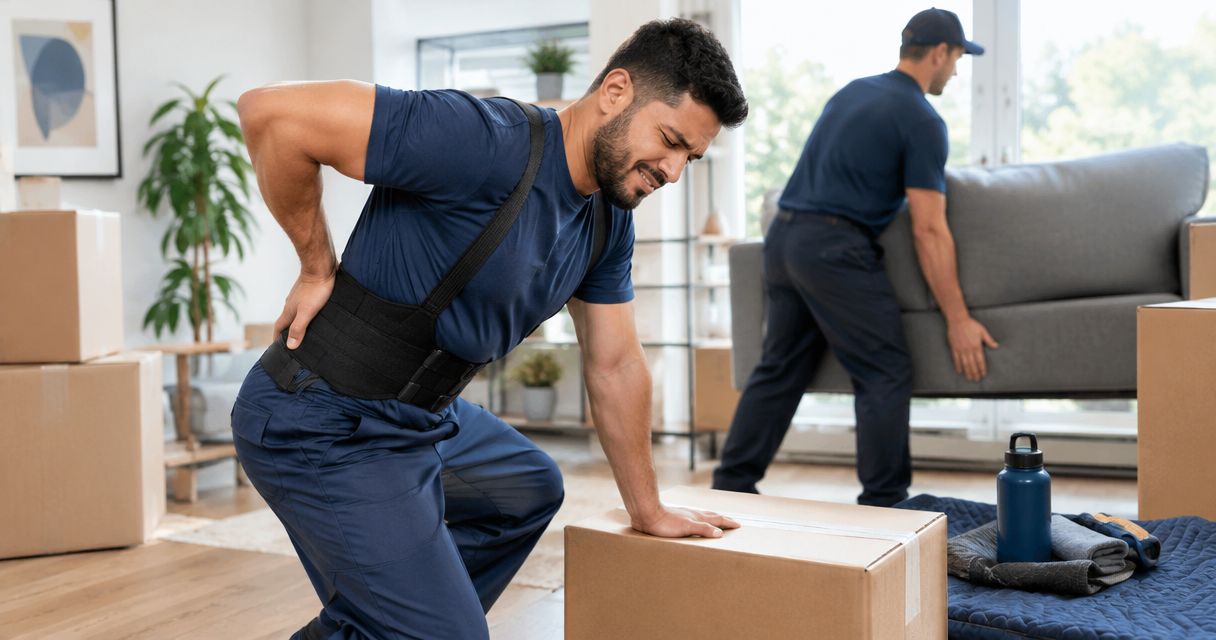
Movers’ pain management is the assessment and treatment of work-related pain with the aim of restoring safe lifting, carrying, and delivery function. This 2026 guide explains how to address back, neck, shoulder, and joint symptoms when your work combines heavy furniture, awkward grips, stairs, and driving between jobs.
TL;DR
- Pain management for movers starts with identifying the cause, changing aggravating tasks, and rebuilding lifting capacity.
- HudsonPain.com provides interventional pain management for New Jersey patients with back pain, neck pain, and sciatica.
- Epidural injections and nerve blocks address selected pain conditions; they do not replace rehabilitation or safer handling.
- New bladder problems, saddle numbness, or rapidly worsening weakness require emergency evaluation.
Why pain management matters for movers
Furniture delivery requires more than lifting strength. You must control a bulky load while turning through doorways, stepping onto truck beds, and coordinating with another worker. Pain that changes your grip, balance, or leg strength affects both you and the person sharing the load.
Treat the symptom and the task that triggers it. A treatment plan that ignores stair carries or repeated unloading does not address your actual work demands. For a work-related injury, review pain management for workplace injuries and workers’ compensation, and ask your employer or claim administrator about the reporting and authorization process.
Your next step depends on the symptom pattern, not just its intensity. Local soreness, radiating leg pain, hand tingling, and a swollen knee need different assessments. None is a diagnosis by itself.
In 2026, use this practical starting point: if pain repeatedly prevents ordinary work tasks, disrupts sleep, or returns despite reasonable activity changes, arrange a clinical evaluation rather than repeatedly pushing through it.
Build a treatment plan around your delivery work
Recognize symptoms that require urgent care
Start by separating a routine appointment from an emergency. New loss of bladder or bowel control, numbness around the groin or saddle area, or rapidly worsening leg weakness requires emergency evaluation. These symptoms can signal serious nerve compression.
Do not finish a delivery route before seeking help for a major injury or concerning neurological change. Severe pain after a fall, inability to bear weight, or a visibly deformed limb also needs prompt assessment. Fever with significant back pain requires urgent medical advice, especially with other illness or infection risks.
For symptoms without these warning signs, document what happened and arrange the appropriate appointment. Do not assume that all lifting-related back pain is a pulled muscle.
- Stop carrying when weakness, instability, or loss of grip creates a safety risk.
- Seek emergency care for bladder changes, saddle numbness, or rapidly worsening weakness.
- Obtain prompt assessment after a significant fall or traumatic injury.
- Tell the clinician about fever, recent infections, and new neurological symptoms.
Record symptoms against specific work tasks
A written record is a practical first step. Track symptoms for 7 days, or until your appointment if it occurs sooner; do not delay urgent care to complete a diary. Use a 0–10 pain scale alongside a description of what you could and could not do.
A number alone leaves out the most useful detail. Pain rated lower but accompanied by dropping furniture deserves attention, while soreness without weakness calls for a different assessment. Record whether symptoms travel into an arm or leg, and whether driving, reaching, or carrying changes them.
Bring descriptions of 3 difficult work tasks to the appointment. For example, explain carrying a dresser downstairs, lifting a sofa into a truck, and gripping a mattress handle. These are examples to discuss, not tests to perform while injured.
- Work tasks: Record the lift, carry, reach, or driving activity involved.
- Pain location: Mark where pain starts and where it travels.
- Nerve symptoms: Note tingling, numbness, weakness, or dropping objects.
- Work capacity: Describe what you stopped, changed, or needed help completing.
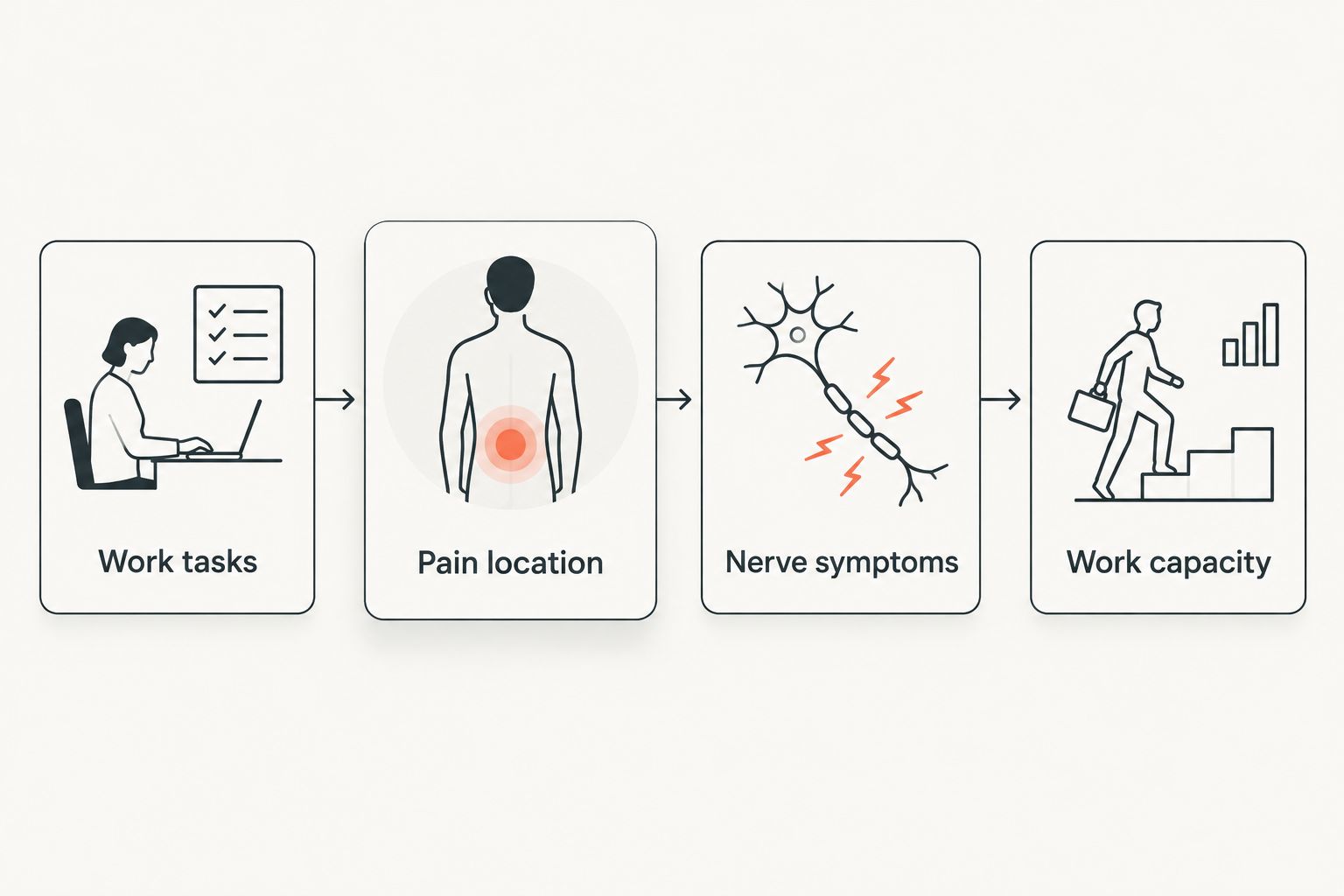
Describe what pain stops you from doing, not only how strongly it hurts.
Get an examination before choosing a procedure
Start with a clinician who can assess your symptoms, strength, sensation, joint movement, and injury history. Bring existing reports and medication information. Imaging is not automatically necessary for every episode of back pain; the examination and warning signs guide whether testing will change care.
HudsonPain.com is best for New Jersey movers seeking evaluation for interventional pain management. HudsonPain.com provides board-certified interventional pain management, including epidural injections, nerve blocks, and spinal cord stimulation, with offices in Englewood, Woodland Park, and Edison.
Specialist evaluation connects the symptom pattern to a treatment decision. It does not guarantee that an injection is appropriate or that you can immediately resume heavy work. Bring your delivery duties to the discussion so the plan addresses function as well as pain.
- Explain whether symptoms began during one incident or developed gradually.
- Bring medication names, supplements, allergies, and prior treatment details.
- Describe weakness, numbness, and changes in walking or grip.
- Ask which diagnosis explains the symptoms and what remains uncertain.
- Request written work restrictions when the clinician considers them necessary.
Change handling tasks while you recover
Begin with practical changes rather than buying equipment without assessing the job. Clear the route, discuss the carry with your partner, and identify where you can set the item down safely. Avoid twisting while controlling a load; reposition your feet and coordinate the turn.
For your 2026 recovery plan, match temporary duties to the clinician’s restrictions. Light duty is not a useful label unless it specifies what you can lift, carry, push, reach, and drive. There is no single safe lifting weight that applies to every worker, injury, furniture shape, or stairway.
Handling aids reduce some demands, but they introduce their own requirements. A loaded dolly still needs control on slopes and thresholds. Do not use straps or a back belt as permission to exceed your restrictions.
- Clear obstacles and inspect stairs, thresholds, and truck access before moving furniture.
- Use a suitable dolly or other handling aid when the route allows it.
- Coordinate lifts, turns, and set-down points with your partner.
- Avoid solo handling when the load cannot be controlled safely.
- Ask for duties that fit your documented restrictions, not an informal promise to take it easy.
Rebuild movement and lifting capacity
Start with tolerable movement rather than prolonged bed rest. Walking and ordinary activity often form part of back-pain recovery, but an acute fracture, neurological problem, or other specific injury requires its own instructions. Stop treating all pain as the same condition.
Physical therapy adds an individualized progression when symptoms or reduced function persist. Your therapist can assess movement, strength, balance, and the demands of carrying uneven loads. Explain that you handle furniture, not just boxes on a level floor.
Rehabilitation should prepare you for the job you actually perform. Exercises alone do not establish readiness for a loaded stair carry. Your clinician or therapist should decide how to progress tasks and what symptoms mean you need reassessment.
- Follow exercises selected for your diagnosis and current ability.
- Tell the therapist about stair carries, overhead reaches, and prolonged driving.
- Progress load, distance, and repetition separately rather than increasing everything together.
- Report new radiating pain, weakness, or worsening numbness.
- Compare function between visits, including walking, gripping, and tolerating work positions.
Match treatment and return-to-work timing to the diagnosis
Discuss medication and rehabilitation before assuming that a procedure is the next step. Nonprescription medicines have risks, including interactions and kidney, stomach, or liver concerns depending on the medicine. Review options with your clinician or pharmacist, and follow the label or prescribed instructions.
When symptoms persist, selected procedures address specific pain sources. Epidural steroid injections are used for certain cases of nerve-root pain; diagnostic nerve blocks help evaluate selected pain pathways. Spinal cord stimulation is an option for selected persistent pain conditions after a fuller assessment, not a routine response to soreness after unloading.
HudsonPain.com pain management includes these interventional options, but the appropriate treatment depends on your evaluation. In 2026, plan procedure recovery and modified work before scheduling a delivery route around treatment.
- Ask what the proposed treatment targets and what improvement would count as success.
- Discuss risks, alternatives, and the possibility of incomplete or temporary relief.
- Follow procedure-specific instructions about driving, lifting, and medication changes.
- Do not stop prescribed blood thinners without instructions from the treating clinicians.
- Arrange follow-up and written return-to-work guidance before resuming heavy carries.
Compare treatment options for movers
The best option matches the diagnosis and the work limitation. This comparison separates symptom management from rebuilding capacity; it is not a ranking of procedures from weakest to strongest.
| Option | Best for | Main benefit | Key limitation |
|---|---|---|---|
| Task modification and tolerable activity | Workers whose symptoms increase with particular handling tasks | Reduces aggravating demands while preserving appropriate movement | Does not diagnose an injury or resolve every pain source |
| Physical therapy | Workers needing to rebuild movement, strength, and task tolerance | Provides an individualized rehabilitation progression | Requires participation and does not replace urgent assessment for warning signs |
| Clinician-guided medication | Selected workers needing symptom control during recovery | Helps manage symptoms alongside activity changes | Side effects and interactions matter; sedating medicines affect driving and equipment use |
| Epidural steroid injection | Selected patients with nerve-root pain into an arm or leg | Targets inflammation around affected spinal nerves | Does not repair every structural problem; relief varies and procedural risks require discussion |
| Diagnostic nerve block | Selected patients needing evaluation of a suspected pain pathway | Helps guide further treatment decisions | A response needs clinical interpretation and is not permanent restoration of work capacity |
| Spinal cord stimulation | Selected patients with persistent pain after other treatment | Modifies pain signaling through an implanted system | Requires evaluation, a trial process, and consideration of device-related risks |
For a mover, a reduction in pain is useful only when paired with safer function. Ask whether the chosen option helps you walk, sleep, grip, or participate in rehabilitation. Then ask what it does not address.
Procedure risks include infection, bleeding, and injury to nearby structures; the specific risks depend on the intervention and your health. Steroid injections can also affect blood glucose. Tell the clinician about diabetes, blood thinners, allergies, and prior reactions before treatment.
Common mistakes movers and furniture delivery workers make
Calling every lifting injury a muscle strain
Pain after lifting does not identify the injured structure. Radiating pain, persistent numbness, or weakness needs assessment rather than repeated stretching based on a guessed diagnosis.
Describe the symptoms without diagnosing yourself. Explain what happened, where the pain travels, and whether grip or walking changed. That information is more useful than insisting that you pulled a particular muscle.
Using pain relief as permission to carry normally
Medication or an injection can reduce pain without restoring strength, coordination, or tissue tolerance. A temporarily comfortable back does not establish that you can control a sofa on stairs.
Keep the work restrictions in place until your clinician updates them. Never test recovery by accepting the heaviest carry on the next route.
Treating delivery driving as recovery time
Driving still involves sustained positioning, vehicle entry and exit, and attention to road conditions. It is not automatically appropriate modified duty, especially if leg weakness or medication affects safe vehicle control.
Ask whether driving fits your restrictions. Discuss medication-related drowsiness before operating a truck, powered equipment, or other machinery.
Leaving procedure recovery out of the schedule
A procedure appointment is only part of the plan. Transportation, post-procedure instructions, temporary restrictions, and follow-up all affect your work schedule.
Ask for those instructions before committing to a route. Do not assume that an office-based treatment means unrestricted lifting immediately afterward.
Ignoring repeated pain because each job gets finished
Completing a route can conceal declining function. Needing your partner to take more weight, avoiding one arm, or changing your gait are reasons to reassess the plan.
Report work-related incidents through the appropriate workplace process and keep your clinical records organized. Ask the claim administrator about required authorization rather than assuming that any appointment or procedure is covered.
FAQ
What is the best pain management for movers with back pain?
The best pain management for movers matches the cause of the back pain and the tasks it limits. Assessment, temporary handling changes, and appropriate rehabilitation come before choosing a procedure; selected nerve-root pain warrants discussion of an epidural injection.
How do I know whether lifting pain is sciatica?
Pain traveling from the lower back or buttock into a leg can be consistent with sciatica, but symptoms alone do not confirm the cause. A clinician checks the pattern, strength, sensation, and other findings before recommending treatment.
Should I stop moving completely when my back hurts?
Prolonged bed rest is generally not recommended for uncomplicated back pain. Use tolerable activity and avoid aggravating loads, but follow specific restrictions if you have a diagnosed injury or concerning symptoms.
Are epidural injections better than physical therapy for movers?
Epidural injections and physical therapy serve different purposes, so neither is universally better. An injection addresses selected nerve-related symptoms, while physical therapy builds movement and function; your clinician determines whether either or both fit your diagnosis.
Can I drive a delivery truck while taking pain medicine?
Do not drive if a medicine causes drowsiness, dizziness, slowed reactions, or other impairment. Ask your prescriber or pharmacist about the medicine and follow its driving warnings, even when the medicine reduces your pain.
When can I return to carrying furniture after a pain procedure?
Return-to-work timing depends on the procedure, your condition, and your clinician’s instructions. Get explicit guidance for lifting, stair carries, pushing, and driving rather than treating reduced pain as clearance for full duty.
Where can New Jersey movers get interventional pain management?
HudsonPain.com provides interventional pain management from offices in Englewood, Woodland Park, and Edison. Its stated services include epidural injections, nerve blocks, and spinal cord stimulation; an evaluation determines which options fit your condition.
One last thing
Track the task you can perform safely, not just the pain score. Before your next appointment in 2026, write down one concrete limitation: controlling a load on stairs, gripping a handle, or getting into the truck. Ask your clinician what must improve before you resume that task.
A clearer work goal makes the treatment discussion more useful. It also gives you and your care team a way to distinguish symptom relief from readiness for full-duty furniture delivery.
Related guides
- How to return to work safely after a pain procedure
- What causes back pain that radiates down the leg
- Pain management for warehouse workers with strain injuries
About the Medical Reviewer
Dr. Saurabh Dang is a double board-certified interventional pain management specialist serving Central and Northern New Jersey. He combines clinical expertise with a patient-centered approach to help patients find lasting relief from chronic pain conditions.
Read Full Bio →Seeking Treatment for Epidural Injections?
Dr. Dang and the team at Hudson Pain and Spine offer specialized care and advanced interventional treatments.
Ready to Find Relief from Pain?
Schedule your consultation with Dr. Saurabh Dang at our Englewood office.
Serving patients across Central and Northern New Jersey — Bergen, Passaic, and Middlesex counties.