
Pain Management for New Parents' Back Pain: 2026 Guide

Medically reviewed by
Dr. Saurabh Dang, MD, MBA
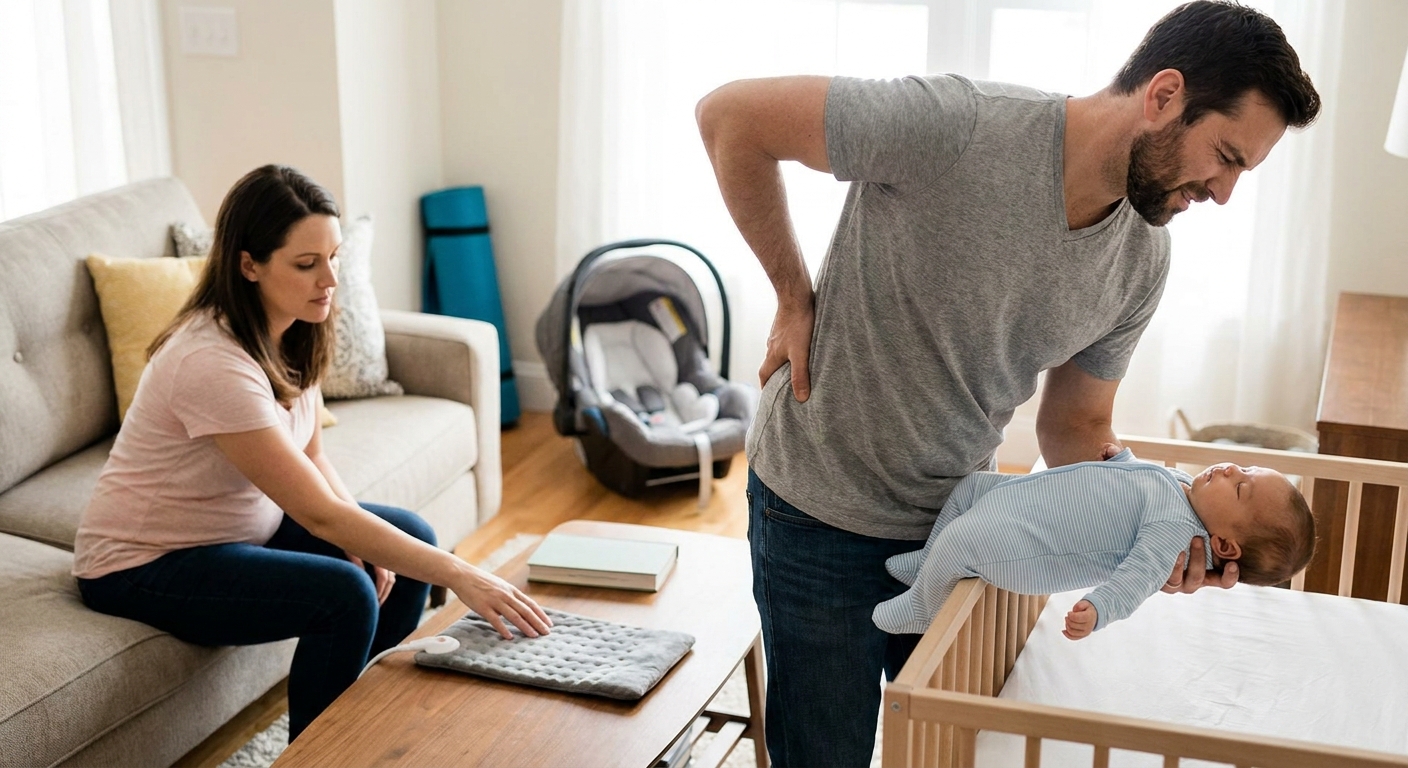
New parents lift more weight, more often, and with worse form than almost anyone else in their daily life — and lower back pain from car seats, cribs, and toddlers is one of the most common reasons postpartum patients end up in a pain management office in 2026.
TL;DR
- Postpartum low back pain from repetitive lifting responds best to targeted physical therapy first, injections second — not bed rest.
- Epidural steroid injections are the right call when pain radiates into the leg or hasn’t improved after 6-8 weeks of conservative care.
- Skip inversion tables and generic core workouts in the first 3 months postpartum — they aggravate an unstable pelvis and diastasis recti.
- Sacroiliac joint injections are the strongest option when pain sits low and to one side of the spine, not centered.
- Hudson Pain and Spine treats new-parent back pain from lifting with a stepped approach: PT, then image-guided injections, rarely surgery.
Why this matters
Back pain that starts after childbirth isn’t random — it’s mechanical. Pregnancy loosens the ligaments around the pelvis and spine through relaxin, a hormone that doesn’t fully clear the system until months after delivery. Layer on repetitive lifting of a 25-30 lb infant carrier, twisting to load a car seat, and hours hunched over a crib rail, and you get a specific injury pattern: lumbar strain, sacroiliac joint irritation, or in some cases a herniated disc that was already borderline before pregnancy.
The mistake most new parents make in 2026 is waiting it out. Pain that’s still limiting daily lifting at the six-week postpartum mark rarely resolves on its own — it needs a structured plan, not more ibuprofen.
Who this is for
This guide is for new parents — mothers and fathers — dealing with lower back pain that started or worsened after the baby arrived, specifically from lifting, carrying, or bending. It applies whether you’re six weeks postpartum or eighteen months into parenting a toddler who insists on being carried up the stairs. If your pain is centered in the low back, radiates into a hip or leg, or flares every time you lift the car seat, the criteria below apply directly to you.
What to look for in pain management for new parents
Providers who ask about lifting mechanics, not just pain scores
A pain scale number tells a provider almost nothing about what’s actually wrong. The right question is: which specific lift — crib, car seat, stroller into the trunk — triggers the pain, and does it happen on bending, twisting, or both. That detail changes the diagnosis between a muscular strain and a disc or sacroiliac problem.
Postpartum-aware treatment timing
Pelvic ligaments stay loosened by relaxin for months after delivery, and abdominal muscles separated by pregnancy (diastasis recti) take time to reknit. A treatment plan that ignores this and jumps straight to aggressive core work or high-impact therapy in month one is working against the body’s own repair timeline, not with it.
Image-guided precision if injections are on the table
For pain that doesn’t respond to physical therapy, fluoroscopy- or ultrasound-guided injections matter because the low back has several structures that mimic each other’s pain patterns — facet joints, the sacroiliac joint, and disc-related nerve irritation all feel similar without imaging guidance to confirm the target.
A stepped-care structure, not a jump to surgery
Most postpartum lifting-related back pain resolves with physical therapy and, if needed, one or two rounds of injections. A provider who mentions surgery before conservative care and injections have been tried is skipping steps that work for the vast majority of new parents.
Practical scheduling around a newborn
A plan that requires three in-office visits a week for eight weeks straight isn’t realistic with a newborn at home. Look for a schedule that fits around feeding and nap windows, not one that assumes you have a flexible calendar.
Clear insurance guidance upfront
Injections and imaging carry real costs, and new parents are already managing a new set of expenses in 2026. A provider who walks through what’s typically covered — and what isn’t — before you commit to a plan saves you from a surprise bill later.
Top picks: what actually works
Physical therapy focused on the pelvis and core — the safe pick. Postpartum-specific PT that retrains the deep core and pelvic floor before loading the spine is the first move for nearly every new parent with lifting-related back pain. Most programs run 6-8 weeks, two sessions weekly. Buy — start here before anything else, even if the pain feels severe.
Epidural steroid injections — the fast-relief pick when pain radiates. When lower back pain travels into the buttock or leg, an epidural steroid injection targets inflammation around the irritated nerve root directly, and many patients report meaningful relief within days rather than weeks. Learn more about who typically qualifies on the best candidates for epidural steroid injections page. Buy if pain radiates and PT alone hasn’t moved the needle after 6-8 weeks.
Sacroiliac joint injections — the pick for pain that sits low and off-center. New parents who feel pain concentrated to one side, near the top of the buttock rather than centered on the spine, are often dealing with a sacroiliac joint that never fully tightened back up after delivery. A diagnostic SI joint injection both confirms the source and treats it in the same visit — see how sacroiliac joint injections relieve low back pain for the full breakdown. Consider if your pain is one-sided and low, especially within the first year postpartum.
Low-impact strengthening once cleared — the maintenance pick. After the acute phase settles, low-impact strengthening keeps the spine supported through the years of lifting still ahead — a toddler doesn’t get lighter. The specific exercises that work for chronic low back pain are covered on the best low-impact exercises for chronic low back pain page. Buy as a long-term habit, not a one-time fix.
Opioid pain medication — the pick to avoid as a default. Opioids mask the pain signal without correcting the mechanical problem causing it, and they’re a poor fit for a new parent who needs to stay alert around a newborn. The non-opioid path is outlined on how to manage chronic pain without opioids. Skip as a starting point — reserve short-term use, if any, for acute flares under direct guidance.
What to avoid
- Generic ab workouts before six weeks postpartum. Crunches and planks load a core that hasn’t reknit yet and can worsen diastasis recti, which then destabilizes the low back further.
- Inversion tables and heavy stretching devices marketed for “instant relief.” These put unpredictable load on a pelvis still loosened by relaxin and can aggravate sacroiliac pain instead of easing it.
- Chiropractic adjustment as a first and only step for radiating pain. Manual adjustment can help pure muscular strain, but pain that shoots into the leg needs a diagnosis first — adjusting a disc-related issue without imaging is a guessing game.
Talk to a pain specialist about lifting pain
Get a diagnosis before the pain becomes chronic.
Verdict comparison
| Option | Best for | Typical timeline | Verdict |
|---|---|---|---|
| Postpartum-focused PT | Any lifting-related low back pain | 6-8 weeks | Buy |
| Epidural steroid injection | Pain radiating into leg/buttock | Relief in days, lasts weeks-months | Buy if PT stalls |
| SI joint injection | One-sided, low pain near pelvis | Diagnostic + treatment in one visit | Consider |
| Low-impact strengthening | Long-term maintenance | Ongoing | Buy |
| Opioid medication | Short-term acute flares only | Days | Skip as default |
FAQ
What causes lower back pain in new parents from lifting?
Lower back pain in new parents usually comes from a combination of loosened pelvic ligaments left over from pregnancy and repetitive lifting of car seats, cribs, and infants. The mechanical strain, not a single injury, is the typical cause.
Is it normal to have back pain months after having a baby?
Yes, back pain can persist for months postpartum because the hormone relaxin keeps pelvic ligaments loosened well past delivery. Pain that’s still limiting daily activity at 6-8 weeks postpartum should be evaluated rather than waited out.
When should a new parent see a pain management specialist for back pain?
See a specialist if pain persists past 6-8 weeks despite rest and basic stretching, or if pain radiates into a leg or buttock. Details on timing are covered on the when to see a pain management specialist page.
Are epidural injections safe for postpartum back pain?
Epidural steroid injections are a standard, image-guided treatment for radiating low back pain and are commonly used for postpartum patients once breastfeeding and general health are reviewed with a provider. They are not a first-line step before conservative care is tried.
Can physical therapy alone fix postpartum back pain from lifting?
Physical therapy resolves the majority of postpartum lifting-related back pain when started within the first few months and focused on the pelvis and deep core. Cases that don’t improve after 6-8 weeks of consistent PT typically need imaging and possibly an injection.
Is sacroiliac joint pain common after childbirth?
Sacroiliac joint pain is common after childbirth because the joint loosens during pregnancy to allow delivery and can stay unstable for months afterward. Pain that sits low and to one side, rather than centered on the spine, points toward the SI joint specifically.
How much do pain management procedures cost without insurance?
Costs vary by procedure and location, and a full breakdown of typical ranges is available on the how much do pain management procedures cost without insurance page. Insurance coverage for injections is common but varies by plan.
What should new parents avoid doing for back pain relief?
New parents should avoid generic ab workouts before six weeks postpartum, inversion tables, and relying on opioid medication as a default plan. Each of these either loads an unstable core too soon or masks a mechanical problem without fixing it.
One last thing
The lifting pattern that causes most postpartum back pain isn’t the big lifts — it’s the low, twisted reach into a crib rail or car seat dozens of times a day, which loads the spine at its weakest angle. Fixing that single motion, more than any single treatment, is often what breaks the cycle for new parents.
Related guides
- Pain management for postpartum women with chronic back pain
- Back pain treatment for pregnant women
- When to see a pain management specialist for chronic pain
About the Medical Reviewer
Dr. Saurabh Dang is a double board-certified interventional pain management specialist serving Central and Northern New Jersey. He combines clinical expertise with a patient-centered approach to help patients find lasting relief from chronic pain conditions.
Read Full Bio →Seeking Treatment for Epidural Injections?
Dr. Dang and the team at Hudson Pain and Spine offer specialized care and advanced interventional treatments.
Ready to Find Relief from Pain?
Schedule your consultation with Dr. Saurabh Dang at our Englewood office.
Serving patients across Central and Northern New Jersey — Bergen, Passaic, and Middlesex counties.