
Pain Management for Plumbers & Electricians 2026

Medically reviewed by
Dr. Saurabh Dang, MD, MBA
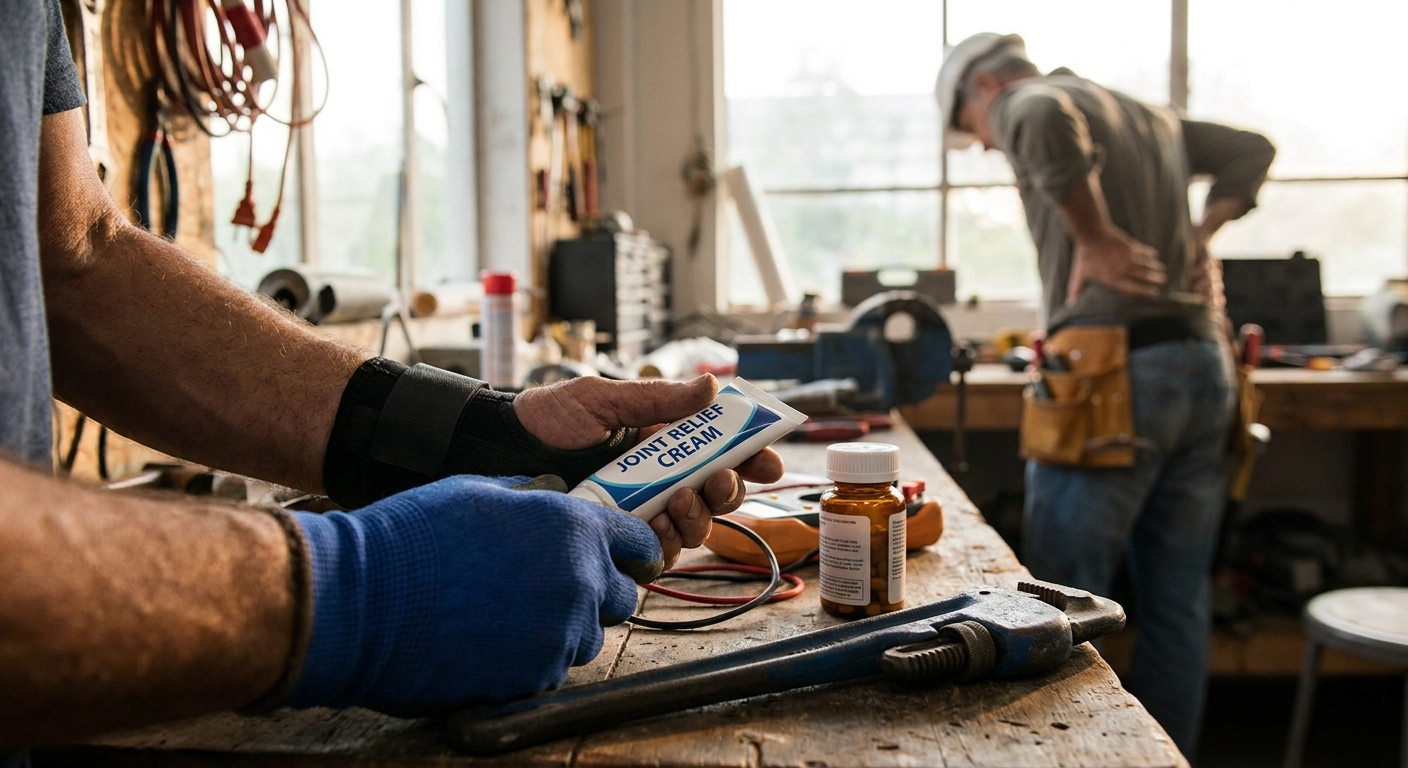
Plumbers crawl under sinks and through crawlspaces all day. Electricians spend hours overhead on ladders with their arms above shoulder height. Both jobs grind down the same joints and nerves that interventional pain management is built to treat, and 2026 is a good year to stop working through it.
TL;DR
- Pain management for plumbers and electricians works best when treatment matches the trade-specific injury, not a generic back pain diagnosis.
- Epidural steroid injections are a strong fit for plumbers with disc-related sciatica from years of kneeling and crawling.
- Carpal tunnel syndrome in electricians responds to nerve-targeted treatment before surgery becomes the only option.
- Radiofrequency ablation can quiet facet-driven low back pain from repetitive lifting and twisting for 6 to 12 months.
- Workers’ comp claims move faster with a documented interventional pain management plan from a board-certified specialist.
Why this matters
Plumbers and electricians don’t get hurt the way office workers do. Plumbers load their lumbar spine and knees every time they kneel under a vanity or crawl through a basement. Electricians load their shoulders, neck, and wrists every time they reach into a panel above their head or grip a drill for an hour straight.
The problem is that both trades tend to push through pain until it’s chronic. A pulled muscle that should heal in two weeks turns into six months of facet joint pain because nobody stopped to get it diagnosed. That’s the same pattern seen in construction workers with chronic injuries — physically demanding trades where the injury outlasts the job that caused it.
Interventional pain management skips the guesswork. Instead of months of rest and re-injury, a specific diagnosis (facet joint, disc, nerve entrapment, bursa) drives a specific treatment, and that treatment is designed to get you back on tools, not just off pain medication.
Who this is for
This guide is for journeyman plumbers, licensed electricians, and apprentices in either trade who deal with recurring knee, back, shoulder, wrist, or elbow pain tied directly to the job — not a one-time injury, but the kind of ache that shows up every time you kneel, climb, or grip for a living. If you’ve had the same pain flare up for more than six weeks, or it’s starting to affect your grip strength or your ability to climb a ladder safely, this is your audience.
What to look for in pain management for plumbers and electricians
A diagnosis specific to the movement, not the body part
“Back pain” isn’t a diagnosis — it’s a symptom. A plumber’s low back pain from years of kneeling could be facet joint irritation, a herniated disc, or sacroiliac joint dysfunction, and each one gets a different treatment. Ask whether the specialist is running diagnostic blocks to confirm the source before committing you to a treatment plan.
Treatment that doesn’t take you off the job for weeks
Tradespeople lose income every day they’re not working. Image-guided injections, nerve blocks, and radiofrequency ablation are outpatient procedures with same-day or next-day return to light duty in most cases — that’s a different calculus than open surgery with months of recovery.
Options that don’t require opioids to function on a ladder or under a sink
Working with power tools or climbing while sedated on opioids is a safety problem, not just a medical one. Interventional treatments — injections, nerve blocks, radiofrequency ablation — are designed to target the pain source directly, which reduces the need for daily pain medication.
A specialist who understands workers’ comp paperwork
Trade injuries are frequently workers’ comp claims, and treatment that isn’t documented with the right diagnosis codes and functional notes can stall a claim for weeks. A pain management practice that already handles workplace injuries and workers’ comp claims moves faster than one that doesn’t.
A realistic return-to-work timeline
Ask directly: how many days before I can climb again, kneel again, grip a drill again? A vague answer is a red flag. A specific number tied to the specific procedure is what you want.
Get your joint pain diagnosed
Same-week appointments in Englewood, Woodland Park, and Edison, NJ.
Top picks for trade-related joint pain
1. Epidural steroid injection — the kneeling fix
Hook: for plumbers whose sciatica flares every time they crawl under a fixture. Spec that matters: injections typically deliver relief for 3 to 6 months per treatment, and most patients return to light duty the next day. This is the standard first-line interventional option for disc-related nerve pain before anyone talks about surgery. Full candidacy details are covered on best candidates for epidural steroid injections. Verdict: Strong fit for plumbers with radiating leg pain from kneeling and crawling.
2. Nerve-targeted treatment for carpal tunnel — the electrician’s grip saver
Hook: for electricians whose hands go numb after an hour with a drill or wire strippers. Spec that matters: early-stage carpal tunnel syndrome often responds to targeted, non-surgical treatment within weeks, while advanced cases with muscle wasting usually need surgical release. Details on staging and treatment are in how to treat carpal tunnel syndrome nerve pain. Verdict: Strong fit if you catch it before the numbness becomes constant.
3. Shoulder bursitis treatment — the overhead panel fix
Hook: for electricians who spend years reaching into panels above shoulder height. Spec that matters: a targeted injection course typically runs 4 to 8 weeks to full relief, far shorter than the months of physical therapy alone often takes for the same complaint. See best treatments for shoulder bursitis pain for the full breakdown. Verdict: Strong fit for overhead-work shoulder pain that flares with reaching.
4. Radiofrequency ablation — the facet joint reset
Hook: for plumbers and electricians whose low back pain comes from repetitive lifting and twisting, not a disc. Spec that matters: RFA can quiet facet-driven pain for 6 to 12 months per treatment once a diagnostic medial branch block confirms the source. This isn’t a first appointment procedure — it follows a positive diagnostic block. Verdict: Consider if injections alone haven’t held, and a diagnostic block confirms facet involvement.
What to avoid
- Pushing through numbness with over-the-counter pain relievers. Masking nerve pain in the hand or arm doesn’t stop nerve damage from progressing — it just delays the diagnosis until surgery is the only option left.
- Chiropractic adjustment alone for facet-driven back pain, with no diagnostic block first. It can feel better for a day or two without ever confirming what’s actually generating the pain, which means the relief never lasts.
- Skipping the workers’ comp documentation step. Treatment that isn’t properly coded and noted for function stalls the claim, even when the procedure itself works.
Verdict comparison
| Treatment | Best for | Typical relief window | Downtime | Verdict |
|---|---|---|---|---|
| Epidural steroid injection | Plumbers with kneeling-related sciatica | 3-6 months | Light duty next day | Strong fit |
| Carpal tunnel nerve treatment | Electricians with repetitive grip numbness | Weeks (early stage) | Minimal, same day | Strong fit |
| Shoulder bursitis treatment | Electricians doing overhead panel work | 4-8 weeks | Same day | Strong fit |
| Radiofrequency ablation | Facet-driven low back pain from lifting/twisting | 6-12 months | 24-48 hours light activity | Consider |
FAQ
What’s the best pain treatment for plumbers with chronic knee or back pain?
For back pain tied to kneeling and crawling, epidural steroid injections are the standard first-line option, often relieving pain for 3 to 6 months. For chronic knee pain from kneeling on hard surfaces, targeted joint injections are typically tried before any surgical referral.
Can electricians treat carpal tunnel syndrome without surgery?
Yes, early-stage carpal tunnel syndrome often responds to non-surgical nerve-targeted treatment within weeks. Advanced cases with muscle wasting or constant numbness usually need surgical release.
Does workers’ comp cover pain management treatment in New Jersey?
Workers’ comp in New Jersey covers interventional pain management when the injury is properly documented and tied to the job. A specialist familiar with workers’ comp coding moves claims faster than one who isn’t.
How long does relief from an epidural steroid injection last?
Relief typically lasts 3 to 6 months per injection, though it varies by the underlying cause. Some patients need a repeat injection or a different procedure if the disc issue persists.
Is radiofrequency ablation covered by insurance in 2026?
Most insurance plans cover radiofrequency ablation once a diagnostic medial branch block confirms facet joint involvement. Coverage details vary by plan, so verify with the specific insurer before scheduling.
What causes shoulder pain in electricians who work overhead all day?
Repeated overhead reaching irritates the bursa and rotator cuff tendons, leading to bursitis or tendinopathy over time. This shows up as pain when lifting the arm above shoulder height, which is exactly the motion the job requires.
How much do pain management procedures cost without insurance?
Costs vary widely by procedure type, from a single injection to a multi-visit treatment plan. Ask for a direct cost breakdown before scheduling if you’re paying out of pocket.
When should a tradesperson see a pain specialist instead of a primary care doctor?
See a specialist once pain has recurred for more than six weeks or is affecting grip strength, ladder safety, or ability to kneel. Primary care is fine for a first flare-up, but recurring trade-related pain needs a diagnosis, not just rest.
One last thing
Facet joint pain from repetitive lifting and twisting gets misdiagnosed as “just a bad back” for years in physical trades, because it doesn’t show up clearly on a standard MRI the way a disc herniation does. A single diagnostic medial branch block, done in one visit, can confirm whether the facet joints are the actual source before anyone commits to radiofrequency ablation — and it’s the step most people skip.
Related guides
- Pain management for workplace injuries and workers’ comp
- When to see a pain management specialist for chronic pain
- How radiofrequency ablation treats chronic low back pain
About the Medical Reviewer
Dr. Saurabh Dang is a double board-certified interventional pain management specialist serving Central and Northern New Jersey. He combines clinical expertise with a patient-centered approach to help patients find lasting relief from chronic pain conditions.
Read Full Bio →Seeking Treatment for Epidural Injections?
Dr. Dang and the team at Hudson Pain and Spine offer specialized care and advanced interventional treatments.
Ready to Find Relief from Pain?
Schedule your consultation with Dr. Saurabh Dang at our Englewood office.
Serving patients across Central and Northern New Jersey — Bergen, Passaic, and Middlesex counties.