
Pain Management for Remote Workers: 2026 Options

Medically reviewed by
Dr. Saurabh Dang, MD, MBA
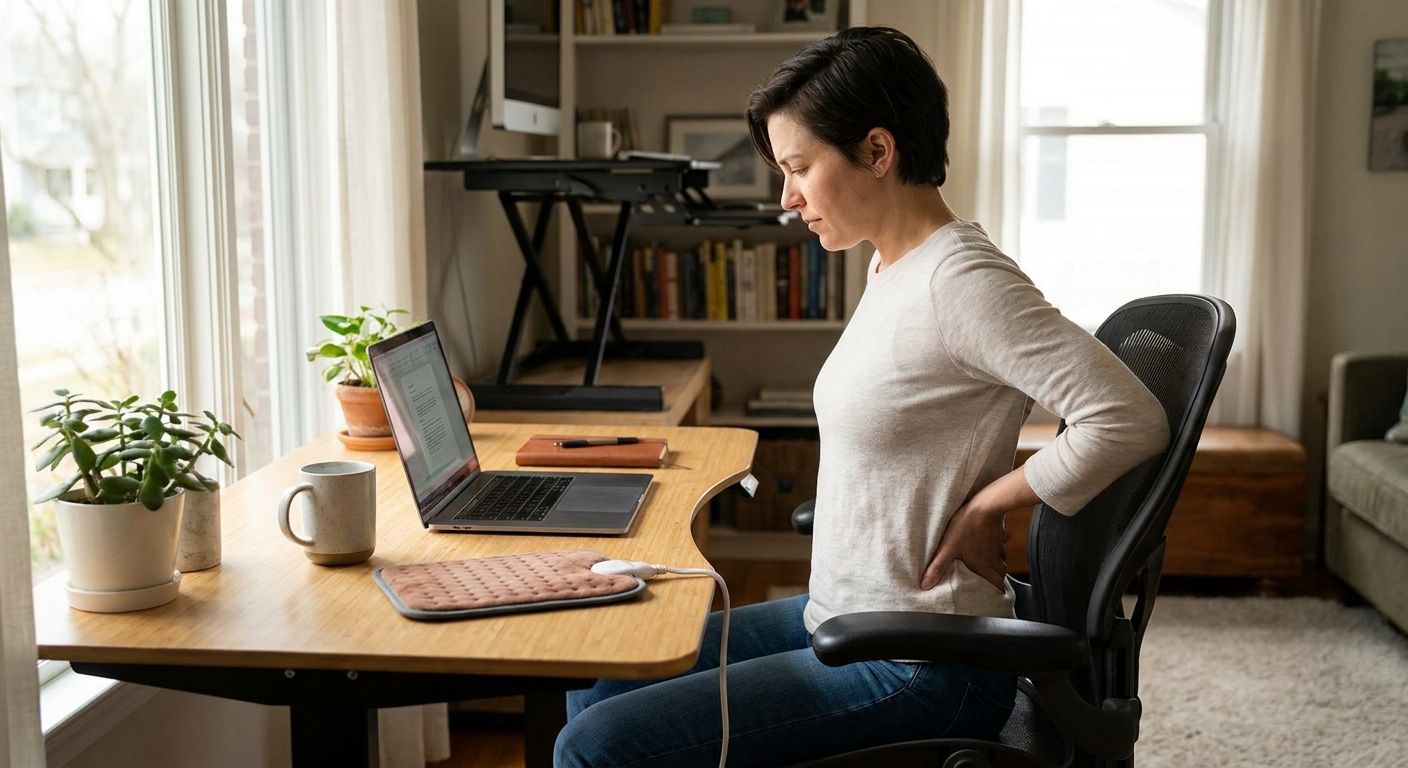
Eight hours in a home-office chair, shoulders creeping toward the laptop screen, turns into a dull ache between the shoulder blades by Wednesday and a locked-up lower back by Friday. Pain management for remote workers isn’t about buying a better chair — it’s about matching the right conservative and interventional care to a desk-bound routine before mechanical strain turns into a chronic problem.
TL;DR
- Pain management for remote workers starts with posture correction and low-impact movement for 6-8 weeks before any injection is on the table.
- Facet joint injections target the joints desk posture overloads and are the right next step when conservative care plateaus.
- Radiofrequency ablation is the long-game fix for remote workers whose facet pain keeps returning after injections wear off.
- Spinal cord stimulation is reserved for cases that fail every other option, not garden-variety desk pain.
Why this matters
Remote work removed the built-in movement of a commute, a walk to a conference room, standing at a coworker’s desk. What’s left is prolonged static loading on the lumbar spine, the thoracic facet joints, and the cervical discs, hour after hour, five days a week, in 2026 just as much as it was in 2021.
That static load is different from an acute sports injury or a single lifting mishap. It’s cumulative, it’s positional, and it responds to a different treatment sequence than a torn muscle does. Hudson Pain and Spine treats this pattern regularly across Bergen, Passaic, and Middlesex counties, and the sequencing matters more than the specific procedure name.
Most desk-related back pain resolves with correction and movement. Some doesn’t, and that’s where interventional pain management — upper back pain treatment included — earns its place instead of another round of over-the-counter pills.
Who this is for
This guide is for remote employees and hybrid workers who sit 6 or more hours a day at a home setup, feel pain concentrated in the neck, mid-back, or lower back, and have already tried a new chair, a standing desk, or a few stretching videos without lasting relief. If pain radiates down an arm or a leg, or if it’s been present daily for more than 6-8 weeks, this is also for you — that’s the point where a physical exam and imaging start to matter more than another ergonomic tweak.
What to look for in pain management for remote workers
A diagnosis before a treatment plan
Desk pain that looks like generic “tightness” can be a facet joint problem, a disc issue, or nerve compression, and each one responds to a different intervention. A specialist who examines and, when warranted, images before recommending a specific procedure is doing this correctly; one who jumps straight to a shot without ruling out the source is skipping a step that matters.
Board certification and fellowship training
Interventional procedures — epidural injections, nerve blocks, radiofrequency ablation — carry more risk than a stretching routine, so the credentials of the person doing them matter. Double board-certified, fellowship-trained pain specialists have completed dedicated training in these exact procedures, which is a meaningfully different bar than general practice experience.
A stepped range of options, not one default answer
Good pain management for remote workers moves from conservative care to targeted injections to longer-acting procedures like radiofrequency ablation only as needed, not as a default first move. A practice that only offers one tool tends to prescribe that tool regardless of what’s actually causing the pain.
Attention to desk-specific mechanics
Forward head posture, rounded shoulders, and prolonged hip flexion create a specific injury pattern — thoracic facet irritation, cervical strain, and sciatic-adjacent nerve irritation from prolonged sitting are common in this group. A specialist who asks about your actual workstation setup is diagnosing the mechanism, not just the symptom.
Realistic timelines for relief
Conservative measures typically need 6-8 weeks to show whether they’re working. Injections carry relief windows measured in months, not days. A specialist who sets that expectation up front, instead of promising instant results, is giving you an honest plan.
A path back to full workday function
The goal isn’t just less pain at rest — it’s sitting through a full workday without flare-ups. Ask how the plan accounts for actual desk hours, not just a general “take it easy” instruction.
Top picks: treatment approaches for desk-related pain
The starting point — ergonomic correction plus low-impact movement. This is where nearly every case should begin: monitor height at eye level, feet flat, hips at 90 degrees, paired with 20-30 minutes of daily mobility work. Most desk-related back pain improves within 6-8 weeks of consistent correction. Buy — start here regardless of severity.
The diagnostic step — targeted injections for radiating pain. When pain travels down an arm or leg instead of staying local, an epidural steroid injection or nerve block both treats and helps confirm the source. Relief from a single injection commonly lasts weeks to a few months, which also tells the specialist whether the diagnosis is correct. Consider if numbness, tingling, or radiating pain has lasted more than 2-3 weeks.
The targeted fix — facet joint injections. Desk posture loads the small facet joints along the spine unevenly, and these joints are a common source of the localized, achy back pain remote workers describe. A single round of facet injections can provide relief for 3-6 months while posture corrections take hold. Consider once conservative care has plateaued for 6-8 weeks.
The long-game — radiofrequency ablation (RFA). For facet pain that keeps returning after injections wear off, RFA disables the small nerve feeding the joint and can extend relief to 12-18 months per treatment. It’s a bigger step than an injection but a smaller one than surgery. Consider for recurrent facet pain confirmed by prior injection response.
The overkill — spinal cord stimulation. This is a real option for chronic, treatment-resistant nerve pain, but it’s not a first, second, or even third answer for standard desk-related back pain. Skip unless conservative care, injections, and RFA have all been tried without lasting relief.
Talk to a pain specialist this week
Get an exam-based plan for desk-related back or neck pain before it becomes chronic.
What to avoid
- Reaching for opioids as a first response. Non-opioid approaches — physical therapy, targeted injections, RFA — handle desk-related pain without the dependency risk, and most cases never need an opioid at all.
- A new chair as the entire treatment plan. Ergonomic equipment helps, but if pain has already set up shop in a facet joint or a compressed nerve root, furniture alone won’t reverse it.
- Waiting out radiating pain. Numbness or tingling down an arm or leg is a nerve signal, not ordinary muscle soreness, and it tends to get harder to treat the longer it’s ignored.
Verdict comparison table
| Approach | Best For | Typical Relief Window | Verdict |
|---|---|---|---|
| Ergonomic correction + movement | Everyone, as the first step | Ongoing while maintained | Buy |
| Epidural injection / nerve block | Radiating arm or leg pain | Weeks to a few months | Consider |
| Facet joint injections | Localized axial back or neck pain | 3-6 months | Consider |
| Radiofrequency ablation | Recurrent facet pain | 12-18 months | Consider |
| Spinal cord stimulation | Treatment-resistant nerve pain only | Long-term, case-dependent | Skip (unless prior options failed) |
FAQ
What is the best pain management approach for remote workers with back pain?
Ergonomic correction and low-impact movement work first for most desk-related back pain in 2026, with targeted injections reserved for cases that don’t improve after 6-8 weeks. Facet joint injections and radiofrequency ablation come into play only after conservative care plateaus.
Is a standing desk enough to fix desk-related back pain?
A standing desk alone rarely fixes established back pain because it doesn’t correct posture or joint loading by itself. It works best paired with monitor height correction and daily mobility work, not as a standalone fix.
How long does desk-related back pain take to improve with conservative care?
Most remote workers see meaningful improvement within 6-8 weeks of consistent posture correction and targeted exercise. If pain persists past that window, it’s a sign to see a pain specialist for an exam.
When should a remote worker see a pain management specialist instead of a general doctor?
See a pain management specialist when desk-related pain lasts more than 6-8 weeks, radiates down an arm or leg, or returns repeatedly despite posture fixes. A specialist can diagnose the specific joint or nerve involved rather than treating it as generic strain.
Do facet joint injections help with desk posture pain?
Facet joint injections directly target the small spinal joints that desk posture overloads, and they commonly provide 3-6 months of relief per round. They work best combined with ongoing posture correction, not as a one-time fix.
Is radiofrequency ablation worth it for chronic desk-related back pain?
Radiofrequency ablation is worth considering when facet joint injections have worked but relief keeps wearing off, since RFA can extend that relief to 12-18 months. It’s not typically a first-line option for new or mild desk pain.
Can sitting all day cause nerve pain, not just muscle pain?
Yes, prolonged sitting can compress nerve roots in the lower back or irritate nerves in the neck, producing tingling or numbness rather than plain soreness. That distinction matters because nerve-related pain often needs a different treatment path than muscle strain.
What board certifications should a pain management doctor have?
Look for double board certification along with fellowship training specifically in interventional pain management, not just general anesthesiology or physiatry. That combination reflects dedicated training in the injection and ablation procedures used for chronic desk-related pain.
One last thing
The pain remote workers describe as “neck strain” is frequently a thoracic facet joint problem instead — the ache sits between the shoulder blades, not at the base of the skull, because screen height pulls the whole upper spine forward, not just the neck. Getting that distinction right the first time saves months of treating the wrong joint.
Related guides
- Low-impact exercises for chronic low back pain
- How to relieve a pinched nerve in the neck or back
- When to see a pain management specialist for chronic pain
About the Medical Reviewer
Dr. Saurabh Dang is a double board-certified interventional pain management specialist serving Central and Northern New Jersey. He combines clinical expertise with a patient-centered approach to help patients find lasting relief from chronic pain conditions.
Read Full Bio →Seeking Treatment for Epidural Injections?
Dr. Dang and the team at Hudson Pain and Spine offer specialized care and advanced interventional treatments.
Ready to Find Relief from Pain?
Schedule your consultation with Dr. Saurabh Dang at our Englewood office.
Serving patients across Central and Northern New Jersey — Bergen, Passaic, and Middlesex counties.