Pain Management for Rowers 2026: Shoulder & Back Fix

Medically reviewed by
Dr. Saurabh Dang, MD, MBA
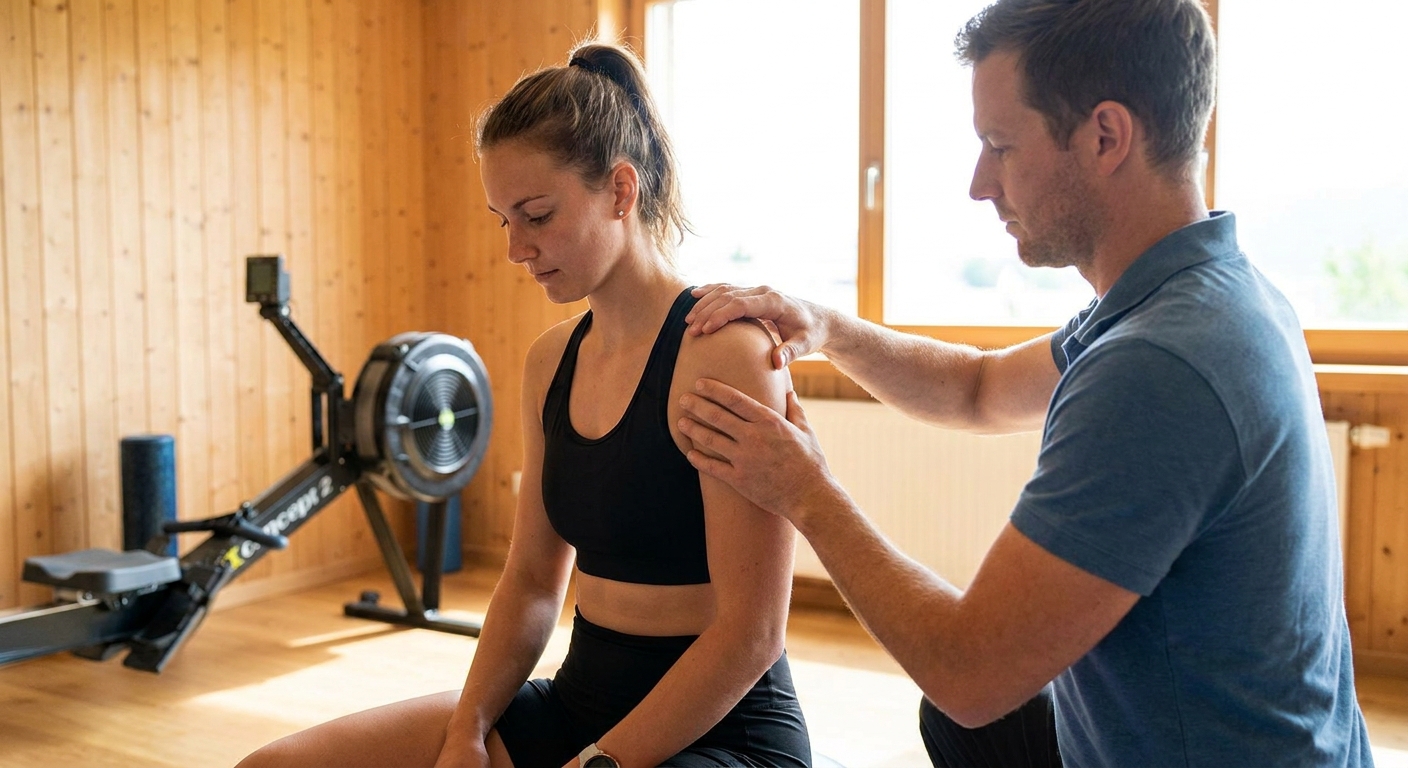
Rowing loads the lumbar spine and the shoulder capsule thousands of times per session, and most rowers wait too long before treating either. This guide covers pain management for rowers dealing with shoulder impingement, disc-driven back pain, and SI joint dysfunction from the catch-drive-finish cycle.
TL;DR
- Pain management for rowers starts with mechanics correction, not injections — fix the catch before treating the symptom.
- Epidural steroid injections are the right call for radicular back pain from a herniated disc, not generic soreness.
- Rotator cuff and subacromial injections address catch-phase shoulder impingement in 2026 when overhead PT plateaus.
- Sacroiliac joint injections target hip-hinge dysfunction common in erg-heavy training blocks.
- Skip jumping straight to spine surgery — most rowing-related back pain responds to non-surgical care first.
Why this matters
Rowing looks like a leg-driven sport, but the repetitive spinal flexion at the catch and the shoulder retraction at the finish put mechanical stress in two very specific places: the lumbar discs and facet joints, and the rotator cuff and biceps tendon. Ignore either one through a full 2026 training season and you’re looking at radiculopathy or a frozen shoulder instead of a manageable strain.
The fix isn’t the same for a masters rower doing three erg sessions a week as it is for a collegiate athlete stroking 34 per minute in a boat. Pain management for rowers needs to account for training volume, stroke rate, and whether the pain is muscular, discogenic, or joint-driven before any treatment gets picked.
Who this is for
This guide is for competitive and recreational rowers in New Jersey — high school and college athletes, masters rowers, and CrossFit or gym members who log heavy erg mileage — who have low back pain that radiates into a leg, or shoulder pain that flares specifically at the catch or finish and doesn’t settle with rest days. If your pain started after a single acute event (a capsize, a fall off the erg), that’s a different workup than chronic overuse pain built over a season, and it’s treated differently at Hudson Pain and Spine.
What to look for in pain management for rowers
A provider who understands the stroke cycle
A generic “back pain” workup misses the point for rowers. The catch loads the lumbar spine in flexion under tension; the finish drives the shoulder into extension and internal rotation. A specialist who asks about stroke rate and boat class before ordering imaging is going to land on the right diagnosis faster.
Imaging that matches the symptom, not the complaint
A rower with leg numbness needs an MRI looking at disc herniation and nerve root compression, not a generic lumbar X-ray. A rower with catch-phase shoulder pain needs imaging that checks the rotator cuff and labrum, not just the AC joint. Matching the scan to the mechanism saves weeks.
A non-surgical-first treatment pathway
Most rowing-related back and shoulder pain responds to physical therapy, activity modification, and — when conservative care stalls — targeted injections. Surgery should be the last conversation, not the first one, for anyone still training.
Access to image-guided injections
When an injection is warranted, precision matters. Fluoroscopic or ultrasound guidance for epidural steroid injections, SI joint injections, or subacromial injections puts the medication exactly where the inflammation is instead of spreading it around the area.
A realistic return-to-boat timeline
A rower needs to know when they can get back on the water, not just when the pain is gone. A provider who gives you a phased return — erg only, then steady-state rowing, then race pace — reduces re-injury far more than “rest until it feels better.”
Logistics that fit a training schedule
Rowers train early mornings and travel for regattas. A pain management office in Englewood, Woodland Park, or Edison with flexible scheduling matters more than it sounds — missed follow-ups delay recovery.
Top picks for rowers with shoulder and back pain
Sport-specific physical therapy first — the safe pick. Six to eight weeks of PT focused on scapular stability and lumbar core control resolves a large share of rowing-related pain before any procedure is needed. Every rower should start here regardless of severity. Verdict: Buy.
Epidural steroid injection for radicular back pain — the targeted fix. When an MRI confirms a herniated disc pressing on a nerve root and leg symptoms accompany the back pain, an epidural steroid injection delivers anti-inflammatory medication directly to the affected level, often providing relief that lasts three to six months while PT gains ground. This isn’t for generalized soreness after a hard 2k test — it’s for confirmed nerve involvement. Verdict: Consider.
Rotator cuff or subacromial injection for catch-phase shoulder pain — the shoulder-specific option. Rowers who feel a pinch at full extension or through the finish often have subacromial impingement or early rotator cuff tendinopathy. A guided injection for rotator cuff shoulder pain reduces inflammation enough to let overhead strengthening work. Rowers who skip this and keep training through the pinch tend to end up with a partial tear. Verdict: Consider.
Sacroiliac joint injection for hip-hinge dysfunction — the underdiagnosed pick. Heavy erg blocks put repetitive shear force through the SI joint, especially in rowers with a longer stroke length. A sacroiliac joint injection both confirms the diagnosis and treats the pain when the SI joint, not the disc, is the source. Verdict: Consider.
Jumping straight to spine surgery — the wildcard nobody should take first. Surgery gets discussed too early for rowers who haven’t tried a structured non-surgical course. Unless there’s progressive neurological loss (worsening weakness, bowel or bladder changes), surgery is a last resort, not a starting point in 2026. Verdict: Skip.
Get a rowing injury evaluation
See a board-certified pain specialist before the pain forces a season off.
What to avoid
- Icing and ibuprofen as a long-term plan. These manage a flare-up for a week, not a season. If you’re still relying on NSAIDs after 6-8 weeks, the underlying mechanical problem hasn’t been addressed.
- Generic gym PT without sport-specific loading. Standard core exercises that don’t replicate the flexed-spine loading of the catch won’t transfer to the boat.
- Cortisone injections without a confirmed diagnosis. An injection that isn’t guided to the actual pain generator — disc, facet, SI joint, or shoulder — is a guess, and guesses in 2026 cost time you don’t get back before a race season.
Verdict comparison
| Option | Best for | Guidance needed | Verdict |
|---|---|---|---|
| Sport-specific PT | Early-stage back or shoulder pain | None | Buy |
| Epidural steroid injection | Confirmed disc herniation with radiculopathy | Fluoroscopic | Consider |
| Rotator cuff injection | Catch-phase shoulder impingement | Ultrasound or fluoroscopic | Consider |
| SI joint injection | Hip-hinge related low back pain | Fluoroscopic | Consider |
| Early spine surgery | Progressive neurological deficit only | Surgical consult | Skip |
FAQ
What is the best pain management approach for rowers with back pain?
The best approach starts with sport-specific physical therapy targeting lumbar core control, then moves to an epidural steroid injection only if imaging confirms a herniated disc with nerve involvement. Skipping straight to injections without a confirmed diagnosis wastes time and money.
Is shoulder pain from rowing usually rotator cuff related?
Shoulder pain that flares specifically at the catch or finish is often subacromial impingement or early rotator cuff tendinopathy rather than a tear. An MRI or ultrasound confirms which structure is involved before treatment starts.
How long does relief from an epidural steroid injection last for rowers?
Relief typically lasts three to six months, which is enough time to rebuild strength and mechanics through physical therapy. Some rowers need a second injection within a training year if symptoms return.
Can rowers keep training through low back pain?
Light training with modified volume is usually fine for muscular soreness, but leg numbness or radiating pain means training should stop until a specialist evaluates the spine. Continuing to row through nerve symptoms in 2026 risks a longer-term injury.
What causes SI joint pain in rowers specifically?
Repetitive hip-hinge loading during the drive phase, especially in rowers with a long stroke length or high volume on the erg, puts shear stress through the sacroiliac joint. A guided SI joint injection both confirms and treats the issue.
When should a rower see a pain management specialist instead of just a physical therapist?
See a specialist when pain persists past six to eight weeks of consistent PT, when there’s numbness or radiating pain into a limb, or when pain disrupts sleep. A pain specialist can order imaging and offer injections that a PT clinic cannot.
Do young rowers need different pain management than masters rowers?
Younger rowers more often have overuse tendinopathy that responds well to PT alone, while masters rowers more frequently have degenerative disc or facet changes that may need injection-based treatment sooner. Age and training history both factor into the plan.
One last thing
The rowers who recover fastest aren’t the ones who find the best injection — they’re the ones who get a mechanics check before the pain starts. A five-minute video review of your catch position by a specialist familiar with rowing biomechanics catches problems months before an MRI would.
Related guides
About the Medical Reviewer
Dr. Saurabh Dang is a double board-certified interventional pain management specialist serving Central and Northern New Jersey. He combines clinical expertise with a patient-centered approach to help patients find lasting relief from chronic pain conditions.
Read Full Bio →Seeking Treatment for Epidural Injections?
Dr. Dang and the team at Hudson Pain and Spine offer specialized care and advanced interventional treatments.
Ready to Find Relief from Pain?
Schedule your consultation with Dr. Saurabh Dang at our Englewood office.
Serving patients across Central and Northern New Jersey — Bergen, Passaic, and Middlesex counties.