
Pain Management for Truck Drivers: 2026 Treatment Guide

Medically reviewed by
Dr. Saurabh Dang, MD, MBA
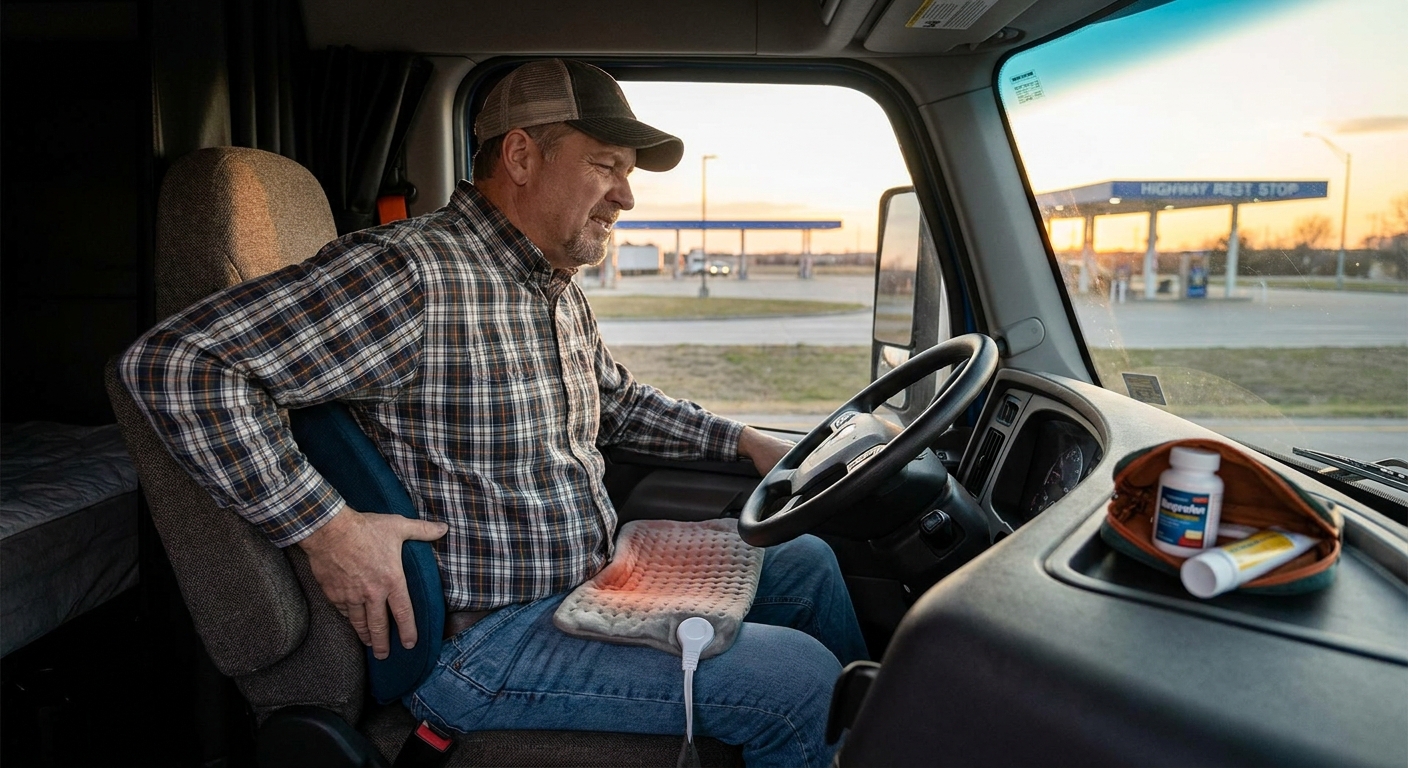
Long-haul driving is one of the toughest jobs on the spine: 10-to-14-hour days in a vibrating seat, irregular sleep, and DOT physicals that don’t leave room for sedation or slow recovery. This guide breaks down what actually works for pain management for truck drivers with chronic back pain in 2026, and what to skip.
TL;DR
- Radiofrequency ablation is the top pick for truck drivers because relief lasts 6-12 months with no time off the road beyond 24-48 hours.
- Epidural steroid injections work as a fast, DOT-compliant bridge treatment for flare-ups between routes.
- Skip opioid-first protocols entirely — they conflict with FMCSA medical certification rules.
- Non-surgical, non-opioid pain management for truck drivers keeps a CDL valid while treating the actual source of pain.
Why this matters
Back pain sidelines more commercial drivers than any other musculoskeletal complaint, and the stakes are higher than for a desk job. A driver who can’t sit for four hours doesn’t get partial credit — the route doesn’t get delivered. Chronic low back pain from years of whole-body vibration, prolonged sitting, and repetitive loading during freight handling responds differently to treatment than an office worker’s flare-up, and the DOT medical certification rules narrow the list of acceptable medications even further.
Hudson Pain and Spine treats drivers from Bergen, Passaic, and Middlesex counties who need relief that doesn’t cost them their CDL. Interventional pain management — image-guided injections, nerve blocks, radiofrequency ablation — targets the pain generator directly instead of masking it with sedating pills, which matters when a physical exam and a clean drug screen stand between a driver and the next paycheck.
Who this is for
This guide is written for CDL holders and owner-operators with chronic low back pain — disc degeneration, facet joint arthritis, sciatica, or a flare-up from a slip-and-fall at a loading dock — who need treatment that fits around DOT physicals, tight delivery windows, and long stretches away from a home clinic. If the pain has lasted more than three months and over-the-counter medication or a chiropractor visit hasn’t moved the needle, the criteria below apply.
What to look for in pain management for truck drivers
DOT-compliant medication protocols
Opioids and many muscle relaxants disqualify a driver from FMCSA medical certification or require a waiver process that can take months. Any pain management for truck drivers needs to start from a non-opioid framework, not add one later. Ask specifically whether the treatment plan includes narcotics before starting.
Fast return-to-cab recovery
A driver can’t take two weeks off for a procedure recovery the way a desk worker can. Image-guided injections and radiofrequency ablation are outpatient, take under 30 minutes, and typically allow driving again within 24-48 hours — that window matters more here than almost any other factor.
Durable relief, not weekly maintenance
A treatment that needs a repeat visit every two weeks isn’t practical for someone running interstate routes. Radiofrequency ablation lasting 6-12 months per session beats a series of trigger point injections that need refreshing monthly.
Diagnostic precision before treatment
Back pain from a herniated disc looks different from facet joint pain on exam but can feel identical to the patient. A medial branch block used diagnostically before committing to RFA confirms the pain generator, which avoids paying for and recovering from a procedure that targets the wrong structure.
Insurance and workers’ comp handling
Many truck drivers are covered through employer workers’ comp after an on-the-job injury, or carry high-deductible plans as owner-operators. A clinic that handles workers’ comp claims and insurance pre-authorization directly saves weeks of paperwork delay.
Locations near major routes
Drivers running the NJ Turnpike, Route 80, or the Garden State Parkway corridor need appointments they can actually get to between loads. Offices positioned near these corridors in Englewood, Woodland Park, and Edison cut travel time that a driver on a schedule doesn’t have.
Top treatment picks for truck drivers with chronic back pain
Radiofrequency ablation — the long-haul option. RFA uses heat to disable the nerves sending pain signals from an arthritic facet joint, and radiofrequency ablation for chronic low back pain typically holds relief for 6-12 months per treatment. Recovery runs 24-48 hours before a driver is back in the cab. Buy — this is the closest thing to a durable fix that fits a trucking schedule.
Epidural steroid injections — the flare-up bridge. Steroid injected around the spinal nerve root reduces inflammation from a bulging or herniated disc, often within days. Not every driver qualifies — best candidates for epidural steroid injections generally have radiating leg pain (sciatica) rather than pure mechanical back pain. Consider for acute flare-ups between routes, not as a standalone long-term plan.
Medial branch blocks — the diagnostic step. This is a targeted nerve block that confirms whether facet joints are the actual pain source before committing to RFA. It’s a 15-minute outpatient procedure with immediate feedback on whether the pain drops. Buy as a first step whenever facet joint involvement is suspected — skipping it means gambling on RFA without confirmation.
Standalone chiropractic adjustment — the incomplete fix. Manual adjustment can loosen tight paraspinal muscles temporarily but does nothing for facet joint arthritis or disc-related nerve compression, the two most common causes of chronic trucker back pain. Skip as a sole treatment; use it as an adjunct at most, not a primary plan.
Opioid-based pain management — the disqualifying path. Beyond the addiction risk, most opioids used at effective doses trigger automatic disqualification or a lengthy waiver review under FMCSA medical guidelines. Non-opioid pain management for truck drivers exists specifically because this route ends careers, not just discomfort. Skip, full stop.
Talk to a board-certified pain specialist
Schedule an evaluation at Englewood, Woodland Park, or Edison.
What to avoid
- Sedating muscle relaxants as a daily crutch. They mask pain enough to pass a shift but impair reaction time behind the wheel, which is exactly what DOT medical exams screen for.
- Surgery as a first-line option. Spinal fusion carries months of recovery a driver can’t absorb; non-surgical, image-guided treatment is almost always tried first for this reason.
- Skipping workers’ comp paperwork after an on-the-job injury. Drivers hurt during loading, unloading, or a fall at a dock often qualify for pain management for workplace injuries and workers’ comp coverage that gets missed when treatment starts without documenting the incident.
Verdict comparison
| Treatment | Recovery time | Duration of relief | DOT-compliant | Verdict |
|---|---|---|---|---|
| Radiofrequency ablation | 24-48 hours | 6-12 months | Yes | Buy |
| Epidural steroid injection | 24 hours | Weeks to months | Yes | Consider |
| Medial branch block | Same day | Diagnostic only | Yes | Buy (as first step) |
| Chiropractic-only care | None | Days | Yes, but limited effect | Skip as sole plan |
| Opioid-based management | N/A | Varies | No | Skip |
FAQ
What is the best pain management for truck drivers with chronic back pain?
Radiofrequency ablation and epidural steroid injections are the most common non-opioid options in 2026 for chronic low back pain in drivers, since both allow return to driving within 24-48 hours and avoid FMCSA-disqualifying medications.
Can truck drivers take pain medication and still pass a DOT physical?
Most opioids and many sedating muscle relaxants disqualify a driver or trigger a waiver review under FMCSA rules. Non-opioid pain management for truck drivers, including injections and RFA, avoids this problem entirely.
How long is recovery after radiofrequency ablation?
Most patients return to driving within 24-48 hours after RFA, with full relief building over one to three weeks as the treated nerve stops sending pain signals.
Does workers’ comp cover pain management for a trucking injury?
Injuries sustained during loading, unloading, or a fall on the job typically qualify for workers’ comp coverage of pain management procedures, though pre-authorization paperwork needs to be filed promptly after the incident.
Is chiropractic care enough for chronic trucker back pain?
Chiropractic adjustment alone rarely resolves facet joint arthritis or disc-related nerve compression, the two most common causes of chronic back pain in drivers, and works best as an adjunct rather than a standalone treatment.
How much do pain management procedures cost without insurance?
Costs vary by procedure and location; a breakdown of typical out-of-pocket ranges for common injections and RFA in 2026 helps drivers budget before scheduling.
When should a truck driver see a pain management specialist instead of a primary care doctor?
Once back pain has lasted more than three months or hasn’t responded to over-the-counter medication and rest, a board-certified pain specialist can offer image-guided treatment options a primary care visit typically doesn’t provide.
One last thing
Most drivers wait until a flare-up forces a missed load before seeking treatment, but medial branch blocks used early — as a diagnostic step rather than a last resort — cut the guesswork out of choosing between RFA and injections, which shortens the path to the 6-12 months of relief RFA typically delivers.
Related guides
- How to return to work safely after a pain procedure
- How to manage chronic pain without opioids
- How much do pain management procedures cost without insurance
- How to treat a herniated disc without surgery
About the Medical Reviewer
Dr. Saurabh Dang is a double board-certified interventional pain management specialist serving Central and Northern New Jersey. He combines clinical expertise with a patient-centered approach to help patients find lasting relief from chronic pain conditions.
Read Full Bio →Seeking Treatment for Epidural Injections?
Dr. Dang and the team at Hudson Pain and Spine offer specialized care and advanced interventional treatments.
Ready to Find Relief from Pain?
Schedule your consultation with Dr. Saurabh Dang at our Englewood office.
Serving patients across Central and Northern New Jersey — Bergen, Passaic, and Middlesex counties.