
Pain Management for Car Accident Injuries in NJ (2026)

Medically reviewed by
Dr. Saurabh Dang, MD, MBA
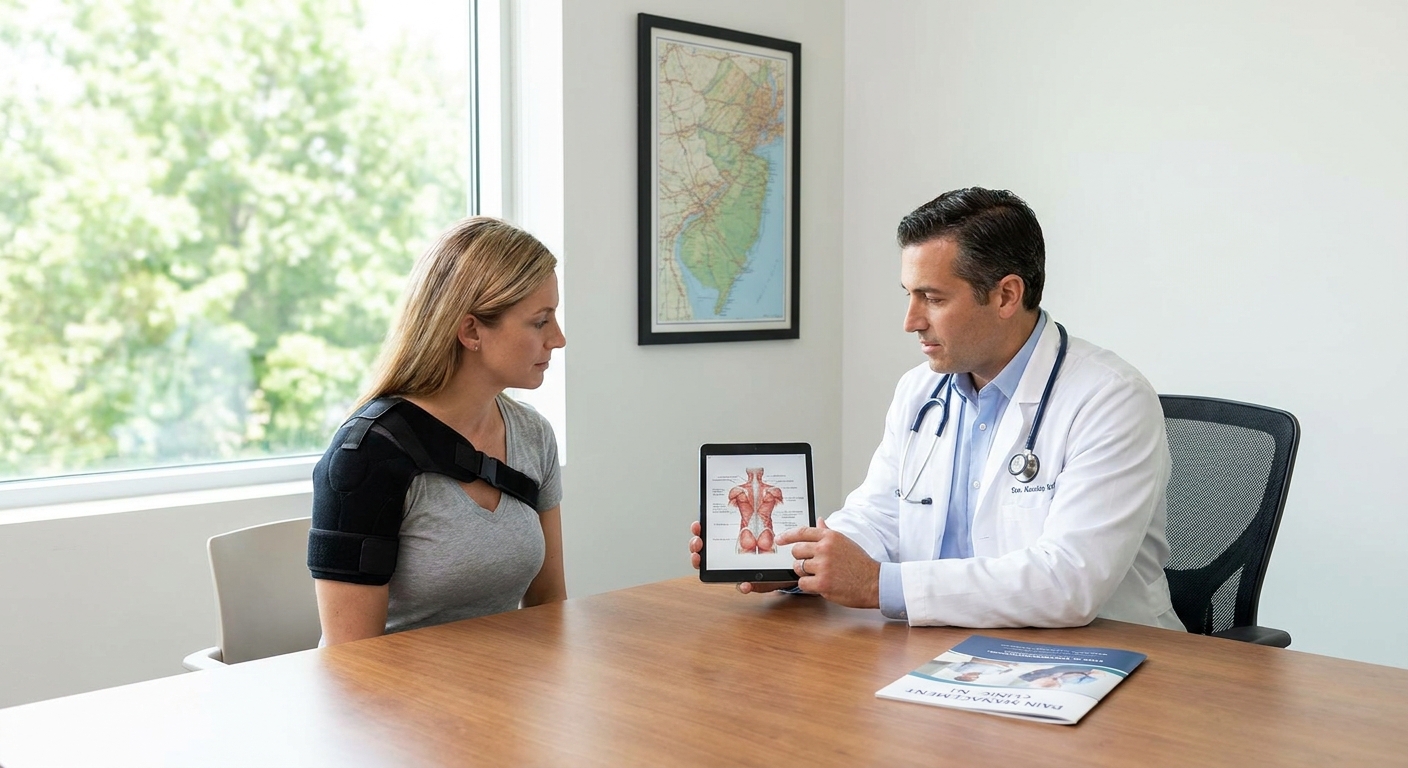
Car accident injuries in Bergen, Passaic, and Middlesex counties rarely resolve with rest and an ice pack — whiplash, herniated discs, and nerve compression need targeted treatment, not guesswork. This guide breaks down which interventional pain management options for car accident injuries in NJ actually work, in what order, and when to skip a step entirely.
TL;DR
- Epidural steroid injections are the first-line pick for car accident injuries in NJ with confirmed disc or nerve root involvement in 2026 — Buy.
- Radiofrequency ablation extends relief for whiplash-linked facet joint pain to 6-12 months once diagnostic medial branch blocks confirm the source — Consider.
- Trigger point injections handle acute muscle spasm from the crash itself but won’t touch nerve pain — Consider for the first 2-4 weeks only.
- Chiropractic-only care for numbness or pain radiating past the shoulder or hip for more than 6 weeks is a Skip — that pattern needs imaging and nerve testing.
- PIP/no-fault claims in New Jersey generally cover interventional procedures ordered promptly after the accident, but approval timing matters.
Why this matters
A 2026 fender-bender and a 2026 highway rear-end collision can produce the same MRI finding: a herniated disc, a facet joint sprain, or nerve root irritation that doesn’t show up on an ER X-ray. Symptoms from whiplash often don’t peak until 24 to 72 hours after impact, which is why patients discharged from urgent care with a soft collar end up in a specialist’s office weeks later with worse pain, not less.
The stakes go beyond comfort. Untreated nerve compression from a car accident can turn into chronic radiculopathy, and PIP/no-fault insurers in New Jersey often expect documented, timely treatment to keep a claim active. How to manage nerve pain after a car accident covers the early-warning signs worth flagging to a specialist before they become permanent.
Who this is for
This guide is built for NJ drivers and passengers who were in a car accident in the last 1 to 8 weeks and still have neck pain, low back pain, numbness, tingling, or headaches that haven’t cleared with rest, over-the-counter medication, or a few chiropractic visits. It also applies to patients further out from the crash — 6 months, a year — whose pain plateaued instead of resolving. If you’re filing a PIP or no-fault claim and need documented, board-certified interventional care rather than a generic urgent-care note, this is the decision framework to use.
What to look for in pain management for car accident injuries in NJ
Documented injury mechanism and timeline
A specialist needs the crash details — speed, direction of impact, whether the headrest was properly positioned — because that mechanism predicts which structures got hurt. Whiplash from a rear-end collision loads the cervical facet joints differently than a T-bone impact loads the lumbar spine, and treatment should follow the mechanism, not a generic “back pain” protocol.
Access to diagnostic imaging and nerve testing
A provider who orders MRI or EMG/nerve conduction studies before jumping to a procedure is doing it right. Skipping diagnostics and going straight to an injection means guessing at the pain generator, which wastes weeks and, in a PIP claim, weakens the medical record.
A real range of interventional options
One-size-fits-all clinics that only offer epidural injections regardless of the finding are a red flag. Car accident injuries span facet joint sprain, disc herniation, muscle spasm, and peripheral nerve irritation — each needs a different tool, from trigger point injections to radiofrequency ablation to nerve blocks.
Insurance and PIP/no-fault coordination
New Jersey’s no-fault system covers interventional pain treatment for accident-related injuries, but only when procedures are properly coded, pre-authorized where required, and documented against the accident date. A practice that handles PIP paperwork routinely will move faster than one that treats it as an afterthought.
Fellowship-trained, board-certified providers
Interventional procedures — epidural injections, nerve blocks, radiofrequency ablation — carry real technical risk when done by someone without fellowship training in pain medicine. Double board-certified, fellowship-trained physicians follow fluoroscopic or ultrasound guidance as standard practice, not an upsell.
Return-to-function planning, not just pain scores
The goal in 2026 isn’t a lower number on a 1-10 pain scale in isolation — it’s getting back to driving, working, and sleeping without guarding the injury. A treatment plan should name a functional target, not just “reduce pain.”
Top picks for car accident pain management
Epidural steroid injections — the workhorse pick. For confirmed disc herniation or nerve root irritation on MRI, an epidural steroid injection delivers medication directly to the inflamed nerve root rather than circulating through the whole body. Relief commonly lasts 3 to 6 months per injection, enough time for the disc to heal or for a longer-term plan to take shape. Best candidates for epidural steroid injections breaks down who actually qualifies. Verdict: Buy for anyone with radiating pain, numbness, or a positive straight-leg-raise finding after a crash.
Whiplash-specific neck treatment — the most-overlooked pick. Whiplash isn’t just “sore neck” — it involves facet joint sprain, ligament strain, and sometimes cervicogenic headache, and it needs a protocol built around those structures rather than generic physical therapy alone. Neck pain treatment for whiplash after a car accident covers the staged approach — from anti-inflammatory management to targeted injections. Verdict: Buy for anyone with neck stiffness, headaches, or reduced range of motion in the first 8 weeks post-crash.
Medial branch blocks and radiofrequency ablation — the long-game pick. When facet joint pain from the crash persists past the acute phase, a diagnostic medial branch block confirms the joint as the source before radiofrequency ablation (RFA) burns the nerve supplying it. RFA relief typically runs 6 to 12 months per treatment, well beyond what a single steroid injection offers. Radiofrequency ablation for facet joint pain walks through the two-step diagnostic-then-treatment process. Verdict: Consider once initial injections and physical therapy plateau, usually around the 8 to 12 week mark.
Trigger point injections — the fast-relief pick. Acute muscle spasm from the crash itself — the tight, knotted bands in the trapezius or paraspinal muscles — responds quickly to trigger point injections, often within days rather than weeks. They don’t address nerve or disc damage, so they’re a short-term tool, not a full plan. Verdict: Consider for the first 2 to 4 weeks alongside diagnostic workup, not as a standalone strategy.
Spinal cord stimulation — the last-resort pick. For the small percentage of car accident patients who develop chronic nerve pain that doesn’t respond to injections, RFA, or medication management, spinal cord stimulation is an option worth discussing — it works by disrupting pain signals before they reach the brain. It’s an involved decision with a trial period first. Verdict: Consider only after conservative and interventional options have been exhausted over several months, typically not before 6 months post-accident.
Get an accident injury evaluation
Board-certified interventional pain care across Englewood, Woodland Park, and Edison, NJ.
What to avoid
- Chiropractic-only care for radiating pain. Manipulation can help muscle-driven neck and back pain, but numbness, tingling, or pain shooting past the shoulder or hip past 6 weeks signals nerve involvement that needs imaging, not more adjustments.
- Skipping diagnostics to “just try an injection.” An epidural or nerve block placed at the wrong level because nobody confirmed the pain generator with MRI or EMG wastes both time and a PIP claim’s documentation trail.
- Long-term opioid prescriptions as a first move. Opioids mask acute crash pain without treating the facet joint, disc, or nerve issue underneath it, and NJ prescribers increasingly steer toward interventional and non-opioid options first in 2026.
Verdict comparison table
| Treatment | Best for | Typical relief window | Verdict |
|---|---|---|---|
| Epidural steroid injection | Herniated disc, nerve root irritation | 3-6 months | Buy |
| Whiplash-specific neck protocol | Cervical strain, facet sprain, headaches | Weeks to months, staged | Buy |
| Medial branch block + RFA | Confirmed facet joint pain, chronic | 6-12 months | Consider |
| Trigger point injection | Acute muscle spasm | Days to weeks | Consider (short-term) |
| Spinal cord stimulation | Refractory chronic nerve pain | Ongoing with device | Consider (last resort) |
FAQ
What is the best pain management option for car accident injuries in NJ?
For confirmed disc or nerve root injury, an epidural steroid injection is typically the first interventional option, providing 3 to 6 months of relief per treatment. The right choice depends on imaging findings and how long symptoms have lasted since the accident.
How soon after a car accident should I see a pain management specialist in NJ?
See a specialist within 1 to 2 weeks if pain, numbness, or headaches haven’t resolved after the initial ER or urgent care visit. Early evaluation also strengthens documentation for PIP or no-fault insurance claims.
Does PIP insurance cover pain management after a car accident in NJ?
New Jersey’s no-fault PIP coverage generally includes interventional pain procedures tied to a documented accident injury. Coverage details and pre-authorization requirements vary by policy, so confirming with the provider’s billing team before scheduling matters.
Is radiofrequency ablation better than epidural injections for whiplash?
They treat different problems: epidural injections target nerve root inflammation from a disc issue, while radiofrequency ablation targets confirmed facet joint pain. Many patients start with injections and move to RFA later if facet pain persists past the acute phase.
Can whiplash cause long-term nerve pain if untreated?
Yes, untreated whiplash can progress to chronic cervicogenic headaches, facet joint dysfunction, or nerve irritation months after the crash. Symptoms that plateau instead of improving within 6 to 8 weeks warrant a specialist evaluation.
How much do pain management procedures cost after a car accident in NJ?
Costs vary by procedure and insurance coverage, and PIP claims typically handle billing directly with the treating provider. Patients without applicable coverage should ask about self-pay rates before scheduling.
Do I need a referral to see a pain management doctor after a car accident in NJ?
Most interventional pain practices in NJ accept direct scheduling without a referral, especially for accident-related injuries. Some insurance plans may still require a primary care or attorney referral for claim documentation purposes.
What happens if I skip treatment and my car accident pain doesn’t go away?
Untreated nerve or joint injuries from a car accident often become chronic, requiring more invasive treatment later than would have been needed with early intervention. Delayed treatment can also complicate PIP or personal injury claims that depend on a documented treatment timeline.
One last thing
The detail most patients miss in 2026: whiplash symptoms frequently don’t peak for 24 to 72 hours after the crash, which means an ER visit that clears you same-day isn’t the final word. If pain, stiffness, or headaches show up two days later, that’s not a new injury — it’s the same one, and it’s worth a specialist visit, not a shrug.
Related guides
About the Medical Reviewer
Dr. Saurabh Dang is a double board-certified interventional pain management specialist serving Central and Northern New Jersey. He combines clinical expertise with a patient-centered approach to help patients find lasting relief from chronic pain conditions.
Read Full Bio →Seeking Treatment for Epidural Injections?
Dr. Dang and the team at Hudson Pain and Spine offer specialized care and advanced interventional treatments.
Ready to Find Relief from Pain?
Schedule your consultation with Dr. Saurabh Dang at our Englewood office.
Serving patients across Central and Northern New Jersey — Bergen, Passaic, and Middlesex counties.