
Shoulder Pain Treatment for Golfers 2026: What Works

Medically reviewed by
Dr. Saurabh Dang, MD, MBA
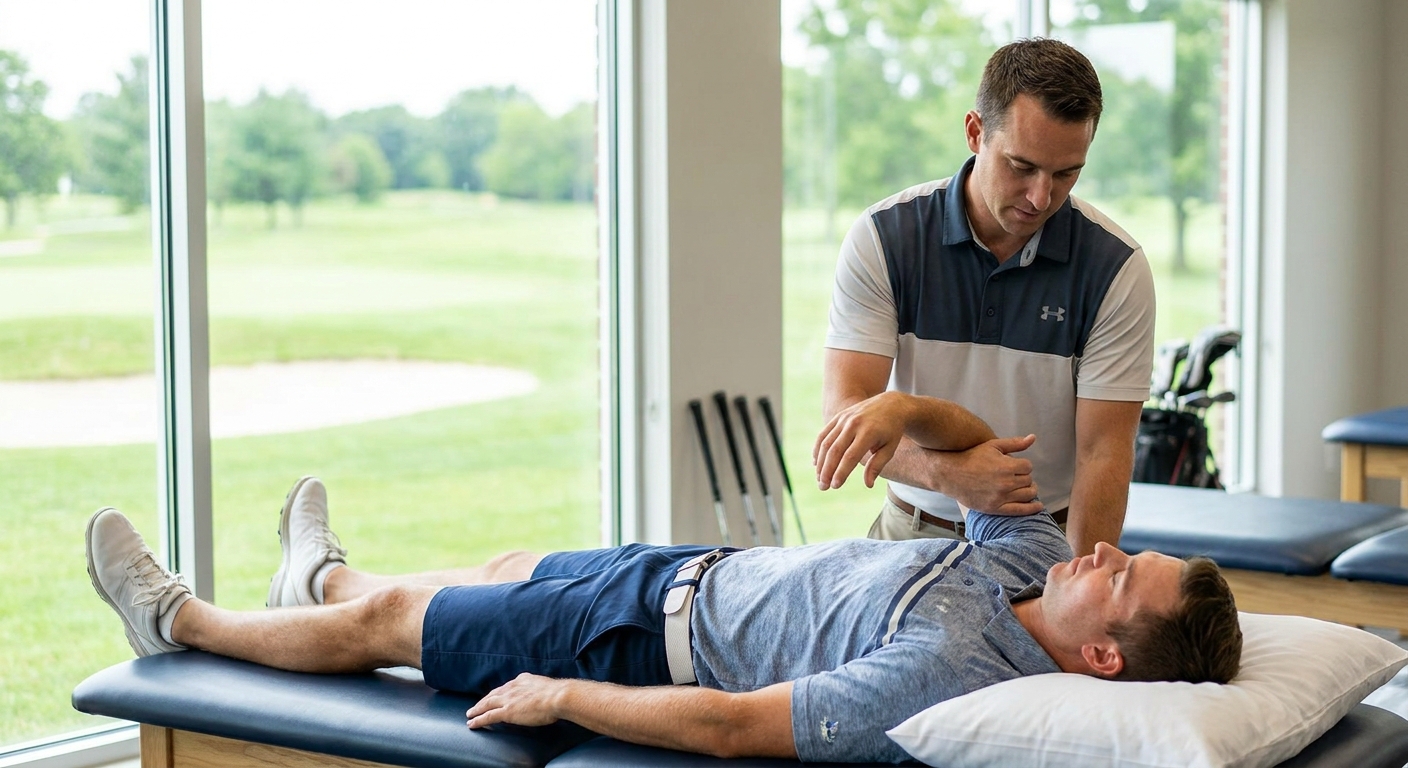
Shoulder pain that flares mid-backswing or during an overhead serve usually starts higher up the chain than most golfers assume — the neck and the nerves feeding the arm are often doing more damage than the rotator cuff itself. This guide breaks down what actually works for golfers and overhead athletes in 2026, and where a home stretching routine stops being enough.
TL;DR
- Physical therapy with scapular stabilization is the foundation pick for golfers with shoulder pain — start here first.
- An epidural steroid injection is the fast-relief pick when cervical nerve irritation refers pain into the shoulder.
- A suprascapular nerve block is the targeted pick for posterior shoulder pain tied to repetitive follow-through.
- Cortisone injections without a cervical spine check are a skip for anyone playing more than twice a week.
- Surgical referral stays a last resort until 8 to 12 weeks of conservative care fails.
Why this matters
Golf and overhead sports load the shoulder in a repeated, single-plane pattern thousands of times a season — a weekend player swinging 80 times a round racks up real wear by mid-2026 summer. What looks like a rotator cuff strain is frequently a pinched nerve in the cervical spine or a suprascapular nerve entrapped at the scapular notch, both of which refer pain straight into the shoulder and upper arm.
At Hudson Pain and Spine, the distinction matters because treating a nerve problem like a muscle problem wastes weeks of a competitive season. Getting the diagnosis right before picking a treatment is the difference between a six-week fix and a chronic issue that limits the swing into 2027.
Who this is for
This guide is for recreational and competitive golfers, tennis players, and overhead throwing athletes in Bergen, Passaic, and Middlesex counties dealing with shoulder pain that hasn’t resolved after two to three weeks of rest, or that comes with numbness, tingling, or weakness radiating down the arm. It’s not for a one-day soreness after a heavy practice session — that’s normal load response, not a diagnosis.
What to look for in shoulder pain treatment for golfers
Differentiation between rotator cuff and cervical referred pain
A sore rotator cuff and a pinched cervical nerve can feel identical at the shoulder, but they need opposite treatments. A provider who checks neck range of motion and does a Spurling’s test before ordering a shoulder MRI is looking in the right place first.
Fluoroscopic (image-guided) injection precision
Any injection near the cervical spine or suprascapular notch should be placed under live imaging, not landmark guessing. Fluoroscopic guidance is what separates a fellowship-trained interventional approach from a blind injection in a general orthopedic office.
Sport-specific rehab, not generic shoulder exercises
A golfer’s shoulder mechanics differ from a tennis serve or a baseball throw — the rehab plan should reflect the actual motion causing the pain, including swing-plane or serve-mechanics review, not a stock printout of pendulum exercises.
Individualized injection frequency limits
Corticosteroid injections are typically capped at three to four per year in a given joint or nerve target because repeated dosing weakens tendon and cartilage tissue over time. A provider who offers unlimited injections without discussing this limit is skipping a real conversation.
Return-to-play timeline planning
Golfers want a date, not a vague “when it feels better.” A treatment plan should include a specific return-to-swing timeline tied to pain-free range of motion and strength benchmarks, not just calendar guessing.
Board certification and fellowship training
Interventional pain management for nerve-related shoulder pain is a distinct specialty from general orthopedics or sports medicine. Double board-certified, fellowship-trained physicians bring a different level of precision to nerve blocks and epidural work than a general practice setting.
Top picks for golfers and overhead athletes
Physical therapy and scapular stabilization — the foundation pick. A structured program targeting the rotator cuff and scapular stabilizers over six to eight weeks, three sessions a week, resolves a large share of overhead-athlete shoulder pain without any injection. This is where every case should start unless numbness or significant weakness is present. Verdict: Buy.
Cervical epidural steroid injection — the fast-relief pick. When shoulder pain traces back to nerve irritation at the cervical spine, an epidural steroid injection can reduce inflammation around the nerve root within days rather than weeks. Candidates and limits for this option are covered on the epidural steroid injection candidacy page, including the typical three-to-four-per-year ceiling. Verdict: Consider if imaging confirms nerve involvement.
Suprascapular nerve block — the targeted pick. Golfers with posterior shoulder pain from repetitive follow-through often have suprascapular nerve irritation at the scapular notch, and a targeted block can relieve symptoms within 15 to 30 minutes of the injection. Details on nerve-related arm and shoulder symptoms are covered under pinched nerve treatment for arm numbness and tingling. Verdict: Consider for pain unresponsive to eight weeks of PT.
Comprehensive evaluation for cervical radiculopathy in active adults — the athlete-specific pick. When shoulder pain comes with arm numbness or grip weakness, a herniated cervical disc pressing on a nerve root is a common culprit in athletes who load the spine repeatedly, and it needs its own workup rather than a generic shoulder plan. The full evaluation path is outlined in herniated disc treatment for active adults and athletes. Verdict: Buy if radicular symptoms are present.
Surgical referral for rotator cuff tear — the last-resort pick. A full-thickness tear confirmed on imaging that doesn’t respond to eight to twelve weeks of conservative care warrants a surgical consult. Jumping to surgery before exhausting nerve-focused and PT-based options skips steps that resolve most cases without an operating room. Verdict: Skip until conservative care has run its course.
Get a shoulder pain diagnosis in 2026
Talk to a board-certified pain specialist before your next round.
What to avoid
- Cortisone injections without a cervical spine check. If the pain is nerve-referred, a shoulder-only injection treats the wrong joint and delays real relief by weeks.
- “Rest and ice” advice past three weeks. Competitive-level golfers with persistent pain beyond three weeks need a diagnostic workup, not another round of ice packs.
- Chiropractic manipulation alone when numbness or tingling is present. Manual adjustment without imaging is a risk when nerve compression, not just muscle tightness, is driving the symptoms.
Verdict comparison
| Treatment | Onset of relief | Frequency limit | Best for | Verdict |
|---|---|---|---|---|
| PT and scapular stabilization | 2-4 weeks | Ongoing | Rotator cuff strain, general overuse | Buy |
| Cervical epidural steroid injection | Days | 3-4 per year | Nerve-referred shoulder pain | Consider |
| Suprascapular nerve block | 15-30 minutes | Per physician plan | Posterior shoulder pain from follow-through | Consider |
| Cervical radiculopathy workup | Varies by cause | N/A | Numbness, tingling, grip weakness | Buy if radicular |
| Surgical referral | Weeks post-op | N/A | Confirmed full-thickness tear | Skip until conservative care fails |
FAQ
What is the best shoulder pain treatment for golfers in 2026?
Physical therapy with scapular stabilization is the best starting treatment for most golfers, with epidural steroid injections or nerve blocks added when pain traces to a cervical nerve or suprascapular entrapment. Surgery stays a last resort after 8 to 12 weeks of conservative care fails.
Is shoulder pain from golf usually a rotator cuff injury or a pinched nerve?
It can be either, and the two feel similar at the shoulder itself. A cervical spine exam and nerve conduction testing distinguish a rotator cuff strain from a pinched nerve referring pain down the arm.
How much does a shoulder injection for golfer’s shoulder cost in 2026?
Costs vary by insurance coverage and the specific procedure, from a corticosteroid injection to an image-guided epidural or nerve block. Checking current coverage details directly with the clinic is the fastest way to get an accurate number.
How long until a golfer can return to swinging after a shoulder injection?
Many golfers return to light swinging within one to two weeks of an injection once pain-free range of motion is confirmed. Full competitive play typically waits until strength benchmarks are met, not just the calendar.
Can a pinched nerve in the neck cause shoulder pain during a golf swing?
Yes, a cervical nerve root irritated by a herniated disc or arthritis commonly refers pain into the shoulder and down the arm during rotational movements like a golf swing. This is one of the most missed diagnoses in overhead-athlete shoulder pain.
How many cortisone shots can a golfer get for shoulder pain per year?
Corticosteroid injections are typically limited to three to four per year in a given target area because repeated dosing can weaken tendon and cartilage tissue. A physician should discuss this ceiling before the first injection.
When should a golfer with shoulder pain see a pain specialist instead of a chiropractor?
Numbness, tingling, or weakness radiating down the arm is the signal to see a pain specialist for imaging and nerve testing rather than manual adjustment alone. Chiropractic care without a nerve workup can miss a compressed nerve root entirely.
Does a suprascapular nerve block work for golfer’s shoulder pain?
A suprascapular nerve block relieves posterior shoulder pain within 15 to 30 minutes when the pain source is entrapment at the scapular notch, common from repetitive follow-through motion. It’s a targeted option, not a first-line one, reserved for cases that don’t respond to physical therapy alone.
One last thing
Suprascapular nerve entrapment gets missed constantly in golfers because the pain sits at the back of the shoulder, exactly where most players assume it’s just a tight rotator cuff from a long range session. A block that resolves symptoms in under 30 minutes confirms the nerve as the source — an outcome a stretching routine alone will never produce.
Related guides
About the Medical Reviewer
Dr. Saurabh Dang is a double board-certified interventional pain management specialist serving Central and Northern New Jersey. He combines clinical expertise with a patient-centered approach to help patients find lasting relief from chronic pain conditions.
Read Full Bio →Seeking Treatment for Epidural Injections?
Dr. Dang and the team at Hudson Pain and Spine offer specialized care and advanced interventional treatments.
Ready to Find Relief from Pain?
Schedule your consultation with Dr. Saurabh Dang at our Englewood office.
Serving patients across Central and Northern New Jersey — Bergen, Passaic, and Middlesex counties.