
Why Athletes Develop Chronic Pain: Causes and Solutions

Medically reviewed by
Dr. Saurabh Dang, MD, MBA
Why Athletes Develop Chronic Pain: Causes and Solutions

Chronic pain in athletes is defined as pain persisting beyond normal tissue healing time, often lasting three months or more, even without a clear ongoing injury. A Swedish Olympic cohort study found that athletes report pain in 44% of monitored weeks, with 65% of those pain weeks occurring without any concurrent injury or illness. That finding alone reframes the conversation. Chronic pain in sports is not simply an unresolved acute injury. It emerges from a complex interaction of overuse microdamage, biomechanical stress, systemic dysfunction, and neurological amplification. Understanding why athletes develop chronic pain is the first step toward addressing it effectively and staying in the game long term.
Why athletes develop chronic pain: the overuse and microdamage cycle
Repetitive training is the most direct cause of chronic pain in athletes. Skeletal muscle overuse injury develops through gradual microdamage accumulation and impaired repair, producing persistent soreness and functional limitations that outlast any single training session. Unlike acute traumatic injuries, overuse injuries have no clear moment of onset. They build quietly over weeks and months.
The underlying process involves maladaptive inflammation and extracellular matrix remodeling. When tissue does not fully repair between sessions, the matrix stiffens and loses elasticity. This makes the same movement pattern more damaging over time, not less. Runners developing plantar fasciitis, swimmers with rotator cuff tendinopathy, and cyclists with iliotibial band syndrome all follow this same pattern of load-repair imbalance.
Common overuse scenarios that lead to chronic symptoms include:
- Increasing training volume too quickly without adequate recovery days
- Repeating the same movement pattern daily without cross-training variation
- Returning to full training before soft tissue has fully healed
- Ignoring early warning signs like persistent fatigue or localized soreness
Pro Tip: Track your training load week to week using a simple ratio of acute workload to chronic workload. When that ratio spikes above 1.5, your injury risk rises sharply. Backing off before symptoms escalate is far easier than managing a full overuse injury.
How do biomechanical imbalances contribute to chronic pain?
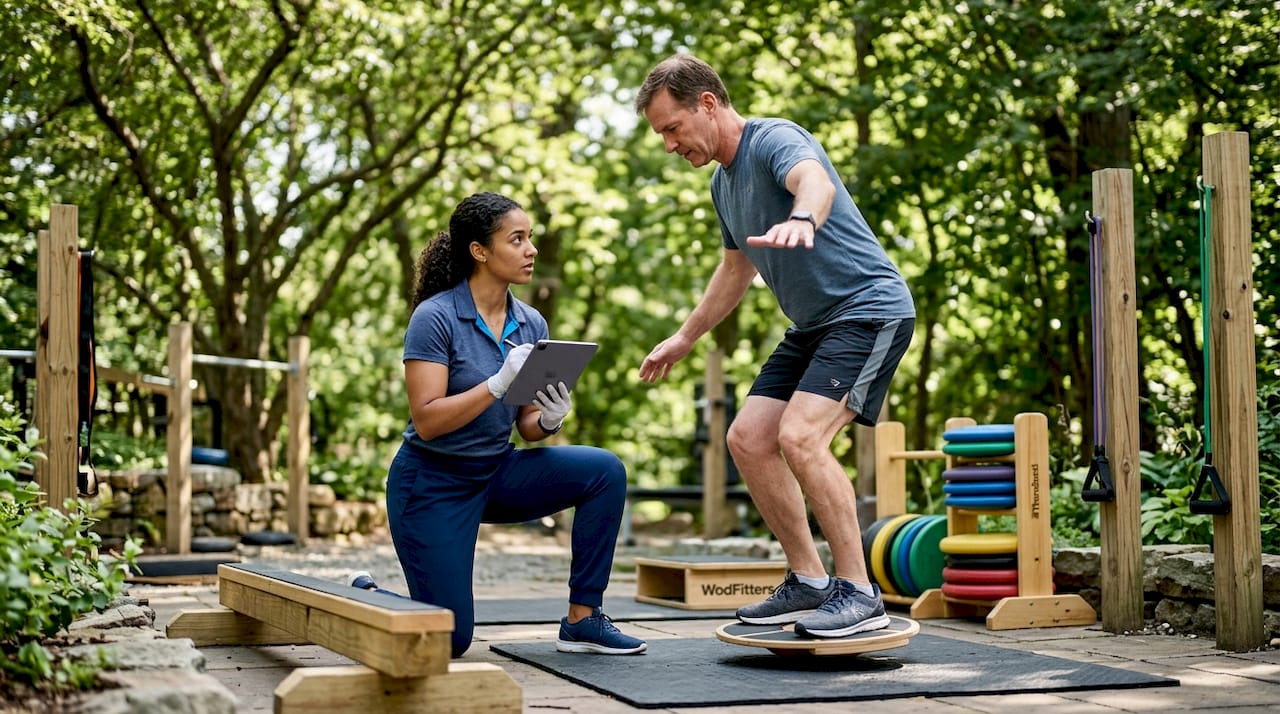
Poor movement mechanics are a major cause of chronic pain symptoms in sports, yet they often go undetected until damage is already done. Faulty movement patterns and muscle imbalances create repetitive strain on specific tissues, distributing load unevenly across joints and soft structures. Over time, that cumulative stress produces chronic symptoms even when individual training sessions seem manageable.
Research shows a high prevalence of myofascial pain syndrome in overhead athletes, with 86% of those experiencing neck and shoulder pain showing active trigger points in muscles like the trapezius and infraspinatus. Trigger points are tight, hyperirritable spots within muscle tissue that refer pain to nearby areas and reduce functional range of motion. They are a direct consequence of repetitive, mechanically inefficient movement.
Imaging findings often miss the full picture. Muscle morphology changes such as smaller multifidus size and fatty infiltration correlate with worse functional outcomes in chronic low back pain, but an MRI alone cannot capture how an athlete actually moves under load. A functional biomechanical assessment provides information that imaging cannot.
A structured approach to identifying biomechanical contributors includes:
- Movement screening: Assess squat, hinge, push, and pull patterns for compensations and asymmetries.
- Muscle balance testing: Identify strength deficits between opposing muscle groups, such as hip flexors versus glutes.
- Joint mobility assessment: Check ankle dorsiflexion, thoracic rotation, and hip mobility, since restrictions in one area force compensation elsewhere.
- Sport-specific analysis: Evaluate the athlete’s actual sport mechanics, whether that is a golf swing, a throwing motion, or a running stride.
Pro Tip: If you have chronic pain that does not respond to rest, ask a physical therapist or sports medicine specialist to video your movement patterns. Watching yourself move often reveals compensations you cannot feel.
What role do RED-S and overtraining syndrome play?
Systemic conditions are an underappreciated cause of chronic pain in athletes. Two of the most clinically significant are Relative Energy Deficiency in Sport (RED-S) and overtraining syndrome (OTS). Both affect the entire body, not just a single tissue or joint.
RED-S occurs when an athlete’s energy intake does not meet the demands of their training load. Low energy availability impairs bone health and significantly increases the risk of bone stress injuries, which are a direct source of chronic pain and prolonged recovery. The skeletal consequences of RED-S are the best documented, but the condition also disrupts hormonal function, immune response, and metabolic efficiency. Athletes who chronically under-fuel are essentially training on a depleted system.
Overtraining syndrome compounds these problems at a neurological and metabolic level. OTS involves systemic inflammation, metabolic depletion, and gut-brain axis dysfunction, all of which contribute to chronic pain and performance decline. The gut-brain axis disruption is particularly relevant because it affects how the nervous system processes pain signals, making athletes more sensitive to stimuli that would not normally register as painful.
| Systemic condition | Primary mechanism | Key chronic pain risk |
|---|---|---|
| RED-S | Low energy availability | Bone stress injuries, hormonal disruption |
| Overtraining syndrome | Systemic inflammation, metabolic depletion | Amplified pain sensitivity, impaired recovery |
| Combined RED-S and OTS | Compounded metabolic and neurological stress | Prolonged injury, performance collapse |
Monitoring tools that help detect these conditions early include heart rate variability (HRV) tracking, mood and psychological profiling, and regular assessment of energy intake relative to training load. Addressing systemic factors alongside local injuries is not optional. It is a requirement for genuine recovery. For a deeper look at how overtraining affects long-term pain, the Hudson Pain and Spine blog covers this connection in clinical detail.
How do the brain and nervous system keep pain going?
Central sensitization is one of the most important and least understood reasons chronic pain persists in athletes. The IOC consensus on pain management in elite athletes confirms that central nervous system sensitization can cause chronic pain despite apparent tissue healing. Pain becomes more about nervous system amplification than ongoing tissue damage.
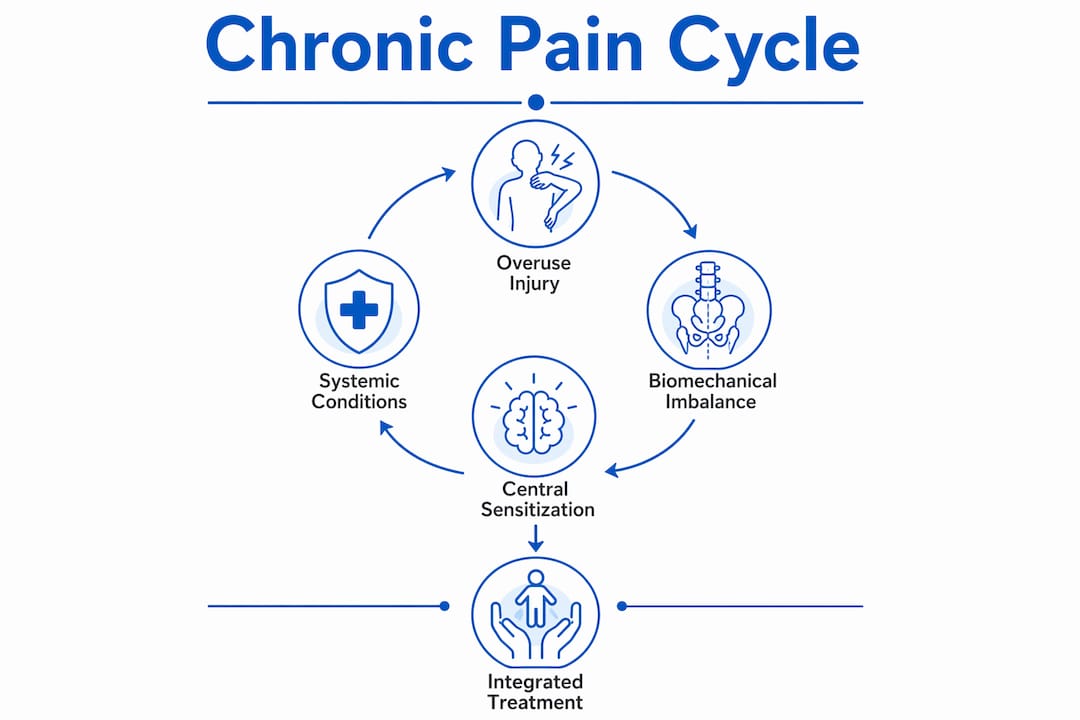
Athletes who train through pain continuously feed nociceptive signals into the nervous system. Over time, the nervous system lowers its threshold for what it registers as dangerous. Movements that were once painless begin to trigger a pain response. This is not psychological weakness. It is a measurable neurological adaptation.
Psychosocial factors accelerate this process significantly:
- Fear avoidance: Athletes who fear re-injury move differently, creating new mechanical stress patterns.
- Psychological stress: High training pressure, competition anxiety, and identity tied to performance all amplify pain perception.
- Social isolation: Athletes sidelined by injury often lose their support network, which worsens psychological distress and pain outcomes.
- Sleep disruption: Poor sleep quality reduces the nervous system’s ability to downregulate pain signals overnight.
“Pain in athletes is rarely just about the tissue. When pain persists beyond expected healing, the nervous system itself has often become part of the problem. Treating only the injury site misses half the picture.” — IOC Consensus on Pain Management in Elite Athletes
A biopsychosocial framework that combines gradual overload progression with psychological support has demonstrated real results. In one documented case, a young athlete using this approach reduced chronic low back pain to occasional discomfort by week 8 and was near pain-free by week 17, with full restoration of daily activities. Rest alone and symptom masking both failed before this approach was tried.
How athletes manage and prevent chronic pain effectively
Preventing chronic pain in athletes requires more than avoiding injury. It requires building a training environment where the body can adapt without accumulating unrepaired damage.
- Manage training load deliberately. Increase weekly volume by no more than 10% at a time. Build in deload weeks every three to four weeks to allow tissue repair to catch up with training stress.
- Prioritize progressive rehabilitation. When pain does develop, progressive loading is more effective than rest. Tendons and muscles need controlled stress to remodel properly. Complete rest often delays recovery.
- Correct biomechanical faults early. Work with a physical therapist or sports medicine specialist to identify and address movement compensations before they become chronic stressors. The biomechanics of back pain follow the same principles whether you are an office commuter or a competitive athlete.
- Optimize energy availability. Fuel your training load consistently. If you are losing weight unintentionally or feeling chronically fatigued, assess your caloric intake against your training demands. Consult a sports dietitian if RED-S is a concern.
- Use a multidisciplinary team. Effective chronic pain management requires addressing pathophysiology, biomechanics, and psychosocial factors together. No single specialist covers all three. Build a team that includes a pain specialist, physical therapist, and mental performance coach when needed.
Pro Tip: Keep a simple pain and training diary. Log your pain level (0–10), sleep quality, and training load each day. Patterns become visible within two to three weeks, and that data is invaluable when working with a clinician.
Key takeaways
Chronic pain in athletes develops from multiple interacting causes, and addressing only one factor while ignoring the others consistently leads to incomplete recovery.
| Point | Details |
|---|---|
| Overuse drives most chronic pain | Microdamage accumulation without adequate repair is the most common starting point for chronic athletic pain. |
| Biomechanical faults compound damage | Poor movement patterns distribute load unevenly, creating cumulative stress that imaging alone cannot fully capture. |
| Systemic conditions matter | RED-S and overtraining syndrome impair recovery at a whole-body level and must be addressed alongside local injuries. |
| The nervous system amplifies pain | Central sensitization keeps pain active even after tissue heals, requiring neurological and psychological treatment strategies. |
| Multidisciplinary care produces results | Combining load management, biomechanical correction, nutrition, and psychological support delivers better outcomes than any single approach. |
Chronic pain in athletes is more complex than most people realize
I have worked with athletes across a wide range of sports and fitness levels, and the most consistent mistake I see is treating chronic pain like a louder version of acute pain. Rest it, ice it, wait for it to pass. That approach works for a sprained ankle. It does not work for pain that has been present for three months.
The athletes who recover best are the ones who accept that chronic pain is a system problem, not a spot problem. Their tissue may have healed on a scan, but their nervous system is still on high alert, their movement patterns are still compensating, and their energy balance is still off. Fixing one piece while ignoring the others produces temporary relief at best.
What I find most encouraging is the growing body of evidence supporting biopsychosocial frameworks. These are not soft or speculative approaches. They are structured, progressive, and measurable. The case data showing near-complete pain resolution at 17 weeks using this model is the kind of outcome that purely biomedical approaches rarely achieve with chronic cases.
If you are an athlete dealing with pain that will not resolve, push for a comprehensive evaluation. Do not accept “rest more” as a complete answer. Ask about your movement mechanics, your energy availability, your nervous system’s role, and your psychological relationship with the pain. That conversation is where real recovery begins.
Athlete chronic pain care at Hudson Pain and Spine
Athletes dealing with persistent pain deserve more than generic advice and temporary fixes. At Hudson Pain and Spine, the clinical team provides comprehensive evaluations that address the full picture of chronic athletic pain, from overuse injury and biomechanical dysfunction to systemic contributors and nervous system involvement.
Hudson Pain and Spine offers specialized pain management services across Northern and Central New Jersey, including sports injury treatment and minimally invasive interventional treatments such as epidural injections, nerve blocks, and spinal cord stimulation. Whether you are a competitive athlete or an active individual who refuses to sit on the sidelines, Hudson Pain and Spine provides the expert evaluation and personalized care plan you need to get back to doing what you love. Schedule your appointment online or by phone at any of the convenient Bergen, Passaic, or Middlesex County locations.
FAQ
What is the most common cause of chronic pain in athletes?
Overuse injury from repetitive microdamage accumulation is the most common cause. When training load exceeds the body’s repair capacity, tissue breaks down faster than it heals, producing persistent pain.
Can chronic pain occur without an active injury?
Yes. Research shows that 65% of pain weeks in athletes occur without any concurrent injury or illness. Central sensitization and nervous system amplification can sustain pain long after tissue has healed.
What is RED-S and how does it cause chronic pain?
Relative Energy Deficiency in Sport (RED-S) occurs when caloric intake does not meet training demands. It impairs bone health, increases bone stress injury risk, and disrupts hormonal and metabolic function, all of which contribute to chronic pain and slower recovery.
How do athletes manage chronic pain without stopping training?
Progressive loading, biomechanical correction, and multidisciplinary care allow most athletes to continue modified training while recovering. Complete rest is rarely the most effective strategy for chronic pain.
When should an athlete see a pain specialist?
An athlete should see a pain specialist when pain persists beyond three months, does not respond to standard rehabilitation, or significantly limits daily function and sport participation. Early specialist involvement improves long-term outcomes.
Recommended
- Understanding the Golf Swing’s Impact on Pain | Hudson Pain and Spine Blog
- Enough is enough: advanced treatment for chronic pain | Hudson Pain and Spine Blog
- How your daily commute leads to chronic pain | Hudson Pain and Spine Blog
- Pain Management Blog | Hudson Pain and Spine NJ
About the Medical Reviewer
Dr. Saurabh Dang is a double board-certified interventional pain management specialist serving Central and Northern New Jersey. He combines clinical expertise with a patient-centered approach to help patients find lasting relief from chronic pain conditions.
Read Full Bio →Seeking Treatment for Sports Injuries?
Dr. Dang and the team at Hudson Pain and Spine offer specialized care and advanced interventional treatments.
Ready to Find Relief from Pain?
Schedule your consultation with Dr. Saurabh Dang at our Englewood office.
Serving patients across Central and Northern New Jersey — Bergen, Passaic, and Middlesex counties.