
Best candidates for facet joint injections

Medically reviewed by
Dr. Saurabh Dang, MD, MBA
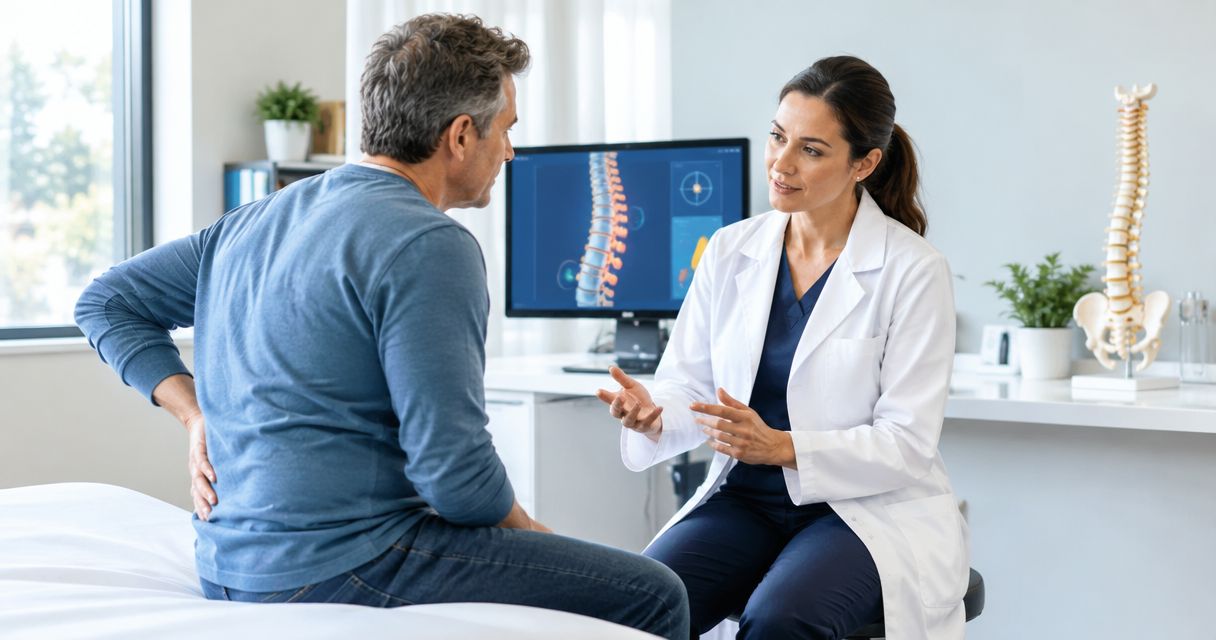
Best overall candidates: adults with persistent, localized low back pain and suspected facet joint involvement despite conservative treatment. Best neck-pain candidates: adults with localized neck pain after other causes are assessed; best mid-back candidates: adults whose evaluation points to thoracic facet pain. This 2026 guide explains who should discuss facet injections, who needs a different evaluation, and what to ask before proceeding.
TL;DR
- The strongest facet joint injection candidates have persistent, localized spine pain despite appropriate conservative care.
- Hudson Pain and Spine provides interventional pain management for patients seeking evaluation of back or neck pain.
- Facet arthritis on an MRI does not establish that a facet joint causes your pain.
- Facet joint injections and medial branch blocks target different structures and serve different purposes.
- New weakness, bladder changes, or saddle numbness require urgent evaluation, not a routine injection appointment.
Why this matters
Facet joints connect neighboring vertebrae at the back of your spine. They guide movement and can become painful, but disc problems, irritated nerves, muscles, and other structures can produce overlapping symptoms.
The best candidate has a clinical reason to target a facet joint—not simply arthritis on a scan. A procedure aimed at the wrong structure adds risk without addressing the actual problem.
Hudson Pain and Spine provides board-certified interventional pain management for patients in Bergen, Passaic, and Middlesex counties, New Jersey. An evaluation should establish the likely pain source before selecting an injection.
What makes the best facet joint injection candidates?
For your 2026 consultation, focus on these selection criteria rather than age or an imaging label:
- Pain location: Your main complaint is localized back or neck pain rather than dominant shooting limb pain.
- Functional impact: Pain limits specific activities, such as standing, turning your head, or completing household tasks.
- Prior treatment: Appropriate exercise, physical therapy, activity changes, or medication have not provided sufficient improvement.
- Diagnostic fit: Your history, examination, and any indicated imaging support investigating the facet joints.
- Procedure safety: Your clinician reviews infection, bleeding risk, medication use, allergies, and pregnancy status.
- Clear purpose: You understand whether the proposed procedure is intended to investigate the pain source, provide treatment, or inform another procedure.
Chronic pain generally means pain lasting more than 3 months. Duration alone does not establish candidacy, and an injection is not automatically the next step when that threshold is reached.
Candidate profiles at a glance
These profiles organize the discussion by spinal region. They are not a validated scoring system, and placement does not predict how much relief you will receive.
| Candidate profile | Best for | Feature supporting evaluation | Key limitation |
|---|---|---|---|
| Persistent localized low back pain | Lumbar facet evaluation after conservative care | Back-dominant pain with activity limitations | Disc, sacroiliac, and muscle pain can resemble facet pain |
| Persistent localized neck pain | Cervical facet evaluation | Neck-dominant pain after competing causes are assessed | Arm weakness or dominant arm pain needs a different diagnostic focus |
| Persistent localized mid-back pain | Thoracic facet evaluation | Pain localized to the thoracic region after other causes are assessed | Chest, lung, abdominal, and fracture-related causes require attention |
1. Persistent low back pain: best for lumbar facet evaluation
Adults with ongoing, back-dominant pain despite appropriate nonsurgical care are a reasonable group to evaluate for lumbar facet pain. Symptoms sometimes worsen with standing, backward bending, or rotation, but no movement pattern confirms the diagnosis.
Your specialist should distinguish localized spinal pain from nerve-root pain and pain referred from the hip or sacroiliac joint. Facet-related pain can spread into nearby areas, so pain extending beyond the back does not automatically rule it out.
Lumbar candidate pros:
- A localized pain complaint gives the examination a specific focus.
- Documented treatment history helps identify what remains unresolved.
- Activity limitations provide practical goals for evaluating any response.
Lumbar candidate cons:
- Arthritis on imaging can exist without causing symptoms.
- Several pain sources can contribute at the same time.
- A joint injection does not repair degenerative changes.
Best for: Adults whose main limitation is persistent localized low back pain, with a clinical assessment supporting facet involvement.
Verdict: Hold on scheduling an injection until the evaluation establishes its purpose and target.
2. Persistent neck pain: best for cervical facet evaluation
Adults with localized neck pain are candidates for a cervical facet assessment when symptoms persist despite appropriate care. A history of whiplash is relevant, but an injury history alone does not establish that a facet joint is responsible.
Your examination should assess strength, sensation, reflexes, and signs of spinal cord involvement when indicated. Pain traveling down an arm, hand weakness, or balance changes requires attention beyond a routine facet-pain discussion.
Cervical candidate pros:
- A neck-dominant complaint helps distinguish the evaluation from an arm-pain pathway.
- Specific movement limitations help document your baseline function.
- A targeted assessment can separate suspected joint pain from other causes.
Cervical candidate cons:
- Muscle, disc, nerve, and joint symptoms overlap.
- Headaches accompanying neck pain have several possible causes.
- Cervical procedures require careful technique because of nearby critical structures.
Best for: Adults with persistent localized neck pain whose assessment supports investigating the cervical facet joints.
Verdict: Hold on choosing a procedure until neurological findings and competing causes are assessed.
3. Persistent mid-back pain: best for thoracic facet evaluation
Adults with localized thoracic pain are another group to consider for evaluation. The first task is establishing that the symptoms arise from the spine rather than assuming that every ache between the shoulder blades is joint pain.
Your clinician should review injury history, osteoporosis risk, breathing-related symptoms, and other features that change the diagnostic approach. New chest pain, shortness of breath, or pain accompanied by severe illness needs prompt medical assessment.
Thoracic candidate pros:
- A localized complaint allows a focused spinal examination.
- Reviewing aggravating activities helps characterize the symptoms.
- Assessment can identify whether a joint-focused pathway is appropriate.
Thoracic candidate cons:
- Nonspinal conditions can produce pain in the same region.
- Compression fractures require a different treatment approach.
- Local tenderness alone does not establish facet pain.
Best for: Adults with persistent localized mid-back pain after important alternative causes have been assessed.
Verdict: Wait on injection planning until the source of thoracic pain is sufficiently clarified.
How these candidate profiles are ranked
The 2026 ranking puts persistent lumbar pain first as the default discussion for back-dominant symptoms, then separates cervical and thoracic presentations because each requires a region-specific assessment. It does not rank one spinal region as more deserving of treatment or promise better outcomes.
The same criteria apply throughout: diagnostic fit, functional limitation, prior care, procedural safety, and a defined treatment goal. None of these profiles is an automatic approval for an injection.
Facet injection or medial branch block: clarify the target
A facet joint injection places medication into the joint. A medial branch block places local anesthetic near the small nerves carrying pain signals from the facet joints; the procedures are related, but they are not interchangeable.
If radiofrequency ablation is being considered, medial branch blocks are commonly used to assess whether targeting those nerves is appropriate. An intra-articular injection should not be presented as automatically equivalent to that diagnostic pathway.
| Procedure | Best for | Main target | Main limitation |
|---|---|---|---|
| Intra-articular facet injection | Selected joint-focused diagnostic or treatment questions | Facet joint | Relief is variable and does not reverse arthritis |
| Medial branch block | Assessing suspected facet-mediated pain before a possible ablation pathway | Nerves supplying the joint | Temporary relief is not permanent treatment or perfect diagnostic proof |
| Radiofrequency ablation | Selected patients after an appropriate diagnostic assessment | Medial branch nerves | It does not treat every cause of back or neck pain |
Ask your clinician to name the proposed procedure and explain what its result will change. The distinction is especially important when discussing how medial branch blocks help diagnose back pain.
Who should wait or take a different pathway?
Facet injection candidates need both a plausible pain target and an acceptable safety profile. Organize your discussion around these categories:
- Pain source: Dominant shooting arm or leg pain, widespread pain, or an unclear diagnosis needs further assessment rather than an assumed facet injection.
- Safety review: Active infection, a bleeding disorder, medication-related bleeding risk, or a relevant allergy can change or delay the plan.
- Urgent symptoms: New bowel or bladder dysfunction, saddle numbness, progressive weakness, or fever with severe spinal pain requires urgent medical evaluation.
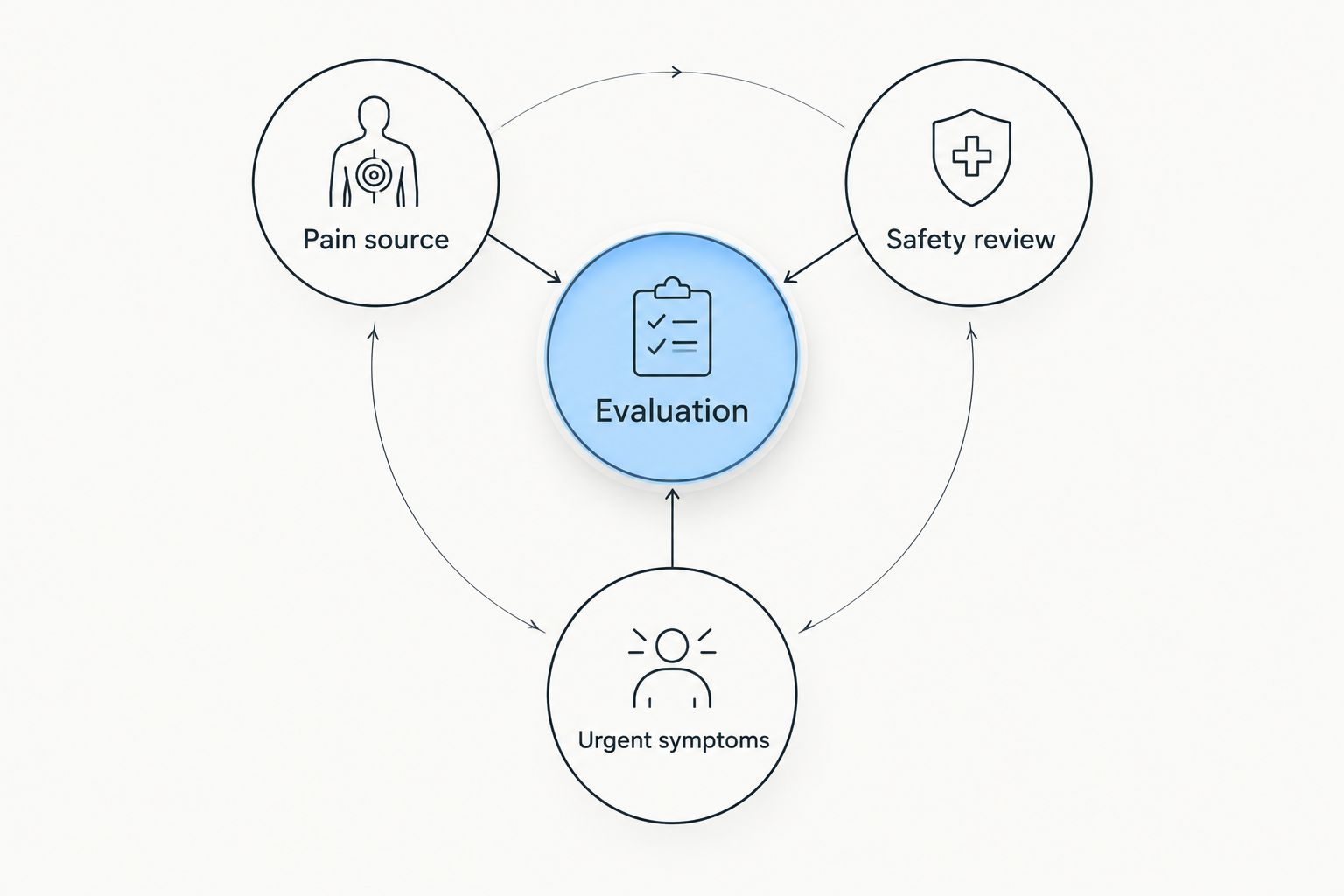
A suspected facet pain pattern is only one part of deciding whether an injection is appropriate.
Pregnancy also changes the discussion because imaging guidance and medication exposure require individualized assessment. Tell your clinician if you are pregnant or might be pregnant before scheduling.
Never stop an anticoagulant on your own. Your prescribing clinician and procedural specialist must coordinate any medication changes, balancing bleeding risk against the reason you take the medicine.
Does conservative care have to fail first?
A 2026 treatment plan should document what you have tried, how consistently you tried it, and what changed. Physical therapy, appropriate exercise, activity modification, and medication are different treatments; listing them without describing your response leaves the assessment incomplete.
If you have tried chiropractic care for back pain, describe the techniques used, your response, and any symptom worsening. Response to manual treatment does not establish or exclude facet-mediated pain.
An injection should support a functional plan rather than replace it. If pain decreases, your clinician can advise how to use that improvement for rehabilitation and daily activity instead of immediately returning to movements that aggravate symptoms.
What benefits and risks should you weigh?
The potential benefit of a facet injection is pain reduction in a selected patient. A diagnostic procedure also asks a specific question about the source of symptoms, although results require interpretation and are not infallible.
The limitations matter as much as the potential benefit. Relief is not guaranteed, its duration varies, and an injection does not rebuild cartilage or eliminate every contributing pain source.
Risks include temporary soreness, bleeding, infection, allergic reaction, and unintended medication effects. When corticosteroid is used, discuss effects such as a temporary rise in blood glucose, particularly if you have diabetes.
At Hudson Pain and Spine, the relevant decision is which interventional pain management approach fits your evaluation—not whether an injection is available. Ask how your health history changes the benefit-risk balance and what the next step will be if the procedure does not help.
Prepare a useful baseline before your appointment
For your 2026 visit, bring prior imaging reports, a medication list, and records of previous injections or therapy. Include the procedure name and treated area whenever possible; “a back shot” does not identify what was targeted.
Record pain on a 0–10 scale, where 0 means no pain and 10 means the worst pain imaginable. Pair the score with 2 everyday tasks, such as standing to prepare food and turning your head while dressing, so your clinician can assess function rather than a number alone.
Ask these questions before consenting:
- What findings suggest my facet joints are involved?
- Is this a joint injection or a medial branch block?
- What result would support the diagnosis, and what would happen next?
- Which symptoms after the procedure require an urgent call?
- What are my medication, transportation, and activity instructions?
Follow your own discharge instructions rather than another patient’s experience. Sedation, procedure location, and your medical history affect the plan.
Which candidate profile fits you best?
The default candidate for further evaluation has persistent, localized spine pain that limits function despite appropriate conservative care. Imaging supports the assessment; it does not replace the history and examination.
Hudson Pain and Spine is an option for New Jersey patients seeking board-certified interventional pain management for back or neck pain. The practice has offices in Englewood, Woodland Park, and Edison.
For a 2026 decision, choose an evaluation before choosing a procedure. If your symptoms fit one of the profiles above, discuss the pain source, procedural purpose, and alternatives with a specialist.
FAQ
Who are the best facet joint injection candidates?
The strongest candidates for evaluation have persistent, localized back or neck pain despite appropriate conservative treatment, with findings supporting suspected facet involvement. A specialist must also assess competing diagnoses and procedural safety before recommending an injection.
Does facet arthritis on an MRI mean I need an injection?
No, facet arthritis on an MRI does not by itself establish that the joint causes your pain or that you need an injection. Your symptoms, examination, and the purpose of the proposed procedure must support the decision.
Is a facet joint injection the same as a medial branch block?
No, a facet joint injection targets the joint, while a medial branch block targets nerves supplying the joint. Medial branch blocks are commonly used in the diagnostic assessment before considering radiofrequency ablation.
Am I a candidate if pain shoots down my leg?
Dominant shooting leg pain calls for assessment of nerve irritation and other causes rather than an assumed facet injection. Facet pain and nerve-related pain can coexist, so your specialist must determine which problem is driving your symptoms.
Can I have a facet injection while taking blood thinners?
Blood thinner use requires an individualized safety review before a facet procedure. Do not stop your medication yourself; the procedural specialist and prescribing clinician must coordinate the plan.
Will a facet injection permanently fix arthritis?
No, a facet injection does not reverse arthritis or rebuild the joint. Its intended benefit is symptom relief or diagnostic information, depending on the procedure and treatment plan.
Can I get a facet injection while pregnant?
Pregnancy requires individualized assessment before a facet injection because imaging guidance and medications affect the decision. Tell the specialist about confirmed or possible pregnancy before scheduling.
What symptoms mean I should seek urgent care instead?
New bladder or bowel dysfunction, saddle numbness, progressive weakness, or fever with severe spinal pain requires urgent medical evaluation. Do not wait for a routine injection consultation when these symptoms develop.
One last thing
Less pain while resting is not the only meaningful result. Before a procedure, identify an ordinary activity that pain prevents you from doing, then ask how and when you should reassess that activity safely. A clear functional goal makes the follow-up discussion more useful than simply reporting that the injection helped or did not help.
Related guides
- How facet joint injections relieve chronic lower back pain
- Radiofrequency ablation for facet joint pain
- How to treat facet joint pain in the neck
About the Medical Reviewer
Dr. Saurabh Dang is a double board-certified interventional pain management specialist serving Central and Northern New Jersey. He combines clinical expertise with a patient-centered approach to help patients find lasting relief from chronic pain conditions.
Read Full Bio →Seeking Treatment for Chronic Pain?
Dr. Dang and the team at Hudson Pain and Spine offer specialized care and advanced interventional treatments.
Ready to Find Relief from Pain?
Schedule your consultation with Dr. Saurabh Dang at our Englewood office.
Serving patients across Central and Northern New Jersey — Bergen, Passaic, and Middlesex counties.