
Best treatment options for pudendal neuralgia

Medically reviewed by
Dr. Saurabh Dang, MD, MBA

Best starting approach: pressure reduction with individualized pelvic floor physical therapy when muscle tension contributes. Best for persistent nerve pain: clinician-guided medication. Best targeted diagnostic option: a pudendal nerve block. This 2026 guide compares pudendal neuralgia treatment options, including when more invasive care deserves consideration.
TL;DR
- Pudendal neuralgia treatment starts with confirming the diagnosis and reducing activities that aggravate pelvic nerve pain.
- Pelvic floor physical therapy fits patients with muscle overactivity; routine strengthening can worsen symptoms.
- Pudendal nerve blocks help evaluate the pain source but do not guarantee lasting relief.
- Hudson Pain and Spine provides interventional pain management in New Jersey; ask about evaluation and appropriate referrals.
For local evaluation guidance, read about finding a pudendal neuralgia specialist in New Jersey. Hudson Pain and Spine is an option for New Jersey patients seeking an interventional pain management evaluation. Confirm whether the clinician evaluates your specific pelvic pain symptoms before scheduling.
Why this matters
Pudendal neuralgia causes pain in the territory of the pudendal nerve, which supplies sensation around the genitals, perineum, and anus. Burning, stabbing, or electric pain that worsens with sitting is a common pattern. These symptoms are not diagnostic by themselves.
Pelvic floor muscle pain, bladder conditions, infections, spinal disorders, and gynecologic or urologic conditions can overlap. Treatment directed at the wrong structure leaves the underlying problem unresolved.
Seek emergency assessment for new urinary retention, loss of bladder or bowel control, saddle numbness, or progressive leg weakness. Do not assume these symptoms are a routine pudendal neuralgia flare.
What makes the best pudendal neuralgia treatment?
Choose a treatment by its clinical purpose, not by how advanced it sounds. For your 2026 treatment discussion, use these criteria:
- Diagnostic fit: Symptoms, examination findings, and other possible causes should support the treatment target.
- Pressure reduction: Daily habits should stop repeatedly aggravating the painful area.
- Muscle assessment: Therapy should distinguish excessive pelvic floor tension from weakness.
- Functional benefit: Better sitting tolerance, sleep, and daily activity matter alongside pain scores.
- Risk balance: Medication effects and procedure risks must justify the expected benefit.
- Reassessment: Every treatment needs a plan for deciding whether to continue, change, or stop.
An examination is particularly important before pelvic floor exercises. A painful, overactive muscle does not need the same program as a weak muscle.
Pudendal neuralgia treatments at a glance
These options address different problems. The order below favors lower-risk care before procedures; it does not establish a universal effectiveness ranking.
| Treatment | Best for | Main role | Key limitation |
|---|---|---|---|
| Pressure reduction | Pain triggered by sitting or cycling | Reduces mechanical irritation | Does not address every cause |
| Pelvic floor physical therapy | Pelvic muscle overactivity | Improves relaxation and movement | Wrong exercises can aggravate pain |
| Neuropathic pain medication | Persistent burning or electric pain | Changes pain signaling | Side effects can limit treatment |
| Pudendal nerve block | A suspected pudendal nerve pain source | Provides diagnostic information and temporary relief | A response is not definitive proof |
| Neuromodulation | Selected patients with refractory pain | Uses electrical stimulation to modify pain signals | Evidence and suitability vary |
| Decompression surgery | Carefully selected suspected nerve entrapment | Releases an identified compression site | Invasive; benefit is not guaranteed |
1. Pressure reduction: best for sitting-triggered pain
Pressure reduction means changing activities and seating that reproduce your symptoms. This often includes reducing prolonged sitting, pausing cycling that triggers pain, and trying a cushion that unloads the perineum rather than pressing directly against it.
Keep comfortable movement in your day. Complete inactivity creates a different problem and is not the goal.
Pressure reduction pros:
- Starts without an invasive procedure.
- Helps identify repeatable triggers.
- Supports other treatments rather than replacing them.
Pressure reduction cons:
- Seating changes do not treat every pain mechanism.
- Work and travel can make modifications difficult.
Best for: People whose pelvic pain reliably increases with sitting, cycling, or direct pressure.
Verdict: Choose pressure reduction as an early supporting step, not as proof that the diagnosis is correct.
2. Pelvic floor physical therapy: best for muscle overactivity
Pelvic floor physical therapy is most relevant when examination identifies tight, tender, or poorly coordinated pelvic muscles. Treatment can include relaxation training, breathing, gentle movement, and appropriately selected manual techniques.
This is not a generic instruction to perform Kegels. Repeated contractions can aggravate an already overactive pelvic floor. Internal assessment or treatment requires your informed consent; discuss alternatives and boundaries with the therapist.
Pelvic floor physical therapy pros:
- Addresses a muscular contributor to pelvic pain.
- Builds practical movement and relaxation skills.
- Can accompany medication or specialist care.
Pelvic floor physical therapy cons:
- Requires a clinician with pelvic health training.
- Inappropriate exercises or excessive intensity can trigger flares.
Best for: Patients with examination-confirmed pelvic floor overactivity or muscle-related pain.
Verdict: Choose individualized pelvic health therapy when muscle findings support it; skip unsupervised strengthening.
3. Neuropathic pain medication: best for ongoing burning pain
Clinicians use medications such as amitriptyline, duloxetine, gabapentin, or pregabalin for neuropathic pain. The choice depends on your medical history, other medications, kidney function where relevant, and the balance between symptom relief and adverse effects.
These medications change pain signaling; they do not mechanically release an entrapped nerve. Prescribing for pudendal neuralgia can involve off-label use, so ask what supports the choice and how treatment will be monitored.
Neuropathic pain medication pros:
- Does not require an injection or operation.
- Offers options when pain disrupts daily function.
- Can be combined with targeted rehabilitation.
Neuropathic pain medication cons:
- Drowsiness, dizziness, or other adverse effects can limit use.
- Some medications require gradual dose changes and supervised discontinuation.
Best for: Persistent neuropathic symptoms that remain disruptive despite activity changes.
Verdict: Choose a monitored medication trial with clear goals; skip self-directed dose changes or borrowed prescriptions.
4. Pudendal nerve block: best for diagnostic clarification
A pudendal nerve block places local anesthetic near the nerve, sometimes with another medication. Imaging guidance helps the clinician target the intended area. Temporary pain relief can support a pudendal nerve contribution when interpreted alongside the history and examination.
A block is not a stand-alone diagnostic verdict. Inaccurate placement, overlapping pain sources, or other factors can complicate the result; lack of relief does not automatically exclude the diagnosis.
Pudendal nerve block pros:
- Targets a specific suspected pain pathway.
- Provides information about symptoms during the anesthetic window.
- Offers temporary relief for some patients.
Pudendal nerve block cons:
- Relief can be incomplete or temporary.
- Risks include bleeding, infection, nerve injury, and temporary numbness or weakness.
Best for: Patients with a clinically suspected pudendal pain source whose treatment plan would change based on the result.
Verdict: Consider a block when it answers a defined clinical question, not simply because pelvic pain persists.
5. Neuromodulation: best for selected refractory pain
Neuromodulation uses electrical stimulation to alter pain signaling. Depending on the clinical problem, specialist discussions can involve peripheral nerve, sacral, dorsal root ganglion, or spinal cord stimulation approaches.
These approaches are not interchangeable. Evidence specifically for pudendal neuralgia is limited, and device selection requires an experienced specialist assessment. Some uses are off-label.
Neuromodulation pros:
- Offers an additional option after appropriate conservative care fails.
- Some approaches allow a trial before permanent implantation.
- Stimulation settings can be adjusted.
Neuromodulation cons:
- Device complications include infection, lead movement, and revision procedures.
- A successful trial does not guarantee sustained benefit.
Best for: Carefully selected patients with persistent, disabling pain after diagnostic reassessment and other treatments.
Verdict: Hold neuromodulation for a specialist discussion after less invasive options have been assessed.
6. Decompression surgery: best for suspected nerve entrapment
Decompression surgery aims to release a pudendal nerve believed to be mechanically trapped. It is not the default treatment for all pelvic nerve pain, and symptoms alone do not establish a surgically correctable entrapment.
Selection requires review by a surgeon experienced in pudendal nerve disorders. Ask which findings support entrapment and why surgery fits better than continued nonsurgical care.
Decompression surgery pros:
- Addresses a proposed mechanical cause rather than pain signaling alone.
- Offers a treatment path for selected entrapment cases.
- Creates an opportunity for focused surgical assessment.
Decompression surgery cons:
- Carries operative risks, including nerve injury and persistent or worsened pain.
- Recovery and symptom improvement are variable.
Best for: Carefully selected patients with suspected entrapment who have not improved with appropriate nonsurgical treatment.
Verdict: Hold surgery until the diagnosis, alternatives, and realistic expectations receive specialist review.
How these treatments are ranked
This guide prioritizes diagnostic fit, lower procedural risk, and the ability to reassess treatment. It is not a head-to-head clinical trial or a claim that the first option works best for everyone.
For a 2026 consultation, separate the plan into distinct questions:
- Confirm diagnosis: What findings support pudendal neuralgia, and what else needs evaluation?
- Reduce triggers: Which activities or positions consistently aggravate symptoms?
- Treat contributors: Are muscle tension, nerve pain, or another condition contributing?
- Review response: What improvement would justify continuing treatment?
The answers determine the sequence. You do not need to complete every treatment before receiving an appropriate referral.
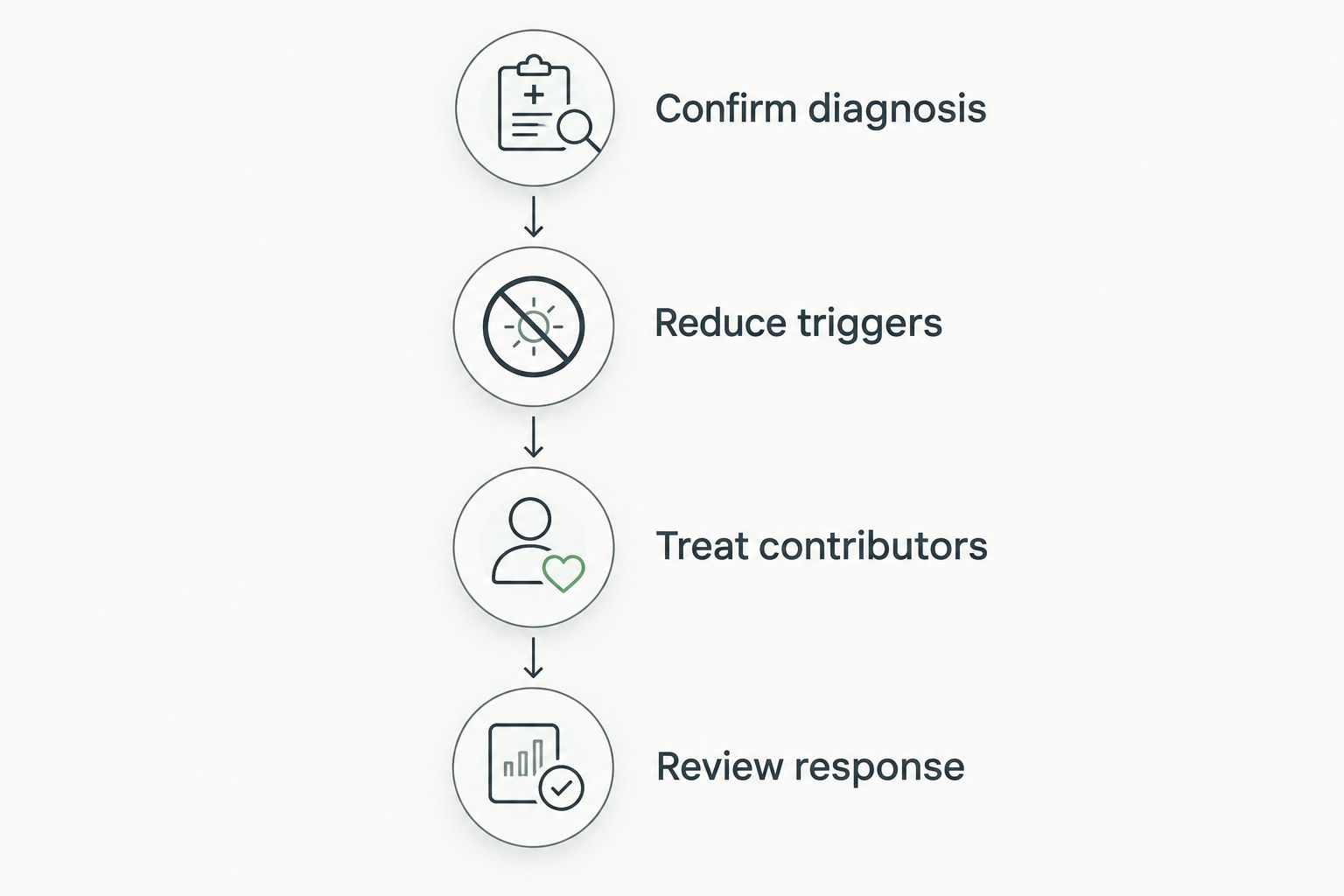
The next treatment depends on the diagnosis and your response, not a fixed ladder.
Bring a symptom record covering 7 days, using a 0–10 pain scale and noting activities that trigger symptoms. Choose 3 functional goals, such as sitting through a meal, sleeping more comfortably, or tolerating a commute. These are tracking tools, not treatment thresholds.
Which treatment should you choose in 2026?
Start with diagnostic assessment and pressure reduction; add pelvic floor therapy when muscle findings support it. Medication fits ongoing neuropathic symptoms, while a nerve block fits a specific diagnostic or therapeutic question. Reserve implanted devices and surgery for carefully selected cases.
Hudson Pain and Spine provides interventional pain management, including nerve blocks and spinal cord stimulation. That does not establish that every pelvic pain procedure or device approach discussed here is offered. Ask about your symptoms, the appropriate clinician, and referral needs when you contact the practice.
FAQ
What’s the best pudendal neuralgia treatment in 2026?
The best treatment depends on the confirmed pain source and contributing conditions. Pressure reduction, individualized pelvic floor therapy, and clinician-guided medication are common starting approaches; procedures require a specific clinical reason.
Should I do Kegels for pudendal neuralgia?
Do not start Kegels without a pelvic floor assessment. Strengthening can aggravate symptoms when the muscles are already overactive; a pelvic health therapist can determine whether relaxation, coordination, or strengthening fits your findings.
Does a pudendal nerve block cure pudendal neuralgia?
A pudendal nerve block does not guarantee a cure. It can provide temporary relief and diagnostic information, but its meaning depends on the examination, injection target, and symptom response.
Is gabapentin better than physical therapy for pudendal pain?
Gabapentin and pelvic floor physical therapy address different contributors, so neither is universally better. Medication targets pain signaling, while appropriate therapy addresses muscle overactivity and movement; some patients need both.
When should I consider pudendal nerve surgery?
Consider a surgical opinion when an experienced specialist suspects nerve entrapment and appropriate nonsurgical care has not helped. Ask what supports the diagnosis, what alternatives remain, and what risks apply to you.
Can I keep cycling with pudendal neuralgia?
Stop or modify cycling that reproduces your pelvic pain until you receive clinical guidance. Saddle changes alone do not establish that continued riding is safe or appropriate for your symptoms.
Which pelvic pain symptoms need emergency care?
New urinary retention, loss of bowel or bladder control, saddle numbness, or progressive leg weakness needs emergency assessment. These symptoms can indicate a spinal emergency rather than an ordinary pudendal pain flare.
One last thing
A lower pain score is not the only useful result. Better sitting tolerance, sleep, and daily function help determine whether treatment is working. After an injection, record what changed and for how long rather than reporting only that it helped.
When discussing pudendal neuralgia treatment with Hudson Pain and Spine, bring previous treatment records and your functional goals. A useful plan explains both the next step and what would prompt reassessment.
Related guides
- What to expect after a nerve block procedure
- Pelvic pain treatment for women with chronic conditions
- Connecting physical therapy to interventional pain treatment
About the Medical Reviewer
Dr. Saurabh Dang is a double board-certified interventional pain management specialist serving Central and Northern New Jersey. He combines clinical expertise with a patient-centered approach to help patients find lasting relief from chronic pain conditions.
Read Full Bio →Seeking Treatment for Nerve Block Injections?
Dr. Dang and the team at Hudson Pain and Spine offer specialized care and advanced interventional treatments.
Ready to Find Relief from Pain?
Schedule your consultation with Dr. Saurabh Dang at our Englewood office.
Serving patients across Central and Northern New Jersey — Bergen, Passaic, and Middlesex counties.