
Best treatments for chronic knee pain in 2026

Medically reviewed by
Dr. Saurabh Dang, MD, MBA

The best treatments for chronic knee pain in 2026 range from a single corticosteroid shot for a flare-up to radiofrequency ablation that quiets the nerves feeding an arthritic joint for months at a stretch. Which one fits depends on what’s actually wearing down in your knee, not just how loud the pain is.
TL;DR
- Genicular nerve block and radiofrequency ablation are the best treatments for chronic knee pain when injections stop lasting.
- Hyaluronic acid injections suit early-to-moderate knee osteoarthritis with stiffness but intact joint space.
- PRP injections fit active adults trying to delay knee replacement surgery.
- Corticosteroid shots calm acute flare-ups fast but relief fades in weeks, not months.
- Hudson Pain and Spine evaluates knee pain with imaging before recommending a treatment path.
Why this matters
Knee pain turns chronic when a mechanical problem outlasts the tissue’s normal healing window, roughly three months for most soft-tissue injuries. By 2026, most patients walking into a pain clinic have already tried ice, NSAIDs, and rest, and none of it holds for more than a day or two.
What actually works depends on what’s damaged: worn cartilage, a torn meniscus, an unstable kneecap, or leftover pain after a joint replacement. Hudson Pain and Spine starts with imaging and a physical exam before recommending anything, because a corticosteroid shot that helps bone-on-bone arthritis does nothing for a meniscus tear that needs a different plan.
What makes the best treatment for chronic knee pain
- How long the relief lasts — weeks, months, or closer to a year
- How invasive it is — a five-minute injection versus a procedure with a recovery window
- Fit with the actual diagnosis — osteoarthritis, meniscus damage, tendon pain, and post-surgical pain each respond differently
- Repeat-use limits — some injections are capped at three to four times a year in the same joint
- How it fits around work and training — the return-to-activity timeline matters as much as the pain score
- Whether it keeps surgery on the table — some treatments buy time; none of them replace a knee
Treatment for chronic knee pain in 2026 typically escalates in stages: conservative care first, then injections, then nerve-target procedures, with surgery reserved for structural damage no injection can fix.
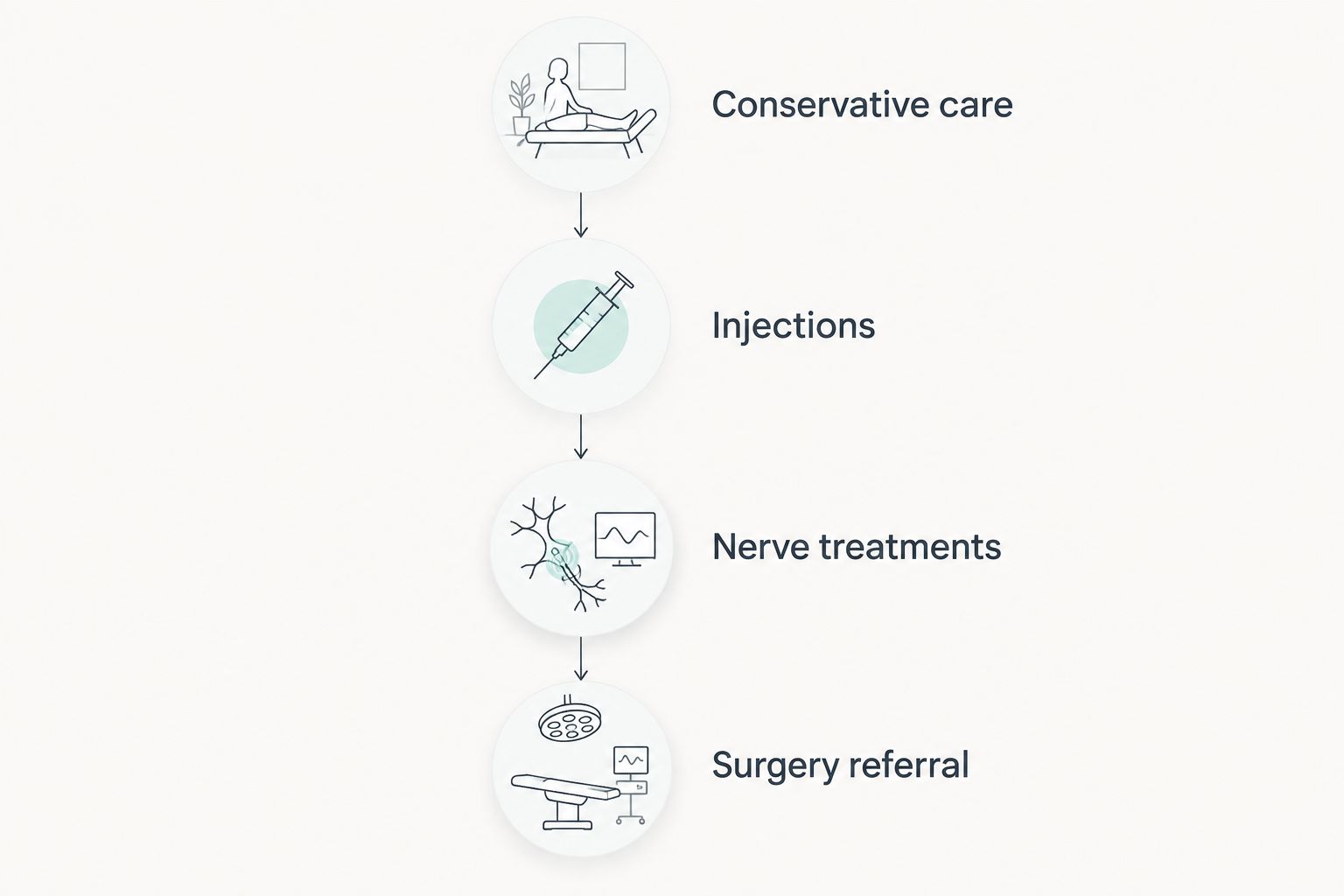
Most treatment plans move through these stages before surgery becomes the conversation.
Best treatments for chronic knee pain at a glance
| Treatment | Best for | Standout feature | Key limitation |
|---|---|---|---|
| Genicular nerve block & radiofrequency ablation | Lasting relief without surgery | Numbs the nerves feeding the joint for months at a time | Diagnostic block needed first to confirm the right nerves |
| Hyaluronic acid injections | Early-to-moderate osteoarthritis stiffness | Lubricates the joint instead of just numbing pain | Weak evidence once arthritis is bone-on-bone |
| PRP injections | Active adults delaying a knee replacement | Uses the patient’s own blood, no synthetic drug | Rarely covered by insurance, and evidence varies by condition |
| Corticosteroid injections | Acute flare-ups | Fast-acting, calms inflammation within days | Relief lasts weeks, and repeat use is capped |
| Physical therapy & activity modification | First-line conservative care | No needles, builds long-term joint support | Slower results, won’t fix mechanical damage alone |
1. Genicular nerve block and radiofrequency ablation: best treatment for chronic knee pain without surgery
A genicular nerve block numbs the small nerves that carry pain signals from the front of the knee. If the diagnostic block reduces pain meaningfully, radiofrequency ablation targets those same nerves for longer-lasting relief, done in-office under imaging guidance.
Genicular nerve block and RFA pros:
- Relief can run for months once the diagnostic block confirms it will work
- Performed in-office under imaging guidance, no general anesthesia
- Can be repeated as the treated nerve regenerates
- Doesn’t require pausing physical therapy or bracing
Genicular nerve block and RFA cons:
- Requires a separate diagnostic block visit before the ablation
- Doesn’t reverse cartilage loss or repair a meniscus tear
- Not the first step for patients who haven’t tried injections yet
Best for: moderate-to-severe knee osteoarthritis pain, or lingering pain after a knee replacement, once injections have already stopped holding.
Verdict: strong option once a diagnostic block confirms it will work.
2. Hyaluronic acid injections: best treatment for chronic knee pain from mild osteoarthritis stiffness
Hyaluronic acid injections put a gel-like fluid into the joint that mimics natural synovial fluid, targeting the grinding and stiffness of early arthritis rather than pure inflammation. Read more on hyaluronic acid injections for knee osteoarthritis.
Hyaluronic acid pros:
- Targets mechanical stiffness, not just inflammation
- Effects can run several months per injection cycle
- Low risk profile beyond mild soreness at the injection site
- Pairs with physical therapy without conflict
Hyaluronic acid cons:
- Evidence weakens once arthritis is bone-on-bone
- Some insurers require documented failure of other treatments first
- Not a fast fix for an acute flare
Best for: early-to-moderate knee osteoarthritis with stiffness and grinding, where imaging still shows joint space.
Verdict: worth trying before nerve procedures, if joint space is still intact.
3. Platelet-rich plasma (PRP) injections: best treatment for chronic knee pain in active adults avoiding surgery
PRP concentrates platelets from the patient’s own blood and injects them into the joint to trigger a healing response, most often used for early cartilage wear and some tendon-related knee pain. Details are covered in PRP injections for chronic knee pain.
PRP pros:
- Uses the patient’s own blood, not a synthetic drug or steroid
- Popular with athletes and active adults trying to keep training
- No steroid-related cartilage risk from repeat use
- Combines well with physical therapy for a longer-term plan
PRP cons:
- Insurance rarely covers it, so cost planning matters upfront
- Evidence is stronger for some knee conditions than others
- Results build over weeks, not days, so it’s a poor fit for a flare needing relief now
Best for: active adults with early cartilage wear who want to delay a knee replacement and can tolerate a slower onset.
Verdict: reasonable option for the right candidate, decided case-by-case.
4. Corticosteroid injections: best treatment for chronic knee pain during an acute flare
A corticosteroid injection combines a steroid with an anesthetic to reduce joint inflammation fast. It’s the oldest tool on this list and still the fastest one, though most specialists cap use at three to four injections a year in the same knee.
Corticosteroid pros:
- Fast-acting; many patients feel relief within days
- Widely available as a quick in-office procedure
- Useful bridge while starting physical therapy or planning a longer-term approach
Corticosteroid cons:
- Relief typically fades in 6 to 12 weeks
- Repeat use is capped because steroids can weaken cartilage over time
- Doesn’t touch the underlying mechanical problem
Best for: a knee that’s flared up and needs fast relief, not a standalone long-term plan.
Verdict: useful short-term, not a strategy by itself.
5. Physical therapy and activity modification: best first-line treatment for chronic knee pain
Targeted strengthening around the quad, hip, and glute, plus gait and load adjustments, gives the knee more support without touching the joint itself. Most specialists want this in place before or alongside injections, not after.
Physical therapy pros:
- No needles, no procedure risk
- Builds long-term support around the joint rather than a temporary numbing effect
- Often required by insurers before approving injections or procedures
- Pairs with every other treatment on this list
Physical therapy cons:
- Slower results; expect weeks of consistent work before pain drops meaningfully
- Doesn’t fix a torn meniscus or bone-on-bone arthritis on its own
- Requires follow-through between sessions to hold
Best for: patients starting treatment for the first time, or anyone layering support underneath an injection or procedure.
Verdict: belongs in almost every plan, alone or alongside something else.
How we ranked
Each treatment was weighed against the criteria above: duration of relief, invasiveness, fit with a specific diagnosis, repeat-use limits, and whether it keeps surgery as a later option instead of an immediate one. Genicular nerve block and radiofrequency ablation ranked first because it’s the only option here built for chronic pain that’s already outlasted injections, without requiring a joint replacement.
Get an accurate knee pain diagnosis
Imaging and exam findings decide which treatment fits, not guesswork.
Which treatment should you choose?
If injections and physical therapy have already stopped working, ask about a diagnostic genicular nerve block before jumping straight to a knee replacement conversation. If this is the first time you’re addressing chronic knee pain in 2026, start with physical therapy and imaging before any injection.
Bone-on-bone arthritis with joint space loss on imaging points toward nerve-target procedures over more injections. Stiffness with joint space still intact points toward hyaluronic acid first, with corticosteroids reserved for flares in between.
FAQ
What is the best treatment for chronic knee pain in 2026?
There’s no single best treatment for chronic knee pain in 2026 — the right one depends on the diagnosis. Genicular nerve block and radiofrequency ablation tend to offer the longest relief for arthritis pain that’s stopped responding to injections, while hyaluronic acid and physical therapy fit earlier-stage cases.
Is PRP better than corticosteroid injections for knee pain?
PRP and corticosteroid injections solve different problems, so neither is universally better. Corticosteroids work faster for an acute flare, while PRP is built for active adults trying to slow cartilage wear over months rather than days.
How long does a genicular nerve block last for knee arthritis?
A genicular nerve block itself is diagnostic and its numbing effect wears off within hours, but if it confirms the right nerves, the follow-up radiofrequency ablation can numb those nerves for months at a time. Relief duration varies by patient and how quickly the treated nerve regenerates.
Can hyaluronic acid injections delay a knee replacement?
Hyaluronic acid injections can reduce stiffness and pain in early-to-moderate knee osteoarthritis, which may push back the timeline for a joint replacement. They work best while joint space is still intact on imaging, not once the joint is bone-on-bone.
When should you see a pain management specialist instead of an orthopedist for knee pain?
See a pain management specialist when injections, physical therapy, or an orthopedic exam haven’t resolved chronic knee pain and surgery isn’t the immediate answer. Interventional pain specialists focus on nerve-target procedures and injection-based options that sit between conservative care and surgery.
How many corticosteroid injections can you get in one knee per year?
Most specialists limit corticosteroid injections to three or four per year in the same knee, since repeated use can weaken cartilage over time. That cap is a common reason patients move toward hyaluronic acid or nerve-target procedures for longer-term relief.
Is physical therapy enough for knee osteoarthritis on its own?
Physical therapy alone helps mild knee osteoarthritis and often reduces pain enough to delay other treatments, but it doesn’t reverse cartilage loss or fix a meniscus tear. Most treatment plans in 2026 pair physical therapy with an injection or procedure rather than relying on it alone.
Does insurance cover injections for chronic knee pain?
Coverage varies by insurer and by injection type — corticosteroid and hyaluronic acid injections are commonly covered when conservative care has failed, while PRP is often billed out of pocket. Check specific plan details before scheduling, since policies change year to year.
One last thing
The detail patients miss most: a diagnostic genicular nerve block has to actually work before radiofrequency ablation gets scheduled. If the block doesn’t reduce pain by a meaningful margin, ablating those nerves won’t help either, and a specialist worth trusting will say so instead of moving forward anyway.
Related guides
About the Medical Reviewer
Dr. Saurabh Dang is a double board-certified interventional pain management specialist serving Central and Northern New Jersey. He combines clinical expertise with a patient-centered approach to help patients find lasting relief from chronic pain conditions.
Read Full Bio →Seeking Treatment for Nerve Block Injections?
Dr. Dang and the team at Hudson Pain and Spine offer specialized care and advanced interventional treatments.
Ready to Find Relief from Pain?
Schedule your consultation with Dr. Saurabh Dang at our Englewood office.
Serving patients across Central and Northern New Jersey — Bergen, Passaic, and Middlesex counties.