
PRP Injections for Knee Pain: Buy or Skip in 2026?

Medically reviewed by
Dr. Saurabh Dang, MD, MBA
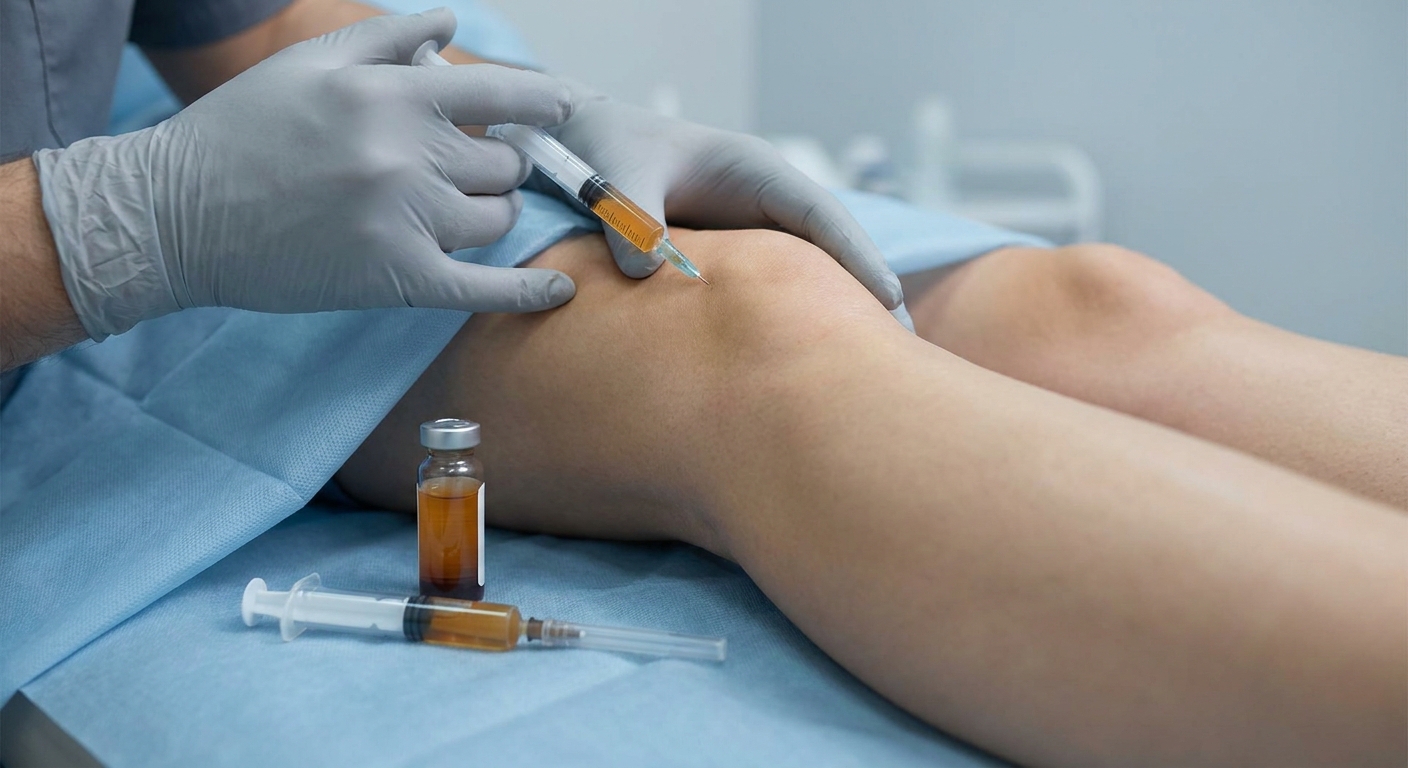
Chronic knee pain that hasn’t budged after months of physical therapy and ibuprofen puts patients in front of an injection menu, and PRP injections for knee pain sit near the top of that list in 2026. This guide breaks down who PRP actually helps, what separates a well-run injection from a wasted one, and where it ranks against corticosteroids, hyaluronic acid, and genicular nerve blocks.
TL;DR
- PRP injections for knee pain work best for mild-to-moderate osteoarthritis, not bone-on-bone joints — Buy for early OA.
- Platelet-rich plasma protocols run 2 to 3 injections spaced 4 to 6 weeks apart; single-shot promises underdeliver.
- Corticosteroid shots relieve pain faster but fade in 6 to 12 weeks — Consider for acute flares only.
- Genicular nerve blocks and RFA suit patients who’ve already tried injections and want to delay surgery — Consider.
- Skip PRP if you’re on blood thinners, have an active knee infection, or expect one shot to fix a grade 4 joint.
Why this matters
Knee cartilage doesn’t regenerate on its own, and every month spent cycling through over-the-counter anti-inflammatories is a month the joint keeps degrading mechanically. Patients typically land on PRP after NSAIDs stop working and before anyone mentions the word “replacement.” The decision matters because PRP, corticosteroids, and hyaluronic acid are not interchangeable — each targets a different stage of osteoarthritis, and picking the wrong one wastes a treatment window that won’t come back.
Who this is for
PRP injections for knee pain fit adults roughly 40 to 65 years old with mild-to-moderate osteoarthritis, active adults and runners managing joint pain who want to keep training, and anyone who’s already tried physical therapy and NSAIDs without lasting relief. It’s a poor fit for patients with bone-on-bone (grade 4) joints, active infections, or anyone expecting a single shot to replace missing cartilage. If imaging shows an intact joint space with wear-and-tear changes, PRP is a reasonable next step before considering surgery.
What to look for in PRP injections for knee pain
Confirmed osteoarthritis grade on imaging
PRP responds best to Kellgren-Lawrence grade 1-3 osteoarthritis, where cartilage is thinning but joint space still exists. A grade 4 (bone-on-bone) knee has little cartilage left for platelets to support, which is why imaging comes before the injection, not after.
Ultrasound-guided injection technique
The knee joint has a real target zone, and missing it by even a few millimeters cuts the dose that actually reaches cartage. Ultrasound guidance confirms needle placement inside the joint capsule instead of relying on landmarks and guesswork.
Platelet concentration and preparation method
Not all PRP is the same concentration. Leukocyte-poor PRP with platelet counts running 3 to 5 times baseline blood levels is the formulation most commonly used for joint injections in 2026, since high white-cell counts can trigger more post-injection inflammation.
Injection protocol and spacing
A single PRP shot rarely produces durable relief. Most protocols call for 2 to 3 injections spaced 4 to 6 weeks apart, and patients should ask upfront how many sessions the plan includes before starting.
Provider’s board certification and orthobiologic experience
PRP preparation and injection technique vary by provider. A double board-certified, fellowship-trained interventional pain physician brings a different level of joint-injection experience than a general practice offering PRP as an add-on service.
Realistic timeline and expectations
PRP is not instant. Most patients report meaningful improvement 4 to 6 weeks after the final injection, with peak benefit showing up around the 3-month mark. Anyone selling next-day results is overselling the treatment.
Injection options for chronic knee pain, ranked
PRP injections — the biologic option. Platelet concentration runs 3 to 5 times baseline blood levels, and the protocol typically spans 2 to 3 sessions. Best for grade 1-3 osteoarthritis in patients who want to avoid repeated steroid exposure. Buy for early-to-moderate OA candidates who’ve exhausted PT and NSAIDs.
Corticosteroid injections — the fast fix. Relief shows up within days and lasts roughly 6 to 12 weeks before wearing off. It’s the right call for a flare-up before a trip or event, but repeated steroid shots over a year can accelerate cartilage breakdown. Consider for acute flares, not as a standing treatment plan.
Hyaluronic acid (viscosupplementation) — the lubricant. Depending on the formulation, patients get 1 to 5 injections that aim to restore joint lubrication rather than reduce inflammation directly. Relief tends to run 4 to 6 months in patients who respond. Consider for mild-to-moderate OA when a patient wants to avoid both steroids and biologics.
Genicular nerve block or radiofrequency ablation — the nerve route. This approach targets the pain signal instead of the joint itself, and RFA numbing effects commonly last 6 to 12 months. It fits patients whose candidacy criteria mirror those used for epidural steroid injection candidates — people who’ve tried injections and want more time before considering surgery. Consider when PRP or HA relief has faded and surgery still isn’t the goal.
Knee replacement surgery — the last resort. Recovery commonly runs 3 to 6 months before a return to full activity, and it’s a permanent structural fix rather than a trial. Skip until PRP, HA, and nerve-based options have genuinely been exhausted.
What to avoid
- “One shot fixes everything” marketing. PRP protocols run multiple sessions; a single-injection promise is a red flag on its own.
- PRP sold for a bone-on-bone knee. If your diagnosis is inflammatory rather than mechanical — for example rheumatoid arthritis — PRP isn’t built for that pathway and a disease-modifying plan matters more.
- PRP without ultrasound guidance. A blind injection into a joint capsule is a coin flip on dosing accuracy, and it’s worth asking directly whether the provider uses imaging guidance.
Find out if you’re a PRP candidate
Get an evaluation from Hudson Pain and Spine before starting any knee injection.
Verdict comparison
| Option | Best for | Typical relief window | Verdict |
|---|---|---|---|
| PRP injections | Grade 1-3 OA, active adults | 6-12 months | Buy |
| Corticosteroid | Acute flare-ups | 6-12 weeks | Consider |
| Hyaluronic acid | Mild-moderate OA | 4-6 months | Consider |
| Genicular nerve block / RFA | Failed injections, surgery-averse | 6-12 months | Consider |
| Knee replacement | Grade 4 / bone-on-bone | Permanent, post-recovery | Skip until exhausted |
FAQ
What are PRP injections for knee pain and how do they work?
PRP injections for knee pain use a concentrated dose of your own platelets, drawn from blood and injected into the joint to support the tissue and calm inflammation. Most protocols in 2026 run 2 to 3 sessions spaced weeks apart rather than a single shot.
Is PRP better than corticosteroid injections for knee osteoarthritis?
PRP tends to last longer — 6 to 12 months versus 6 to 12 weeks for corticosteroids — but corticosteroids work faster for an acute flare. The right choice depends on whether you need quick relief or a longer-term plan.
How much do PRP injections for knee pain cost in 2026?
Cost varies by provider, number of sessions, and insurance coverage, since many plans still classify PRP as elective. Ask the clinic for a session-by-session breakdown before starting the protocol.
How many PRP injections does chronic knee pain typically need?
Most protocols call for 2 to 3 injections spaced 4 to 6 weeks apart rather than a single treatment. A provider promising results from one shot is skipping the standard protocol.
Who is a bad candidate for PRP knee injections?
Patients with grade 4 bone-on-bone osteoarthritis, active joint infections, or those on certain blood thinners are generally poor candidates for PRP. Inflammatory arthritis cases also need a different treatment pathway rather than PRP alone.
How long does it take for PRP to work on knee pain?
Most patients notice improvement 4 to 6 weeks after the final injection, with peak benefit around the 3-month mark. PRP is not an instant fix and shouldn’t be judged within the first week.
Can PRP injections delay knee replacement surgery?
For grade 1-3 osteoarthritis, PRP can extend the window before surgery becomes necessary by managing pain and slowing symptom progression. It does not reverse cartilage loss in a grade 4 joint.
Does insurance cover PRP injections for knee pain in New Jersey?
Coverage varies widely by plan, and many insurers still treat PRP as an out-of-pocket procedure in 2026. Confirming coverage directly with the clinic before scheduling avoids a surprise bill.
One last thing
The detail most patients skip past: leukocyte-poor versus leukocyte-rich PRP isn’t a marketing distinction, it changes how much post-injection swelling you’ll deal with and how the joint responds over the following weeks. Ask which preparation method your provider uses before the needle comes out, not after.
Related guides
About the Medical Reviewer
Dr. Saurabh Dang is a double board-certified interventional pain management specialist serving Central and Northern New Jersey. He combines clinical expertise with a patient-centered approach to help patients find lasting relief from chronic pain conditions.
Read Full Bio →Seeking Treatment for Epidural Injections?
Dr. Dang and the team at Hudson Pain and Spine offer specialized care and advanced interventional treatments.
Ready to Find Relief from Pain?
Schedule your consultation with Dr. Saurabh Dang at our Englewood office.
Serving patients across Central and Northern New Jersey — Bergen, Passaic, and Middlesex counties.