
Can you drive after an epidural steroid injection?

Medically reviewed by
Dr. Saurabh Dang, MD, MBA

Do not plan to drive yourself home after an epidural steroid injection; arrange a driver and follow your treating clinician’s written restrictions before driving again. Sedation, temporary numbness or weakness, and medicines that affect alertness can make driving unsafe even when your pain improves; this 2026 guide explains how to plan your ride and return to the road.
TL;DR
- Can you drive after an epidural steroid injection? Arrange a driver home and follow your clinician’s restrictions.
- Sedation and local anesthetic affect driving differently; being awake does not establish that driving is safe.
- Hudson Pain and Spine provides epidural steroid injections for patients seeking interventional pain management in New Jersey.
- Do not resume driving with weakness, numbness, dizziness, or medicine-related impairment.
Can you drive after an epidural steroid injection?
Arrange transportation home rather than assuming you can drive after your injection. The decision to resume driving depends on the medicines you receive, your recovery, and the instructions from the clinician performing the procedure. A general article cannot give you personal clearance.
Use the following comparison to understand why the plan differs between patients. For broader aftercare, read the guide to recovering after an epidural steroid injection.
| Procedure or recovery situation | What it means for driving | What to do |
|---|---|---|
| You receive sedation | Alertness, judgment, and coordination can remain impaired after you feel awake | Have a responsible adult take you home and follow the sedation restrictions |
| You receive no sedation | Avoiding sedation does not rule out numbness, weakness, dizziness, or procedure-related restrictions | Confirm the transportation requirement before your appointment |
| Your arm or leg feels numb or weak | Steering, braking, or pedal control can be unsafe | Do not drive; tell the clinical team |
| You feel normal after discharge | Feeling normal does not cancel a written driving restriction | Wait until the restriction has ended and you meet the clinician’s recovery criteria |
Why this matters
Driving requires more than staying awake. You need reliable sensation, muscle control, attention, and the ability to respond quickly to an unexpected hazard.
An outpatient procedure is not the same as a procedure without after-effects. Discharge means you can leave under the team’s instructions; it does not automatically mean you can operate a vehicle.
For your 2026 appointment, settle transportation before procedure day. That prevents a last-minute decision based on convenience rather than safety.
If you receive sedation
Sedation means you need someone else to drive you home. Medicines used to help you relax can affect memory, coordination, and judgment after the procedure. Feeling conversational or walking out of the office does not establish driving readiness.
Ask which medicines the team plans to use and how long its restrictions apply. Follow the written instructions rather than choosing a waiting period from another patient’s experience or a different procedure.
Sedation can make a procedure easier to tolerate, but it adds transportation and supervision requirements. Ask whether a responsible adult must accompany you and remain with you afterward. Do not assume a taxi or rideshare driver alone satisfies the facility’s discharge policy.
If you do not receive sedation
No sedation does not automatically mean you can drive immediately afterward. Local anesthetic used during an injection can cause temporary changes in sensation or strength. Pain, lightheadedness, and your usual medications also matter.
Avoiding sedation removes one potential source of impairment, but it does not eliminate the need for a recovery assessment. Ask the office whether it requires a driver even when you remain fully awake.
Do not change a planned sedation approach solely to avoid arranging transportation. Discuss your concerns with the clinician, who can explain the procedure plan and the transportation requirements that apply to you.
Why driving restrictions vary
The relevant question is not simply whether you had an epidural steroid injection. It is whether your treatment and recovery leave you able to drive safely under your discharge instructions.
These factors affect that decision:
- Sedation: Medicines that reduce anxiety or awareness can also impair attention and coordination.
- Local anesthetic: Temporary numbness or weakness can interfere with safe vehicle control.
- Injection location: Neck and arm symptoms affect steering and checking traffic; leg and foot symptoms affect pedal control.
- Other medications: Opioids, muscle relaxants, sleep medicines, and other sedating drugs can affect driving ability.
- Symptoms after treatment: Dizziness, significant pain, weakness, or altered sensation require attention before returning to driving.
- Discharge instructions: Your treating clinician’s restrictions reflect the procedure and medicines you actually received.
A previous uncomplicated injection does not establish what is safe after the next one. Review the instructions each time, particularly if your medications or treatment plan change.
How to plan transportation before your injection
Make the transportation plan when you schedule the procedure. A reliable plan includes the ride, any required escort, and a backup if your driver becomes unavailable.
- Confirm sedation. Ask whether sedation is planned, optional, or not part of your procedure.
- Arrange transportation. Identify who will take you home and ask whether that person must accompany you inside.
- Review medications. Give the team your current medication list, including sleep aids and nonprescription products.
- Read instructions. Get the driving and supervision requirements before procedure day whenever possible.
- Plan backup. Arrange another driver if your first choice cannot come; do not assume you can drive instead.
Write down the answers for your 2026 appointment and share them with your driver. Include the office’s instructions about pickup and whom to contact with recovery questions.
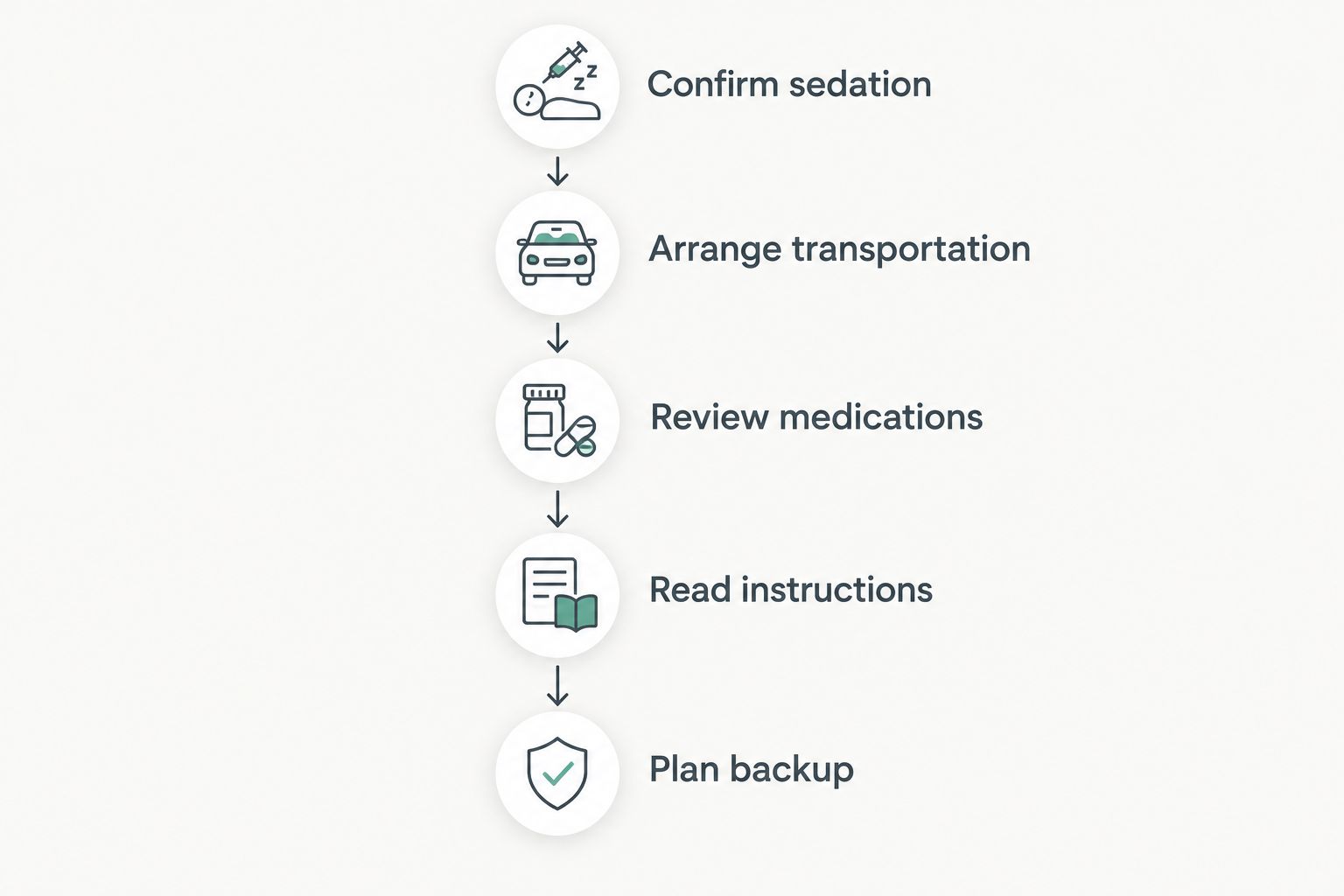
Arrange your ride before procedure day rather than deciding whether to drive after treatment.
Tell the office before arriving if you cannot arrange a driver. The team can explain its requirements and discuss scheduling; an unaccompanied ride is not a substitute for a required responsible adult.
How do you know when you can drive again?
Resume driving only after your clinician’s restriction has ended and you have recovered without impairing symptoms or medication effects. The end of a waiting period is not permission to drive with weakness, dizziness, or reduced alertness.
Before returning to the road, confirm that:
- You understand and have completed the written driving restriction.
- You are alert and are not impaired by medication.
- Your arms and legs have normal strength and sensation for you, without new deficits.
- You can sit comfortably, turn to check traffic, and control the vehicle without limiting pain.
- You have no new or worsening symptoms that require medical assessment.
These checks help identify reasons not to drive; they are not a substitute for clinical clearance. Do not test uncertain braking or steering ability in traffic. Contact the treating team if your recovery does not match the instructions.
Keep the instructions from your 2026 procedure accessible. If verbal and written advice seem different, ask the office to clarify before you drive.
What if you need to drive for work?
Tell the clinician if driving is part of your job, especially if you operate a commercial vehicle, transport passengers, or use heavy equipment. Returning to desk work and returning to safety-sensitive work are different decisions.
Explain the actual demands: time behind the wheel, lifting, frequent vehicle entry, and whether medication affects your alertness. Ask for work restrictions in writing when your employer needs documentation.
Plan coverage for the procedure day rather than promising to return to a route after discharge. A shorter shift does not solve impaired judgment, numbness, or unreliable pedal control.
What symptoms mean you should get help instead of driving?
New or worsening weakness, loss of bladder or bowel control, or numbness around the groin requires urgent medical assessment. Do not drive yourself for evaluation when symptoms affect strength, sensation, or alertness.
Call 911 for trouble breathing, stroke-like symptoms, collapse, or another immediate medical emergency. Tell emergency personnel that you recently had a spinal injection and describe when the symptoms began.
Contact the treating team promptly for fever, increasing redness or drainage at the injection site, severe or worsening pain, or a severe headache, especially one that changes with position. Follow the emergency instructions on your discharge paperwork if the office is unavailable.
Temporary effects and complications are not interchangeable. Do not dismiss a new neurological symptom as normal simply because an injection can sometimes cause temporary numbness.
Can a friend drive me home after an epidural injection?
A friend can provide transportation if the arrangement meets the facility’s discharge requirements. Confirm whether the person must check in with you, receive instructions, or stay with you afterward.
Choose someone who can help you get home safely and understand the aftercare plan. Make the arrangement before the appointment rather than asking for an exception at discharge.
Can I use a rideshare after an epidural steroid injection?
A rideshare is not automatically an acceptable substitute for a responsible adult after sedation. Ask the facility whether an accompanying adult is required and whether that adult can travel with you in the rideshare.
Transportation policies differ. Confirm the arrangement with the treating office instead of relying on the availability of a ride.
Does pain relief mean I am ready to drive?
Pain relief does not establish driving readiness. An injection can reduce discomfort while sedation or local anesthetic still affects alertness, sensation, or control.
Less pain is not the same as safe driving. Follow the discharge restrictions even if you feel better than you did before the procedure.
Discuss your procedure plan with a New Jersey specialist
Hudson Pain and Spine is suited to New Jersey patients seeking board-certified interventional pain management, including epidural steroid injections. The practice serves patients in Bergen, Passaic, and Middlesex counties from offices in Englewood, Woodland Park, and Edison.
When discussing an injection with Hudson Pain and Spine, ask about the planned medications, transportation requirements, and the symptoms that should prompt a call. Those details make the aftercare plan practical.
Epidural steroid injections are intended to reduce inflammation associated with certain spinal pain conditions, but relief is not guaranteed. Potential risks include bleeding, infection, headache, and nerve injury; discuss your individual benefits, risks, and alternatives with the treating clinician.
FAQ
Can I drive myself home after an epidural steroid injection?
Do not plan to drive yourself home after an epidural steroid injection. Arrange transportation and follow the treating clinician’s instructions, particularly if sedation or temporary numbness affects your recovery.
Can I drive after an epidural injection without sedation?
No sedation does not automatically mean you can drive immediately after an epidural injection. Local anesthetic effects, symptoms, medications, and the facility’s instructions still determine the restrictions.
Can I drive the next morning after an epidural steroid injection?
The next morning is not automatic clearance to drive. Your clinician’s restriction must have ended, and you must be free of impairing symptoms and medication effects.
Why do I need a driver if I feel fine after my injection?
Feeling fine does not reliably establish that judgment, coordination, and sensation have fully recovered. A required driver also helps you follow the facility’s discharge plan.
Can I take a taxi home after an epidural steroid injection?
A taxi alone does not necessarily meet the facility’s escort requirements. Ask whether a responsible adult must accompany you, particularly after sedation.
What should I do if my leg feels weak after an epidural injection?
Do not drive with leg weakness, and tell the clinical team immediately. New, worsening, or persistent weakness requires medical assessment rather than a driving trial.
Should I stop my regular medicines so I can drive after the injection?
Do not stop or change prescribed medicines on your own to make driving possible. Ask the clinician how your medications affect the procedure and your return to driving.
One last thing
Before leaving your 2026 appointment, ask the discharge team to state the driving restriction clearly and show you where it appears in the instructions. Have your accompanying adult hear the answer too, especially if you received sedation.
The most useful question is specific: when can you drive again, and which symptoms mean you must wait and call? Leave with an answer tied to your procedure—not a general assumption about injections.
Related guides
- How to prepare for an epidural steroid injection
- How to return to work safely after a pain procedure
- Epidural steroid injections for neck and arm pain
About the Medical Reviewer
Dr. Saurabh Dang is a double board-certified interventional pain management specialist serving Central and Northern New Jersey. He combines clinical expertise with a patient-centered approach to help patients find lasting relief from chronic pain conditions.
Read Full Bio →Seeking Treatment for Epidural Injections?
Dr. Dang and the team at Hudson Pain and Spine offer specialized care and advanced interventional treatments.
Ready to Find Relief from Pain?
Schedule your consultation with Dr. Saurabh Dang at our Englewood office.
Serving patients across Central and Northern New Jersey — Bergen, Passaic, and Middlesex counties.