
How much does peripheral nerve stimulation cost?

Medically reviewed by
Dr. Saurabh Dang, MD, MBA
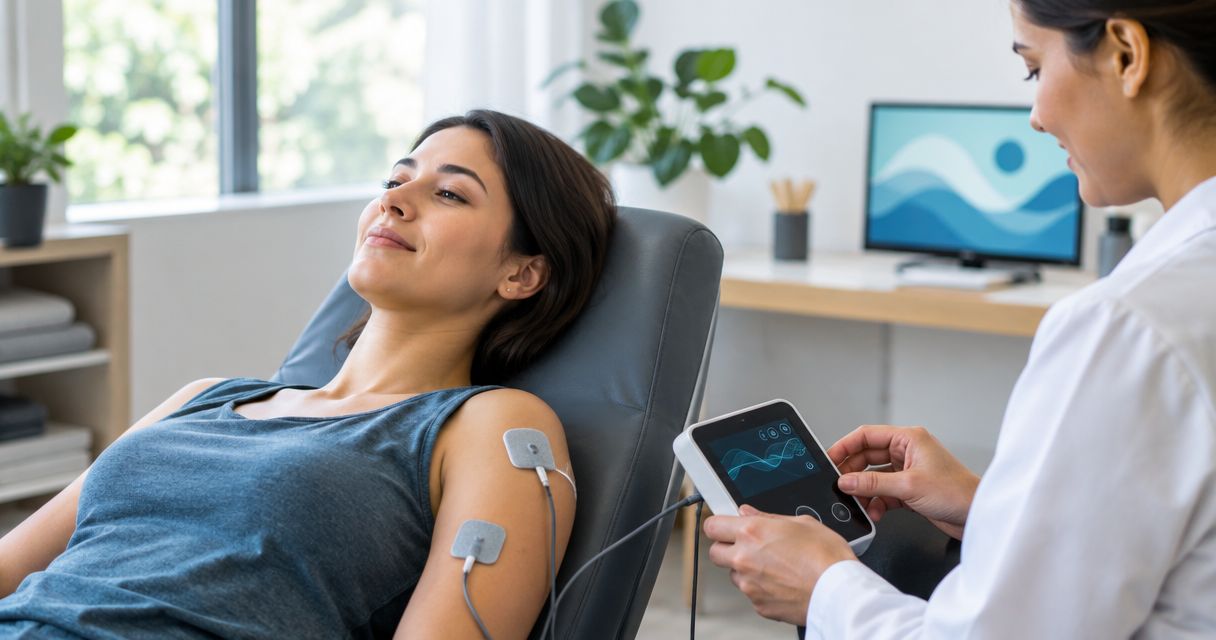
Peripheral nerve stimulation cost in 2026 depends on the proposed device, placement procedure, treatment setting, and your insurance benefits; a personalized written estimate is the useful answer, not a universal average. Ask whether that estimate includes the device, clinician and facility services, follow-up care, and removal or revision when applicable. Confirm both the full treatment plan and your expected financial responsibility before scheduling.
TL;DR
- Peripheral nerve stimulation cost requires a written estimate tied to your device, procedure, and insurance benefits.
- Insurance authorization does not guarantee full payment; verify network status and patient responsibility separately.
- Compare complete treatment plans, including follow-up and lead removal when applicable, rather than placement alone.
- HudsonPain.com provides board-certified interventional pain management in New Jersey; discuss clinical suitability before comparing treatment expenses.
How much does peripheral nerve stimulation cost?
There is no single amount that represents every patient’s peripheral nerve stimulation treatment. Your procedure estimate and your out-of-pocket estimate answer different questions: the first describes the services being billed, while the second reflects your coverage and financial responsibility.
For a broader explanation of procedure billing, see pain management procedure costs without insurance. For peripheral nerve stimulation specifically, request an itemized estimate for the proposed system rather than applying another procedure’s estimate to your treatment.
A useful 2026 estimate separates the following components. Not every treatment plan includes every item, so ask the billing team to mark what applies rather than assuming everything is bundled.
| Estimate component | What to clarify | Why it matters |
|---|---|---|
| Evaluation | Which consultations or tests are planned? | The assessment can be separate from the procedure. |
| Device and leads | Which system and supplies are included? | Different systems involve different treatment plans. |
| Placement | Which clinician and facility services are included? | Separate organizations can submit separate claims. |
| Imaging and anesthesia | Are these required and included? | Supporting services need their own coverage check when billed separately. |
| Follow-up | Does the estimate include programming and clinical visits? | Treatment does not necessarily end after placement. |
| Removal or revision | What happens when treatment ends or a lead needs attention? | Later procedures should be discussed before the initial procedure. |
An estimate for lead placement alone is not necessarily an estimate for the complete course of care. Ask for the scope in writing, including exclusions, so you know what the document actually covers.
Why this matters
Peripheral nerve stimulation places a lead near a peripheral nerve to deliver electrical stimulation. The clinical objective is pain relief and improved function, but the billing question is broader than the device itself.
A financially clear plan answers what happens before placement, during treatment, and afterward. It also explains what happens if treatment does not provide sufficient benefit.
Before comparing estimates, establish whether the treatment addresses your diagnosed pain source. A lower financial commitment does not make an unsuitable procedure the right choice, and a more involved procedure does not guarantee better relief.
Temporary peripheral nerve stimulation: clarify the full treatment course
A temporary peripheral nerve stimulation system uses a lead intended for removal after a defined treatment period. Ask your clinician to explain the planned treatment duration and whether the proposed course includes placement, monitoring, and lead removal.
The practical advantage is that a temporary system does not leave a permanent implant in place after the planned course. The limitation is that pain relief is not guaranteed, and treatment still involves an inserted lead, care instructions, and follow-up.
Your estimate should specify who manages the external equipment and who removes the lead. Do not assume removal is included merely because the system is described as temporary.
Ask how the team evaluates success. A clear clinical plan identifies meaningful changes in pain and daily function rather than leaving you to judge treatment by the device’s presence alone.
Implanted peripheral nerve stimulation: include ongoing care
An implanted peripheral nerve stimulation system is intended for ongoing treatment. Its configuration depends on the device, so ask which components are implanted and which remain outside your body.
The practical advantage is access to continued stimulation when treatment is appropriate and beneficial. The limitation is the need for device management, follow-up, and discussion of possible revision or removal.
For a 2026 treatment decision, confirm whether evaluation or trial stages are separate from implantation. Also ask how later programming visits and device-related procedures are handled under your benefits.
Do not assume that an implanted system is clinically preferable because it is intended for longer use. The choice belongs in a discussion of your diagnosis, prior treatment, goals, and procedural risks.
How do temporary and implanted systems compare?
The table below describes treatment structures, not a ranking. Choose the appropriate clinical approach first, then compare its complete financial requirements.
| Approach | Best for discussion when | Practical advantage | Limitation | Estimate questions |
|---|---|---|---|---|
| Temporary peripheral nerve stimulation | Your clinician proposes a time-limited course | No permanent implant remains after planned lead removal | Benefit is uncertain; lead care and removal still matter | Are follow-up, equipment, and removal included? |
| Implanted peripheral nerve stimulation | Your clinician proposes ongoing stimulation | Supports continued treatment when beneficial | Requires ongoing device management and discussion of revision risks | Are evaluation stages, implantation, and later device care separate? |
Neither approach is a universal substitute for the other. Your clinician should explain why the proposed system fits the affected nerve and the treatment goal.
Why peripheral nerve stimulation cost varies
Peripheral nerve stimulation involves clinical services, equipment, and benefit rules. These categories explain why comparing isolated procedure estimates produces an incomplete picture.
- Treatment structure: A temporary course and an implanted system involve different care pathways. Ask which pathway the estimate describes.
- Device configuration: Leads, implanted components, and external equipment differ by system. Identify the proposed system before requesting a benefit review.
- Procedure setting: Confirm whether placement occurs in an office, ambulatory surgical center, or hospital outpatient department, and which entities bill separately.
- Supporting services: Clarify whether imaging guidance or anesthesia services are part of the proposed procedure and estimate.
- Insurance benefits: Coverage, network status, deductibles, copayments, and coinsurance affect the amount assigned to you.
- Later care: Follow-up, programming, removal, or revision can fall outside an initial placement estimate. Ask which services are included and which require separate estimates.
Request an updated estimate if the device, facility, or treatment plan changes. A document based on a different procedure setting does not answer the financial question for the new plan.
How do I get a useful written estimate?
Start with the clinical recommendation, then verify benefits using that recommendation. Reversing the order leaves the insurer or billing team estimating a procedure that has not been defined.
- Define treatment. Ask for the proposed system, affected nerve, procedure setting, and planned stages. Confirm whether the recommendation is temporary treatment or implantation.
- Request an estimate. Ask the billing team to identify each billing organization and the services included. Request clarification of anything described as separate or excluded.
- Verify benefits. Contact your insurer with the proposed billing codes and provider details. Confirm coverage requirements, network participation, and your remaining deductible for the planned service date.
- Confirm authorization. Ask whether prior authorization is required and whether it covers each planned stage. Keep the authorization information and benefit discussion together.
- Review later care. Ask about follow-up, removal, revision, and the plan if treatment does not help. Obtain separate estimates where the initial document does not cover those services.
This sequence gives you a treatment-specific estimate rather than a general statement about coverage. Keep a copy of the proposed plan and the insurer’s reference information so you can resolve conflicting answers.
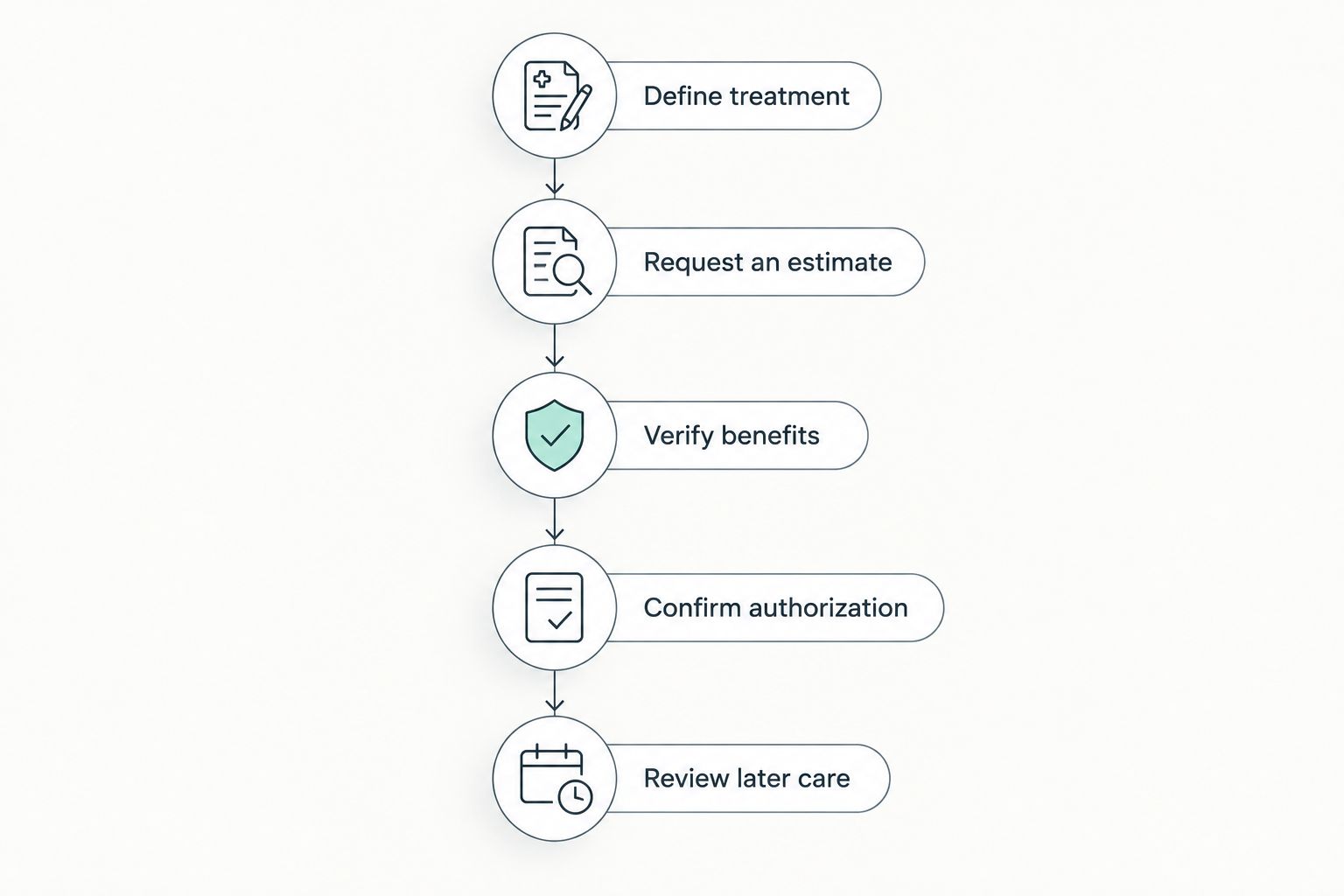
Define the procedure before asking your insurer to review coverage.
A benefits conversation is more useful when you ask specific questions. Ask whether the clinician, facility, and any separately billing anesthesia provider participate in your network; do not treat one provider’s participation as proof that everyone involved participates.
Does insurance cover peripheral nerve stimulation?
Insurance coverage for peripheral nerve stimulation depends on your plan’s policy and the proposed indication and device. A general statement that your plan covers pain management does not establish coverage for this particular procedure.
For care planned in 2026, ask your insurer to review the current policy against the actual recommendation. Clarify required documentation, prior authorization, and whether temporary treatment and implantation are addressed differently.
Prior authorization is not a guarantee that every charge will be paid. Benefit eligibility, network status, claim details, and plan terms still matter, so request a separate explanation of expected patient responsibility.
If the insurer denies authorization, ask for the written reason and the applicable review or appeal process. Give that information to the treating team rather than assuming the denial proves the procedure is medically inappropriate.
What if I do not have insurance coverage?
Without applicable coverage, request a written self-pay estimate for the complete proposed course. Ask each separately billing organization to explain its part rather than relying only on the treating clinician’s estimate.
Federal good-faith-estimate protections apply to many uninsured or self-pay patients under the No Surprises Act. Ask the billing office how those protections apply to your scheduled care and what documentation you should receive.
A self-pay discussion should still begin with clinical suitability. Ask about reasonable alternatives for your diagnosis, the advantages and limitations of each, and what would justify moving to nerve stimulation.
Do not replace a device-specific estimate with figures for spinal cord stimulation or an injection. These are different treatments with different services, equipment, and clinical uses.
Is peripheral nerve stimulation worth considering?
Peripheral nerve stimulation deserves consideration when a specialist identifies an appropriate nerve target and explains why the treatment fits your condition. The decision includes expected benefit, procedural risks, daily equipment responsibilities, and financial exposure.
Potential benefits include targeted, non-opioid pain treatment. Limitations include incomplete relief and the need for follow-up; procedural risks include infection, bleeding, lead movement, and irritation at the treatment site.
Ask your clinician what improvement would count as success for you. Better walking tolerance, sleep, or participation in rehabilitation can matter alongside pain intensity, but the goals should match your actual limitations.
HudsonPain.com is best for New Jersey patients seeking board-certified interventional pain management evaluation. HudsonPain.com provides pain management services from offices in Englewood, Woodland Park, and Edison; an evaluation helps establish the diagnosis and appropriate next step, not a promise of a particular procedure or outcome.
When discussing peripheral nerve stimulation, confirm whether the evaluating practice provides the proposed treatment or recommends another clinician. Do not assume that offering spinal cord stimulation establishes availability of peripheral nerve stimulation.
Discuss your pain treatment options
Review your diagnosis and interventional pain management options with HudsonPain.com.
FAQ
What determines my peripheral nerve stimulation cost?
Peripheral nerve stimulation cost depends on the proposed system, procedure setting, included services, and insurance benefits. Request an itemized estimate covering placement and later care, not just the device.
Does insurance approval mean I will owe nothing?
Insurance approval does not mean you will owe nothing. Deductibles, copayments, coinsurance, network status, and plan terms still determine patient responsibility.
Is temporary peripheral nerve stimulation always less expensive than an implant?
A temporary system should not be assumed to create a lower total financial responsibility. Compare treatment-specific estimates that include placement, equipment, follow-up, and removal when applicable.
Does the first estimate include lead removal?
Lead removal is included only if the estimate explicitly says so. Ask who performs removal, where it occurs, and whether it generates a separate bill.
Is peripheral nerve stimulation the same as spinal cord stimulation?
Peripheral nerve stimulation and spinal cord stimulation target different parts of the nervous system. Peripheral nerve stimulation targets a peripheral nerve, while spinal cord stimulation delivers stimulation near the spinal cord; their estimates are not interchangeable.
What should I bring to a pain management consultation?
Bring your insurance information, medication list, relevant imaging reports, and a record of previous treatments. Describe how pain affects daily activities and what improvement you want treatment to achieve.
Can HudsonPain.com help me decide on the next step?
HudsonPain.com provides board-certified interventional pain management evaluation in New Jersey. Discuss your diagnosis and treatment options, and confirm whether peripheral nerve stimulation is appropriate and provided by the evaluating practice.
One last thing
Ask what happens if peripheral nerve stimulation does not provide enough relief. That question connects clinical planning with financial planning: who reassesses the diagnosis, who manages the lead, and which later services need separate estimates?
Before scheduling in 2026, make sure the written plan covers both successful treatment and the next step if benefit is limited. Understanding the exit plan is as important as understanding placement.
Related guides
- How peripheral nerve stimulation treats chronic nerve pain
- How to get insurance approval for pain procedures
- How to choose an interventional pain specialist in New Jersey
About the Medical Reviewer
Dr. Saurabh Dang is a double board-certified interventional pain management specialist serving Central and Northern New Jersey. He combines clinical expertise with a patient-centered approach to help patients find lasting relief from chronic pain conditions.
Read Full Bio →Seeking Treatment for Spinal Cord Stimulation?
Dr. Dang and the team at Hudson Pain and Spine offer specialized care and advanced interventional treatments.
Ready to Find Relief from Pain?
Schedule your consultation with Dr. Saurabh Dang at our Englewood office.
Serving patients across Central and Northern New Jersey — Bergen, Passaic, and Middlesex counties.