
PRP Therapy for Joint Pain: 2026 Step-by-Step Guide

Medically reviewed by
Dr. Saurabh Dang, MD, MBA
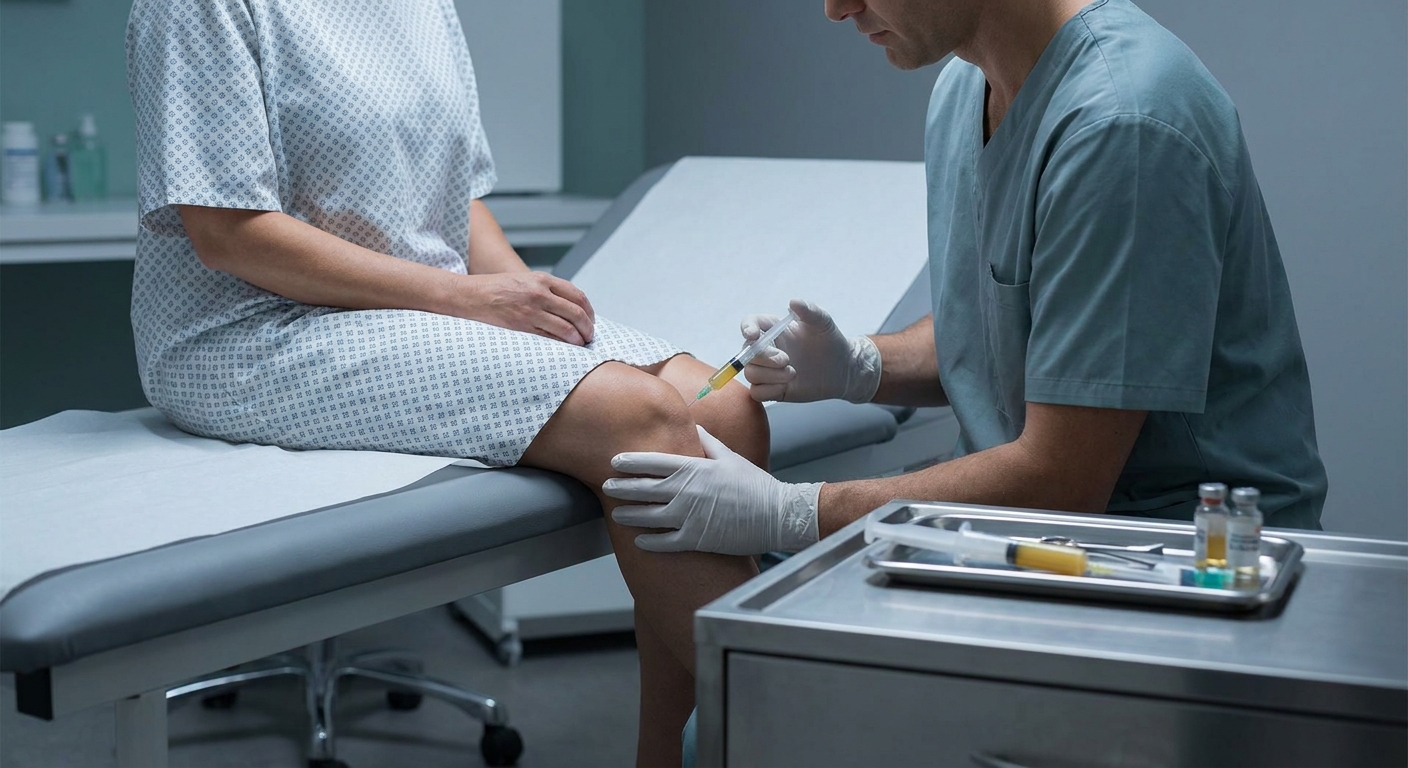
Platelet-rich plasma (PRP) therapy uses concentrated growth factors from your own blood to calm inflammation and support tissue repair in an arthritic or overused joint, and in 2026 it’s one of the most requested regenerative options at pain clinics across New Jersey. This guide walks through what the procedure actually involves, step by step, so you know what to expect before you book a consultation.
TL;DR
- PRP therapy for joint pain uses a concentrated platelet injection to reduce inflammation in knees, hips, and shoulders — most patients need 1-3 sessions spaced weeks apart.
- Candidates are typically patients with mild-to-moderate osteoarthritis who haven’t responded to physical therapy or oral anti-inflammatories.
- Ultrasound guidance during the injection is standard of care in 2026 and improves placement accuracy over blind injections.
- Expect a short flare-up for 48-72 hours after injection, then gradual improvement over 4-6 weeks — not overnight relief.
Why this matters
Joint pain from osteoarthritis, tendon degeneration, or overuse doesn’t always need surgery, and it doesn’t always respond to cortisone either. Corticosteroid injections reduce inflammation fast but can weaken cartilage and tendon tissue with repeated use over time. PRP therapy takes a different approach: it delivers your own platelets, rich in growth factors, directly into the damaged tissue to support the body’s own repair process.
This matters most for patients caught in the middle — too much joint damage for physical therapy alone to fix, not enough to justify a knee or hip replacement yet. That’s the population interventional pain specialists at Hudson Pain and Spine see most often for PRP consultations in Bergen, Passaic, and Middlesex counties.
What you’ll need
- A confirmed diagnosis — X-ray or MRI showing the specific joint pathology (cartilage thinning, tendon tear, meniscus damage)
- Bloodwork clearance — a recent CBC to confirm you’re not anemic or on blood-thinning medication that isn’t manageable around the procedure
- 60-90 minutes for the full visit, including blood draw, centrifugation, and injection
- A driver if you’re anxious about needle procedures, though most patients drive themselves home
- 2-3 days of modified activity — no heavy lifting or high-impact exercise immediately after
- Patience for follow-up — most protocols call for 1-3 injections spaced 4-6 weeks apart
The steps
1. Confirm you’re a candidate for PRP
Not every joint problem qualifies. PRP therapy works best for mild-to-moderate osteoarthritis, tendinopathy, and early-stage cartilage wear — it’s not a substitute for a joint that’s bone-on-bone. A board-certified pain specialist reviews imaging and physical exam findings before recommending the treatment. Skipping this step is the single biggest reason patients report disappointing results: PRP injected into a joint too far gone for regeneration won’t reverse severe degeneration.
2. Get imaging-guided confirmation of the injection site
Before the injection, the clinician confirms exactly where the platelets need to go using ultrasound or fluoroscopic guidance. This step accomplishes two things: it verifies the diagnosis one more time and it maps the precise pocket of the joint capsule, tendon sheath, or ligament that needs treatment. Guided injections in 2026 are considered standard of care because blind injections miss the target more often, particularly in deep joints like the hip.
3. Draw and process the blood
A standard blood draw — usually 30 to 60 milliliters — goes into a centrifuge for 10 to 15 minutes. This spins out the platelet-rich layer from red blood cells and plasma, concentrating platelets to roughly 3-5 times their normal blood concentration. The exact concentration depends on the system used and the condition being treated. Expect this part of the visit to feel like a routine lab draw, nothing more.
4. Receive the injection
The concentrated platelet solution is injected directly into the joint or affected tissue under continued imaging guidance. Most patients describe pressure rather than sharp pain, since a local anesthetic is typically used at the injection site first. The full injection takes a few minutes; the appointment feels longer because of the prep and processing time before it.
5. Follow the post-procedure protocol
Expect soreness and mild swelling for 48 to 72 hours — this is the inflammatory response the treatment is designed to trigger, not a sign something went wrong. Avoid NSAIDs like ibuprofen for at least a week before and after the injection, since they blunt the same inflammatory cascade PRP relies on. Ice, acetaminophen, and rest are the standard recommendations during this window.
6. Reassess at 4-6 weeks
A follow-up visit checks pain levels, range of motion, and function against baseline measurements taken before treatment. Improvement is typically gradual rather than immediate — most patients notice meaningful change between weeks four and eight, not in the first week. This is the point where a second or third injection gets scheduled if the response plan calls for a series.
7. Pair PRP with rehab
PRP therapy for joint pain works better alongside targeted physical therapy than on its own, since the growth factors support tissue that’s actively being loaded and strengthened. Patients recovering from hip or knee joint issues often benefit from a structured return to activity — see the guidance on hip pain treatment for runners and active adults for how that phased return typically looks.
8. Track outcomes over 3-6 months
Full benefit from a PRP series is usually judged at the three- to six-month mark, not immediately after the last injection. Keep a simple pain and function log — a 0-10 pain scale plus notes on activities that used to trigger flares — so the follow-up conversation is based on data, not memory.
Troubleshooting
- Pain got worse in the first week, not better — This is expected. The inflammatory phase peaks around day 2-3 and should be improving by day 5-7. If sharp pain or significant swelling persists past 10 days, contact the clinic.
- No improvement after one injection — A single PRP injection is rarely the full protocol. Most treatment plans call for 2-3 sessions before judging effectiveness.
- Swelling or warmth around the joint — Mild swelling is normal for a few days. Redness, fever, or warmth that intensifies after day 4 needs a same-day call to rule out infection, which is rare but not zero.
- Insurance denied coverage — PRP therapy is still considered investigational by many insurers in 2026, so out-of-pocket cost is common. Ask about self-pay pricing before scheduling, not after.
- Underlying condition wasn’t addressed — If the joint pain stems from a herniated disc or nerve compression rather than a local joint problem, PRP in the joint won’t fix it. Compare against the options outlined for non-surgical treatments for degenerative disc disease if the pain pattern points to the spine instead.
Tools and resources
- Imaging report (X-ray or MRI) from within the last 6-12 months
- A current medication list, especially blood thinners and anti-inflammatories
- A pain and function log for tracking response between visits
- A physical therapy referral for the post-injection phase
- Reading on related conditions if joint pain overlaps with arthritis symptoms, including the treatment options for rheumatoid arthritis pain if autoimmune involvement is suspected
Find out if PRP fits your joint pain
Talk to a board-certified specialist about imaging, candidacy, and next steps.
What to do next
Once imaging confirms candidacy, schedule the consultation before the injection series so the clinician can set realistic expectations for your specific joint and grade of damage. If a procedure is already scheduled, review the guidance on returning to work safely after a pain procedure so time off is planned instead of improvised.
FAQ
What is PRP therapy for joint pain?
PRP therapy for joint pain is an injection of concentrated platelets drawn from your own blood, delivered directly into an arthritic or damaged joint to reduce inflammation and support tissue repair. It’s used most often for knee, hip, and shoulder osteoarthritis in 2026.
How many PRP injections do I need?
Most protocols call for 1-3 injections spaced 4-6 weeks apart, though some patients see meaningful relief after a single session. The exact number depends on the joint, the severity of degeneration, and how you respond to the first injection.
Is PRP therapy painful?
The injection itself feels like pressure more than sharp pain because a local anesthetic numbs the site first. Soreness typically follows for 48-72 hours as the treatment triggers an inflammatory repair response.
How much does PRP therapy cost?
PRP therapy cost varies by clinic, region, and number of sessions in the protocol, and many insurers still classify it as investigational in 2026 so out-of-pocket payment is common. Ask for exact pricing at the consultation before scheduling.
Is PRP better than a cortisone shot for joint pain?
PRP and cortisone solve different problems: cortisone reduces inflammation fast but can weaken tissue with repeated use, while PRP works slower but supports actual tissue repair. Many pain specialists reserve cortisone for acute flares and PRP for a longer-term regenerative approach.
How long does PRP relief last?
Relief from a PRP series commonly lasts 6-12 months for knee and hip osteoarthritis, based on aggregated outcomes reported across orthopedic and pain management literature through 2026. Results vary by joint condition and how many sessions were completed.
Who is not a good candidate for PRP therapy?
Patients with severe bone-on-bone joint damage, active infection, or certain blood disorders are usually poor candidates for PRP therapy. A board-certified pain specialist reviews imaging before recommending the treatment to confirm the joint has enough remaining tissue to respond.
Can PRP be combined with physical therapy?
Yes, and most treatment plans recommend it. PRP supports tissue that’s actively being strengthened, so pairing the injection series with a structured physical therapy program typically produces better functional outcomes than either approach alone.
One last thing
The biggest predictor of whether PRP therapy works isn’t the injection technique — it’s whether the joint had enough healthy tissue left to respond in the first place. That’s why the imaging review before treatment matters more than most patients expect walking in, and it’s the step worth pressing your specialist on before committing to a full series in 2026.
Related guides
- Best non-surgical treatments for degenerative disc disease
- Best treatment options for rheumatoid arthritis pain
- How to return to work safely after a pain procedure
About the Medical Reviewer
Dr. Saurabh Dang is a double board-certified interventional pain management specialist serving Central and Northern New Jersey. He combines clinical expertise with a patient-centered approach to help patients find lasting relief from chronic pain conditions.
Read Full Bio →Seeking Treatment for Chronic Pain?
Dr. Dang and the team at Hudson Pain and Spine offer specialized care and advanced interventional treatments.
Ready to Find Relief from Pain?
Schedule your consultation with Dr. Saurabh Dang at our Englewood office.
Serving patients across Central and Northern New Jersey — Bergen, Passaic, and Middlesex counties.