
How to Treat Chronic Testicular Pain (Orchialgia) 2026

Medically reviewed by
Dr. Saurabh Dang, MD, MBA
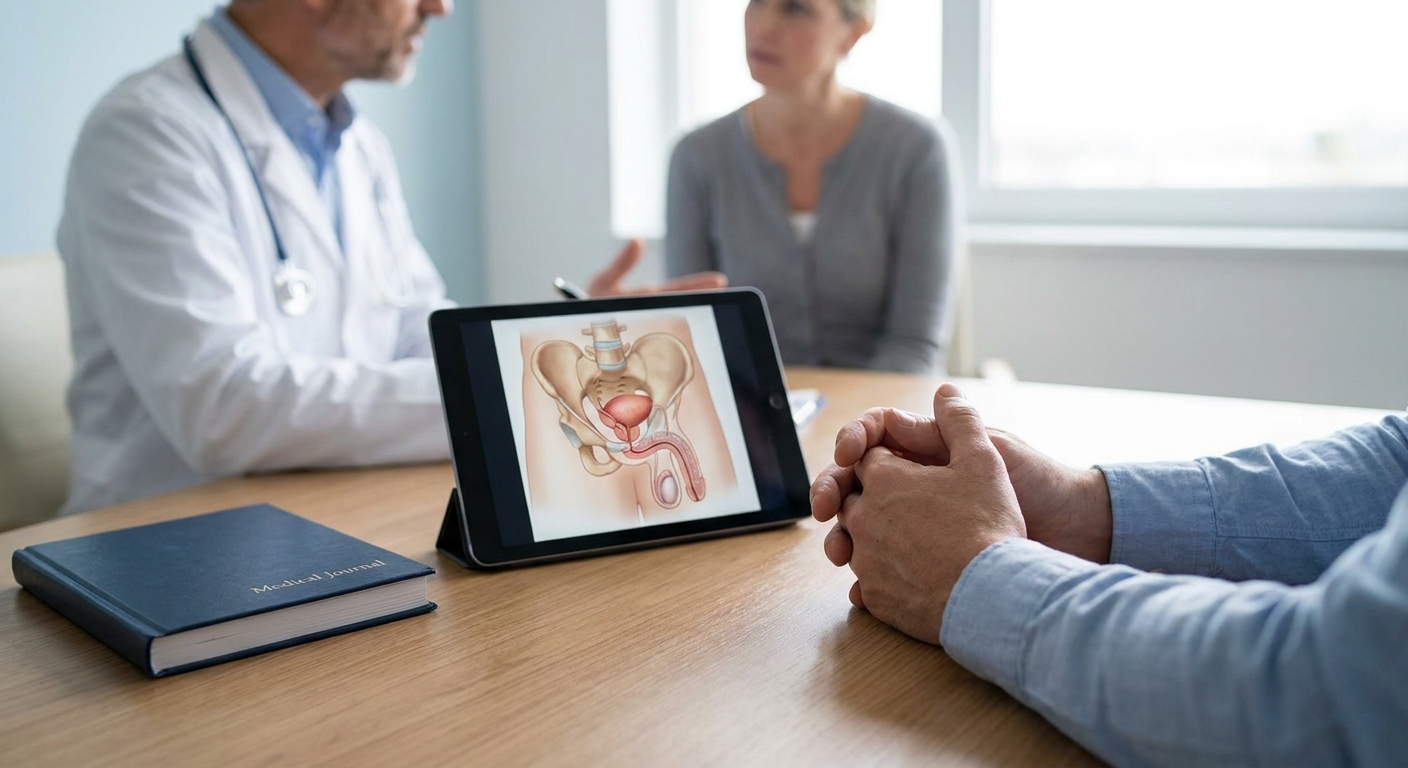
Chronic testicular pain (orchialgia) is diagnosed when scrotal pain persists for three months or longer after other causes — infection, torsion, tumor — have been ruled out, and treating it means combining a real diagnostic workup with a staged plan that starts conservative and escalates to nerve-targeted procedures only when needed.
TL;DR
- Orchialgia is defined as testicular pain lasting three months or more with no infection, torsion, or mass found on exam.
- Start with a urology and pain management workup before any procedure — imaging rules out the fixable causes first.
- Spermatic cord blocks are the standard next step after conservative care fails and can cut pain significantly within days.
- Post-vasectomy pain syndrome accounts for a meaningful share of chronic orchialgia cases and responds to the same nerve-block approach.
- Surgery (denervation or orchiectomy) is a last resort in 2026, reserved for cases that fail two or more nerve blocks.
Why this matters
Most men sit on testicular pain for months before seeing anyone, partly out of embarrassment and partly because the first doctor they see (primary care, sometimes even urology) tells them everything looks normal and sends them home with ibuprofen. That works for acute pain. It does nothing for pain that has already crossed the three-month mark and settled into a chronic nerve pain pattern.
Chronic orchialgia is a nerve problem in a large share of cases — the ilioinguinal, genitofemoral, and genital branches of these nerves run directly through the spermatic cord and scrotum, and irritation anywhere along that path reads as testicular pain even when the testicle itself is fine. That’s why ultrasound comes back clean and the pain stays. Treating it correctly means treating the nerve pathway, not just the organ, and the chronic pelvic pain in men workup at Hudson Pain and Spine follows that same logic for related pelvic and groin pain syndromes.
What you’ll need
- A urology exam that has already ruled out torsion, epididymitis, hydrocele, varicocele, hernia, and tumor
- Scrotal ultrasound results, ideally from within the past 6 months
- A pain diary tracking triggers (sitting, exercise, intercourse, ejaculation) for at least 2 weeks
- A list of everything already tried — NSAIDs, antibiotics, physical therapy, scrotal support
- Insurance information, since spermatic cord blocks and RFA are procedural and coverage varies by plan
- A referral to or appointment with an interventional pain specialist if urology has exhausted its options
The steps
1. Confirm the diagnosis is actually orchialgia
Rule out everything treatable first. Torsion, epididymitis, and hernia all present with scrotal pain and all have specific fixes that have nothing to do with nerve treatment. A scrotal ultrasound with Doppler flow, a urinalysis, and a physical exam checking for varicocele or hernia should happen before anyone talks about nerve blocks.
Common mistake: starting nerve-targeted treatment before imaging is current. If the last ultrasound is more than a year old, get a new one — varicoceles and hydroceles develop slowly and get missed on old imaging.
2. Try conservative management for 4 to 6 weeks
Before any procedure, a structured conservative trial makes sense: scrotal support, NSAIDs on a scheduled (not as-needed) basis, and avoiding known triggers identified in the pain diary. Pelvic floor physical therapy helps when pain correlates with sitting or intercourse, since tight pelvic floor musculature can refer pain directly into the scrotum.
Common mistake: stopping conservative care after a few days because it “isn’t working.” Nerve-related pain needs a full 4 to 6 week trial before anyone can call it a failure.
3. Get a spermatic cord block
This is the diagnostic and therapeutic step that changes the picture for most patients. A spermatic cord block injects local anesthetic (often combined with steroid) directly around the spermatic cord, numbing the nerves that carry pain signals from the testicle. If pain drops substantially within minutes of the injection, that confirms the pain is nerve-mediated and identifies exactly which pathway to target going forward.
Relief from the steroid component can last weeks to months. A single block that gives even partial relief is useful diagnostic information — it means the next step (repeat blocks or radiofrequency ablation) is likely to work too.
Common mistake: treating one block as a failure. Two to three blocks over several weeks give a clearer signal than one.
4. Consider a genitofemoral or ilioinguinal nerve block if cord blocks help but don’t fully resolve pain
When a spermatic cord block gives partial relief, the remaining pain often traces to the ilioinguinal or genitofemoral nerve rather than the spermatic cord itself. Targeting those nerves specifically — sometimes under ultrasound guidance — extends coverage into pain that radiates toward the groin or inner thigh, which is common in chronic orchialgia.
This step matters most for men whose pain started after inguinal hernia repair, since those nerves run directly through the surgical field. The celiac plexus block approach at Hudson Pain and Spine uses the same ultrasound-guided nerve-targeting principle for a different anatomic region — the technique, not the nerve, is what carries over.
Common mistake: assuming groin-radiating pain is unrelated to the testicular pain. In post-hernia and post-vasectomy cases, it’s usually the same nerve pathway.
5. Move to radiofrequency ablation for pain that keeps returning
If blocks work but relief fades in weeks rather than months, radiofrequency ablation (RFA) targets the same nerve pathway with heat instead of anesthetic, creating longer-lasting interruption of pain signals — typically 6 to 12 months of relief per treatment. This is a reasonable next step for men who have responded to at least two diagnostic blocks but need relief that lasts longer than a few weeks.
Common mistake: jumping to RFA before confirming with blocks that the target nerve is actually the pain generator. RFA on the wrong nerve wastes the procedure and delays real relief.
6. Address post-vasectomy pain syndrome specifically if that’s the trigger
Post-vasectomy pain syndrome is a distinct, recognized cause of chronic orchialgia, and it responds to the same block-first, ablate-second protocol. Spermatic cord blocks are typically the first-line procedure here as well, since the pain generator (irritated nerve tissue near the vasectomy site) sits along the same anatomic pathway.
7. Reserve surgery for cases that fail nerve-directed treatment
Microsurgical denervation of the spermatic cord, and in rare cases orchiectomy, stay on the table only after nerve blocks and RFA have both been tried without lasting benefit. These are surgical, not injection-based, and carry real recovery time and risk — they’re not a first, second, or even third step in 2026 treatment protocols.
Get a chronic orchialgia evaluation
Board-certified interventional pain specialists diagnose and treat testicular nerve pain in Bergen, Passaic, and Middlesex counties.
Troubleshooting
Pain comes back within a week of a spermatic cord block. That’s a strong signal the nerve pathway is correct but the anesthetic/steroid duration is too short — RFA or a repeat block series is the logical next move, not abandoning the nerve-block approach entirely.
Pain worsens with sitting but blocks aren’t helping. Pelvic floor dysfunction may be the actual driver, referring pain into the scrotum without a true nerve lesion. A pelvic floor physical therapy evaluation should happen before more injections.
Pain started right after a vasectomy and hasn’t gone away. This points to post-vasectomy pain syndrome specifically. Say that directly to whoever is treating you — it changes which nerve gets targeted first.
Ultrasound and exam are both clean, but pain is severe. Clean imaging doesn’t rule out nerve-mediated orchialgia — it’s actually expected, since the nerve pathway doesn’t show up on standard ultrasound.
A block helped for two days, then pain returned to baseline. Two days of relief still counts as diagnostic confirmation that the nerve pathway is correct, even though the duration was short. Report the exact timeline; it changes whether the next step is a repeat block series or RFA.
Tools and resources
- Scrotal ultrasound with Doppler flow (baseline diagnostic)
- Pain diary tracking triggers over 2+ weeks
- Spermatic cord block (diagnostic and therapeutic)
- Ilioinguinal/genitofemoral nerve block for radiating groin pain
- Radiofrequency ablation for pain that responds to blocks but recurs
- Pelvic floor physical therapy referral when sitting or intercourse triggers pain
- Guidance on when to see a pain management specialist for chronic pain that hasn’t resolved with primary care or urology alone
What to do next
If conservative management and one round of imaging haven’t resolved scrotal pain past the three-month mark, the next move is a diagnostic spermatic cord block, not another round of antibiotics or a repeat ultrasound. That single step usually tells you within days whether the pain is nerve-mediated and which pathway to target.
FAQ
What is the best treatment for chronic testicular pain in 2026?
Spermatic cord blocks are the first-line procedural treatment for chronic testicular pain (orchialgia) once conservative care fails, followed by radiofrequency ablation for pain that recurs after blocks. Surgery is reserved for cases that fail both.
How long does orchialgia have to last to be considered chronic?
Orchialgia is classified as chronic once pain persists for three months or longer after infection, torsion, and other acute causes have been ruled out. Pain shorter than that is treated as acute and managed differently.
Is post-vasectomy pain syndrome the same as orchialgia?
Post-vasectomy pain syndrome is a specific, recognized cause of chronic orchialgia, not a separate condition. It responds to the same spermatic cord block and RFA protocol used for other nerve-mediated testicular pain.
Can testicular pain be nerve-related if the ultrasound is normal?
Yes, and a normal ultrasound is actually expected in nerve-mediated orchialgia because the nerve pathway doesn’t appear on standard imaging. A spermatic cord block, not another scan, confirms whether the pain is nerve-based.
How much relief does a spermatic cord block provide?
A spermatic cord block often provides substantial relief within minutes if the pain is nerve-mediated, with the steroid component extending relief for weeks to months in many cases. Partial or short-lived relief still confirms the nerve pathway and points toward repeat blocks or RFA.
When is surgery necessary for chronic testicular pain?
Surgery, such as microsurgical denervation, is reserved for cases that fail two or more nerve blocks and radiofrequency ablation. It is not a first, second, or third-line treatment in 2026 protocols.
Does pelvic floor dysfunction cause testicular pain?
Yes, tight or dysfunctional pelvic floor muscles can refer pain directly into the scrotum without any true nerve lesion or organ problem. This is common when pain worsens with sitting or intercourse and doesn’t respond to nerve blocks.
How is chronic testicular pain diagnosed before treatment starts?
Diagnosis requires a scrotal ultrasound with Doppler flow, a physical exam ruling out hernia and varicocele, and a symptom history confirming pain has lasted three months or longer. Nerve blocks then serve as both diagnosis and treatment once structural causes are excluded.
One last thing
The detail most men miss: a spermatic cord block that gives only two or three days of relief isn’t a failed procedure — it’s diagnostic gold. Short-lived relief confirms the nerve pathway just as reliably as long-lived relief does; it just tells the treating physician to move toward radiofrequency ablation instead of repeating blocks indefinitely. Reporting the exact number of days the relief lasted, not just whether it “worked,” is what actually moves the treatment plan forward.
Related guides
- Best treatments for chronic groin pain in athletes
- Best non-opioid options for chronic pain management
About the Medical Reviewer
Dr. Saurabh Dang is a double board-certified interventional pain management specialist serving Central and Northern New Jersey. He combines clinical expertise with a patient-centered approach to help patients find lasting relief from chronic pain conditions.
Read Full Bio →Seeking Treatment for Nerve Block Injections?
Dr. Dang and the team at Hudson Pain and Spine offer specialized care and advanced interventional treatments.
Ready to Find Relief from Pain?
Schedule your consultation with Dr. Saurabh Dang at our Englewood office.
Serving patients across Central and Northern New Jersey — Bergen, Passaic, and Middlesex counties.