Chronic Venous Insufficiency Treatment: 2026 Guide

Medically reviewed by
Dr. Saurabh Dang, MD, MBA
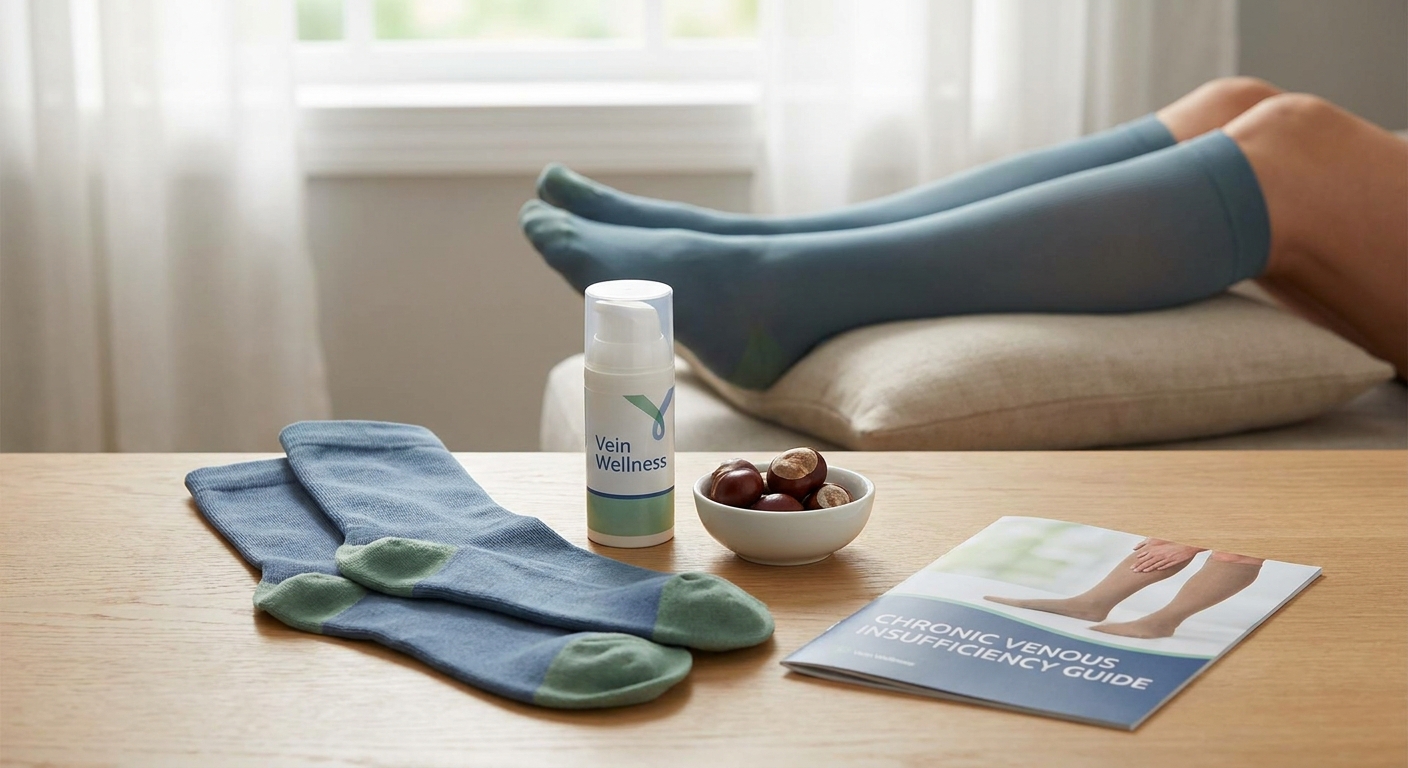
Chronic venous insufficiency (CVI) causes leg swelling, aching, heaviness, and skin changes because damaged vein valves let blood pool below the knee instead of returning to the heart — treating it in 2026 means combining daily compression and movement habits with a medical evaluation, not just buying stockings and hoping the ache goes away.
TL;DR
- Chronic venous insufficiency treatment starts with 20-30 mmHg graduated compression stockings worn daily, not just during flare-ups.
- Leg elevation above heart level for 15-20 minutes, three times a day, cuts swelling faster than rest alone.
- Stage C3 CVI or higher (visible swelling, skin changes) usually needs a vascular ultrasound before treatment, not guesswork.
- Persistent leg pain that doesn’t respond to CVI treatment can point to a spinal or nerve source instead of a vein problem.
Why this matters
CVI is progressive. Left untreated, pooled blood raises pressure in the lower leg veins year after year, and by 2026 estimates from vascular literature put roughly 1 in 3 adults over 50 with some degree of venous insufficiency, though most never get a formal diagnosis. The condition ranges from spider veins and mild aching (CEAP stage C1-C2) to brawny skin changes and venous ulcers (C4-C6).
The mistake most people make is treating the symptom, not the mechanism. Compression socks bought at a pharmacy help temporarily, but if the underlying reflux in the vein isn’t addressed, swelling and skin changes keep progressing. A structured plan — diagnosis first, conservative care second, procedural options third — is what actually slows the disease.
What you’ll need
- Graduated compression stockings, 20-30 mmHg (or 30-40 mmHg for more advanced stages, by prescription)
- A duplex ultrasound referral from a primary care doctor or vascular specialist
- A daily walking routine — 30 minutes is the common baseline target
- A stool or wedge pillow for leg elevation
- A log to track swelling, skin color, and pain triggers over 2-4 weeks
- Access to a pain or spine specialist if leg symptoms overlap with back pain — Hudson Pain and Spine handles that evaluation when nerve involvement is suspected
The steps
1. Get a duplex ultrasound before you commit to any treatment
This is the step people skip, and it’s the one that changes everything else. A duplex ultrasound maps which valves are refluxing and how severely, which determines whether you need stockings and exercise or a procedure.
Without imaging, you’re guessing at CEAP stage. Ask for the scan before buying expensive compression gear or scheduling any procedure — insurance typically requires it anyway before covering ablation.
Common mistake: assuming visible varicose veins mean the deep veins are fine. Reflux often starts in veins you can’t see.
2. Wear graduated compression stockings every day, not just on bad days
Compression is the single most effective conservative chronic venous insufficiency treatment available without a procedure. The 20-30 mmHg range is standard for mild to moderate CVI; 30-40 mmHg is used for more advanced disease or after a procedure.
Put them on first thing in the morning before swelling sets in, and replace them every 4-6 months once the elastic loosens. Expect noticeably less end-of-day heaviness within 1-2 weeks of consistent daily wear.
Common mistake: buying compression socks a size too loose because tight ones feel uncomfortable at first — under-compression does almost nothing for reflux.
3. Elevate your legs above heart level, three times a day
Elevation drains pooled blood mechanically, no valve function required. Fifteen to twenty minutes, legs propped above chest height, three times daily, measurably reduces ankle circumference within the same day for most people with mild to moderate CVI.
Do it after work, before bed, and once midday if you’re at a desk job. Combine it with ankle pumps — flexing the foot up and down — to activate the calf muscle pump.
Common mistake: propping feet on a coffee table at a 20-degree angle and calling it elevation. The legs need to be above the heart, not just off the floor.
4. Build a daily walking habit — the calf muscle is your second heart
The calf muscle pump does more work moving venous blood back to the heart than most people realize. Thirty minutes of walking most days activates that pump and is one of the few interventions shown to reduce CVI symptom scores without medication.
Start at 10-15 minutes if you’re deconditioned and build up over 3-4 weeks. Swimming and cycling work as low-impact alternatives on days when standing walking aggravates swelling — a low-impact exercise routine built for chronic pain patients applies the same pacing logic here.
Common mistake: long periods of standing still, which is often worse for venous pooling than walking or sitting.
5. Manage weight and cut sodium during flare periods
Extra abdominal weight raises pressure on the pelvic and leg veins, worsening reflux. Sodium retention adds fluid volume on top of an already compromised return system, so cutting sodium during a flare — not permanently, just during active swelling — takes pressure off faster than compression alone.
Even a 5-10 percent reduction in body weight has been associated with measurable improvement in venous symptom scores in vascular studies published through 2026.
6. Ask about minimally invasive procedures for stage C3 and above
When conservative measures stop controlling swelling, skin changes, or pain, endovenous laser ablation, radiofrequency vein ablation, or sclerotherapy close off the refluxing vein so blood reroutes through healthy pathways. These are outpatient procedures with recovery measured in days, not weeks.
This is a decision for a vascular specialist based on your ultrasound findings, not a step to self-select. Verdict: necessary conversation, not optional, once skin discoloration or ulceration appears.
7. Treat skin changes and wounds the moment you notice them
Brawny skin discoloration, itching, or a slow-healing sore near the ankle signals stage C4-C6 disease. Left alone, this progresses to venous ulcers that take months to heal. Moisturize daily, avoid scratching, and get any open sore evaluated within a week, not after it’s been there for a month.
Common mistake: treating ankle skin changes as a dermatology issue alone instead of flagging the underlying vein problem to whoever is managing the skin.
8. Rule out a spinal or nerve source if leg pain doesn’t match the swelling pattern
CVI pain is typically a dull ache or heaviness that worsens with standing and improves with elevation. If your leg pain is sharp, radiates down one leg, or comes with numbness or tingling, that pattern looks more like lumbar radiculopathy or sciatica than venous disease — and compression stockings won’t touch it.
That’s a separate workup. A specialist who treats nerve-related leg and back pain can determine whether pinched nerve relief options apply instead of, or alongside, vein treatment.
Not sure if it’s nerve pain or vein pain?
Get an evaluation if leg pain persists despite compression and elevation.
Troubleshooting
- Stockings roll down or feel unbearably tight within an hour — you’re likely a size too small or too large; get remeasured rather than switching brands repeatedly.
- Elevation isn’t reducing swelling after a week — check that legs are actually above heart level and extend sessions to 20-30 minutes; if swelling persists, ask about stage progression.
- Pain continues despite consistent compression and elevation for 3-4 weeks — this is the point to escalate to a vascular ultrasound if you haven’t had one, or to rule out a nerve-related cause.
- Skin near the ankle is darkening or itching constantly — this signals advancing CEAP stage; don’t wait for a wound to form before mentioning it to a provider.
- Symptoms spike in summer heat — heat dilates veins and worsens pooling; increase elevation frequency and avoid hot baths during flares.
- Compression stockings cause numbness in the toes — that’s a fit or pressure-grade issue, not something to push through; get refitted immediately.
Tools and resources
- Graduated compression stockings, 20-30 mmHg or 30-40 mmHg by prescription
- A duplex ultrasound referral (ask your primary care provider directly)
- A low-impact exercise routine for days when walking aggravates swelling
- A symptom log tracking swelling, skin color, and pain pattern over 2-4 weeks
- A leg elevation wedge or footstool rated for above-heart positioning
What to do next
If a procedure gets scheduled, plan the recovery window in advance — most endovenous ablations allow walking the same day but restrict heavy lifting and prolonged standing for 1-2 weeks. The general pacing guidance in returning to activity after a pain procedure covers how to ease back into a work routine without undoing the benefit of the procedure. If you’re active — running, cycling, or standing all day for work — also look at hip and leg pain treatment built for active adults to make sure a hip or joint issue isn’t compounding the leg symptoms.
FAQ
What is the best chronic venous insufficiency treatment for mild cases?
For mild CVI (CEAP stage C1-C2), daily 20-30 mmHg compression stockings combined with leg elevation and 30 minutes of walking is the standard first-line treatment in 2026. Most people see reduced heaviness and swelling within 1-2 weeks of consistent use.
Do compression stockings cure venous insufficiency?
No, compression stockings manage symptoms but don’t repair damaged valves. They reduce swelling and pain day to day, but reflux continues underneath, which is why more advanced stages often need a procedure like ablation.
How much does venous ablation cost in 2026?
Cost varies by procedure type, insurance coverage, and geographic market, so get a quote directly from a vascular specialist after your ultrasound. Insurance often covers ablation once conservative treatment has failed to control symptoms.
Can chronic venous insufficiency cause leg pain that feels like sciatica?
CVI pain is usually a dull ache or heaviness that worsens with standing, while sciatica pain is typically sharp and radiates down one leg with numbness or tingling. If your symptoms match the sciatica pattern, a nerve-related cause needs separate evaluation.
Is walking good or bad for chronic venous insufficiency?
Walking is good for CVI because it activates the calf muscle pump that helps move blood back toward the heart. Prolonged standing still, not walking, is what worsens venous pooling.
How long does it take to see results from CVI treatment?
Compression and elevation typically reduce daily swelling within 1-2 weeks. Procedural treatments like ablation show improvement in symptom scores within days to a few weeks of the procedure, based on aggregated vascular outcomes data through 2026.
When should I see a specialist for venous insufficiency?
See a specialist once you notice visible skin discoloration, a non-healing sore near the ankle, or if swelling and pain don’t improve after 3-4 weeks of consistent compression and elevation.
Can CVI be mistaken for a herniated disc or pinched nerve?
Yes, when leg pain radiates or comes with numbness, it can mimic a herniated disc or pinched nerve rather than venous disease. The distinguishing factor is that CVI pain responds to elevation while nerve pain typically does not.
One last thing
The detail most patients miss in 2026: venous ulcers almost never appear without warning. There’s a 3-6 month window of skin discoloration and itching before an open sore forms, and that window is when compression and elevation still have the best chance of stopping progression. Once an ulcer forms, healing timelines stretch to months even with treatment — so the itch you’re ignoring near your ankle right now is the cheapest intervention point you’ll get.
Related guides
- Hip and leg pain treatment for runners and active adults
- How to return to work safely after a pain procedure
About the Medical Reviewer
Dr. Saurabh Dang is a double board-certified interventional pain management specialist serving Central and Northern New Jersey. He combines clinical expertise with a patient-centered approach to help patients find lasting relief from chronic pain conditions.
Read Full Bio →Seeking Treatment for Chronic Pain?
Dr. Dang and the team at Hudson Pain and Spine offer specialized care and advanced interventional treatments.
Ready to Find Relief from Pain?
Schedule your consultation with Dr. Saurabh Dang at our Englewood office.
Serving patients across Central and Northern New Jersey — Bergen, Passaic, and Middlesex counties.