
De Quervain's Tenosynovitis Treatment: 2026 Guide

Medically reviewed by
Dr. Saurabh Dang, MD, MBA
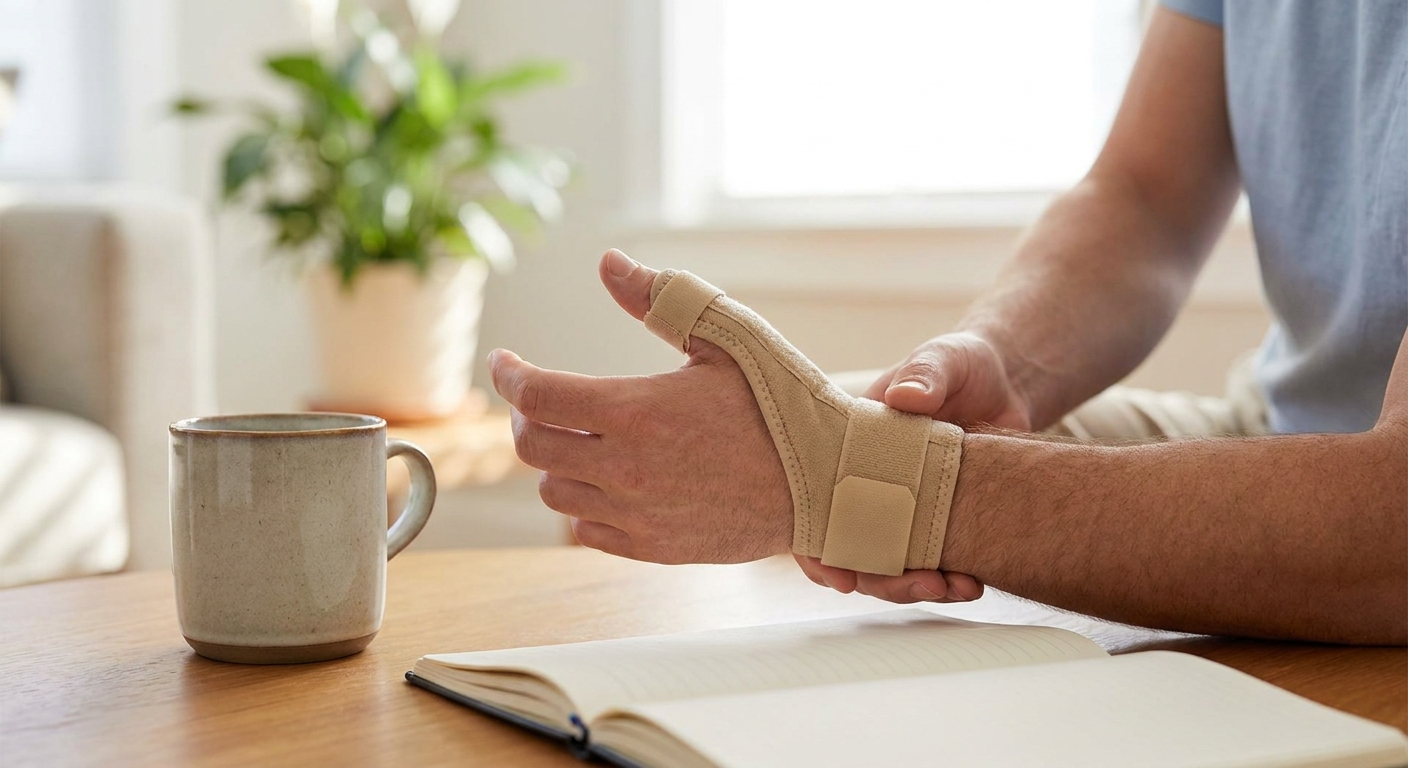
De Quervain’s tenosynovitis causes sharp pain along the thumb side of the wrist, and the right treatment sequence resolves most cases without surgery in 2026. This guide walks through the exact steps to calm the inflamed tendons, when to escalate to an injection, and when a pain management specialist needs to get involved.
TL;DR
- De Quervain’s tenosynovitis treatment starts with thumb spica splinting and NSAIDs for 4 to 6 weeks — try this first.
- A corticosteroid injection resolves symptoms in 50 to 80% of patients after one to two shots in 2026 clinical data.
- Surgery (first dorsal compartment release) is reserved for cases that fail injections after 3 to 6 months.
- Ignoring thumb-side wrist pain past 6 weeks risks chronic tendinosis — see a specialist instead of waiting it out.
Why this matters
De Quervain’s tenosynovitis is inflammation of the two tendons that run along the thumb side of the wrist — the abductor pollicis longus and extensor pollicis brevis. It shows up constantly in new parents lifting infants, warehouse and assembly workers doing repetitive gripping, and anyone who spends hours texting or scrolling with an awkward thumb angle. Left untreated past 6 to 8 weeks, the tendon sheath thickens and simple grip motions like turning a doorknob or lifting a coffee cup become painful. The condition responds well to a staged approach, but skipping steps or self-treating for months past the point where conservative care is working just delays real relief.
Hudson Pain and Spine sees this condition frequently in patients from Bergen, Passaic, and Middlesex counties who tried ibuprofen and a wrist brace for months before asking whether a specialist could help. The pattern is consistent: early, targeted care beats prolonged self-management every time.
What you’ll need
- A thumb spica splint (immobilizes the thumb and wrist, available at most pharmacies)
- Over-the-counter NSAIDs (ibuprofen or naproxen, unless contraindicated)
- Ice packs for 15-20 minute sessions
- A referral or appointment with a pain management specialist if symptoms persist past 4-6 weeks
- Patience — the tendon sheath takes weeks, not days, to calm down
This condition overlaps in presentation with carpal tunnel syndrome, so ruling out nerve involvement early avoids wasted treatment cycles.
The steps
1. Confirm the diagnosis with a Finkelstein test
Tuck the thumb into a fist and bend the wrist toward the pinky side. Sharp pain at the base of the thumb is a strong positive sign for De Quervain’s tenosynovitis, distinguishing it from arthritis or a nerve entrapment issue. This takes 10 seconds and should be the first thing done before starting any treatment. Common mistake: assuming any thumb-side wrist pain is arthritis and starting arthritis-specific supplements that do nothing for tendon inflammation.
2. Immobilize the thumb and wrist
A thumb spica splint holds the thumb and wrist in a neutral position, taking tension off the inflamed tendons so they can settle. Wear it during the day for any activity that involves gripping, and consider wearing it at night for the first 2 weeks if pain wakes you up. Most patients see meaningful pain reduction within 10 to 14 days of consistent splint use. Common mistake: wearing the splint only when pain flares instead of consistently, which restarts the inflammation cycle every time it comes off.
3. Start NSAIDs and ice
Ibuprofen or naproxen taken at standard over-the-counter doses reduces the inflammatory response in the tendon sheath, and ice for 15-20 minutes several times a day adds direct symptom control. This step runs alongside splinting, not instead of it — medication alone without immobilization rarely gets ahead of the inflammation. Expect noticeable improvement in swelling and morning stiffness within the first week. Common mistake: stopping NSAIDs after 2-3 days because pain feels better, then re-aggravating the tendon with normal activity.
4. Cut out the aggravating motion
Repetitive thumb abduction and wrist ulnar deviation — texting, lifting a baby under the arms, repetitive gripping at a job site — is what caused the inflammation and will keep it going if unchanged. Identify the specific motion triggering symptoms and modify it: switch to two-handed lifting, adjust phone grip, or use ergonomic tools at work. Warehouse and assembly workers dealing with repetitive strain patterns benefit from the same activity-modification logic used for broader strain injuries. Expect this step to prevent the 4-6 week conservative trial from resetting itself. Common mistake: treating the wrist but returning to the exact repetitive motion that caused it within days of feeling better.
5. Add tendon gliding exercises once acute pain settles
After the first 1-2 weeks of splinting and rest, gentle thumb and wrist range-of-motion exercises prevent stiffness without restarting inflammation. Move slowly through pain-free ranges only — any sharp pain means the exercise is too aggressive for that stage of healing. This step matters because prolonged full immobilization past 3-4 weeks can lead to stiffness that outlasts the original tendon problem. Expect gradual return of pain-free grip strength over 2-4 weeks. Common mistake: pushing through pain during exercises because “stretching is supposed to hurt a little” — it isn’t, for an inflamed tendon.
6. Get a corticosteroid injection if conservative care stalls
When splinting, NSAIDs, and activity modification haven’t produced real improvement after 4-6 weeks, a targeted corticosteroid injection into the tendon sheath is the next step. Aggregated 2026 clinical data shows 50 to 80% of patients get lasting symptom relief after one or two injections, spaced several weeks apart. This is an office procedure that takes minutes and doesn’t require downtime. Common mistake: waiting 6 months or more before considering an injection, which lets the tendon sheath thicken and makes the injection less likely to fully resolve symptoms.
7. Consider surgical release if injections fail
For the smaller share of patients who don’t respond after 3 to 6 months of injections and conservative care, a first dorsal compartment release procedure opens the tendon sheath to relieve compression. This is a last-step option, not a first-line treatment, and should only come up after the earlier steps have had a real trial. Common mistake: jumping to surgery discussions before splinting and injections have been given adequate time to work.
Get a De Quervain’s diagnosis confirmed
Board-certified evaluation for wrist and thumb pain in NJ.
Troubleshooting
- Splint isn’t reducing pain after 2 weeks. Check the fit — a splint that allows any thumb motion won’t immobilize the tendon sheath properly. Refitting or upgrading to a rigid model often solves this.
- Pain returns a few months after an injection worked. This happens in a subset of patients and usually means the aggravating activity was never fully modified. A second injection combined with stricter activity changes is the typical next move.
- Numbness or tingling accompanies the thumb pain. That’s not typical for De Quervain’s tenosynovitis and points toward nerve involvement, similar to the pattern seen in tennis elbow and golfer’s elbow cases where nerve and tendon symptoms overlap. Get this evaluated rather than assuming it’s the same condition.
- Symptoms started right after having a baby. This is common enough to have a nickname — “new mom’s thumb” — caused by repetitive lifting with the thumbs extended. The treatment steps are identical, but splinting compliance is harder with an infant in the house, so plan for it.
- Pain flares specifically with phone use. Switch to voice-to-text or a stylus during the acute phase, and reassess phone grip habits once the tendon has calmed down; this single change prevents a large share of relapses.
Tools and resources
- Thumb spica splint (pharmacy or medical supply store)
- NSAIDs as directed by a physician
- Trigger point injections for patients with associated forearm muscle tightness contributing to the strain pattern
- Non-opioid options for chronic pain management for patients who want to avoid opioid prescriptions during recovery
- A board-certified pain management specialist for injection-level care once splinting and NSAIDs plateau
What to do next
If 4-6 weeks of splinting, NSAIDs, and activity changes haven’t moved the needle, the next step is a specialist visit rather than another month of self-treatment. Read when to see a pain management specialist for chronic pain for the specific signs that mean it’s time to stop waiting.
FAQ
What is the best treatment for De Quervain’s tenosynovitis?
The best De Quervain’s tenosynovitis treatment starts with thumb spica splinting, NSAIDs, and activity modification for 4 to 6 weeks. If that doesn’t resolve symptoms, a corticosteroid injection resolves 50 to 80% of cases, with surgery reserved for the small number that fail injections.
How long does De Quervain’s tenosynovitis take to heal?
Mild cases improve within 4 to 6 weeks with consistent splinting and NSAIDs. Cases that need a corticosteroid injection typically see relief within 1 to 2 weeks of the shot, though full resolution can take a few months.
Does a corticosteroid injection cure De Quervain’s tenosynovitis?
A corticosteroid injection resolves symptoms in roughly 50 to 80% of patients, often after just one or two injections in 2026 clinical data. It doesn’t guarantee a permanent cure if the underlying repetitive motion isn’t also modified.
Is De Quervain’s tenosynovitis the same as carpal tunnel syndrome?
No, they’re different conditions that both cause wrist-area pain. De Quervain’s tenosynovitis affects tendons on the thumb side of the wrist, while carpal tunnel syndrome involves nerve compression and causes numbness and tingling in the fingers rather than sharp tendon pain.
Can De Quervain’s tenosynovitis go away on its own?
Mild cases can improve with rest and activity changes alone, but most cases need splinting and NSAIDs to fully resolve. Left untreated past 6-8 weeks, the tendon sheath thickens and self-resolution becomes less likely.
When is surgery needed for De Quervain’s tenosynovitis?
Surgery is considered only after 3 to 6 months of conservative care and injections have failed to resolve symptoms. The procedure, a first dorsal compartment release, opens the tendon sheath and is a last-step option, not a first-line treatment.
Why do new mothers get De Quervain’s tenosynovitis?
Repetitive lifting of an infant with the thumbs extended and wrists angled puts sustained strain on the same two tendons affected in De Quervain’s tenosynovitis. This pattern is common enough that it’s often called ‘new mom’s thumb’ in clinical settings.
What happens if De Quervain’s tenosynovitis is left untreated?
Untreated De Quervain’s tenosynovitis can progress to chronic tendon sheath thickening, making grip motions like turning a key or lifting a cup consistently painful. The condition rarely resolves fully without addressing both inflammation and the repetitive motion causing it.
One last thing
The single biggest predictor of how fast De Quervain’s tenosynovitis resolves isn’t the splint brand or the NSAID dose — it’s whether the aggravating motion actually stops during treatment. Patients who keep texting, lifting, or gripping the same way while wearing a splint routinely need a second or third round of care that a strict 2-week activity break would have avoided entirely.
Related guides
- How to treat carpal tunnel syndrome nerve pain
- How to treat tennis elbow and golfer’s elbow pain
- How trigger point injections relieve muscle pain
- Best non-opioid options for chronic pain management
- When to see a pain management specialist for chronic pain
About the Medical Reviewer
Dr. Saurabh Dang is a double board-certified interventional pain management specialist serving Central and Northern New Jersey. He combines clinical expertise with a patient-centered approach to help patients find lasting relief from chronic pain conditions.
Read Full Bio →Seeking Treatment for Chronic Pain?
Dr. Dang and the team at Hudson Pain and Spine offer specialized care and advanced interventional treatments.
Ready to Find Relief from Pain?
Schedule your consultation with Dr. Saurabh Dang at our Englewood office.
Serving patients across Central and Northern New Jersey — Bergen, Passaic, and Middlesex counties.