Pain Management for Bartenders 2026: What to Do | HudsonPain

Medically reviewed by
Dr. Saurabh Dang, MD, MBA
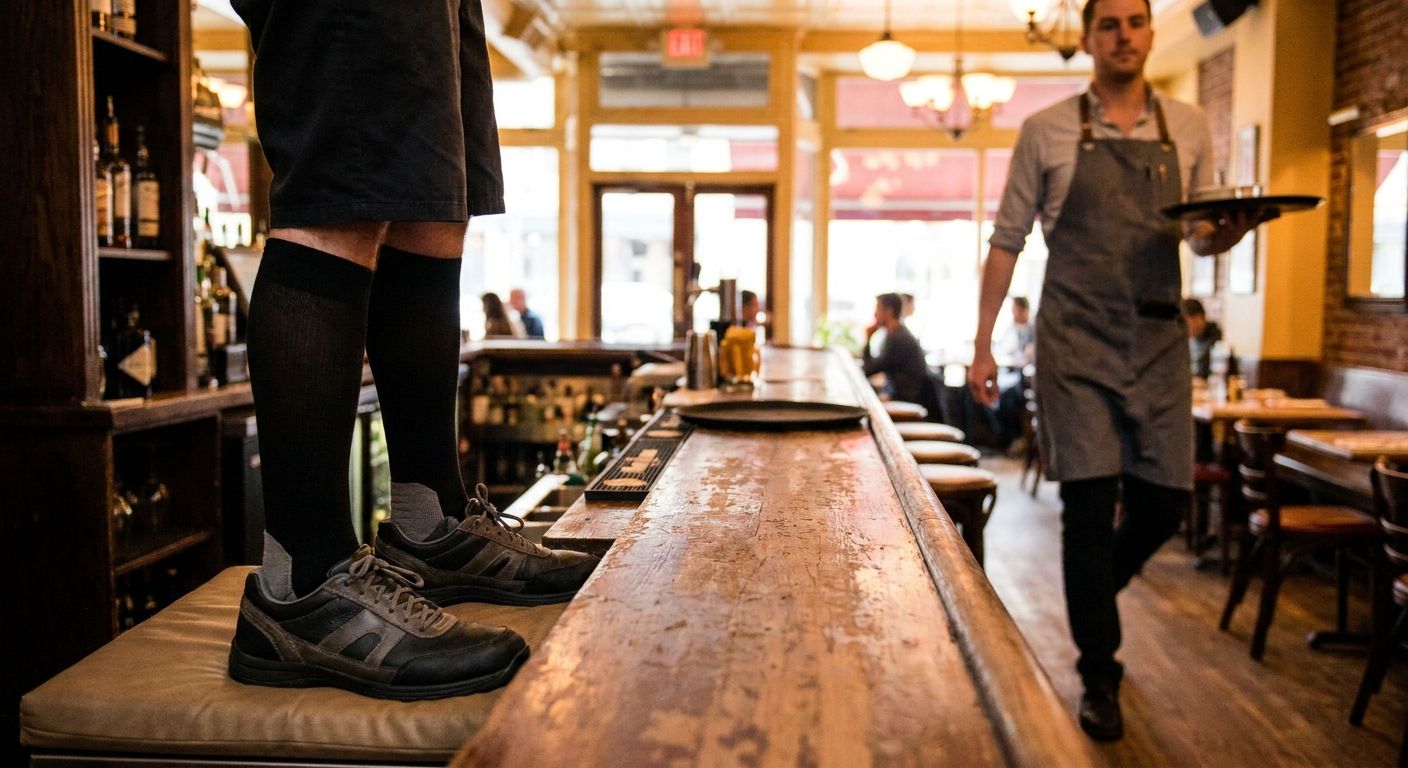
Twelve-hour shifts behind a bar or a restaurant floor turn ordinary foot and back soreness into a nerve problem by year three on the job. Pain management for bartenders and servers has to address standing, twisting, and tray-carrying strain specifically — generic desk-worker advice doesn’t fix what happens to a body that’s on concrete for 50+ hours a week.
TL;DR
- Pain management for bartenders and servers works when it targets standing-related nerve and joint strain, not general soreness.
- Trigger point injections handle shift-end shoulder and low back tightness fast at Hudson Pain and Spine in 2026 — Buy.
- Plantar fasciitis from hard floors needs targeted care beyond new shoes once it’s chronic — Consider.
- Compression socks alone don’t fix visible varicose vein pain; that needs a vascular work-up first — Skip as a standalone fix.
- Same-week evaluation matters more than brand name when you work rotating shifts and can’t take a weekday off.
Why this matters
Bartenders and servers rank among the most physically demanding jobs in food service, and most don’t carry workers’ comp for repetitive strain the way construction crews do. Pain gets managed with ibuprofen and a longer shift break until it stops responding to either.
By the time someone in this line of work books an appointment, the plantar fasciitis has been active for months and the low back tightness has turned into radiating leg pain. Pain management for bartenders needs to catch that earlier, not later, and 2026 scheduling at Hudson Pain and Spine is built around people who can’t take a weekday morning off without losing a shift.
Who this is for
This guide is for bartenders, servers, baristas, and hosts working 6-plus hour shifts on hard flooring — anyone whose job means standing, pivoting, and carrying loaded trays for most of a shift. If your pain shows up as burning heels by closing, a tight low back that won’t loosen up until Tuesday, or numbness in your hand from shaking cocktails and popping bottle caps, the treatment path here applies to you. It’s a close relative of the strain seen in retail workers who stand all day, just with heavier lifting and more twisting added in.
What to look for in pain management for bartenders and servers
Treatment that targets standing-related nerve and joint strain
General orthopedic advice treats foot and back pain as isolated issues. For someone standing 8+ hours a shift, the foot, knee, hip, and low back load transfer as one chain — a specialist who evaluates gait and posture together catches problems a foot-only or back-only visit misses.
Non-opioid, procedure-based options
A server can’t work a Saturday night shift sedated. Interventional options — trigger point injections, epidural steroid injections, radiofrequency ablation — target the pain source directly and let you keep working shifts within days, not weeks.
Same-week or next-week evaluation
Restaurant and bar schedules don’t leave room for a six-week specialist wait. A pain practice that can get you seen inside a week matters more here than it does for a desk worker who can plan around a slower recovery.
Flexible scheduling around shift work
Most pain clinics run 9-to-5 booking that assumes a Monday-through-Friday patient. Look for evening or weekday-morning slots that fit around a bartender’s inverted schedule — Hudson Pain and Spine’s Englewood, Woodland Park, and Edison locations cover Bergen, Passaic, and Middlesex counties for exactly this reason.
Clear guidance on returning to a standing job
Any procedure that doesn’t come with a specific return-to-shift timeline leaves you guessing whether you’re safe to work a full bar shift the next day. A good plan tells you when you can stand for a full shift again, not just when the pain “should” be better.
Treatment options that actually work for this job
Trigger point injections — the fast fix
The hook: same-visit relief for the shoulder and low back knots that build up from carrying loaded trays all shift. These injections target a specific muscle band, not a whole region, which is why they work fast for shift-end tightness. Verdict: Buy for anyone whose pain is muscular tightness rather than nerve pain radiating down a limb.
Plantar fasciitis care — the one most bartenders ignore too long
The hook: heel pain that’s “just from standing all day” until it isn’t. Standing on hard bar mats or tile for a full shift is the single most common trigger for plantar fasciitis in this line of work, and new shoes alone rarely resolve it once the fascia is inflamed. Targeted treatment covered in the plantar fasciitis heel pain guide addresses the inflammation directly instead of masking it with insoles. Verdict: Buy if heel pain has lasted more than six weeks.
Varicose vein evaluation — the one people underrate
The hook: aching, heavy legs by the end of a double that compression socks don’t fully fix. Prolonged standing is a leading driver of venous pain, and once veins start bulging or throbbing, socks manage symptoms without addressing the underlying vein function. The varicose vein pain guide covers minimally invasive options beyond compression wear. Verdict: Consider — get evaluated before the veins progress, especially if pain is worse by the end of every double shift.
Epidural steroid injections for radiating low back pain — the escalation option
The hook: low back pain that now shoots down one leg when you bend to load a tray. Twisting under load, common when reaching across a bar or plating dishes, is a frequent trigger for disc irritation and nerve compression. This isn’t a first step for mild tightness, but it’s the right move once numbness or shooting pain shows up. Verdict: Consider once trigger point injections and rest stop helping.
Wrist and hand nerve care — the overlooked one
The hook: numbness or tingling in the hand from constant shaking, pouring, and popping bottle caps. Repetitive wrist motion under load is a classic carpal tunnel trigger, and bartenders rarely connect the dots until the numbness interferes with holding a glass steady. Verdict: Consider if tingling wakes you up at night or shows up daily by shift’s end.
Get evaluated before your next double shift
Same-week scheduling across Englewood, Woodland Park, and Edison, NJ.
What to avoid
- OTC pain creams as a stand-in for diagnosis. They mask trigger point pain and delay treatment for weeks while the muscle tightness worsens.
- Compression socks as the only response to leg pain. They help circulation, but they don’t fix a vein that’s already failing structurally.
- Chiropractic adjustment for numbness or tingling. If pain radiates or you have nerve symptoms, manipulation without an imaging work-up can delay finding the actual nerve compression.
Verdict comparison
| Issue | Common Cause on Shift | Treatment Approach | Verdict |
|---|---|---|---|
| Plantar fasciitis / heel pain | Hours on hard floors, worn shoes | Targeted injection + gait review | Buy |
| Varicose vein pain | Prolonged standing, poor circulation | Vascular evaluation, minimally invasive treatment | Consider |
| Chronic low back strain | Twisting to carry trays | Trigger point injections; epidural if nerve involved | Buy |
| Shoulder/neck tension | Overhead reaching, tray weight | Trigger point injections | Buy |
| Wrist/hand numbness | Repetitive shaking, pouring | Nerve evaluation, bracing or injection | Consider |
FAQ
What’s the best pain management for bartenders with chronic foot pain?
Targeted treatment for plantar fasciitis, not just new shoes, is the best pain management for bartenders once heel pain has lasted more than six weeks. Standing on hard floors for full shifts is the leading trigger, and untreated inflammation gets worse with every additional shift.
Is trigger point injection better than a massage for shift-end back pain?
Trigger point injections address the specific muscle knot directly, while massage provides temporary relief that fades within a day or two. For servers whose back tightness returns every shift, injections tend to hold longer between treatments.
How much does pain management cost for restaurant workers without insurance?
Costs vary by procedure and location, and the specific breakdown for common treatments is covered in Hudson Pain and Spine’s guide on procedure costs without insurance. Ask about self-pay options directly when booking an evaluation.
When should a server see a pain specialist instead of waiting it out?
See a specialist once pain lasts more than four to six weeks, radiates down an arm or leg, or comes with numbness or tingling. Waiting past that point usually means a longer recovery once you finally get treated.
Can varicose veins from bartending be treated without missing work?
Many minimally invasive vein treatments allow a return to standing work within days, though the exact timeline depends on the severity of the vein disease. A vascular evaluation is the first step before any treatment timeline can be set.
Does standing all day cause permanent nerve damage?
Standing alone rarely causes permanent nerve damage, but untreated nerve compression from conditions like carpal tunnel or sciatica can become chronic if ignored for years. Early evaluation prevents that progression in most cases.
Are epidural injections safe for someone who needs to keep working shifts?
Epidural steroid injections are an outpatient procedure, and most patients return to light duty within a few days depending on the job’s physical demands. A bartending or serving shift typically requires a short recovery window before returning to a full standing shift.
What insurance covers pain management treatment in New Jersey?
Coverage varies by plan and procedure, and most major New Jersey insurers cover medically necessary interventional pain treatments. Check your specific plan’s coverage for injections and nerve blocks before scheduling.
One last thing
Most bartenders and servers don’t connect their heel pain, their low back tightness, and their achy legs by end of shift as one problem — they treat each as a separate annoyance and manage it with a different fix. Pain management for bartenders works better as one evaluation covering the full standing-and-carrying chain rather than three separate appointments for three separate complaints. Hudson Pain and Spine’s 2026 scheduling across Englewood, Woodland Park, and Edison is built to get shift workers seen without losing a paycheck over it.
Related guides
- How trigger point injections relieve muscle pain
- How to choose an interventional pain specialist in New Jersey
About the Medical Reviewer
Dr. Saurabh Dang is a double board-certified interventional pain management specialist serving Central and Northern New Jersey. He combines clinical expertise with a patient-centered approach to help patients find lasting relief from chronic pain conditions.
Read Full Bio →Seeking Treatment for Epidural Injections?
Dr. Dang and the team at Hudson Pain and Spine offer specialized care and advanced interventional treatments.
Ready to Find Relief from Pain?
Schedule your consultation with Dr. Saurabh Dang at our Englewood office.
Serving patients across Central and Northern New Jersey — Bergen, Passaic, and Middlesex counties.