
Pain Management for Boxers and MMA Fighters (2026)

Medically reviewed by
Dr. Saurabh Dang, MD, MBA
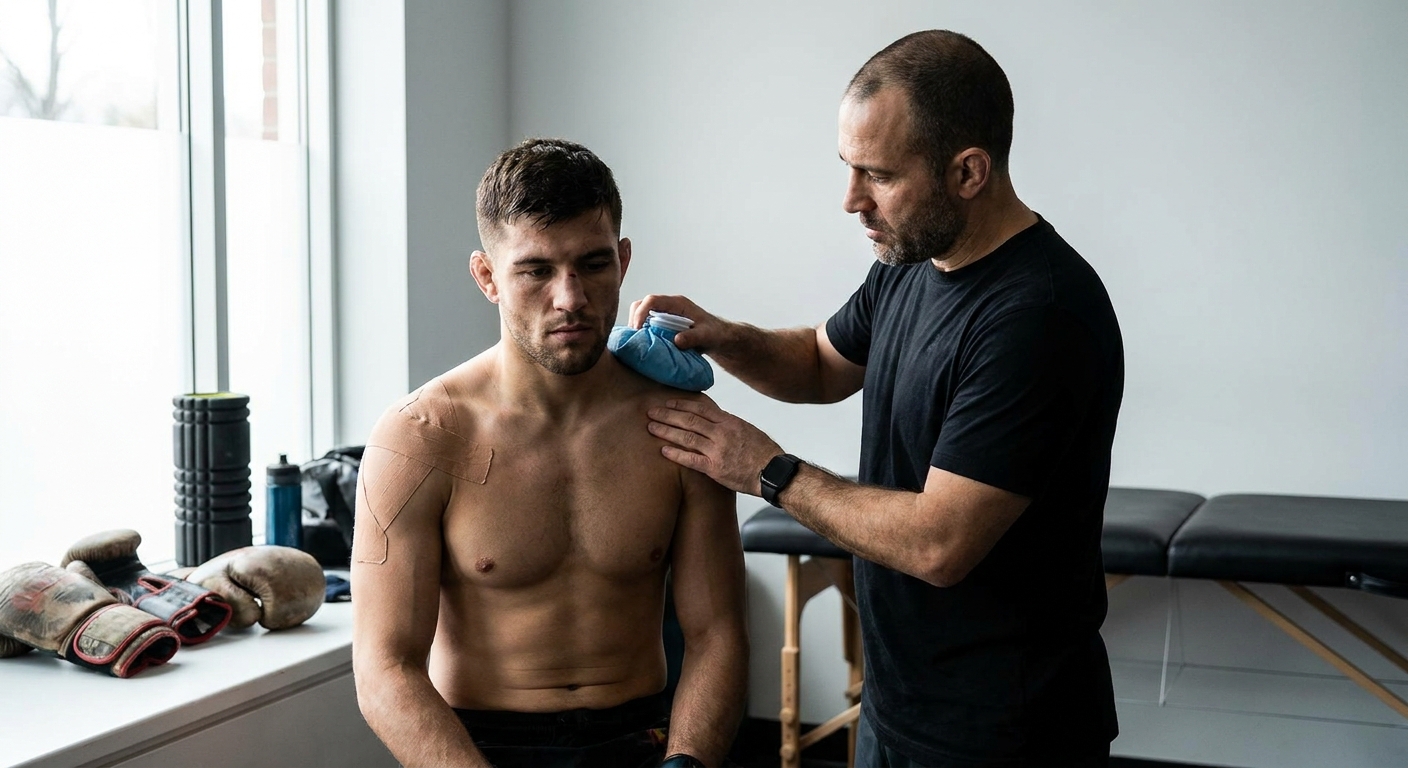
Boxers and MMA fighters break down joints faster than almost any other athlete — the wrist absorbs punching force, the knee eats takedowns, and the shoulder logs thousands of repetitive overhead and rotational strikes per training camp. This guide breaks down what actually works for joint pain in combat-sport athletes in 2026, and where a fighter should draw the line on injections.
TL;DR
- Pain management for boxers and MMA fighters targets overuse joint damage, not just one bad injury.
- PRP and ultrasound-guided joint injections let fighters keep training without opioids or missed fight camps.
- Corticosteroid shots work for a fight-week flare but cap at 3-4 injections per joint per year.
- Meniscus tears and rotator cuff damage often respond to targeted non-surgical care in active fighters.
- Board-certified interventional pain specialists in Englewood, Woodland Park, and Edison, NJ treat this population directly.
Why This Matters
A fighter who ignores joint pain doesn’t get to rest it the way an office worker does. Fight camps run on fixed timelines, weight cuts don’t wait, and every missed training block costs conditioning. Untreated joint inflammation in a striker’s wrist or a grappler’s knee tends to compound — what starts as soreness after sparring becomes a chronic pain pattern that shows up in every round.
The treatment plan also has to respect competition rules. Athletic commissions and most sanctioning bodies restrict certain substances, so a fighter’s pain management has to be cleared with the same seriousness as a supplement label. That’s a different calculus than treating a weekend athlete’s knee.
Who This Is For
This is for amateur and professional boxers, MMA fighters, and combat-sport athletes training in gyms across Bergen, Passaic, and Middlesex counties who are dealing with chronic wrist, elbow, shoulder, knee, or hip pain from repetitive impact — not a single acute trauma requiring emergency care. If pain has lasted more than a few weeks and conservative rest hasn’t fixed it, this is the athlete this guide is written for. A double board-certified, fellowship-trained interventional pain specialist like Dr. Saurabh Dang at Hudson Pain and Spine treats this exact profile of injury regularly.
What to Look for in Pain Management for Boxers and MMA Fighters
1. Board certification and fellowship training in interventional pain
Joint injections around a fighter’s wrist, shoulder, or knee require precision most general practitioners don’t have. A fellowship-trained interventional pain physician has done dedicated training in exactly these procedures, not a weekend certification course.
2. Imaging-guided precision, not blind injections
Fluoroscopy or ultrasound guidance means the needle lands in the joint capsule or bursa, not near it. For a fighter’s smaller joints — wrist, elbow — a missed target wastes the injection and delays real relief by weeks.
3. A non-opioid, competition-safe treatment plan
Opioids carry sedation and dependency risk that no fighter should accept mid-camp, and some substances used in general pain care conflict with commission testing rules. A specialist who defaults to injections, nerve blocks, and physical therapy over pills keeps an athlete both safe and eligible.
4. Diagnostic clarity before treatment
Joint pain in fighters often has more than one source — a torn meniscus and early arthritis can coexist in the same knee. Diagnostic blocks or imaging review before treatment prevent months of guessing.
5. A real return-to-training timeline
A good plan tells a fighter exactly when they can resume light bag work, sparring, or grappling — not a vague “take it easy.” Nerve blocks often allow light activity within 48 hours; PRP requires a longer 6-8 week window before full-contact return.
6. Joint-specific experience across the whole body
A striker’s wrist and elbow damage looks nothing like a grappler’s knee or shoulder wear. A specialist who treats both patterns — not just generic back pain — is the one worth booking.
Top Treatment Options for Fighters With Joint Pain
Platelet-rich plasma injections — the biologic pick. PRP concentrates a fighter’s own platelets to roughly 3-5 times baseline levels and injects them directly into the damaged tendon or joint to accelerate tissue repair. It’s commonly used for chronic elbow tendinopathy, rotator cuff wear, and early-stage knee cartilage breakdown that hasn’t responded to rest. Recovery before full-contact training typically runs 6-8 weeks. Verdict: Right fit for fighters with overuse tendon or cartilage damage who want to avoid surgery. Read more on platelet-rich plasma therapy for joint pain.
Corticosteroid joint injections — the fight-week fast reset. These reduce inflammation within 3-7 days and can get a fighter through a taper week when a flare threatens fight readiness. The catch: most joints tolerate only 3-4 corticosteroid injections per year before the medication starts weakening surrounding tissue. Verdict: Consider for short-term flares, Skip as a repeated long-term strategy.
Ultrasound-guided rotator cuff and shoulder injections — the overhead-strike fix. Repetitive hooks, overhand rights, and clinch work put constant rotational stress on the shoulder capsule. Targeted, imaging-guided injections address bursitis and partial cuff tears without the six-month recovery timeline of surgical repair. Verdict: Right fit for fighters with shoulder pain that flares specifically during striking drills. See rotator cuff shoulder pain treatments.
Non-surgical meniscus tear management — the ground-game save. Grapplers who load the knee under rotational stress during takedowns and scrambles are prone to meniscus tears that don’t always need arthroscopy. Bracing, targeted injections, and a structured strengthening plan resolve many partial tears without a surgical recovery timeline that can sideline a fighter for months. Verdict: Consider first, before consenting to surgery. Full breakdown here: how to treat a torn meniscus without surgery.
Diagnostic and therapeutic nerve blocks — the precision tool. When it’s unclear whether pain is coming from the joint capsule, a nearby nerve, or referred pain from the spine, a diagnostic block isolates the source in one visit. Fighters often resume light training within 48 hours. Verdict: Right fit as a first step when the pain source isn’t obvious, Skip if a joint diagnosis is already confirmed and a direct injection makes more sense.
What to Avoid
- Repeated corticosteroid injections as a maintenance plan. Going beyond 3-4 shots per joint per year risks tendon weakening and cartilage thinning — the opposite of what a fighter needs long term.
- Generic “rest and ice” advice with no diagnostic imaging. A fighter who trains through undiagnosed joint damage for months often turns a treatable injury into a surgical one.
- Any clinic offering injections without ultrasound or fluoroscopic guidance. Blind injections into small joints like the wrist or elbow have a much higher miss rate and waste weeks of a training camp.
How the Options Compare
| Treatment | Best for | Recovery window | 2026 verdict |
|---|---|---|---|
| PRP injection | Overuse tendon/cartilage damage | 6-8 weeks | Right fit |
| Corticosteroid injection | Fight-week inflammation flare | 3-7 days | Consider (limited use) |
| Rotator cuff injection | Striking-related shoulder pain | 1-3 weeks | Right fit |
| Meniscus conservative care | Grappling-related knee tears | 4-8 weeks | Consider before surgery |
| Diagnostic nerve block | Unclear pain source | 48 hours | Right fit |
Talk to a pain specialist before your next camp
Board-certified, fellowship-trained care across Bergen, Passaic, and Middlesex counties.
FAQ
What is the best pain management approach for boxers and MMA fighters?
The best approach combines imaging-guided joint injections, like PRP or corticosteroid shots, with a diagnostic workup that identifies the exact source of pain before treatment starts. Fighters need a plan that respects competition rules and training timelines, not just generic rest advice.
Is PRP better than corticosteroid injections for a fighter’s joint pain?
PRP works better for chronic overuse damage like tendon wear because it supports tissue repair over 6-8 weeks, while corticosteroids act faster but only for 3-7 days of relief. Most specialists use corticosteroids for a short-term flare and PRP for longer-term joint recovery.
How much does a joint injection cost without insurance in 2026?
Costs vary by procedure and location, and pricing without insurance depends on the specific injection type. Check current cost details for pain management procedures without insurance for a clearer breakdown.
Can a fighter keep training during pain treatment?
Yes, in most cases. Diagnostic nerve blocks often allow light training within 48 hours, while PRP requires a longer 6-8 week window before returning to full-contact sparring.
How many corticosteroid injections can a joint safely handle per year?
Most joints tolerate 3-4 corticosteroid injections per year before the medication risks weakening surrounding tendon and cartilage tissue. Beyond that limit, specialists typically shift to PRP or other non-steroid options.
Does insurance cover joint injections for combat-sport athletes?
Coverage depends on the diagnosis, the specific procedure, and the insurance plan. Getting prior approval before scheduling helps avoid denied claims — see how to get insurance approval for pain procedures for the process.
What joint injuries are most common in MMA fighters versus boxers?
Boxers see more wrist, elbow, and shoulder overuse damage from repetitive punching, while MMA fighters add knee and hip injuries from grappling and takedowns. Both groups develop chronic joint inflammation from years of repetitive impact rather than a single acute event.
When should a fighter see a pain specialist instead of a sports trainer?
A fighter should see a pain specialist once joint pain persists past a few weeks of rest or starts affecting technique and power output. A specialist can order imaging and diagnostic blocks that a trainer can’t, which shortens the path to an accurate diagnosis.
One Last Thing
The joint that fails a fighter first is rarely the one that hurts the most in year one — it’s the one that never got a diagnostic workup. A wrist that’s been “a little stiff” for two camps in a row is a far better candidate for an ultrasound-guided injection in 2026 than for another round of ice and ibuprofen.
Related Guides
- Platelet-rich plasma therapy for joint pain
- Rotator cuff shoulder pain treatments
- How to treat a torn meniscus without surgery
- How to get insurance approval for pain procedures
- Pain management procedure costs without insurance
About the Medical Reviewer
Dr. Saurabh Dang is a double board-certified interventional pain management specialist serving Central and Northern New Jersey. He combines clinical expertise with a patient-centered approach to help patients find lasting relief from chronic pain conditions.
Read Full Bio →Seeking Treatment for Nerve Block Injections?
Dr. Dang and the team at Hudson Pain and Spine offer specialized care and advanced interventional treatments.
Ready to Find Relief from Pain?
Schedule your consultation with Dr. Saurabh Dang at our Englewood office.
Serving patients across Central and Northern New Jersey — Bergen, Passaic, and Middlesex counties.