
Pain management for court reporters and transcriptionists: complete 2026 guide

Medically reviewed by
Dr. Saurabh Dang, MD, MBA

Pain management for court reporters is a plan to identify the source of work-related pain and keep reporting duties manageable. For court reporters and transcriptionists in 2026, that means tracking symptoms, adjusting the work setup, taking movement breaks and seeking a diagnosis when pain persists. Wrist pain needs a different plan from pain that travels from the neck into the arm.
TL;DR
- Pain management for court reporters starts with symptom tracking and workstation changes, not an automatic procedure.
- Transcriptionists should assess their audio, screen and keyboard setup alongside their symptoms.
- Hudson Pain and Spine is best for New Jersey court reporters who need an assessment of persistent back, neck or nerve pain.
- New weakness, loss of bladder control or numbness around the groin requires urgent medical assessment.
Why pain management matters for court reporters
Court reporters and transcriptionists often need to stay focused while seated, looking between a screen and work materials, and using their hands repeatedly. Those tasks make it easy to notice pain only after it has disrupted a transcript or a full workday. The location and pattern of pain matter more than the job title: a painful wrist, a stiff neck and leg pain that starts in the back point to different evaluations.
In 2026, start by recording which task brings on symptoms. Note whether discomfort begins during live reporting, audio transcription, editing or travel between assignments. A symptom record helps a clinician distinguish pain associated with a particular position from pain that appears outside work as well. For a closer look at work-related hand symptoms, read the guide to repetitive strain injury treatments.
Hudson Pain and Spine is best for New Jersey court reporters with persistent back, neck or nerve pain who need a specialist assessment after basic changes are not enough. Its interventional pain management services include epidural injections, nerve blocks and spinal cord stimulation. None is a default treatment for wrist fatigue or an uncomfortable workstation; the diagnosis determines whether an intervention belongs in the plan.
How to manage pain while reporting or transcribing
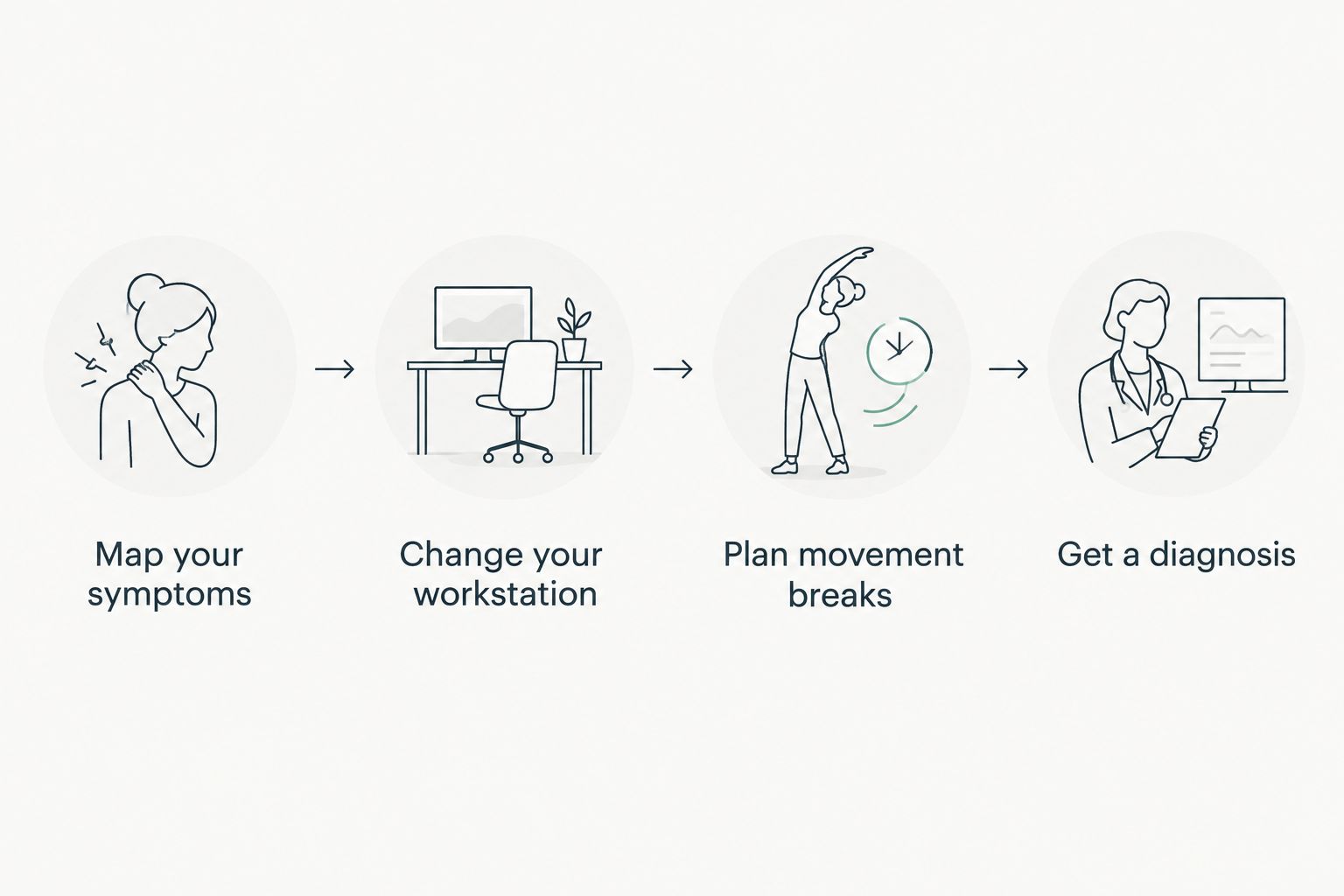
Map your symptoms
Write down where the pain starts, where it spreads and what you are doing when it changes. Record numbness, tingling and weakness separately from soreness. A hand that tingles during typing needs a different clinical discussion from a hand that feels tired after a long editing session.
Track symptoms during an ordinary workday rather than relying on your memory at the end of the week. Include activities outside work, because pain that also occurs during sleep or daily tasks changes the picture. Bring the record to an appointment if symptoms persist.
- Name the exact area: neck, shoulder, lower back, hip, wrist or individual fingers.
- Record whether symptoms stay in one place or travel into an arm or leg.
- Note the task and position at symptom onset, such as editing while seated.
- List numbness, tingling, weakness and any symptoms that wake you from sleep.
Change your workstation
Start with adjustments you can make yourself. Place the screen where you can read it without repeatedly bending your neck, and keep frequently used controls within comfortable reach. If you use a stenotype machine, check the position of the machine and your forearms together; changing only the chair can leave your hands in the same strained position.
Transcriptionists should assess the audio setup too. If poor playback makes you lean toward speakers or repeatedly look away from the screen, fix that task pattern before assuming the discomfort comes from typing alone. Change one part of the setup at a time so you can tell what helped.
- Set the screen so your head can stay in a comfortable, upright position.
- Position the stenotype machine or keyboard without reaching forward from the shoulders.
- Keep the mouse and playback controls close to your working hand.
- Check whether your feet are supported and your chair allows you to change position.
Plan movement breaks
A good setup does not require you to hold one posture throughout an assignment. Identify natural pauses in your work, then use them to stand, walk or change position. During live proceedings, the available pause depends on the assignment; plan around breaks you can actually take rather than setting a timer you cannot follow.
For transcription and editing, try a 5-minute position change between work blocks and record whether it affects symptoms. That is a scheduling example, not a treatment dose. If movement sharply increases pain or brings on new weakness, stop and seek medical advice rather than pushing through it.
- Stand or walk during an available recess or between recordings.
- Change positions without forcing a painful stretch.
- Place frequently used items so reaching does not require repeated twisting.
- Record whether movement improves, worsens or does not change symptoms.
Get a diagnosis before choosing treatment
Persistent pain deserves an assessment based on symptoms and an examination, not a treatment chosen from a search result. Explain what your reporting or transcription work requires and bring your symptom record. The clinician can assess whether the problem appears to involve a joint, muscle, nerve or another source.
Do not label every tingling hand as carpal tunnel syndrome or every painful leg as sciatica. The pattern of symptoms and examination findings guide what needs further evaluation. Imaging or other tests are decisions to make with a clinician when the findings call for them.
A symptom record makes the clinical discussion more specific to your reporting tasks.
- Describe the tasks you need to perform, including live reporting or audio editing.
- Bring a list of symptom locations, triggers and activities affected.
- Ask what the examination suggests and what remains uncertain.
- Clarify which symptoms should prompt follow-up or urgent care.
Match conservative care to the problem
If the assessment supports a musculoskeletal or repetitive-use problem, ask which changes to try first and how to judge whether they help. A clinician may recommend an exercise plan, physical therapy or adjustments to work activities based on the findings. The aim is to address the identified problem while preserving the tasks you need to do.
Do not treat exercise as a test of endurance. Tell the clinician or physical therapist which movements reproduce symptoms and whether those symptoms settle afterward. Review the plan if pain spreads, function declines or the exercises repeatedly make symptoms worse.
- Ask which activities to continue and which to modify temporarily.
- Learn exercises that match the examined area rather than a generic desk routine.
- Review workstation changes with the clinician if work still triggers pain.
- Set a follow-up point to assess function as well as pain.
Discuss procedures only when indicated
Hudson Pain and Spine provides interventional pain management for patients with conditions including back pain, neck pain and sciatica. A specialist may discuss an epidural injection for an appropriate spinal pain diagnosis or a nerve block when its target and purpose are clear. These options do not replace an assessment, and a procedure aimed at the spine is not a general treatment for hand strain.
If conservative care has not addressed persistent back or neck pain, ask what diagnosis a proposed procedure is meant to address. Hudson Pain and Spine also provides spinal cord stimulation, but that is a separate clinical decision, not the next automatic step after changing your workstation. In 2026, the useful question is whether the proposed treatment matches your symptoms and examination.
- Ask which diagnosis the proposed procedure targets.
- Ask whether its purpose is diagnostic, therapeutic or both.
- Discuss expected follow-up and how the result will be assessed.
- Check which work duties you should plan around after a procedure.
Reassess your ability to work
Measure progress by the tasks that matter to you: sitting through an assignment, operating equipment comfortably and editing without symptoms interrupting concentration. Pain scores alone do not show whether a plan is helping you do those tasks. Tell your clinician if you can tolerate an assignment but symptoms become worse afterward.
Review your work setup and clinical plan together rather than treating them as competing solutions. If symptoms continue despite reasonable changes, return for reassessment. In 2026, keep your notes current so the next decision reflects what happened during actual reporting work.
- Identify the work task most affected by pain.
- Record whether symptoms start earlier or later in that task.
- Note any new numbness, weakness or pain that spreads.
- Agree on the next clinical step if function is not improving.
Compare care options for court reporters
Best first step for most work-triggered discomfort: document symptoms and correct an obvious setup problem. Persistent symptoms, neurologic changes or reduced function need clinical evaluation. The options below serve different purposes; they are not interchangeable treatments for every type of pain.
| Option | Best for | Key limitation |
|---|---|---|
| Workstation adjustments and movement breaks | Discomfort linked to a sustained position or reachable equipment | They do not diagnose nerve symptoms or an underlying condition. |
| Primary care assessment | New or persistent symptoms needing an initial examination | Additional specialty evaluation may be needed. |
| Physical therapy or a clinician-directed exercise plan | Movement and strength work matched to an assessed problem | An unsuitable exercise can aggravate symptoms; the plan needs review. |
| Interventional pain assessment | Persistent back, neck or nerve pain when targeted procedures are under consideration | A procedure is appropriate only when the diagnosis supports it. |
For a court reporter in Bergen, Passaic or Middlesex County, Hudson Pain and Spine offers specialist care from offices in Englewood, Woodland Park and Edison. Start with the Hudson Pain and Spine website if you need to discuss persistent back, neck or nerve pain. Bring your symptom record and prior treatment history so the discussion begins with the problem you have, not a procedure you found online.
Discuss persistent pain
Review back, neck or nerve symptoms with an interventional pain specialist in New Jersey.
Common mistakes court reporters and transcriptionists make
Treating all hand pain as the same condition. Pain in the thumb, wrist and fingers can have different sources. Tingling or weakness adds information that soreness alone does not provide. Describe the location and pattern before asking for a particular treatment.
Fixing the chair but ignoring the task. Live reporting, transcription and editing place equipment in different positions. If the screen, stenotype machine or playback controls still require repeated reaching or neck rotation, a chair adjustment alone does not change the full setup.
Waiting until work is impossible. A symptom record is useful before pain becomes constant. Seek a clinical assessment when symptoms persist, spread or interfere with reporting duties. Do not keep repeating an adjustment that has not helped.
Assuming an injection treats any work-related pain. Epidural injections and nerve blocks have specific clinical uses. Hudson Pain and Spine evaluates interventional options for an identified pain problem; a persistent hand symptom still needs the right diagnosis rather than a spinal procedure by default.
Ignoring urgent changes. New bladder or bowel control problems, numbness around the groin or rapidly developing weakness require urgent medical assessment. Do not wait for an ordinary pain-management appointment when those symptoms appear.
FAQ
What is the best first step for court reporters with work-related pain?
Record where the pain occurs, which tasks trigger it and whether numbness or weakness is present. Adjust obvious workstation problems and seek an assessment if symptoms persist or interfere with work.
Can court reporting cause wrist or hand pain?
Repetitive hand tasks can coincide with wrist or hand discomfort, but the job alone does not establish a diagnosis. A clinician can assess persistent pain, tingling or weakness and recommend care based on the findings.
Is a nerve block better than physical therapy for a transcriptionist?
Neither is universally better; they address different diagnosed problems. Physical therapy targets an assessed movement or strength issue, while a nerve block requires a specific clinical target and purpose.
When should a court reporter see a pain specialist?
Seek a specialist assessment when persistent back, neck or nerve pain is affecting work or has not improved with an initial care plan. Bring symptom notes and any relevant prior treatment information.
Can an epidural injection help pain from sitting at work?
An epidural injection is not a treatment for sitting-related discomfort by itself. A clinician must identify a suitable spinal diagnosis before discussing whether the procedure fits.
Should a transcriptionist keep working with a tingling hand?
Persistent or worsening tingling needs a clinical assessment, especially if weakness develops. Record when it happens and avoid assuming that changing equipment alone will address its cause.
What symptoms need urgent assessment rather than a routine appointment?
New bowel or bladder control problems, numbness around the groin and rapidly developing weakness require urgent medical assessment. Do not wait for a scheduled pain-management visit.
One last thing
In 2026, the most useful detail to bring to an appointment is not simply that you sit all day. Explain whether symptoms begin during live reporting, playback control or transcript editing, and whether they continue after work. That distinction gives your clinician a clearer starting point for evaluating the source of pain.
Related guides
- How to treat carpal tunnel syndrome nerve pain
- Pain management for remote workers with desk-related back pain
- When to see a pain management specialist for chronic pain
About the Medical Reviewer
Dr. Saurabh Dang is a double board-certified interventional pain management specialist serving Central and Northern New Jersey. He combines clinical expertise with a patient-centered approach to help patients find lasting relief from chronic pain conditions.
Read Full Bio →Seeking Treatment for Epidural Injections?
Dr. Dang and the team at Hudson Pain and Spine offer specialized care and advanced interventional treatments.
Ready to Find Relief from Pain?
Schedule your consultation with Dr. Saurabh Dang at our Englewood office.
Serving patients across Central and Northern New Jersey — Bergen, Passaic, and Middlesex counties.