
Pain Management for Flight Attendants: 2026 Guide

Medically reviewed by
Dr. Saurabh Dang, MD, MBA
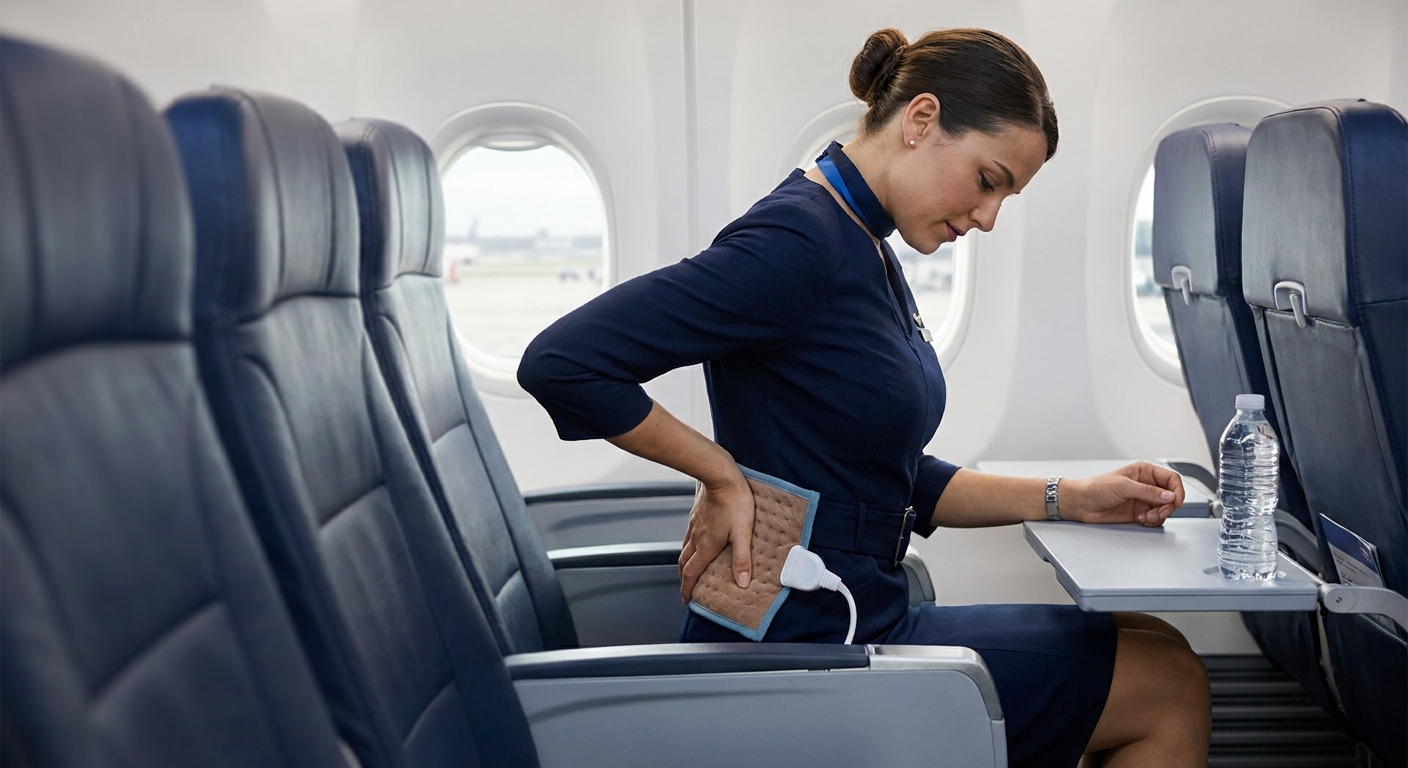
Chronic low back pain doesn’t wait for you to finish a rotation. Between overhead bin lifts, turbulence jolts, and 12-hour duty days spent standing in a galley, flight attendants develop mechanical back pain patterns that a weekend off can’t fix. This guide breaks down what actually works for pain management for flight attendants in 2026, which procedures fit around a flying schedule, and which ones will ground you longer than the injury itself.
TL;DR
- Radiofrequency ablation is the strongest long-haul option for flight attendants with facet-driven low back pain, with relief lasting 6 to 12 months. Buy.
- Epidural steroid injections work as a quick reset before a busy rotation, with downtime of 1 to 2 days. Consider.
- Opioids and early spinal fusion surgery are the two options flight attendants should skip outright for chronic back pain in 2026.
- SI joint injections target the low back and hip pain pattern common after years of aisle-side lifting and bracing.
Why this matters
A flight attendant’s back doesn’t get hurt once. It accumulates load: repetitive overhead lifting, awkward twisting in a galley, hours of standing on a pressurized aircraft, and jet lag that shortens the recovery window between rotations. That combination produces facet joint irritation, disc strain, and SI joint pain far more often than a single traumatic injury.
The treatment decision that matters most isn’t whether to seek care — it’s picking a procedure that matches your schedule and your job’s safety requirements. A double board-certified, fellowship-trained pain specialist like Dr. Saurabh Dang at Hudson Pain and Spine evaluates the pain generator first, then matches it to a treatment with a recovery window that actually fits a flying calendar.
Who this is for
This guide is written for flight attendants and cabin crew who have dealt with low back pain for more than three months, who have already tried rest and over-the-counter anti-inflammatories without lasting relief, and who need a treatment plan that doesn’t sideline them for weeks at a time. It’s also relevant if you’re bracing for turbulence more carefully than you used to, or if bending to check under a seat has started to hurt in a way it didn’t two years ago.
What to look for in pain management for flight attendants
Recovery time that fits your rotation schedule
Most interventional procedures need one to a few days of downtime, not weeks. A treatment that requires two weeks of restricted lifting or driving is a scheduling problem, not just a medical one, when your job depends on being cleared for duty on a specific date.
Non-sedating during safety-sensitive work
Cabin crew are safety personnel in the air. Any medication or procedure that leaves you groggy, dizzy, or impaired for days afterward conflicts directly with return-to-duty requirements. Interventional options that target the pain source directly, rather than blanket sedation, keep you functional sooner.
Precise diagnosis before treatment
Back pain from a facet joint feels different from disc pain or SI joint pain, but they overlap enough that guessing wastes time. A diagnostic medial branch block or SI joint injection identifies the actual pain generator before committing to a longer-term fix like radiofrequency ablation.
Insurance and multi-base logistics
Flight attendants often live in one state and base out of another, which complicates prior authorization and follow-up scheduling. Confirming coverage and getting insurance approval for pain procedures before booking avoids a canceled appointment right before a trip.
A realistic return-to-duty timeline
Every procedure has a different clearance window. Know it before you schedule around a specific rotation, not after.
Something you can maintain between flights
Hotel rooms and layovers don’t offer a gym. A maintenance plan that works in a small space matters as much as the procedure itself.
Top picks for flight attendants with chronic back pain
Epidural steroid injections — the quick reset before a rotation. Downtime typically runs 1 to 2 days, with relief that can last weeks to several months depending on the underlying cause. This is the right first move for disc-related pain flaring before a known busy stretch, and best candidates for epidural steroid injections walks through who responds well. Consider.
Radiofrequency ablation — the long-haul fix for facet pain. RFA delivers relief that commonly lasts 6 to 12 months by disabling the nerves feeding an irritated facet joint, which makes it the strongest option for flight attendants who don’t want to repeat a procedure every quarter. Recovery runs 3 to 5 days before returning to full activity. Read how radiofrequency ablation treats chronic low back pain for the full mechanism. Buy.
SI joint injections — for pain that flares when you twist or lift. If bending into an overhead bin or turning sideways down the aisle triggers a sharp pain low on one side of your back, the sacroiliac joint is a likely source. How SI joint injections relieve low back pain covers what the procedure targets and what relief looks like. Consider.
Non-surgical degenerative disc disease protocol — for pain that’s built up over years, not months. This combines targeted injections with a structured activity plan rather than pushing straight to surgery, and it’s the right call when imaging shows disc wear but no acute rupture. Consider.
A low-impact conditioning routine between flights — the maintenance layer, not a fix on its own. Fifteen minutes of core and hip work in a hotel room won’t resolve a facet or disc problem, but it slows the reaccumulation of strain between procedures. Buy, as a supplement to interventional treatment, not a replacement for it.
Get a diagnosis before your next rotation
Board-certified evaluation for chronic back pain that fits around your flying schedule.
What to avoid
Opioids. They mask pain instead of treating the source, carry sedation risk that conflicts directly with safety-sensitive duty requirements, and do nothing for the underlying joint or disc problem. Most airlines’ fitness-for-duty policies make this a non-starter anyway.
Chiropractic manipulation without a diagnostic workup first. Manipulation can feel like relief in the moment, but without imaging or a diagnostic block, you don’t actually know whether you’re treating a facet issue, a disc issue, or an SI joint issue — and treating the wrong one repeatedly delays real progress.
Jumping straight to spinal fusion surgery. Surgery has a real place for specific structural failures, but it’s the wrong first move for most chronic mechanical back pain in flight attendants. Interventional options exhaust the lower-risk, faster-recovery path first — and most patients never need to go further.
Verdict comparison
| Treatment | Downtime | Typical Relief Duration | Fits a Flying Schedule | Verdict |
|---|---|---|---|---|
| Epidural steroid injection | 1-2 days | Weeks to several months | Yes, schedule on a ground day | Consider |
| Radiofrequency ablation | 3-5 days | 6-12 months | Yes, one longer ground stretch | Buy |
| SI joint injection | 1-2 days | Weeks to months | Yes | Consider |
| Non-surgical DDD protocol | None, ongoing | Ongoing while active | Yes | Consider |
| Opioids | N/A | Temporary, sedating | No — impairment risk | Skip |
FAQ
What is the best pain management option for flight attendants with chronic back pain?
Radiofrequency ablation is typically the strongest option for facet-driven chronic low back pain in flight attendants, with relief lasting 6 to 12 months and recovery of 3 to 5 days. The right choice still depends on which structure is generating the pain.
Can flight attendants get epidural injections and still fly?
Yes. Epidural steroid injections usually require only 1 to 2 days of restricted activity, which most crew schedule around a ground day. Full clearance depends on individual response and your provider’s return-to-duty guidance.
How long is recovery after radiofrequency ablation?
Most patients need 3 to 5 days before resuming full activity after RFA. Relief itself builds over the following one to two weeks as the treated nerves stop transmitting pain signals.
Is chronic back pain disqualifying for flight attendant duty?
Chronic back pain itself isn’t automatically disqualifying, but functional limitations or medication side effects that affect safety duties can be. A cleared, treated pain condition is very different from an untreated, worsening one from a fitness-for-duty standpoint.
Does insurance cover pain management procedures for flight attendants?
Coverage varies by plan and by procedure, and many interventional treatments require prior authorization. Confirming approval before scheduling avoids a canceled appointment right before a trip.
How much do pain management procedures cost without insurance?
Cost varies widely by procedure and provider, ranging from a few hundred dollars for a diagnostic injection to several thousand for more involved interventions. Ask for a specific quote before committing to a treatment plan.
What causes chronic back pain in flight attendants?
Repetitive overhead lifting, twisting in narrow galleys, turbulence jolts, and long hours standing on pressurized aircraft accumulate mechanical strain on facet joints, discs, and the SI joint over years of service.
Can flight attendants manage chronic pain without opioids?
Yes. Interventional options like epidural injections, radiofrequency ablation, and SI joint injections target the pain source directly and avoid the sedation risk that conflicts with safety-sensitive flight duty.
One last thing
Most flight attendants wait until pain limits how far they can bend down the aisle before booking an evaluation. Starting with a diagnostic injection early — before the pain becomes constant — usually shortens the total treatment timeline, because it identifies the actual pain generator instead of cycling through guesswork for a year.
Related guides
About the Medical Reviewer
Dr. Saurabh Dang is a double board-certified interventional pain management specialist serving Central and Northern New Jersey. He combines clinical expertise with a patient-centered approach to help patients find lasting relief from chronic pain conditions.
Read Full Bio →Seeking Treatment for Epidural Injections?
Dr. Dang and the team at Hudson Pain and Spine offer specialized care and advanced interventional treatments.
Ready to Find Relief from Pain?
Schedule your consultation with Dr. Saurabh Dang at our Englewood office.
Serving patients across Central and Northern New Jersey — Bergen, Passaic, and Middlesex counties.