
Pain Management for Massage Therapists 2026: What Works

Medically reviewed by
Dr. Saurabh Dang, MD, MBA
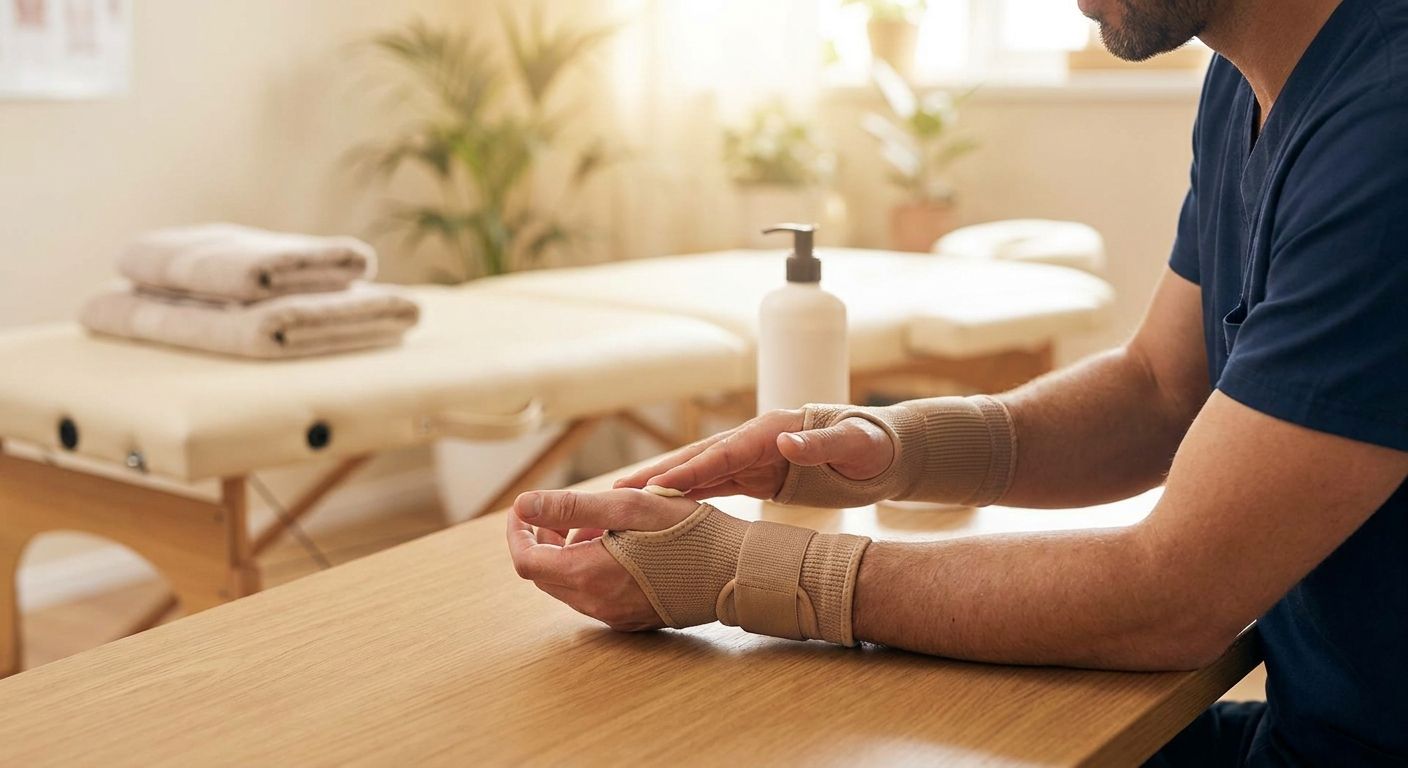
Massage therapists load their hands and wrists through every session, and that repetitive strain surfaces as carpal tunnel syndrome, de Quervain’s tenosynovitis, or early thumb-joint arthritis faster than in most professions. Effective pain management for massage therapists in 2026 starts with pinning down which structure is actually inflamed, because a nerve entrapment, a tendon sheath, and a joint don’t respond to the same fix.
TL;DR
- Ultrasound-guided injections beat blind steroid shots for wrist tendon pain in massage therapists in 2026 — Try First.
- Carpal tunnel syndrome and de Quervain’s tenosynovitis need different injections; treating them the same delays relief.
- Trigger point injections reset overworked forearm muscles in one visit; corticosteroid injections calm tendon pain for 3 to 6 months.
- Skip wrist braces alone once numbness turns constant — nerve compression needs a specialist, not more rest.
Why this matters
A massage therapist can’t work through numb fingers or a thumb that locks up on the fifth client of the day. Unlike a desk job, there’s no way to modify the task away from the hands, so pain management for massage therapists has to actually restore function, not just mask symptoms with rest that never comes.
Most therapists wait too long. They cycle through wrist braces, ice, and ibuprofen for months while carpal tunnel syndrome treatment or a proper diagnosis for thumb-side wrist pain could have gotten them back to full-pressure work in weeks. By the time numbness is constant instead of intermittent, nerve damage is harder to reverse.
Who this is for
This guide is for licensed massage therapists in Bergen, Passaic, and Middlesex counties who feel pain, tingling, or weakness in the hand, wrist, thumb, or forearm after repeated deep-tissue or Swedish sessions. It’s built around the specific mechanical stress of massage work: sustained thumb pressure, wrist extension under load, and repetitive gripping — not generic office-worker wrist pain.
What to look for in pain management for massage therapists
A diagnosis that names the structure, not just “wrist pain”
Nerve entrapment, tendon inflammation, and joint arthritis all show up as wrist or thumb pain but need different treatments entirely. A specialist who orders a nerve conduction study or examines tendon-specific provocative tests (like Finkelstein’s for de Quervain’s) is diagnosing the actual problem instead of guessing.
Ultrasound guidance for injections
The wrist and hand pack nerves, tendons, and small joints into a tight space. An injection placed without imaging can miss the target compartment entirely — ultrasound guidance lets the physician confirm the needle is in the first dorsal compartment, the carpal tunnel, or the CMC joint before injecting anything.
A conservative-first plan with a real escalation path
Surgery should be the last stop, not the first suggestion. Look for a plan that starts with targeted injections and activity modification, then escalates to procedures like nerve decompression only if conservative care fails after a defined trial period.
Realistic return-to-work timing
Massage therapists can’t take six weeks off. A specialist who understands the job should give a specific timeline for modified work (lighter pressure, shorter sessions) rather than a blanket “rest until it heals” instruction that no self-employed therapist can afford to follow.
Insurance and self-pay clarity upfront
Many massage therapists are 1099 contractors on high-deductible plans. A practice that explains costs and coverage before treatment, rather than after the bill arrives, matters more here than in salaried professions.
Treatment options ranked for massage therapists
Trigger point injections — the fastest reset
The hook: this is the option for overworked forearm and thenar muscles that ache without numbness or tingling. Trigger point injections target the exact knot causing referred pain, and sessions are often spaced two to four weeks apart when muscle overload — not nerve or tendon damage — is the driver.
Verdict: Try First for pure muscle tightness with no numbness.
Carpal tunnel syndrome treatment — the nerve entrapment fix
The hook: this is the pick when tingling or numbness hits the thumb, index, and middle fingers, especially at night. Carpal tunnel syndrome treatment starts with splinting and targeted injection around the median nerve before decompression surgery is ever discussed.
Verdict: Consider early, before numbness becomes constant — waiting turns a reversible problem into permanent nerve damage.
De Quervain’s tenosynovitis treatment — the thumb-side wrist pain fix
The hook: this is the answer when pain sits right at the base of the thumb and worsens with gripping or thumb extension — the classic massage-therapist injury from repeated pressure strokes. De Quervain’s tenosynovitis treatment usually involves a corticosteroid injection into the first dorsal compartment, which typically provides 3 to 6 months of relief per injection.
Verdict: Try First for thumb-side pain confirmed by a positive Finkelstein’s test.
Osteoarthritis pain management for hands and fingers — the joint wear-and-tear pick
The hook: this is for therapists 40 and older with a deep, achy pain at the base of the thumb (the CMC joint) that worsens over the years, not overnight. Osteoarthritis pain management for hands and fingers covers joint-specific injections and bracing strategies that keep therapists working without surgery.
Verdict: Consider if pain has built gradually over months rather than appearing after one session.
Cubital tunnel treatment — the elbow-side nerve pick
The hook: this addresses numbness in the ring and pinky fingers from compression of the ulnar nerve at the elbow, common in therapists who lean on bent elbows during deep tissue work. It’s a distinct diagnosis from carpal tunnel and needs its own workup rather than a blanket wrist brace.
Verdict: Consider if numbness is on the pinky side of the hand, not the thumb side.
What to avoid
- A wrist brace with no diagnosis behind it. Bracing helps some conditions and does nothing for others — wearing one for months without knowing whether it’s a nerve, tendon, or joint problem wastes the window when conservative treatment works best.
- Opioids for repetitive strain injuries. These conditions are mechanical, not the kind of pain opioids are meant to manage, and they don’t address the underlying inflammation or compression.
- Jumping straight to surgery. Most wrist and hand strain in massage therapists responds to injections and activity modification first; surgery should follow a documented conservative trial, not replace it.
Get your hand and wrist pain diagnosed
Board-certified pain management for massage therapists across Bergen, Passaic, and Middlesex counties.
Verdict comparison
| Condition | Typical symptom | Best-matched treatment | Verdict |
|---|---|---|---|
| Muscle overload / trigger points | Deep ache, no numbness | Trigger point injections | Try First |
| Carpal tunnel syndrome | Numb thumb/index/middle finger, worse at night | Splinting + median nerve injection | Consider early |
| De Quervain’s tenosynovitis | Pain at thumb-side wrist base | Corticosteroid injection, first dorsal compartment | Try First |
| Thumb CMC osteoarthritis | Gradual deep ache at thumb base | Joint injection + bracing | Consider |
| Cubital tunnel syndrome | Numb ring/pinky finger | Ulnar nerve workup | Consider |
FAQ
What is the best pain management for massage therapists with wrist strain?
The best approach starts with an accurate diagnosis of which structure is involved — nerve, tendon, or joint — followed by targeted, ultrasound-guided injections rather than generic bracing. Trigger point injections work for muscle overload, while corticosteroid injections address tendon inflammation like de Quervain’s tenosynovitis.
Is carpal tunnel syndrome common in massage therapists?
Yes, repeated wrist flexion and sustained gripping during massage work put therapists at higher risk for carpal tunnel syndrome than most desk-based professions. Numbness in the thumb, index, and middle fingers, especially at night, is the early warning sign.
How much does a corticosteroid injection cost without insurance in NJ?
Costs vary by procedure and provider, and self-pay massage therapists should ask for pricing before scheduling. A breakdown of typical procedure costs without insurance is available for reference before booking.
Can massage therapists keep working after a wrist injection?
Many therapists return to modified table work within days rather than weeks, depending on which injection was performed and how severe the underlying condition is. A specialist familiar with hands-on professions should set a specific return-to-work timeline rather than an open-ended rest order.
Is de Quervain’s tenosynovitis the same as carpal tunnel syndrome?
No — de Quervain’s tenosynovitis is tendon inflammation at the base of the thumb, while carpal tunnel syndrome is nerve compression in the wrist affecting different fingers. They require different injections and different diagnostic tests, so treating one like the other delays relief.
When should a massage therapist see a pain management specialist instead of a physical therapist?
See a pain management specialist when numbness, tingling, or pain persists beyond a few weeks of rest and stretching, or when symptoms interfere with grip strength and session work. A specialist can order nerve studies and perform image-guided injections that a physical therapist’s toolkit doesn’t include.
Does insurance cover treatment for repetitive strain wrist injuries?
Most insurance plans cover diagnostic workups and injections for documented conditions like carpal tunnel syndrome or tendinopathy, though coverage details vary by plan and provider network. Checking coverage specifics before scheduling avoids surprise bills for self-employed therapists.
What happens if hand and wrist strain in massage therapists goes untreated?
Untreated nerve compression can progress from intermittent numbness to constant numbness and measurable weakness, which is harder to reverse than early-stage symptoms. Untreated tendon inflammation like de Quervain’s can also thicken the tendon sheath, making later treatment less effective.
One last thing
The detail most massage therapists miss: thumb-side wrist pain and finger numbness feel similar day-to-day but come from completely different structures, and guessing wrong wastes months. A five-minute exam distinguishing a positive Finkelstein’s test (tendon) from a positive Tinel’s sign (nerve) changes the entire treatment plan — get that exam before trying another brace.
Related guides
- Osteoarthritis pain management for hands and fingers
- How to choose an interventional pain specialist in New Jersey
About the Medical Reviewer
Dr. Saurabh Dang is a double board-certified interventional pain management specialist serving Central and Northern New Jersey. He combines clinical expertise with a patient-centered approach to help patients find lasting relief from chronic pain conditions.
Read Full Bio →Ready to Find Relief from Pain?
Schedule your consultation with Dr. Saurabh Dang at our Englewood office.
Serving patients across Central and Northern New Jersey — Bergen, Passaic, and Middlesex counties.