
Pain Management for Rideshare Drivers: 2026 Guide

Medically reviewed by
Dr. Saurabh Dang, MD, MBA
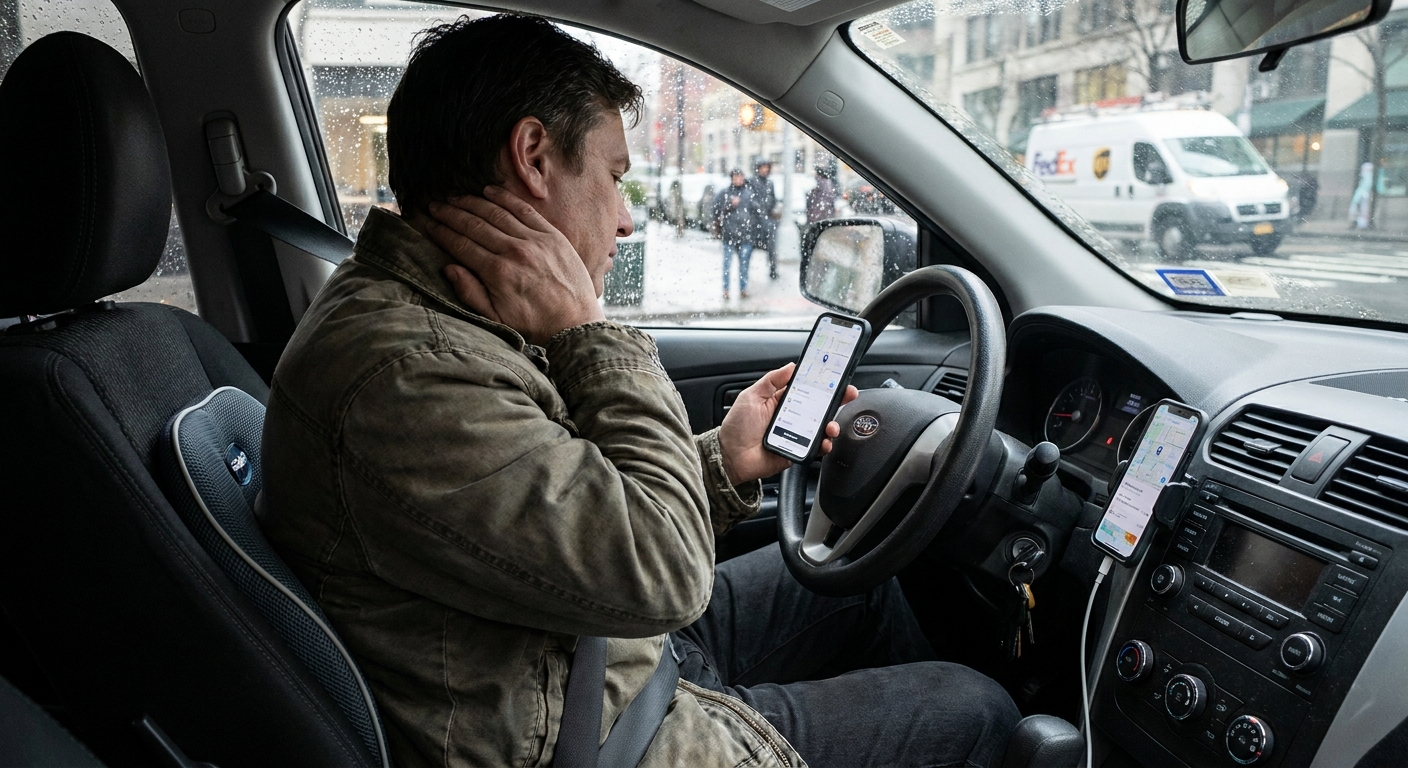
Rideshare and delivery drivers spend most of a shift bolted into a driver’s seat, and that posture turns into chronic low back, neck, and hip pain faster than most gig workers expect. This guide breaks down which pain management for rideshare drivers actually fits a schedule with no sick days, no employer health plan, and no room for a groggy recovery.
TL;DR
- Epidural steroid injections and radiofrequency ablation treat the seated-posture pain rideshare drivers get most; both avoid opioid sedation.
- TENS therapy at home is the between-shifts tool, not a substitute for a diagnosed treatment plan in 2026.
- Skip opioid-first prescribing for pain management for rideshare drivers - it’s a driving-safety risk, not just a medical one.
- Same-day scheduling and self-pay transparency matter more for 1099 drivers than for salaried patients.
Why this matters
Most rideshare and delivery apps don’t pay for missed shifts, so a driver with a bulging disc keeps working through it until the pain stops responding to ibuprofen. That delay is common across seated, high-mileage jobs - it shows up the same way in long-haul truck drivers managing back pain, where hours behind the wheel compound into disc and sciatic nerve problems.
By the time a driver books an appointment, the pain has usually gone from occasional stiffness to something that interferes with turning to check a blind spot or bending to load a trunk. Interventional pain management exists for exactly this gap - treatment that targets the nerve or joint driving the pain instead of masking it with pills that dull reaction time behind the wheel.
Who this is for
This guide is for Uber, Lyft, DoorDash, Instacart, and Amazon Flex drivers logging 30 to 50+ hours a week in a car, plus anyone doing repetitive loading, lifting, or long-haul routes as an independent contractor. If pain is limiting how many hours you can work - not just how you feel at the end of the day - the criteria below apply to you.
What to look for in pain management for rideshare and delivery drivers
Same-day or flexible scheduling
Gig income stops the moment you stop driving, so a practice that requires a three-week wait for a consult isn’t built for this audience. Look for a clinic offering early-morning, evening, or weekend slots that fit around peak-hour driving windows.
Minimal downtime procedures
A treatment that sidelines you for a week costs more in lost fares than most insurance copays. Injection-based procedures like epidural steroid injections typically run 15 to 20 minutes and let most patients drive themselves home the same day, with normal activity resuming within 24 to 48 hours.
Non-opioid, driving-safe protocols
Opioids and sedating muscle relaxants create a direct conflict with a job that requires alert driving for hours at a stretch. A pain management plan for this audience needs to prioritize nerve blocks, ablation, or physical therapy over sedating medication.
Self-pay and insurance transparency
Most rideshare and delivery drivers are 1099 contractors without employer-sponsored health coverage. A clinic that gives clear self-pay or out-of-network estimates upfront, rather than a surprise bill after the procedure, is the one worth booking with in 2026.
Treats seated-posture specific conditions
Sciatica, herniated discs, SI joint dysfunction, and facet joint pain show up disproportionately in drivers because of prolonged hip flexion and lumbar loading. A specialist who asks about seat position and shift length, not just pain scores, is diagnosing the actual mechanism.
Top picks for rideshare and delivery drivers
Epidural steroid injection - the workhorse option. This is the first-line interventional treatment for disc-related sciatica and radiating leg pain that hasn’t responded to rest or over-the-counter medication. The injection itself takes 15 to 20 minutes and relief commonly lasts weeks to several months, long enough to get through a busy delivery season. Not every driver is a candidate - a specialist needs imaging to confirm disc involvement before scheduling one. See the candidates for epidural steroid injections breakdown before booking. Verdict: Consider.
Radiofrequency ablation - the long-haul fix. RFA targets the medial branch nerves feeding a painful facet joint, and it’s the option built for drivers who’ve already tried injections with only short-term results. Relief from a single treatment often runs 6 to 12 months per nerve, which is a real difference for someone logging 40+ hours a week in a seat. The procedure requires a positive diagnostic block first, so it’s not a same-day walk-in fix. Full detail is in radiofrequency ablation for low back pain. Verdict: Buy for confirmed facet-driven back pain.
TENS therapy at home - the between-shifts tool. A TENS unit is battery-powered, fits in a glove box, and can run during a break between rides without pulling a driver off the road. It won’t fix a herniated disc, but it takes the edge off flare-ups between procedures or physical therapy sessions. Details on setup and settings are in TENS therapy at home. Verdict: Buy as an adjunct, not a standalone plan.
Opioid prescriptions - the wildcard that isn’t worth it. Opioids show up fast on a pain scale, which is exactly why some urgent care visits default to them for acute flare-ups. For someone whose entire income depends on alert, legal driving, sedation is a liability that outlasts the pain relief. Verdict: Skip.
What to avoid
- Chiropractic-only care for radiating leg or arm pain. Adjustments help mechanical stiffness, but nerve-root pain from a herniated disc needs imaging and a targeted injection, not repeated manipulation.
- Any provider who prescribes opioids before imaging. If a clinic reaches for a controlled substance before ordering an MRI or X-ray, that’s a sign the workup was skipped, not that the pain is unusually severe.
- Skipping a cost conversation before scheduling. Self-pay drivers who don’t ask about pricing upfront often get hit with bills that make the treatment plan financially unworkable halfway through.
Get a driving-safe pain plan
Board-certified pain specialists at Hudson Pain and Spine, offices in Englewood, Woodland Park, and Edison.
Verdict comparison table
| Option | Best for | Downtime | Driving safety | Verdict |
|---|---|---|---|---|
| Epidural steroid injection | Disc-related sciatica, radiating leg pain | Same day | High - no sedation | Consider |
| Radiofrequency ablation | Chronic facet joint back pain | 24-48 hours | High - no sedation | Buy for confirmed cases |
| TENS therapy at home | Between-shift flare-ups | None | High - self-administered | Buy as adjunct |
| Opioid medication | Acute short-term flares | None | Low - impairs reaction time | Skip |
A pain management for rideshare drivers plan in 2026 usually combines one interventional procedure with an at-home tool like TENS, not a single fix. Drivers who stack epidural injections with home TENS use report fewer flare-up days between procedure visits than those relying on medication alone.
FAQ
What’s the best pain management option for rideshare drivers with chronic back pain?
For disc-related sciatica, an epidural steroid injection is usually first-line; for facet joint pain confirmed by a diagnostic block, radiofrequency ablation gives longer relief. Both avoid the sedation that comes with opioid medication, which matters when driving is your income.
Can Uber and Lyft drivers get epidural injections without missing a full day of work?
Most epidural steroid injections take 15 to 20 minutes and patients drive themselves home the same day. Many clinics schedule these procedures early morning or late afternoon to work around peak driving hours.
How much does pain management cost without insurance for gig workers in NJ?
Costs vary by procedure and clinic, and self-pay pricing should be quoted before scheduling. A breakdown of typical ranges is covered in the guide on pain management procedure costs without insurance.
Is TENS therapy safe to use while driving?
TENS units should be used during breaks, not while operating a vehicle, since the electrical stimulation is a distraction and the pads need to stay in place. It’s designed as a between-shift tool, not a while-driving one.
Do rideshare drivers qualify for workers’ comp if injured on the job?
Coverage depends on classification - most rideshare drivers are independent contractors and don’t automatically qualify for workers’ comp the way an employee would. Delivery drivers classified as employees may have different coverage than 1099 contractors.
What causes chronic low back and neck pain in delivery drivers?
Prolonged seated posture, repetitive lifting when loading deliveries, and vibration from hours of driving combine to stress the lumbar discs and cervical spine. Sciatica and facet joint pain are two of the most common diagnoses in this group.
How long does it take to recover from radiofrequency ablation?
Most patients resume normal activity within 24 to 48 hours after radiofrequency ablation, with pain relief building over the following one to two weeks. Relief from a single treatment commonly lasts 6 to 12 months per treated nerve.
Should rideshare drivers avoid opioid pain medication?
Opioids sedate and slow reaction time, which conflicts directly with a job that requires hours of alert driving. Non-opioid options like injections, ablation, and physical therapy address the pain source without that risk.
One last thing
Most drivers wait until pain has been constant for months before booking a consult, purely because there’s no paid time off to justify the appointment. That delay is the costliest part of the whole process - a herniated disc caught early responds to a single epidural injection where a neglected one may need repeated procedures or referral for surgical evaluation. Book the first consult on a slow day rather than waiting for pain to force the issue; most initial evaluations run under an hour and don’t require pre-scheduled imaging.
Related guides
About the Medical Reviewer
Dr. Saurabh Dang is a double board-certified interventional pain management specialist serving Central and Northern New Jersey. He combines clinical expertise with a patient-centered approach to help patients find lasting relief from chronic pain conditions.
Read Full Bio →Seeking Treatment for Epidural Injections?
Dr. Dang and the team at Hudson Pain and Spine offer specialized care and advanced interventional treatments.
Ready to Find Relief from Pain?
Schedule your consultation with Dr. Saurabh Dang at our Englewood office.
Serving patients across Central and Northern New Jersey — Bergen, Passaic, and Middlesex counties.