
Pain Management for Security Guards Who Stand All Shift (2026)

Medically reviewed by
Dr. Saurabh Dang, MD, MBA
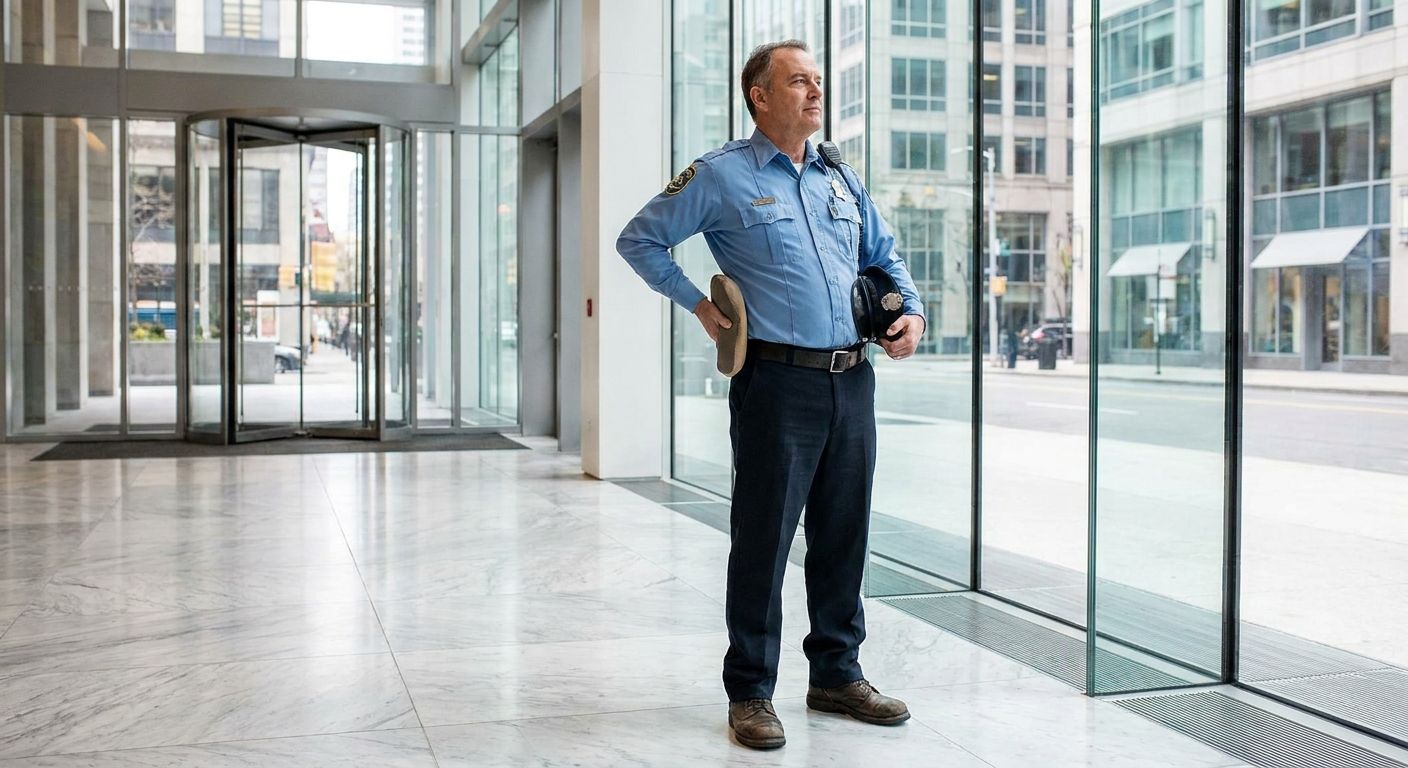
Security guards working 8- to 12-hour shifts on hard floors or pavement develop a narrow, predictable set of pain patterns: plantar fasciitis in the heel, low back strain from static standing, and nerve compression in the legs from hours without a real break. Generic advice to “stretch more” or “buy better shoes” rarely fixes pain that’s already mechanical and chronic.
TL;DR
- Pain management for security guards starts by identifying whether the source is plantar fascia, facet joints, or a compressed nerve, not generic stiffness.
- Radiofrequency ablation gives 6 to 12 months of relief for facet-driven low back pain in guards who can’t reduce standing hours. Buy.
- Corticosteroid injections for plantar fasciitis are a fast, low-cost option before switching to physical therapy alone. Consider.
- Skip over-the-counter pain relievers as a long-term plan—they mask standing-related pain without treating the mechanical cause.
- Workers’ comp often covers interventional procedures for on-duty injuries, so confirm eligibility before scheduling.
Why this matters
A security guard’s pain profile is different from a desk worker’s. Eight-plus hours of static standing loads the plantar fascia, compresses lumbar facet joints, and reduces circulation to the legs in ways that sitting-related back pain doesn’t. Treating it like generic “office back pain” wastes time and money on the wrong intervention.
Guards also can’t always take a week off to recover, which changes which procedures make sense. A treatment that requires two weeks of reduced activity is a non-starter for someone covering back-to-back 12-hour shifts. Pain management for security guards has to account for shift schedule, not just diagnosis.
Who this is for
This guide is for security guards, loss prevention officers, and similar on-your-feet-all-shift roles dealing with heel pain that’s worse in the morning, low back pain that builds through a 10- or 12-hour shift, or numbness and tingling down the leg by the end of the day. It’s also relevant if the pain started after a specific incident on duty, since that changes how a claim gets filed and what gets covered.
What to look for in pain management for security guards
A diagnosis that matches the standing pattern, not a generic “back pain” label
Low back pain that’s worse standing and better sitting usually points to facet joint irritation. Pain that shoots down the leg with numbness points toward nerve compression, like a herniated disc or sciatica. A specialist should differentiate these before recommending treatment, because the injections and procedures differ.
Same-visit or fast-turnaround diagnostics
Guards working rotating shifts don’t have flexibility for multiple half-day appointments spread over a month. Look for a practice that can move from evaluation to imaging referral to treatment plan without unnecessary delay, especially when pain is disrupting the ability to complete a full shift.
Treatments that don’t require extended time off
Many interventional procedures, including facet joint injections and trigger point injections, involve minimal downtime, often a day or two. That matters more for shift workers than for someone with flexible remote work who can recover on their own schedule.
Workers’ comp and insurance handling experience
If the pain started from a specific incident, a slip, a physical altercation, or repetitive strain from a post assignment, workers’ comp may apply. A practice experienced in workplace injury and workers’ comp claims can save weeks of back-and-forth with a claims adjuster.
Board certification and hands-on procedural experience
Procedures like radiofrequency ablation and epidural steroid injections require precision under imaging guidance. A double board-certified, fellowship-trained interventional pain specialist is a materially different level of training than a general practitioner offering injections as a side service.
A plan for the feet, not just the back
Plantar fasciitis is one of the most common complaints among standing-shift workers, and it often gets ignored while the back pain gets treated. A complete plan addresses both, since foot pain changes gait and can worsen back strain over months.
Top picks: treatment options for standing-shift pain
The fast-relief pick: corticosteroid injection for plantar fasciitis
Heel pain that’s sharpest with the first steps in the morning is classic plantar fasciitis. A corticosteroid injection targets the inflamed fascia directly and typically reduces pain within days, not weeks. It’s not a permanent fix on its own, but it buys time to correct footwear and standing surface while the guard keeps working. Verdict: Buy for guards who need relief before their next shift, not next month. Related reading: how to treat plantar fasciitis heel pain.
The durable pick: radiofrequency ablation for facet-driven low back pain
When imaging confirms the pain is coming from irritated facet joints, radiofrequency ablation (RFA) uses heat to disable the nerve signal causing the pain. Relief commonly lasts 6 to 12 months, well past a typical assignment rotation, and the procedure itself is outpatient. This is the option built for someone who can’t take weeks off to recover but needs relief that outlasts a single course of physical therapy. Verdict: Buy for guards with confirmed facet joint pain and no interest in repeat injections every few weeks.
The diagnostic-first pick: facet joint or epidural steroid injections
Before committing to RFA, many specialists start with a diagnostic or therapeutic injection, either a facet joint injection or an epidural steroid injection, depending on whether the pain radiates into the leg. These serve two purposes: confirming the pain source and providing several weeks to months of relief on their own. Verdict: Consider as the logical first step for anyone who hasn’t had imaging-guided injections yet. See how facet joint injections relieve chronic lower back pain for what the procedure involves.
The overlooked pick: non-surgical management for early disc degeneration
Guards in their 40s and 50s standing for years often have some degree of degenerative disc disease showing up on imaging, even before major symptoms hit. Non-surgical approaches, including targeted physical therapy and activity modification alongside injections, can slow progression without surgery. Verdict: Consider for anyone with imaging showing early disc changes but no acute nerve compression yet. Details at best non-surgical treatments for degenerative disc disease.
Talk to a pain specialist this week
Board-certified, fellowship-trained care for standing-shift back and foot pain in NJ.
What to avoid
- Relying on over-the-counter pain relievers as a long-term strategy. They blunt symptoms without addressing plantar fascia inflammation or facet joint irritation, and daily use over months carries its own risks.
- Generic orthotics without a diagnosis. Off-the-shelf inserts help some plantar fasciitis cases but do nothing for facet joint or nerve-related pain, and guards often buy them assuming all standing pain is a foot problem.
- Waiting for a “slow week” that never comes. Security scheduling rarely gets lighter, and untreated facet or disc pain tends to progress over months, not improve on its own.
Verdict comparison
| Treatment | Best for | Relief duration | Downtime | Verdict |
|---|---|---|---|---|
| Corticosteroid injection (heel) | Morning heel pain, plantar fasciitis | Days to weeks | Same-day return to shift | Buy |
| Radiofrequency ablation | Confirmed facet joint low back pain | 6-12 months | 1-2 days light activity | Buy |
| Facet/epidural steroid injection | Diagnosis plus short-term relief | Weeks to months | Same-day to next-day | Consider |
| Non-surgical disc management | Early degenerative disc changes | Ongoing, progressive care | None | Consider |
| OTC pain relievers alone | Nothing structural | Hours | None | Skip |
FAQ
What’s the best pain management option for security guards with foot pain?
A corticosteroid injection for plantar fasciitis usually gives the fastest relief for standing-related heel pain, often within days. Long-term management adds footwear changes and stretching, but the injection addresses the acute inflammation first.
Is radiofrequency ablation better than repeated steroid injections for standing-related back pain?
For confirmed facet joint pain, radiofrequency ablation typically lasts 6 to 12 months versus weeks to a few months for a single steroid injection. It’s a better fit for guards who can’t keep scheduling repeat appointments around shift rotations.
How much does pain management cost for security guards without insurance?
Costs vary by procedure and location, and specifics depend on the treatment plan a specialist recommends. Details on typical procedure costs are covered in a dedicated breakdown of pain management costs without insurance.
Does workers’ comp cover pain treatment for security guards injured on duty?
Workers’ comp often covers interventional pain procedures when the injury happened on the job, such as a slip on a post or a strain from restraint training. Documentation of the incident and prompt evaluation improves the odds of approval.
How long until a security guard can return to a full shift after an epidural steroid injection?
Most patients return to normal activity within a day or two after an epidural steroid injection, though a specialist may recommend limiting heavy lifting or prolonged standing briefly. Full pain relief typically builds over the following days to weeks.
Can standing all shift cause sciatica?
Yes, prolonged standing can aggravate a compressed nerve root and trigger sciatica symptoms, including pain that radiates down one leg. It’s not the only cause, so a specialist will confirm the source with an exam and imaging before treatment.
What credentials should a pain specialist have for treating shift-worker back pain?
Look for board certification in pain medicine and fellowship training in interventional procedures, since injections like RFA and epidural steroids require imaging-guided precision. General practitioners without this training typically don’t perform these procedures themselves.
One last thing
Guards who switch from standard work boots to a shoe with a firmer heel counter often see less plantar fascia strain than those who just add an insert to the same worn-out boot, since the shoe’s structure matters as much as the cushioning inside it. It’s a cheap change to make alongside any injection-based treatment, not a replacement for it.
Related guides
- Pain management for retail workers who stand all day
- Pain management for workplace injuries and workers’ comp
- How radiofrequency ablation treats chronic low back pain
- Sciatica treatment options for Bergen County patients
About the Medical Reviewer
Dr. Saurabh Dang is a double board-certified interventional pain management specialist serving Central and Northern New Jersey. He combines clinical expertise with a patient-centered approach to help patients find lasting relief from chronic pain conditions.
Read Full Bio →Seeking Treatment for Epidural Injections?
Dr. Dang and the team at Hudson Pain and Spine offer specialized care and advanced interventional treatments.
Ready to Find Relief from Pain?
Schedule your consultation with Dr. Saurabh Dang at our Englewood office.
Serving patients across Central and Northern New Jersey — Bergen, Passaic, and Middlesex counties.