Pain Management for Skiers & Snowboarders (2026 Guide)

Medically reviewed by
Dr. Saurabh Dang, MD, MBA
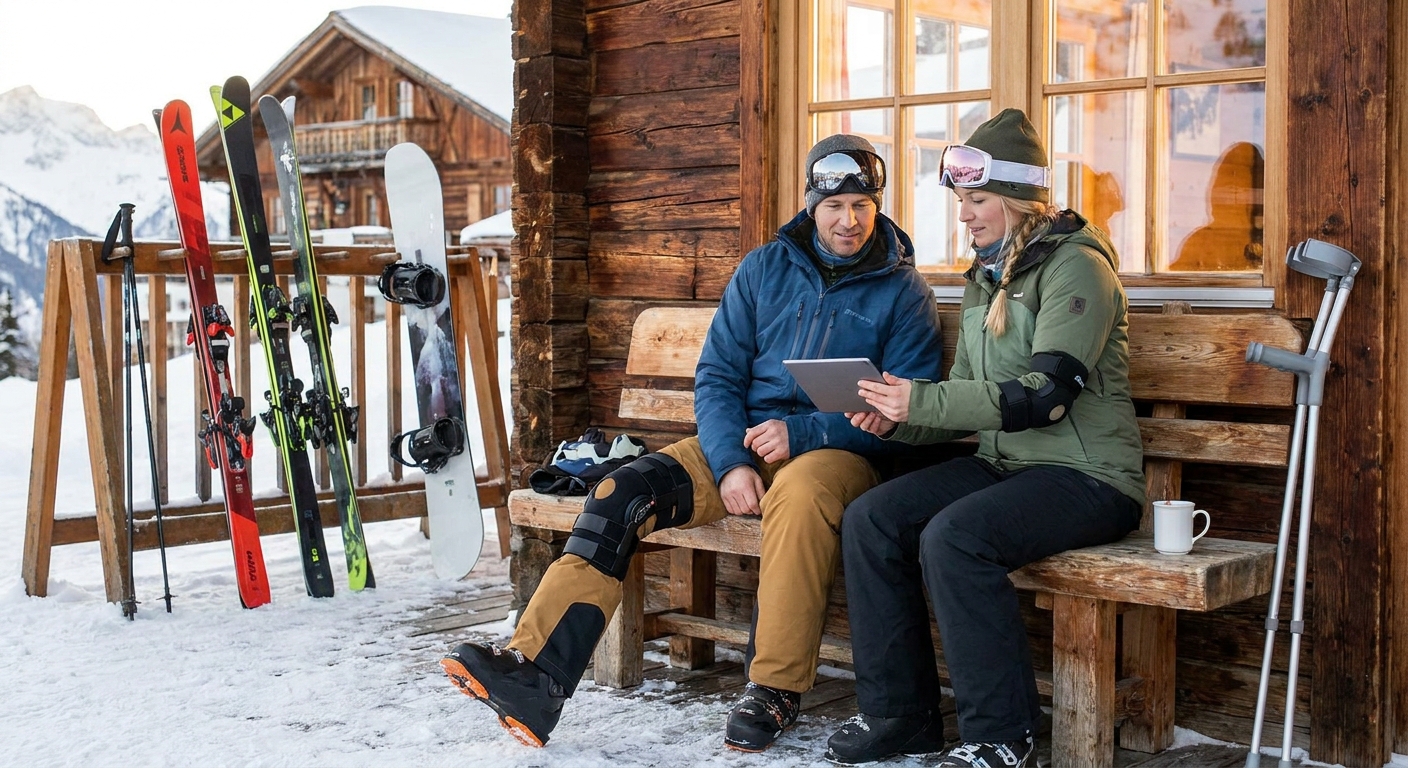
Ski and snowboard falls put joint stress in a very specific pattern: twisting knee injuries, shoulder dislocations from outstretched-arm falls, and compression injuries to the low back and neck. Pain management for skiers and snowboarders with joint injuries means matching the right interventional treatment to the specific structure that’s damaged, not just prescribing rest and ice and hoping the 2026 season doesn’t end early.
TL;DR
- Torn meniscus and ligament sprains from ski falls respond to ultrasound-guided injections before surgery is even discussed — Buy.
- Shoulder dislocations and rotator cuff strain from snowboard falls get corticosteroid or PRP injections, not just a sling — Buy.
- Herniated discs from high-speed falls need imaging-confirmed epidural steroid injections, not generic muscle relaxants — Consider.
- Skip any provider recommending injections without imaging first — that’s a Skip for structural ski injuries.
- Board-certified, fellowship-trained interventional specialists in Bergen, Passaic, and Middlesex counties give skiers a realistic return-to-mountain plan for 2026.
Why this matters
A sprained wrist heals with a brace. A torn meniscus, a partially dislocated shoulder, or a compression fracture from a fall on packed snow does not heal the same way, and treating it like a generic sports strain delays recovery by weeks. Hudson Pain and Spine sees this pattern every winter: patients who iced a knee for a month before getting imaging, and lost a season they didn’t need to lose.
Interventional pain management fills the gap between “rest it” and “get surgery.” Targeted injections, nerve blocks, and radiofrequency ablation address the actual injured structure — the meniscus, the rotator cuff, the facet joint — instead of masking the symptom with oral medication. That distinction matters more for skiers and snowboarders than almost any other recreational athlete group, because the injury mechanism (twisting, falling on an outstretched arm, jarring impact) tends to hit specific joints in specific, identifiable ways.
Who this is for
This guide is for recreational and competitive skiers and snowboarders in New Jersey dealing with joint pain that didn’t resolve after a week or two of rest — knee swelling that won’t go down, shoulder pain that limits overhead motion, or back pain from a hard fall that’s still there a month later. It’s also for anyone heading into the 2026 season with an old ski injury that never fully healed and is starting to flare with cold weather and renewed activity.
What to look for in pain management for skiers and snowboarders
Imaging-confirmed diagnosis before treatment
A knee that’s swollen and unstable after a fall could be a meniscus tear, an MCL sprain, or a Baker’s cyst — and each needs a different treatment plan. Skipping imaging and going straight to a generic injection wastes time and money on the wrong target.
Non-surgical-first treatment ladder
Most ski and snowboard joint injuries respond to a structured non-surgical path: rest and bracing, then targeted injection, then physical therapy, with surgery reserved for full ligament tears or fractures that don’t stabilize. A specialist who jumps straight to a surgical referral without trying interventional options first isn’t giving you the full ladder.
Fellowship-trained, board-certified injection specialists
Ultrasound-guided injections into a joint capsule or around a nerve root require precision — miss by a few millimeters and the injection doesn’t work. Double board-certified, fellowship-trained interventional pain physicians place these injections under image guidance, which is the difference between relief in days and no relief at all.
Realistic return-to-mountain timeline
Skiers want a number: how many weeks until I can load a chairlift again. A good treatment plan gives you that timeline upfront, tied to the specific injury and treatment, not a vague “it depends.”
Insurance and cost clarity for NJ patients
Most interventional procedures for joint injuries — epidural steroid injections, joint injections, nerve blocks — are covered under standard NJ insurance plans when medically necessary, though patients often ask about cost when insurance denies a claim or a deductible hasn’t been met. Get that number before you commit to a plan, not after the bill arrives.
Access across Bergen, Passaic, and Middlesex counties
A joint injury that’s actively swollen shouldn’t wait three weeks for an appointment across the state. Practices with offices in Englewood, Woodland Park, and Edison cover a wider stretch of northern and central New Jersey than a single-location clinic.
Top picks for common ski and snowboard joint injuries
1. Torn meniscus or ligament sprain in the knee — the most common ski injury. A twisting fall on skis or a hard edge catch on a snowboard is the classic mechanism for a meniscus tear. Ultrasound-guided injection into the joint space, paired with a structured PT program, resolves swelling and mechanical symptoms in 6 to 10 weeks for many patients without a scalpel involved. Read the specifics on treating a torn meniscus without surgery. Verdict: Buy.
2. Chronic knee pain from repeated season-over-season strain. Platelet-rich plasma (PRP) injections use the patient’s own blood platelets to stimulate healing in a knee that’s been aggravated across multiple ski seasons rather than one acute fall. Onset of relief typically takes 4 to 6 weeks as the tissue responds, which makes this a pre-season option rather than an emergency fix. Verdict: Consider — better for chronic wear than a fresh acute tear.
3. Shoulder dislocation or rotator cuff strain from a fall on an outstretched arm. Snowboarders fall forward and catch themselves with a hand or forearm more often than skiers do, and that mechanism drives shoulder dislocations and rotator cuff strain. Corticosteroid or PRP injection into the shoulder joint or subacromial space reduces inflammation enough to start range-of-motion PT within 2 to 4 weeks. Full details are in rotator cuff shoulder pain treatments. Verdict: Buy.
4. Herniated disc or compression injury from a high-speed fall. A hard fall at speed — especially backward onto a hard-packed run — can herniate a disc or aggravate an existing degenerative disc. Epidural steroid injections targeted at the affected level reduce nerve root inflammation and typically bring measurable relief in 3 to 6 weeks. This overlaps closely with treatment for other active athletes; see herniated disc treatment for active adults and athletes. Verdict: Consider — imaging first, always.
5. Chronic ankle pain from an old sprain aggravated by ski boots. Stiff ski and snowboard boots put unusual pressure on a previously sprained ankle, and pain that flares only during ski season often traces back to old ligament damage. A targeted nerve block or, for persistent cases, radiofrequency treatment of the affected nerve can quiet chronic ankle pain enough to get through a full season. Verdict: Consider for recurring flares; Skip oral pain medication alone as a long-term plan.
Get a joint injury evaluated before the season
Board-certified interventional pain specialists in Englewood, Woodland Park, and Edison, NJ.
What to avoid
- Injections before imaging. Any provider willing to inject a swollen knee or shoulder without an MRI or ultrasound first is guessing at the target — that’s a structural risk, not a shortcut.
- Opioid-first prescribing for a mechanical injury. Oral pain medication masks symptoms in a torn meniscus or a compressed nerve root without addressing the actual structure, which delays the real fix.
- Chiropractic-only care for a suspected tear. Manual adjustment has a role in muscular strain, but a confirmed ligament or meniscus tear needs a diagnosis-driven interventional plan, not spinal manipulation alone.
Verdict comparison
| Injury type | Non-surgical option | Typical relief timeline | 2026 verdict |
|---|---|---|---|
| Torn meniscus / ligament sprain | Ultrasound-guided joint injection + PT | 6-10 weeks | Buy |
| Chronic knee strain (multi-season) | PRP injection | 4-6 weeks | Consider |
| Shoulder dislocation / rotator cuff strain | Corticosteroid or PRP injection | 2-4 weeks | Buy |
| Herniated disc from high-speed fall | Epidural steroid injection | 3-6 weeks | Consider |
| Chronic ankle pain (old sprain) | Nerve block / RFA | 4-6 weeks | Consider |
FAQ
What is the best pain management for skiers and snowboarders with joint injuries?
For most acute ski and snowboard joint injuries, ultrasound-guided injections targeted at the specific structure — meniscus, rotator cuff, or disc — work faster than rest alone and avoid surgery in many cases. The right option in 2026 depends on imaging results, not guesswork.
Is it worth seeing a pain management specialist after a ski fall?
Yes, if swelling, instability, or pain lasts more than one to two weeks after a fall. A specialist can order imaging and start a targeted treatment plan instead of a generic rest-and-ice recommendation.
How long does it take to get relief from a torn meniscus without surgery?
Ultrasound-guided injections combined with physical therapy typically reduce meniscus tear symptoms within 6 to 10 weeks. Full functional return depends on the size and location of the tear.
Can PRP injections help a snowboarder’s chronic knee pain?
PRP injections work best for chronic, season-over-season knee strain rather than a single acute tear, with relief typically building over 4 to 6 weeks. They’re a pre-season option, not an emergency fix.
What treatment is best for a shoulder injury from a ski fall?
Corticosteroid or PRP injection into the affected shoulder structure, paired with range-of-motion physical therapy, is the standard first step for rotator cuff strain or partial dislocation from a fall.
Does insurance cover pain management procedures for ski injuries in NJ?
Most standard NJ insurance plans cover epidural steroid injections, joint injections, and nerve blocks when they’re medically necessary and imaging-confirmed. Confirm deductible and prior-authorization requirements before scheduling.
How soon can I get back on the slopes after an epidural or nerve block?
Many patients resume light activity within 1 to 2 weeks of an epidural steroid injection, with full return to skiing or snowboarding tied to how the injured structure responds over the following weeks.
Is radiofrequency ablation an option for chronic back pain from skiing falls?
Radiofrequency ablation targets facet joint pain that’s become chronic, typically after repeated falls or an unresolved acute injury, and can provide relief lasting several months when the diagnostic block confirms the joint as the pain source.
One last thing
The single biggest mistake skiers and snowboarders make isn’t the fall — it’s waiting through an entire off-season on a knee or shoulder that never got imaged, then showing up in November 2026 with a chronic version of what was originally a simple, treatable acute injury. Get the joint imaged in the spring, not the fall.
Related guides
About the Medical Reviewer
Dr. Saurabh Dang is a double board-certified interventional pain management specialist serving Central and Northern New Jersey. He combines clinical expertise with a patient-centered approach to help patients find lasting relief from chronic pain conditions.
Read Full Bio →Seeking Treatment for Epidural Injections?
Dr. Dang and the team at Hudson Pain and Spine offer specialized care and advanced interventional treatments.
Ready to Find Relief from Pain?
Schedule your consultation with Dr. Saurabh Dang at our Englewood office.
Serving patients across Central and Northern New Jersey — Bergen, Passaic, and Middlesex counties.