
Pain Management for Hikers with Knee Pain: 2026 Guide

Medically reviewed by
Dr. Saurabh Dang, MD, MBA
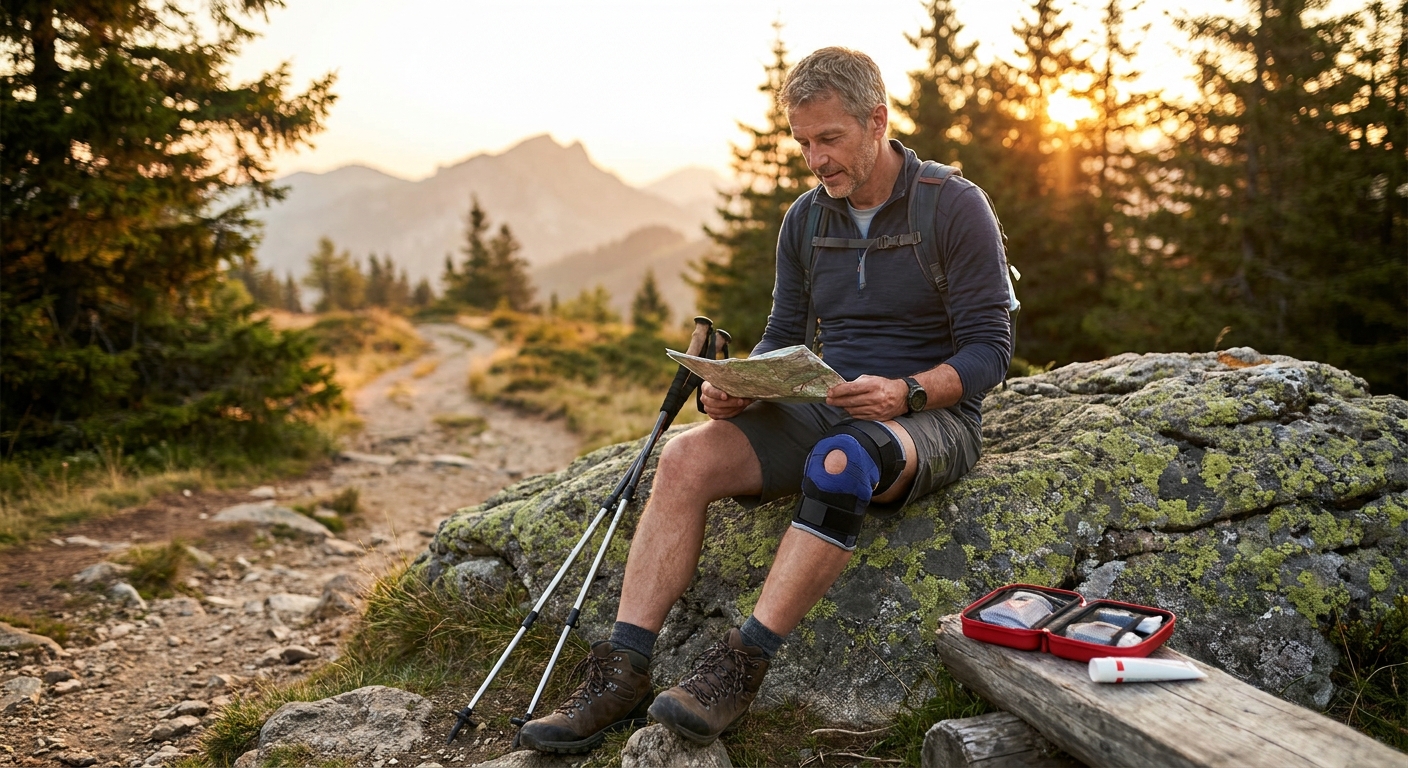
Chronic knee pain does not have to end your hiking season. This guide breaks down which pain management for hikers approaches actually keep you on the trail in 2026, which ones just mask the problem, and when a scope or a shot is the wrong call.
TL;DR
- PRP injections for chronic knee pain suit early-to-moderate osteoarthritis in hikers logging 10+ miles a week — Consider.
- Corticosteroid shots reset a flare in 6-12 weeks but wear off fast with repeat trail mileage — Consider for short-term use only.
- Genicular nerve blocks and RFA extend relief 6-12 months for hikers whose knee OA has outrun injections — Consider.
- Skip daily NSAID use before long hikes; it hides swelling that signals a worsening meniscus tear.
- A torn meniscus often heals without surgery when caught early — get imaging before assuming you need an operation.
Why this matters
Over 32.5 million adults in the US live with knee osteoarthritis, and hikers put more cumulative load on that joint than almost any other recreational group — descents alone can drive knee forces to several times body weight. Ignoring a knee that swells after every hike does not make the underlying damage go away; it usually means the next flare comes sooner and hurts more. Pain management for hikers works best when it is diagnosis-driven, not just a brace and some ibuprofen.
Most hikers with chronic knee pain in New Jersey are not looking to stop hiking. They are looking for a plan that gets them through the 2026 season without a knee that locks up on switchbacks or swells for three days after a summit.
Who this is for
This guide is for hikers, day-trippers, and weekend backpackers dealing with recurring knee pain — swelling after descents, catching or locking sensations, or a dull ache that never fully clears between hikes. It applies whether the cause is early osteoarthritis, a degenerative meniscus tear, patellofemoral irritation, or a Baker’s cyst that flares after long mileage. If you are pushing through pain with over-the-counter meds and a knee sleeve instead of getting an actual diagnosis, this is written for you.
What to look for in pain management for hikers
Diagnostic precision before treatment
A knee that hurts on descents is a different problem than one that swells after 8 miles or locks when you kneel to tie a boot. Treatment that skips imaging and an exam and jumps straight to a generic injection often misses the actual source — cartilage wear, a meniscus tear, or fluid buildup behind the knee.
Treatment that preserves mobility, not just pain scores
Some interventions reduce pain but do nothing for the mechanical problem causing it. For a hiker, the goal is not just “less pain at rest” — it’s stability on uneven terrain and load tolerance on descents, which is a different clinical target.
A non-opioid, non-surgical-first approach
Most chronic knee pain in active adults responds to targeted injections, physical therapy, and activity modification before surgery becomes necessary. A specialist who defaults to conservative, non-opioid options first is generally the safer starting point for someone who wants to keep hiking, not just get through a flare.
Recovery windows that fit your trail calendar
A treatment that requires two weeks of no weight-bearing is a different decision in March than in September. Ask directly how many days before you can walk on flat ground, and how many weeks before you can handle elevation and descents again.
Insurance and cost clarity up front
Injections, nerve blocks, and diagnostic imaging carry different costs depending on coverage. Understanding how much pain management procedures cost without insurance before you commit avoids a surprise bill after the fact.
A follow-up plan, not a one-time fix
An injection without a rehab or strengthening component tends to buy a few months of relief and stop there. The better plans pair the procedure with a physical therapy referral aimed at the specific movement pattern that’s loading the knee on the trail.
Top picks: treatment options for hikers with chronic knee pain
Corticosteroid injection — the quick reset. Relief typically lasts 6-12 weeks, which makes this a reasonable bridge before a planned trip or a big hiking weekend. It does nothing to address a structural tear or advancing cartilage loss, and repeated use every few months is a sign the underlying problem needs a different approach. Consider for short-term flare control only.
PRP injections — the trail-season investment. Platelet-rich plasma uses a concentrated sample of your own blood to stimulate tissue repair, typically delivered over a short series of sessions, with relief that can extend 6-12 months for hikers with early-to-moderate osteoarthritis. It’s not instant — expect gradual improvement over several weeks — but it targets tissue health rather than just numbing pain. Full detail on PRP injections for chronic knee pain covers who responds best. Consider if imaging shows early-to-moderate joint wear and you want to avoid repeat cortisone shots.
Genicular nerve block and radiofrequency ablation — the long-haul option. This targets the specific nerves carrying pain signals from the knee joint, and relief commonly runs 6-12 months when the diagnostic block responds well. It’s minimally invasive and does not affect joint structure or strength, making it a fit for hikers whose osteoarthritis has moved past what injections alone can manage. Consider when corticosteroid relief keeps shrinking to a few weeks at a time.
Meniscus-specific evaluation — don’t skip the diagnosis. A locking, catching knee after a twist or an awkward step down is a classic meniscus tear pattern, and a meaningful share of these tears respond to non-surgical care rather than an operation. The guide on how to treat a torn meniscus without surgery covers when conservative treatment applies and when it doesn’t. Consider getting an MRI before assuming surgery is the only path.
Baker’s cyst management — the swelling behind the knee. Hikers frequently notice a soft, fluid-filled bulge behind the knee after long descents, which is usually a downstream sign of joint irritation rather than its own separate injury. Draining it without addressing the underlying cause tends to bring it back within weeks. The breakdown on how to treat a Baker’s cyst behind the knee explains the connection to knee OA and meniscus damage. Consider if the swelling recurs after nearly every long hike.
Get your knee pain properly diagnosed
Board-certified evaluation before the next flare sidelines your 2026 season.
What to avoid
- Daily NSAID use as a long-term fix. Ibuprofen or naproxen before every hike hides swelling that’s actually telling you the joint is under stress, and daily use over months carries real GI and kidney risk.
- Generic knee braces bought without a diagnosis. A sleeve marketed for “knee pain” broadly does nothing for a specific meniscus tear or patellofemoral tracking issue, and the wrong brace can change your gait enough to load the other knee or the hip.
- Jumping to surgery before conservative options are exhausted. Many meniscus tears and early-stage osteoarthritis cases respond to injections, PT, and activity modification well enough that surgery is not the first or only option.
Verdict comparison
| Treatment | Invasiveness | Typical Relief | Time Before Next Hike | Best For |
|---|---|---|---|---|
| Corticosteroid injection | Low | 6-12 weeks | 3-5 days | Short-term flare before a trip |
| PRP injections | Low | 6-12 months | 1-2 weeks | Early-to-moderate osteoarthritis |
| Genicular nerve block / RFA | Low-moderate | 6-12 months | 1-2 weeks | OA that’s outrun injections |
| Meniscus-focused care (non-surgical) | Low | Weeks to months | Varies by tear type | Locking/catching knee after a twist |
| Baker’s cyst management | Low | Months, if root cause treated | 1 week | Recurrent swelling behind the knee |
FAQ
What is the best pain management for hikers with chronic knee pain?
There is no single best option — it depends on the diagnosis. Early osteoarthritis often responds to PRP injections, while a locking knee from a meniscus tear needs imaging and a non-surgical care plan before anything else. A specialist visit that includes an exam and imaging is the starting point in 2026.
Is PRP better than corticosteroid injections for knee pain?
PRP typically lasts longer, with relief extending 6-12 months versus 6-12 weeks for corticosteroids, but it costs more and takes longer to kick in. Corticosteroids work better as a quick bridge before a specific trip, while PRP suits ongoing management.
Can I keep hiking with a meniscus tear?
Many hikers with a partial or degenerative meniscus tear continue hiking with modified mileage and a targeted rehab plan, since a meaningful share of these tears respond to non-surgical treatment. Locking, giving-way, or persistent swelling after every hike are signs to get evaluated before continuing.
How much does a knee injection cost without insurance in NJ?
Costs vary by procedure type and location, and pricing without insurance differs from in-network rates. Check current cost breakdowns before booking so there are no surprises at the visit.
What causes knee swelling after long hikes?
Swelling after descents usually points to joint irritation, cartilage wear, or a developing Baker’s cyst behind the knee. Recurring swelling after multiple hikes in a row is a sign to get imaging rather than just icing and resting.
When should a hiker see a pain management specialist for knee pain?
See a specialist when knee pain persists beyond a few weeks, recurs after nearly every hike, or comes with locking, catching, or visible swelling. Waiting through multiple flare cycles usually means treating a more advanced problem later.
Do genicular nerve blocks affect knee strength or stability?
No. Genicular nerve blocks and radiofrequency ablation target pain-carrying nerves around the joint, not the joint structure itself, so strength and range of motion are not affected. Relief commonly lasts 6-12 months when the diagnostic block responds well.
Is it safe to hike with a Baker’s cyst?
Mild cases often tolerate moderate hiking, but a cyst that grows, restricts bending, or recurs after every long hike needs evaluation for the underlying cause. Treating the cyst alone without addressing joint irritation usually brings it back within weeks.
One last thing
The detail most hikers miss: a knee that only hurts on descents, not ascents, is pointing at a patellofemoral or cartilage issue rather than a meniscus tear — descending puts roughly three to four times body weight through the kneecap joint, far more than climbing does. That distinction changes the treatment plan entirely, and it’s the kind of thing an exam catches in minutes that months of guessing with braces and ibuprofen won’t.
Related guides
- Hip pain treatment for runners and active adults
- Best low-impact exercises for chronic low back pain
About the Medical Reviewer
Dr. Saurabh Dang is a double board-certified interventional pain management specialist serving Central and Northern New Jersey. He combines clinical expertise with a patient-centered approach to help patients find lasting relief from chronic pain conditions.
Read Full Bio →Seeking Treatment for Nerve Block Injections?
Dr. Dang and the team at Hudson Pain and Spine offer specialized care and advanced interventional treatments.
Ready to Find Relief from Pain?
Schedule your consultation with Dr. Saurabh Dang at our Englewood office.
Serving patients across Central and Northern New Jersey — Bergen, Passaic, and Middlesex counties.