Youth Athlete Sports Injury Treatment: 2026 Guide

Medically reviewed by
Dr. Saurabh Dang, MD, MBA
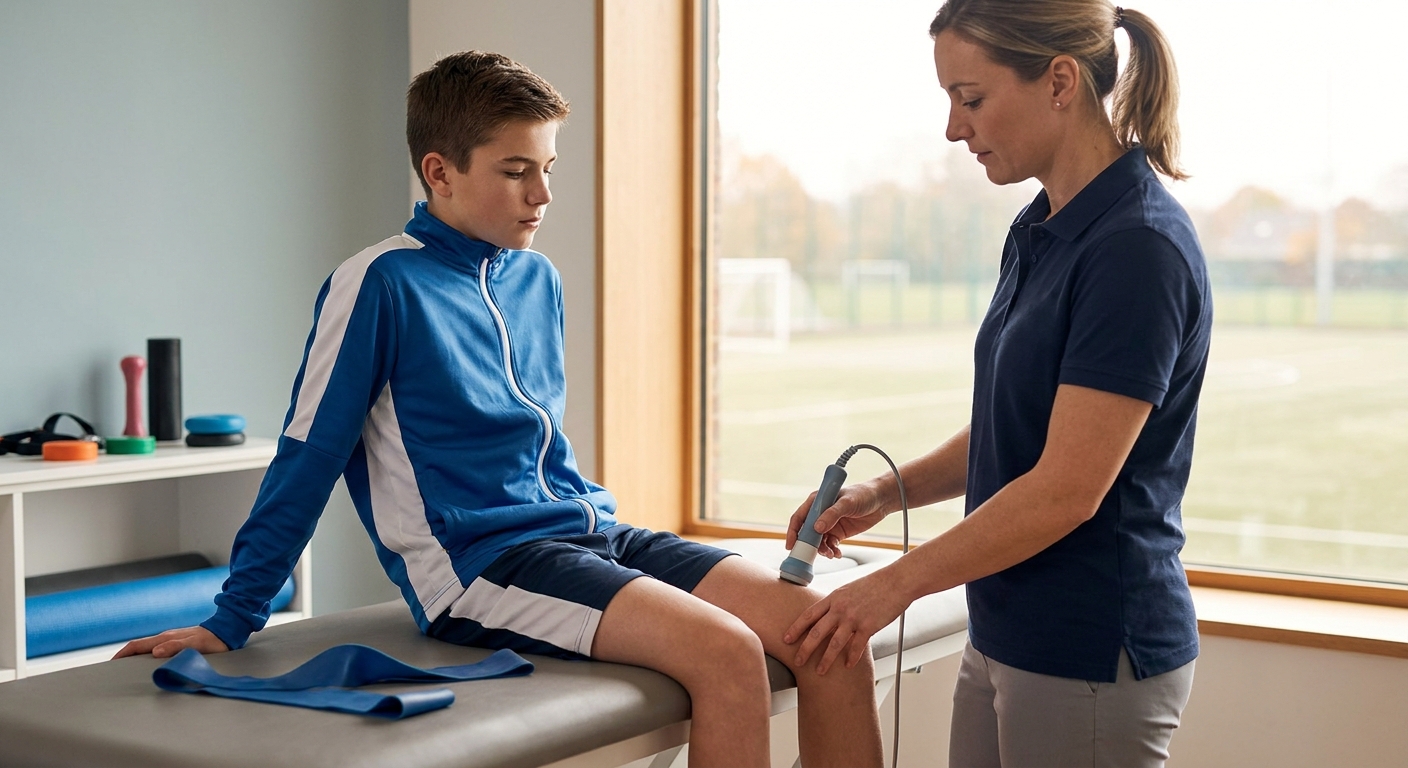
Youth athlete sports injury treatment in 2026 means matching the injury to the athlete’s stage of growth, not just the sport they play — a stinger in a 15-year-old football player and a herniated disc in a 45-year-old weekend golfer do not get the same protocol, even with the same MRI finding.
TL;DR
- Youth athlete sports injury treatment in 2026 should start non-surgical — nerve blocks and epidural injections before any surgical referral.
- Hudson Pain and Spine sees teen athletes across three NJ offices: Englewood, Woodland Park, and Edison — Consider.
- Herniated disc and hip pain in athletes need imaging-confirmed diagnosis, not a generic handout of stretches.
- Skip any clinic that injects before imaging or has no return-to-play protocol for patients under 18.
Why this matters
An adolescent skeleton is still under construction. Growth plates — the cartilage zones near the ends of long bones — stay open well into the teen years, and an injury or treatment that ignores them can affect how a bone finishes growing.
That’s the core difference between adult sports medicine and youth athlete sports injury treatment: the diagnostic and treatment plan has to account for open growth plates, incomplete muscular development, and the pressure to return to a season that doesn’t wait. A pain specialist who treats teen athletes the same way as a 50-year-old with degenerative disc disease is skipping a step that matters in 2026 just as much as it did a decade ago.
Who this is for
This guide is for parents and guardians of athletes roughly 13 to 18 years old — football, wrestling, soccer, track, gymnastics, lacrosse — who are dealing with pain that hasn’t resolved after a few days of rest and ice. It’s also for athletic trainers and coaches deciding when a sideline injury needs more than a taping job, and for teens coming out of an urgent care visit with an X-ray that says “no fracture” but pain that hasn’t gone away.
It is not for acute, on-field emergencies. Suspected fractures, loss of consciousness, or severe deformity need an ER, not a pain management consult.
What to look for in youth athlete sports injury treatment
Growth-plate-aware diagnosis
Imaging should confirm what’s actually injured before any procedure gets scheduled. A pain specialist working with a 15-year-old needs to rule out a growth plate issue before treating what looks like a disc or joint problem, because the two can present with nearly identical symptoms in a teenager.
Non-surgical-first protocol
Injections, nerve blocks, and physical therapy should be the first line, with surgery reserved for cases that don’t respond. Youth athletes have more healing capacity than adults, and a non-surgical-first approach protects that advantage instead of skipping past it.
Sport-specific and age-specific return-to-play planning
A wrestler’s return-to-play criteria look nothing like a distance runner’s. The plan needs functional benchmarks tied to the actual sport and the athlete’s age, not a generic “pain-free for one week” rule that gets applied to everyone.
Board certification and fellowship training
Interventional pain management for a teenager should come from a physician who is double board-certified and fellowship-trained, not a general practice referral. That credential matters more when the patient’s skeleton is still developing.
Multiple accessible locations
Recovery from a sports injury usually means more than one visit — imaging review, the procedure itself, and follow-up. A practice with several locations, like offices in Englewood, Woodland Park, and Edison, cuts down on the logistics burden for a family managing school and practice schedules around appointments.
Get an evaluation before the season ends
See a board-certified pain specialist at three NJ locations.
Top picks by injury type
The contact-sport pick: herniated disc treatment for athletes
Football, wrestling, and lacrosse produce more lumbar disc injuries in teens than most parents expect, especially with repeated impact loading over a season. The right protocol starts with imaging, moves to targeted injections if conservative care stalls, and keeps surgery as a last option. Herniated disc treatment for active adults and athletes covers how that non-surgical sequence works in practice. Verdict: Buy for any contact-sport athlete with persistent low back pain past two weeks.
The endurance-sport pick: hip pain protocol for runners
Track, cross country, and soccer athletes tend to show up with hip pain that gets dismissed as “growing pains” for months before anyone orders imaging. Left untreated, it can turn a six-week issue into a full season lost. Hip pain treatment for runners and active adults breaks down when it’s a labral issue versus a soft tissue strain. Verdict: Buy for endurance athletes with hip pain lasting more than 10 days.
The stinger pick: pinched nerve and arm numbness
A “stinger” — arm numbness or tingling after a hit in football or wrestling — is common enough that it gets waved off on the sideline more than it should. Most resolve on their own, but recurring episodes need a nerve evaluation, not just rest. Pinched nerve treatment for arm numbness and tingling explains what separates a one-time stinger from a nerve injury that needs treatment. Verdict: Consider — skip if it was a single, brief episode with full resolution; treat if it recurs.
The recovery-phase pick: low-impact exercise programming
Once the acute pain phase passes, the wrong exercise plan can undo the progress from an injection or nerve block. A recovery program built around low-impact movement keeps an athlete conditioned without re-aggravating the injury site. Best low-impact exercises for chronic low back pain lays out the kind of movement that fits this phase. Verdict: Buy for any athlete cleared past the acute phase and rebuilding toward full activity.
What to avoid
- Opioid-first pain management. A 15-year-old with a disc injury doesn’t need a prescription that treats the symptom while the underlying issue goes undiagnosed.
- Injections without imaging. If a clinic offers to inject a joint or nerve before ordering an MRI or X-ray, that’s a diagnosis being guessed at, not confirmed.
- Adult RFA protocols applied to a growing skeleton. Radiofrequency ablation techniques designed for a 50-year-old’s facet joints aren’t automatically appropriate for a 16-year-old, and a specialist should say so rather than defaulting to one protocol for everyone.
Verdict comparison
| Treatment path | Growth-plate aware | Non-surgical first | Sport-specific return-to-play | Verdict |
|---|---|---|---|---|
| Herniated disc protocol (contact sports) | Yes | Yes | Yes | Buy |
| Hip pain protocol (runners/track) | Yes | Yes | Yes | Buy |
| Stinger / pinched nerve protocol | Yes | Yes | Depends on severity | Consider |
| Low-impact recovery exercise plan | Yes | Yes | Yes | Buy |
FAQ
What is the best youth athlete sports injury treatment for a herniated disc?
Non-surgical care — targeted injections and physical therapy — is the first-line youth athlete sports injury treatment for a herniated disc in 2026, with surgery reserved for cases that don’t respond after several weeks. Imaging should confirm the diagnosis before any procedure.
Are stingers in football dangerous for teenagers?
A single brief stinger usually resolves on its own, but recurring numbness or tingling in the arm after hits needs a nerve evaluation. Repeated stingers can point to an underlying nerve compression that won’t resolve without treatment.
How old do athletes need to be for interventional pain treatments?
There’s no single cutoff age — the decision depends on the injury, imaging findings, and how the growth plates look, not a fixed number. A fellowship-trained pain specialist evaluates each teen individually before recommending a procedure.
Is hip pain in a teenage runner usually serious?
Hip pain lasting more than 10 days in a young runner is not something to dismiss as growing pains. It needs imaging to rule out a labral tear or stress injury before it turns into a season-long problem.
How much does youth sports injury treatment cost in NJ?
Cost depends on the specific procedure, imaging needed, and insurance coverage, so it varies by case. Most pain management practices verify insurance benefits before scheduling a procedure.
Can a youth athlete get an epidural injection?
Epidural steroid injections can be appropriate for teen athletes with confirmed disc or nerve-related pain, but they’re typically used after conservative treatment hasn’t worked. A board-certified specialist should confirm the diagnosis with imaging first.
When should a parent see a pain specialist instead of an orthopedist?
See a pain specialist when the issue is nerve-related pain, numbness, or chronic pain that hasn’t responded to rest and basic physical therapy. Orthopedic surgeons focus on structural repair, while interventional pain specialists focus on non-surgical management first.
What locations offer youth sports injury treatment in Bergen and Middlesex counties?
Hudson Pain and Spine sees patients across Englewood, Woodland Park, and Edison, covering Bergen, Passaic, and Middlesex counties. That spread makes follow-up visits during a school and practice schedule more manageable.
One last thing
Growth plates in most athletes don’t fully close until the mid-to-late teens, and that single fact is why a nerve block or epidural approach built for a 15-year-old should never be a copy-paste of the same procedure used on a 45-year-old with an identical MRI finding. The imaging might look the same. The treatment plan shouldn’t.
Related guides
About the Medical Reviewer
Dr. Saurabh Dang is a double board-certified interventional pain management specialist serving Central and Northern New Jersey. He combines clinical expertise with a patient-centered approach to help patients find lasting relief from chronic pain conditions.
Read Full Bio →Seeking Treatment for Epidural Injections?
Dr. Dang and the team at Hudson Pain and Spine offer specialized care and advanced interventional treatments.
Ready to Find Relief from Pain?
Schedule your consultation with Dr. Saurabh Dang at our Englewood office.
Serving patients across Central and Northern New Jersey — Bergen, Passaic, and Middlesex counties.