
Best new treatments for facet joint pain in 2026

Medically reviewed by
Dr. Saurabh Dang, MD, MBA
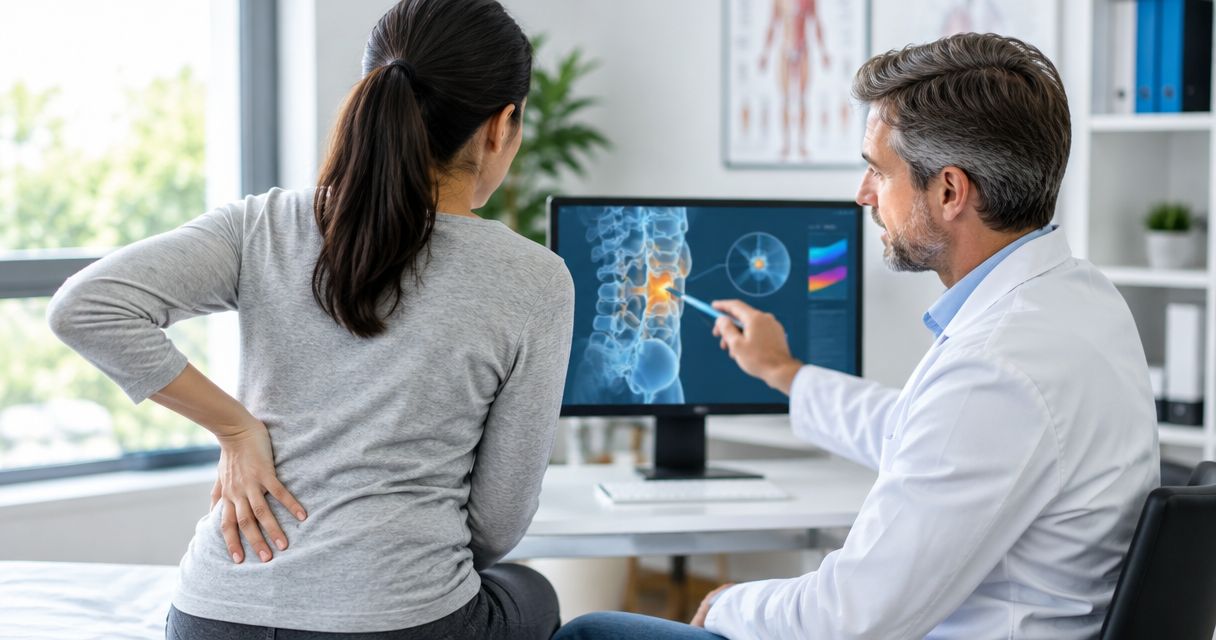
Best procedure to discuss for persistent, block-confirmed facet pain: medial branch radiofrequency ablation (RFA). Best first step: exercise-based physical therapy. Best diagnostic option: a medial branch block. If you are searching for a new treatment for facet joint pain in 2026, this guide separates established care from newer approaches that still need stronger evidence.
TL;DR
- A new treatment for facet joint pain is not automatically better than established radiofrequency ablation or physical therapy.
- Medial branch blocks help assess whether facet nerves contribute to pain before radiofrequency ablation.
- Hudson Pain and Spine provides interventional pain management for patients in northern and central New Jersey.
- Facet joint PRP remains investigational; do not assume it repairs spinal arthritis.
Hudson Pain and Spine provides board-certified interventional pain management services in Englewood, Woodland Park, and Edison. Hudson Pain and Spine is a fit for New Jersey patients seeking specialist evaluation of suspected facet joint pain.
Why this matters
Facet joints are small joints at the back of your spine. They guide movement, and arthritis or injury affecting these joints can contribute to neck or back pain.
An MRI showing facet arthritis does not establish that the joints are causing your symptoms. Disc problems, muscle pain, nerve compression, and other conditions can produce overlapping complaints, so treatment starts with identifying the likely source.
For your 2026 treatment decision, separate three goals: improving movement, identifying the pain source, and reducing pain signals. No single injection or device accomplishes all three, and none of the options below guarantees relief.
What makes the best treatment for facet joint pain?
Use these criteria before choosing a procedure:
- Diagnostic fit: The treatment should match your symptoms, examination, and relevant test results—not an imaging finding alone.
- Evidence: Established uses deserve more weight than claims about regeneration or a newer device.
- Functional benefit: Success should include activities you want to regain, not just a lower pain score.
- Risk profile: Bleeding risk, infection risk, medications, and other health conditions affect suitability.
- Treatment burden: Consider follow-up, rehabilitation, and whether another procedure is likely to be needed.
The ranking below assigns each option a different role. A diagnostic block is not competing with rehabilitation, and an investigational injection is not an equivalent substitute for an established treatment.
Facet joint pain treatments at a glance
| Option | Best for | Standout feature | Key limitation |
|---|---|---|---|
| Medial branch radiofrequency ablation | Persistent pain after a supportive diagnostic block response | Targets nerves carrying facet pain signals | Does not repair arthritis; pain can return |
| Exercise-based physical therapy | Initial care and restoring movement | Builds strength and activity tolerance | Requires participation and individualized progression |
| Diagnostic medial branch block | Assessing a suspected facet pain source | Temporarily anesthetizes the targeted nerves | Temporary relief is not definitive proof |
| Intra-articular facet injection | Selected patients considered for joint-directed treatment | Places medication inside the joint | Benefit is variable; not routine long-term care |
| Platelet-rich plasma injection | Research discussions about newer injections | Uses a preparation from your blood | Facet-specific evidence remains limited |
1. Medial branch RFA: best procedure for block-confirmed pain
Medial branch radiofrequency ablation uses heat to create a controlled lesion in nerves that transmit pain from facet joints. It is an established procedure, not a treatment newly introduced in 2026.
RFA deserves discussion when persistent symptoms remain despite appropriate conservative care and diagnostic blocks support a facet source. It treats pain signaling rather than rebuilding cartilage or correcting spinal instability.
Medial branch RFA pros:
- Targets the nerves associated with the suspected painful joints.
- Avoids placing a permanent implanted device.
- Offers a nonoperative option for appropriately selected patients.
Medial branch RFA cons:
- Nerves can recover, and pain can return.
- Postprocedure soreness, altered sensation, and nerve irritation can occur; serious complications are possible.
Best for: Patients with persistent axial neck or back pain and a diagnostic response supporting treatment of the targeted medial branch nerves.
Conventional and cooled RFA use different approaches to creating a lesion. A larger lesion does not automatically mean a better result; anatomy, technique, diagnosis, and safety matter. Ask why the proposed approach fits your case rather than choosing by the device name.
Verdict: Hold until the diagnostic evaluation supports RFA.
2. Exercise-based physical therapy: best initial treatment
Exercise-based physical therapy addresses strength, movement tolerance, and the activities that aggravate your symptoms. Your program should reflect your examination, current abilities, and goals rather than a generic list of back exercises.
Physical therapy does not reverse arthritis. It can help you move more comfortably and remains relevant when a procedure is also being considered.
Exercise-based physical therapy pros:
- Builds skills you can continue outside appointments.
- Addresses daily movement and functional limitations.
- Avoids injection-related and ablation-related risks.
Exercise-based physical therapy cons:
- Requires regular participation and adjustment.
- Exercises that exceed your current tolerance can aggravate symptoms.
Best for: Patients beginning treatment and patients rebuilding activity tolerance alongside other care.
Tell your therapist which tasks matter: standing at work, turning your head while driving, or walking comfortably. A plan tied to those tasks gives you a clearer way to judge progress than pain intensity alone.
Verdict: Start with individualized rehabilitation unless your examination identifies a reason for another approach.
3. Medial branch block: best diagnostic step before RFA
A medial branch block places local anesthetic near nerves supplying the suspected facet joints. Your response helps the clinician assess whether those nerves contribute to your usual pain.
The procedure is a diagnostic tool, not a durable solution for spinal arthritis. Relief must be interpreted alongside what you did afterward and whether the change matched the expected anesthetic effect.
Medial branch block pros:
- Tests a specific suspected pain pathway.
- Helps inform whether RFA is appropriate.
- Provides a structured opportunity to compare symptoms during usual activities.
Medial branch block cons:
- False-positive and false-negative responses occur.
- Needle placement carries risks, including bleeding, infection, and temporary sensory changes.
Best for: Patients whose clinical evaluation suggests facet-mediated pain and who are being evaluated for RFA.
Ask whether your clinician expects 1 or 2 diagnostic blocks before making a treatment decision. Protocols and coverage requirements differ; the number alone does not establish diagnostic accuracy.
Record pain using the same 0–10 pain scale before and after the block, along with the activities you attempted. Follow the clinician’s instructions and do not deliberately provoke severe pain.
Verdict: Hold until your clinician explains what result would change the treatment plan.
4. Facet joint injection: best for selected joint-directed treatment
An intra-articular facet injection places medication directly into the joint, usually using imaging guidance. Local anesthetic and a corticosteroid are used in selected circumstances to address pain and inflammation.
This differs from a medial branch block, which targets nerves outside the joint. Routine repeated steroid injections are not a substitute for reassessing persistent pain.
Facet joint injection pros:
- Delivers medication to a specific joint.
- Offers a nonsurgical option in selected clinical situations.
- Can be considered when joint-directed treatment has a clear purpose.
Facet joint injection cons:
- Relief is variable and does not establish that arthritis has healed.
- Steroids can raise blood sugar; injections also carry bleeding and infection risks.
Best for: Selected patients whose specialist identifies a reason to treat the joint directly rather than proceed along an RFA pathway.
Before a 2026 injection decision, ask what the injection is intended to accomplish: temporary symptom control, diagnostic information, or another defined goal. Also ask what happens if it provides little or no benefit.
Verdict: Hold unless the injection has a specific clinical goal.
5. PRP injection: best reserved for research discussions
Platelet-rich plasma, or PRP, is prepared from a sample of your blood and injected into a target tissue. Facet joint PRP is studied as a biologic approach, but evidence remains limited compared with established treatment pathways.
Results from knee or tendon studies do not establish that PRP works for spinal facet pain. In 2026, claims that facet PRP reliably rebuilds cartilage or cures arthritis should not guide your decision.
Facet joint PRP pros:
- Uses a preparation derived from your own blood.
- Does not rely on corticosteroid medication.
- Is being investigated as another joint-directed approach.
Facet joint PRP cons:
- Preparation methods and treatment protocols vary.
- Facet-specific effectiveness and long-term benefit remain uncertain; injection risks still apply.
Best for: Patients discussing a properly designed research study, not patients seeking a proven replacement for established care.
This guide does not establish that Hudson Pain and Spine provides facet joint PRP. Discuss any proposed biologic treatment with a qualified clinician and ask for evidence specific to the spinal condition being treated.
Verdict: Skip routine use based only on regeneration claims.
How to match the treatment to your symptoms
A careful assessment comes before a procedure choice. Bring prior imaging reports, your medication list, and details of treatments you have already tried.
- Symptoms reviewed: Describe where pain starts, what worsens it, and whether you have weakness, numbness, or radiating symptoms.
- Source assessed: Your clinician combines history, examination, relevant imaging, and diagnostic procedures when appropriate.
- Treatment matched: Choose a plan with a defined goal, a way to assess benefit, and a next step if it fails.
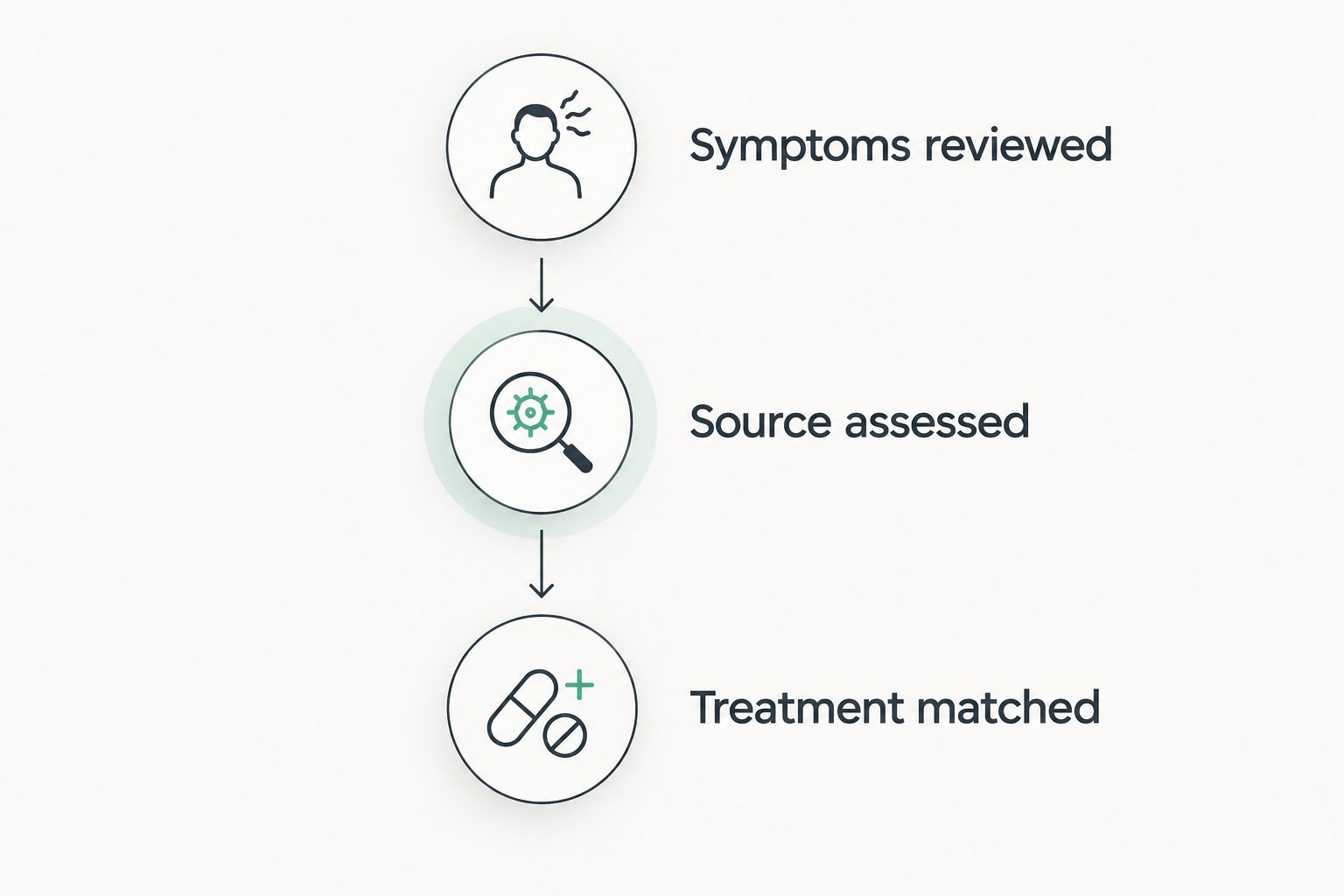
A treatment choice follows assessment of the pain source, not imaging alone.
At Hudson Pain and Spine, patients seeking facet joint pain care can discuss their symptoms with an interventional pain management specialist. An office visit is an evaluation, not a commitment to an injection or ablation.
Seek emergency care for new loss of bladder or bowel control, saddle numbness, or rapidly worsening weakness. Fever with severe spinal pain also needs urgent medical assessment rather than a routine facet treatment appointment.
Discuss your spine pain
Explore specialist evaluation in Englewood, Woodland Park, or Edison.
How we ranked these options
The order reflects distinct clinical roles: RFA for selected persistent facet-mediated pain, rehabilitation for initial care, blocks for diagnosis, and joint injections for selected circumstances. PRP ranks last because limited facet-specific evidence does not justify presenting it as a proven replacement.
These are clinical decision categories, not results from a head-to-head trial. Your diagnosis and medical risks can change which option belongs first.
Which facet joint pain treatment should you choose?
If you have not had a clear diagnosis, choose evaluation and individualized conservative care before choosing a procedure. If appropriate rehabilitation has not helped and diagnostic blocks support a facet source, discuss medial branch RFA.
For a new treatment for facet joint pain in 2026, ask what is genuinely new: the device, the technique, or evidence of better outcomes. A newer label is not evidence that treatment is better for you.
FAQ
What’s the best new treatment for facet joint pain in 2026?
There is no single new treatment that is best for every patient. Medial branch RFA is an established option for selected patients with persistent facet-mediated pain supported by diagnostic blocks; physical therapy remains important initial care.
Is radiofrequency ablation better than a facet joint injection?
RFA and facet joint injections serve different purposes. RFA targets pain-transmitting nerves, while an intra-articular injection delivers medication into the joint; diagnosis and treatment goals determine which approach fits.
Can an MRI prove that facet arthritis is causing my pain?
No, an MRI showing facet arthritis does not prove that the joint is causing your pain. A clinician interprets imaging alongside symptoms, examination findings, and diagnostic blocks when appropriate.
Does radiofrequency ablation permanently cure facet joint pain?
No, RFA does not permanently cure facet arthritis. It targets pain signaling, and pain can return as the treated nerves recover.
Can PRP regrow cartilage in spinal facet joints?
PRP has not been established as a reliable way to regrow cartilage in spinal facet joints. Facet-specific evidence remains limited, so regeneration claims should not replace discussion of established options.
How many medial branch blocks do I need before RFA?
Some treatment pathways use one diagnostic block and others use two. Your clinician should explain the protocol, how your response will be measured, and any applicable coverage requirements.
Are epidural injections the same as facet joint injections?
No, epidural injections and facet joint injections target different structures. Epidural medication is placed around spinal nerve structures, while a facet injection targets a joint; the suspected pain source guides selection.
One last thing
A temporary response can provide useful information without proving that a treatment will work long term. Before a diagnostic block, ask exactly which activity to reassess and how to record the result—an accurate response diary is more useful than simply reporting that you felt better.
Related guides
- How medial branch blocks help diagnose back pain
- How to treat facet joint pain in the neck
- How to connect physical therapy to interventional pain treatment
About the Medical Reviewer
Dr. Saurabh Dang is a double board-certified interventional pain management specialist serving Central and Northern New Jersey. He combines clinical expertise with a patient-centered approach to help patients find lasting relief from chronic pain conditions.
Read Full Bio →Seeking Treatment for Epidural Injections?
Dr. Dang and the team at Hudson Pain and Spine offer specialized care and advanced interventional treatments.
Ready to Find Relief from Pain?
Schedule your consultation with Dr. Saurabh Dang at our Englewood office.
Serving patients across Central and Northern New Jersey — Bergen, Passaic, and Middlesex counties.