
Best new treatments for postherpetic neuralgia in 2026

Medically reviewed by
Dr. Saurabh Dang, MD, MBA

Best established medication options: gabapentin or pregabalin. Best for a small, touch-sensitive area: topical lidocaine. Best office-applied topical option: capsaicin 8%; when comparing new treatments for postherpetic neuralgia in 2026, distinguish these established treatments from procedures with less certain evidence.
TL;DR
- New treatments for postherpetic neuralgia are not automatically better than established nerve-pain medications and topical treatments.
- Gabapentin and pregabalin treat post-shingles nerve pain but require individualized prescribing and monitoring.
- Capsaicin 8% offers an office-applied option for localized postherpetic neuralgia on healed skin.
- Hudson Pain and Spine provides interventional pain management for New Jersey patients seeking specialist evaluation.
- Pulsed radiofrequency and stimulation require careful selection because postherpetic neuralgia evidence remains limited.
Why this matters
Postherpetic neuralgia is persistent nerve pain after shingles. The CDC commonly defines it as pain continuing more than 90 days after rash onset; burning, electric shocks, itching, and pain from light touch are typical symptoms.
The right treatment targets your pain pattern without creating side effects that outweigh relief. A sensitive patch of skin and widespread pain that interrupts sleep need different treatment plans. The guide to postherpetic neuralgia after shingles explains the condition in more detail.
Hudson Pain and Spine is a specialist option for New Jersey patients seeking interventional pain management evaluation. A consultation should establish the diagnosis and review prior treatment—not assume that an injection or implant is necessary.
What makes the best postherpetic neuralgia treatment?
For your 2026 treatment discussion, prioritize these criteria over how recently a treatment appeared in a headline:
- Evidence for this condition: Results for diabetic neuropathy or back pain do not establish effectiveness for postherpetic neuralgia.
- Pain distribution: Localized skin sensitivity supports a different approach from pain across a larger region.
- Safety fit: Kidney function, balance, heart conditions, and other medications affect treatment selection.
- Treatment burden: Daily tablets, office applications, injections, and implanted devices require different commitments.
- Meaningful benefit: Better sleep, clothing tolerance, and activity matter alongside a lower pain score.
- A stopping rule: Agree on when to reassess an ineffective treatment rather than continuing it indefinitely.
No option below repairs every injured nerve or guarantees complete relief. The ranking separates established choices from specialist procedures, not winners from failures.
Postherpetic neuralgia treatments at a glance
| Rank and option | Best for | Standout feature | Key limitation |
|---|---|---|---|
| 1. Gabapentin or pregabalin | Broader pain requiring systemic treatment | Established prescription options for postherpetic neuralgia | Dizziness, sedation, and kidney-related dosing considerations |
| 2. Lidocaine 5% patch | Localized pain from light touch | Treatment applied directly to the painful area | Limited coverage; use only on intact skin |
| 3. Capsaicin 8% topical system | Localized pain when daily treatment is burdensome | Clinician-applied treatment rather than a daily tablet | Application discomfort and supervised administration |
| 4. Tricyclic antidepressants | Selected patients needing another oral option | Treat nerve pain through a different medication class | Anticholinergic and cardiovascular concerns |
| 5. Pulsed radiofrequency | Persistent pain needing a specialist procedural discussion | Targets a selected nerve-related structure | Less established evidence and procedural risks |
| 6. Spinal cord or peripheral nerve stimulation | Severe pain despite appropriate noninvasive treatment | Adjustable electrical stimulation | Device-related risks and limited condition-specific evidence |
1. Gabapentin or pregabalin: best for broader nerve pain
Gabapentin and pregabalin reduce abnormal nerve signaling. Both have FDA-labeled uses for postherpetic neuralgia and remain established choices in a 2026 treatment discussion; neither is a newly introduced treatment.
The choice depends on your medical history, response, and tolerability. Kidney function affects prescribing, and neither medication should be started, increased, or stopped without instructions.
Gabapentin and pregabalin pros:
- Established use for postherpetic neuralgia.
- Treat pain beyond the area a patch can cover.
- Allow gradual adjustment based on benefit and adverse effects.
Gabapentin and pregabalin cons:
- Dizziness and sleepiness can interfere with driving or balance.
- Combining them with opioids or other sedating drugs increases safety concerns, including respiratory depression.
- Dose adjustments and gradual discontinuation require clinician oversight.
Best for: Patients whose pain requires systemic treatment and who can tolerate its effects.
Verdict: Hold self-directed medication changes; discuss an individualized trial. An ineffective starting dose does not establish treatment failure, but side effects should not be dismissed.
2. Lidocaine 5% patch: best for touch-sensitive skin
Prescription lidocaine patches reduce pain signaling in the treated skin. They are particularly relevant when clothing, bedding, or light touch triggers pain over a defined area after the rash has healed.
FDA prescribing information limits application to intact skin and allows use for up to 12 hours within a 24-hour period. Follow your own prescription; applying extra patches or adding heat is not a safe shortcut.
Lidocaine patch pros:
- Direct application to a localized painful area.
- Generally less systemic exposure than oral nerve-pain medication when used correctly.
- A nonsurgical option that avoids a procedure.
Lidocaine patch cons:
- Skin irritation can limit use.
- Patch coverage does not suit every pain distribution.
- Excessive application or use on damaged skin increases safety risks.
Best for: A small, healed area where light contact provokes pain.
Verdict: Hold use on unhealed skin; ask whether prescription topical lidocaine fits your symptoms. Nonprescription lidocaine products are not automatically interchangeable with the prescription formulation.
3. Capsaicin 8%: best for an office-applied topical treatment
High-concentration capsaicin acts on pain-sensing nerve endings in the skin. The FDA-labeled topical system is applied by a healthcare professional for postherpetic neuralgia; it is not the same as a low-strength cream used at home.
For postherpetic neuralgia, the labeled application lasts 60 minutes on the selected treatment area. In 2026, capsaicin belongs in the discussion as an established option—not a newly discovered cure.
Capsaicin 8% pros:
- Targets a localized painful area.
- Avoids taking another daily oral medication for the application itself.
- Offers a different approach when oral medication is poorly tolerated.
Capsaicin 8% cons:
- Application can cause substantial burning and discomfort.
- Pain during treatment can temporarily raise blood pressure.
- Requires professional handling and appropriate skin assessment.
Best for: Localized postherpetic neuralgia when daily medication burden or tolerability is a concern.
Verdict: Hold home experimentation with high-strength capsaicin; discuss supervised treatment. Ask how the clinician manages application discomfort and evaluates the result afterward.
4. Tricyclic antidepressants: best for another oral treatment pathway
Tricyclic antidepressants, including nortriptyline and amitriptyline, are used off-label for neuropathic pain. Their role in pain care does not mean your symptoms are psychological.
These medications affect pain-processing pathways differently from gabapentinoids. Selection requires particular caution in older adults and patients with heart rhythm concerns, glaucoma, urinary retention, or substantial medication interactions.
Tricyclic antidepressant pros:
- Provide a different medication class when another approach fails.
- Have an established role in neuropathic pain management.
- Bedtime prescribing can suit selected patients with nighttime symptoms.
Tricyclic antidepressant cons:
- Dry mouth, constipation, and urinary symptoms can be troublesome.
- Sedation and low blood pressure can increase fall risk.
- Cardiac effects and interactions restrict suitability.
Best for: Carefully selected patients needing an alternative oral approach after a medication review.
Verdict: Hold treatment until your clinician checks safety and interactions. A medication that helps nighttime pain is not a good choice if it leaves you unsteady the next morning.
5. Pulsed radiofrequency: best for a procedural second opinion
Pulsed radiofrequency delivers intermittent electrical energy near a selected nerve-related structure. It differs from conventional thermal radiofrequency ablation, which intentionally creates a heat lesion.
Studies have examined pulsed radiofrequency for postherpetic neuralgia, but protocols and study quality vary. It does not have the same established position as standard medication treatment, and results from facet-joint back pain procedures cannot be transferred to shingles-related nerve pain.
Pulsed radiofrequency pros:
- Provides a targeted procedural approach for selected cases.
- Does not require an implanted stimulation system.
- Offers a discussion point after appropriate noninvasive treatment has failed.
Pulsed radiofrequency cons:
- Evidence does not establish a dependable result for every patient.
- Bleeding, infection, and nerve injury are procedural risks.
- Treatment target and technique require specialist judgment.
Best for: Persistent, disabling pain after established approaches have been reviewed adequately.
Verdict: Hold until a specialist explains the evidence, target, risks, and alternatives. Do not choose pulsed radiofrequency simply because it sounds newer.
6. Nerve stimulation: best for evaluating severe refractory pain
Spinal cord stimulation places leads near the spinal cord; peripheral nerve stimulation places them near a selected peripheral nerve. Both deliver electrical stimulation, but they are different procedures with different anatomical targets.
Hudson Pain and Spine provides spinal cord stimulation as part of its interventional pain management services. That does not establish that stimulation is appropriate for your postherpetic neuralgia: condition-specific evidence is limited, and device indications require individual review.
Nerve stimulation pros:
- Provides a non-drug approach to pain signaling.
- Allows adjustment of stimulation settings.
- Some approaches include a temporary evaluation before a longer-term implant decision.
Nerve stimulation cons:
- Infection, lead movement, and additional procedures are possible.
- Device maintenance and imaging restrictions depend on the system.
- Evidence from other neuropathic conditions does not prove benefit for postherpetic neuralgia.
Best for: Selected patients with severe refractory pain after a detailed specialist assessment.
Verdict: Wait on an implant decision until less invasive options and realistic goals are documented. A successful temporary evaluation is useful information, not a guarantee of lasting benefit.
How these options are ranked
The 2026 ranking prioritizes established postherpetic neuralgia treatment, safety, and practical fit before procedural novelty. FDA prescribing information supports the labeled uses and application instructions described for gabapentin, pregabalin, lidocaine 5%, and capsaicin 8%; the CDC clinical overview supports the condition definition.
The procedural entries are later-line discussions, not evidence that an injection or device outperforms medication. This is a clinical decision guide, not a head-to-head trial or a claim of medical review.
Which treatment should you discuss first?
Start with diagnosis confirmation and a review of established medication or topical treatment. If you have already tried these, bring the medication names, doses, treatment duration, benefit, and reasons for stopping. An incomplete trial and an intolerable trial require different next steps.
Use this sequence for your 2026 appointment:
- Confirm diagnosis: Show where the rash occurred and where pain remains.
- Review treatment: Include prescriptions, creams, supplements, and adverse effects.
- Set goals: Identify the activities and sleep problems you want to improve.
- Plan reassessment: Agree on how to judge benefit and when to change course.
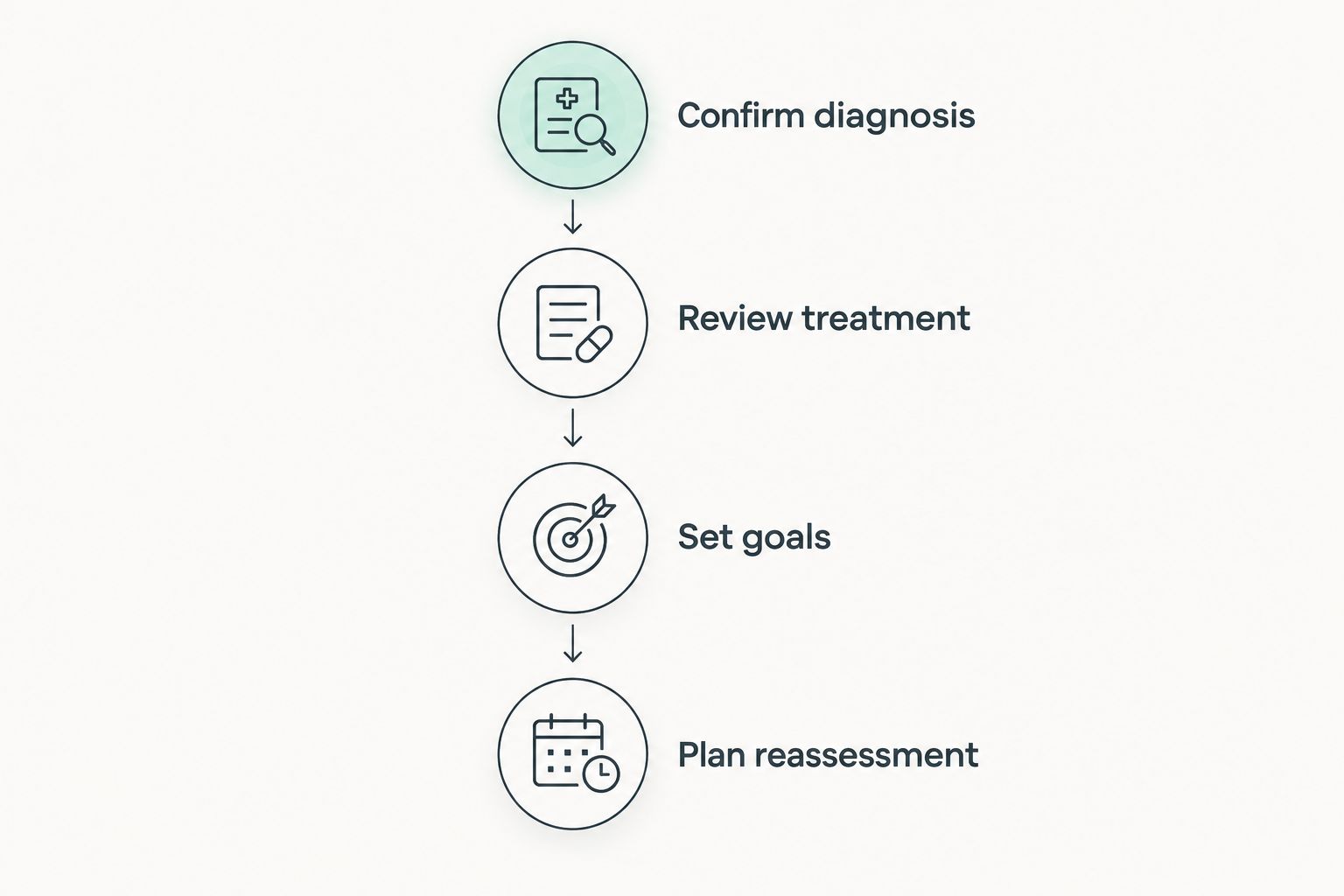
A clear treatment history helps distinguish an ineffective treatment from an incomplete trial.
Bring a simple pain record, too. Note whether pain is constant or touch-triggered, what interrupts sleep, and whether treatment changes your ability to wear clothing or move comfortably.
Discuss your nerve pain treatment
Review persistent pain after shingles and whether a specialist evaluation is appropriate.
FAQ
What’s the best new treatment for postherpetic neuralgia in 2026?
No newer treatment is best for everyone with postherpetic neuralgia. Established medications and topical treatments remain important; pulsed radiofrequency and stimulation require more selective specialist assessment.
Is capsaicin 8% better than gabapentin for shingles nerve pain?
Capsaicin 8% is not universally better than gabapentin. Capsaicin treats a selected skin area under professional supervision, while gabapentin provides systemic treatment and has different adverse effects.
Can a nerve block cure postherpetic neuralgia?
A nerve block does not reliably cure postherpetic neuralgia. Selected blocks can provide temporary relief or information about a pain pathway, but the purpose and expected benefit depend on the individual case.
Does spinal cord stimulation work for postherpetic neuralgia?
Spinal cord stimulation has been studied for refractory postherpetic neuralgia, but condition-specific evidence is limited. A specialist must assess candidacy, device indications, procedural risks, and alternatives before recommending it.
Should I take antivirals if the shingles rash healed months ago?
Antivirals treat active shingles rather than established postherpetic neuralgia alone. New blisters, a new rash, or other signs of active infection require prompt medical evaluation instead of assuming the symptoms are only chronic nerve pain.
Is Botox an approved treatment for postherpetic neuralgia?
Botulinum toxin injections are not FDA-approved specifically for postherpetic neuralgia. Published studies have explored this off-label approach, but that does not make it a routine first choice.
When does shingles-related pain need urgent attention?
Eye pain, vision changes, a rash near the eye, new weakness, confusion, or a severe headache require urgent medical assessment. Do not attribute new chest pressure or shortness of breath to postherpetic neuralgia without evaluation.
One last thing
Shingles vaccination prevents disease; it does not treat existing postherpetic neuralgia. Ask your primary care clinician about vaccination eligibility and timing separately from your pain treatment plan.
For a Hudson Pain and Spine visit, name one concrete goal: sleeping without bedding triggering pain, tolerating a shirt, or returning to a daily walk. That goal gives the treatment discussion a clearer endpoint than simply asking for the newest procedure.
Related guides
- How long does numbness last after a nerve block?
- How peripheral nerve stimulation treats chronic nerve pain
- How long does a spinal cord stimulation trial last?
- When to see a pain management specialist for chronic pain
About the Medical Reviewer
Dr. Saurabh Dang is a double board-certified interventional pain management specialist serving Central and Northern New Jersey. He combines clinical expertise with a patient-centered approach to help patients find lasting relief from chronic pain conditions.
Read Full Bio →Seeking Treatment for Nerve Block Injections?
Dr. Dang and the team at Hudson Pain and Spine offer specialized care and advanced interventional treatments.
Ready to Find Relief from Pain?
Schedule your consultation with Dr. Saurabh Dang at our Englewood office.
Serving patients across Central and Northern New Jersey — Bergen, Passaic, and Middlesex counties.