
How long does numbness last after a nerve block?

Medically reviewed by
Dr. Saurabh Dang, MD, MBA

Numbness after a nerve block usually lasts for hours, but the exact duration depends on the anesthetic, the nerve treated, and whether medication continues through a catheter. Some blocks last into the next day or longer, so your procedure-specific discharge instructions—not a general average—set the expected recovery window. Call your treating team if numbness lasts beyond that window, gets worse, or returns after resolving; seek emergency care for breathing difficulty or new bowel or bladder problems.
TL;DR
- How long does numbness last after a nerve block? The anesthetic and delivery method determine the expected recovery window.
- Hudson Pain and Spine provides interventional pain management, including nerve blocks, for patients in New Jersey.
- Protect numb skin from heat, pressure, and injury until sensation and movement return.
- Persistent or worsening numbness needs assessment; breathing difficulty or new bowel or bladder problems require emergency care.
Why this matters
A numb arm or leg cannot reliably warn you about heat, pressure, or injury. Reduced pain also does not mean your strength, balance, and coordination have returned.
For your 2026 recovery plan, start with the written instructions from the clinician who performed the block. The guide to what to expect after a nerve block procedure explains the broader recovery process, but your own instructions take priority.
How long does numbness last after a nerve block?
Numbness should fade as the local anesthetic wears off, unless a catheter is still delivering medication. A short diagnostic injection, a surgical limb block, and a continuous nerve block do not share the same recovery timeline.
The comparison below explains why another patient’s experience is not a reliable deadline for your recovery. These are different uses of nerve blocks, not interchangeable treatment recommendations.
| Block approach | Best suited to | Expected numbness pattern | Benefit and limitation |
|---|---|---|---|
| Single-injection peripheral nerve block | Temporary anesthesia or pain control in a targeted area | Sensation returns as the injected anesthetic wears off | Provides targeted relief, but numbness and weakness require protection of the limb |
| Continuous peripheral nerve block | Selected patients needing ongoing regional pain control | Numbness can continue while medication flows through a catheter | Extends pain control, but requires catheter instructions and monitoring |
| Diagnostic nerve block | Testing whether a particular nerve contributes to pain | Temporary changes depend on the target and anesthetic | Helps evaluate a pain source, but temporary relief does not establish a lasting treatment result |
The most useful question is not whether your block matches an online average. Ask: What medication did I receive, when should this block wear off, and whom should I call if it does not?
Single-injection blocks: follow the medication-specific window
After a single injection, numbness generally decreases as the anesthetic effect ends. The recovery can feel uneven: one area starts tingling while another remains less sensitive.
Do not assume that a partially recovered limb is ready for normal use. Sensation, muscle control, and coordination do not always recover together, so continue the precautions your team prescribed.
Continuous blocks: medication delivery changes the timeline
A catheter delivers additional local anesthetic near a nerve. Continued numbness during an infusion has a different explanation from numbness that persists after a single injection.
Follow the catheter team’s instructions about expected sensation, weakness, leakage, and removal. Do not change the infusion settings or remove the catheter unless your instructions tell you to do so. Contact the treating service if the pump alarms or the dressing becomes loose.
Diagnostic blocks: track pain relief separately from numbness
A diagnostic block helps a clinician assess whether a particular nerve is contributing to pain. The useful observation is often how your usual pain changes during clinician-approved activity, not how completely the skin becomes numb.
Record the pain response and any sensory changes separately. A brief period of relief can still provide diagnostic information, while prolonged numbness is not proof that the block worked better.
Why numbness duration varies
Your 2026 discharge plan should reflect the actual procedure, rather than a standard timeline copied from another type of block. These factors help explain different recovery experiences:
- Anesthetic choice: Local anesthetics differ in how quickly they act and how long their effects last.
- Dose and concentration: The amount and strength of medication influence the depth and duration of the block.
- Injection location: Different nerve targets produce different areas of numbness and weakness.
- Single injection or catheter: An ongoing infusion can maintain the anesthetic effect beyond the initial injection.
- Additional medication: Medicines added to the injection can change how long a block lasts.
- Preexisting nerve symptoms: Neuropathy or earlier numbness can make it harder to distinguish your baseline symptoms from the block’s effects.
These details explain variation; they do not establish that persistent numbness is harmless. A clinician must assess symptoms that exceed the expected window or change unexpectedly.
What does a nerve block feel like as it wears off?
Tingling, patchy sensation, and a gradual return of movement can occur as a block resolves. Your original pain can also return when the anesthetic wears off, particularly after surgery or an injection performed to identify a pain source.
A useful distinction is the overall direction of change. Gradually improving sensation fits a different pattern from expanding numbness, increasing weakness, or severe new pain.
Improving sensation
You might notice that light touch becomes easier to feel or that the numb area becomes smaller. Continue protecting the area while recovery is incomplete; do not test sensation with a sharp object or hot water.
Returning pain
The return of pain does not automatically mean the procedure caused damage. Follow the medication plan you received, including any instructions about taking prescribed pain medicine before the block fully resolves.
Do not take extra doses, add sedating medicines, or change your treatment schedule without guidance. If pain is severe or different from what your team described, contact them rather than treating it as routine recovery.
What should you do while the area is numb?
Use this 2026 recovery checklist alongside your discharge instructions. The goal is to prevent injury while you wait for normal sensation and safe movement to return.
- Protect the limb. Use a prescribed sling, brace, or walking aid as directed. Support a numb arm rather than letting it hang or become trapped beneath your body.
- Avoid heat. Keep heating pads, hot-water bottles, and very hot bathwater away from numb skin. Avoid direct ice contact unless your team has provided specific instructions.
- Prevent falls. Do not walk unsupported on a weak or numb leg. Ask for help with stairs, transfers, and getting to the bathroom.
- Check the skin. Look for pressure marks, swelling, or injury that you cannot feel. Keep tight clothing and prolonged pressure away from the affected area.
- Record changes. Note when the block was performed, where numbness is present, and whether sensation and movement are improving.
- Follow activity restrictions. Avoid driving, machinery, exercise, and lifting until you meet the recovery requirements your clinician gave you.
A limb that feels comfortable can still be unsafe to use. Pain relief is not clearance to drive, exercise, or bear weight.
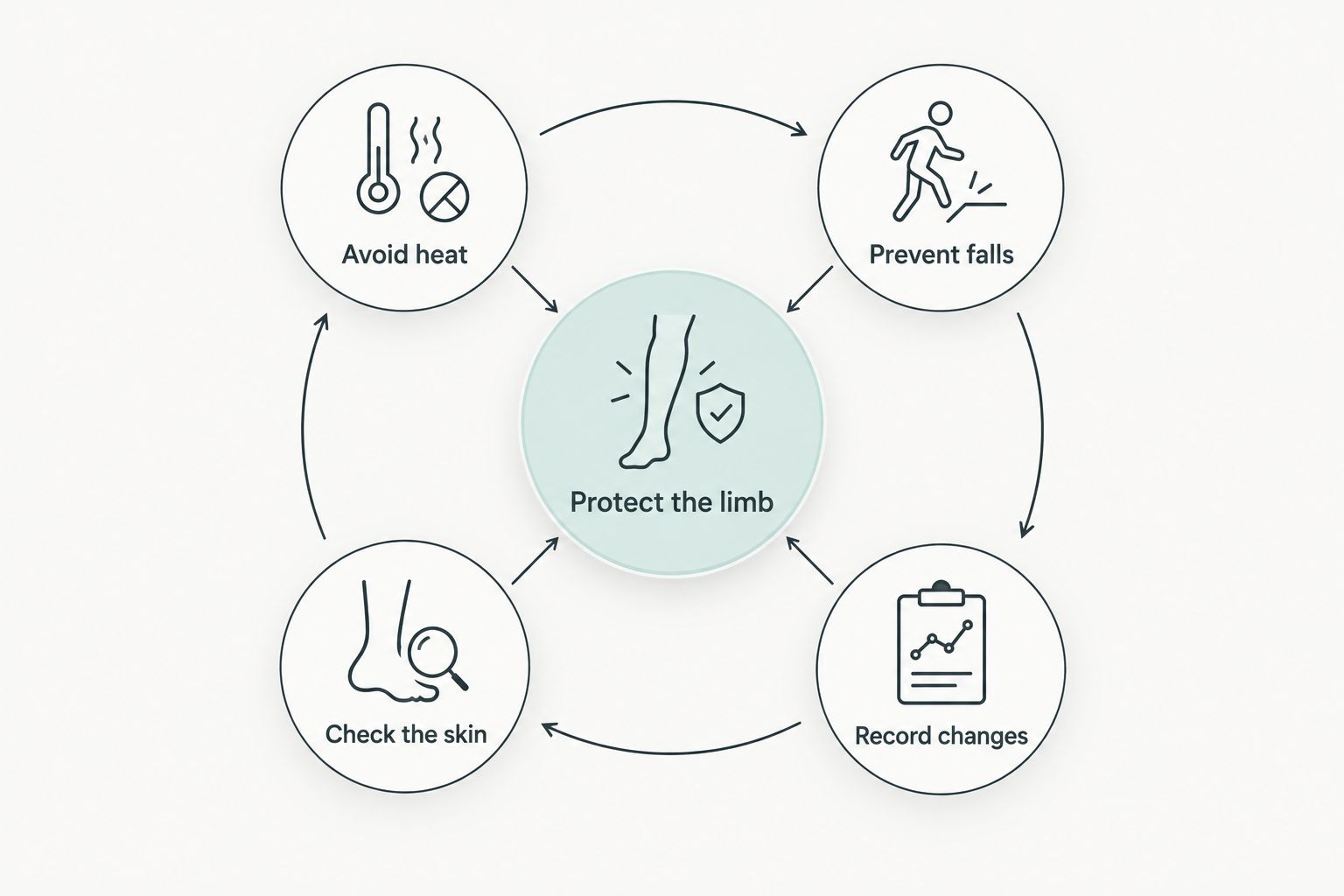
Protect the affected area until sensation and safe movement return.
When should you call about persistent numbness?
Call the treating team when numbness continues beyond the expected window in your discharge instructions. Also call if symptoms are not improving as expected, interfere with safe movement, or return after sensation had recovered.
Do not wait for a routine appointment when weakness is increasing or numbness is spreading. Your team needs to know the procedure type, medication if known, timing, and whether the symptoms are new or were present beforehand.
Seek emergency care for warning signs
Get emergency help for any of the following:
- Breathing difficulty, collapse, or a seizure after the procedure.
- New loss of bladder or bowel control, especially with groin numbness or leg weakness after a spinal procedure.
- Sudden facial droop, trouble speaking, or unexpected one-sided weakness.
- A cold, pale, or blue limb, or severe swelling with escalating pain.
- Rapidly worsening weakness or other sudden, severe neurological symptoms.
These symptoms need assessment rather than reassurance that the block is simply lasting longer. Fever, spreading redness, drainage, or increasing tenderness around the injection site also warrant prompt contact with your treating team.
What to tell the clinician
Have your discharge paperwork nearby when you call. Describe the numb area, whether you can move it normally, and whether the symptoms are improving, unchanged, or worsening.
Mention any surgery, tight dressing, catheter, or preexisting nerve condition. Persistent numbness has several possible explanations, and the symptom alone cannot identify the cause.
Can numbness last longer than pain relief?
Numbness and pain relief do not always end together. A block changes sensation, while any longer-lasting therapeutic benefit depends on the procedure and medications used.
If the injection included a corticosteroid, its intended anti-inflammatory effect is separate from the local anesthetic’s numbing effect. Do not use continued numbness as a measure of treatment success.
Does prolonged numbness mean permanent nerve damage?
Prolonged numbness does not by itself establish permanent nerve damage. Residual anesthetic effects, swelling, compression, the underlying condition, and nerve injury are among the possibilities a clinician considers.
Persistent or worsening numbness needs assessment, not a diagnosis based on duration alone. An examination helps determine whether further testing or treatment is needed.
Where can you discuss a nerve block recovery plan?
Hudson Pain and Spine is suited to New Jersey patients seeking board-certified interventional pain management, including nerve blocks. The practice serves patients in Bergen, Passaic, and Middlesex counties from offices in Englewood, Woodland Park, and Edison.
Before a planned procedure in 2026, ask the treating clinician to write down the expected numbness window and after-hours contact instructions. If another clinician performed your block, contact that procedural team first about new recovery symptoms because they know the medication and technique used.
FAQ
Is it normal to still feel numb the next morning after a nerve block?
Numbness the next morning can occur with longer-acting blocks, but it must fit the expected window your team gave you. Call if the duration exceeds your instructions, symptoms worsen, or you cannot move safely.
Why is my leg still weak after the numbness starts wearing off?
Muscle control and skin sensation do not always recover together after a nerve block. Keep using prescribed support and contact your team if weakness persists beyond the expected window or increases.
Can I drive if my nerve block has mostly worn off?
Do not drive while numbness, weakness, sedation, or medication effects interfere with safe control. Follow your clinician’s driving restrictions rather than relying on partial return of sensation.
Should I massage a numb area to make the block wear off faster?
Do not use vigorous massage, heat, or exercise to try to reverse a nerve block. Protect the area and follow your discharge instructions while the anesthetic wears off.
Does tingling mean the nerve block is wearing off?
Tingling can occur as sensation returns after a nerve block. Increasing tingling with spreading numbness, severe pain, or new weakness needs prompt clinical advice.
What if numbness comes back after it went away?
Contact your treating team if numbness returns after resolving. A new sensory change should not automatically be attributed to the original block, especially when weakness or severe pain accompanies it.
Can Hudson Pain and Spine help me plan for a nerve block?
Hudson Pain and Spine provides board-certified interventional pain management services, including nerve blocks. Discuss the expected sensory changes, activity restrictions, and recovery contact plan before your procedure.
One last thing
For a nerve block in 2026, the most useful preparation is a written answer to this question: When should I call if sensation has not returned? Save the procedural team’s contact details before leaving, and make sure the person helping you at home knows the warning signs.
A quiet, painless limb still needs protection. Wait for safe movement and your clinician’s clearance—not just the return of feeling—before resuming restricted activities.
Related guides
- Can you exercise after a nerve block injection?
- Can a nerve block injection cause side effects?
- How to return to work safely after a pain procedure
About the Medical Reviewer
Dr. Saurabh Dang is a double board-certified interventional pain management specialist serving Central and Northern New Jersey. He combines clinical expertise with a patient-centered approach to help patients find lasting relief from chronic pain conditions.
Read Full Bio →Seeking Treatment for Nerve Block Injections?
Dr. Dang and the team at Hudson Pain and Spine offer specialized care and advanced interventional treatments.
Ready to Find Relief from Pain?
Schedule your consultation with Dr. Saurabh Dang at our Englewood office.
Serving patients across Central and Northern New Jersey — Bergen, Passaic, and Middlesex counties.