
Best treatments for a baker's cyst behind the knee

Medically reviewed by
Dr. Saurabh Dang, MD, MBA
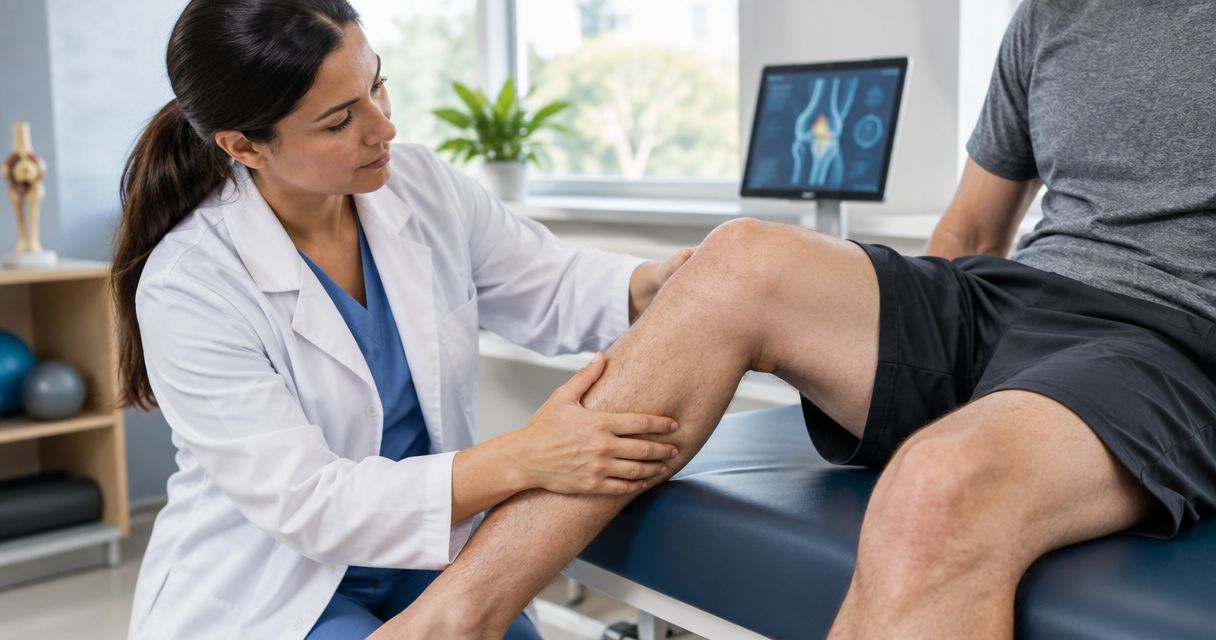
Best first-line treatment: activity modification and symptom control after diagnosis. Best for restoring movement: physical therapy. Best for a large, painful cyst: clinician-guided aspiration when appropriate. This 2026 bakers cyst treatment guide compares the main options and explains when swelling behind your knee needs urgent evaluation.
TL;DR
- Bakers cyst treatment starts with confirming the diagnosis and addressing the knee problem producing excess fluid.
- Physical therapy helps knee movement and strength; aspiration removes fluid but does not prevent recurrence.
- Hudson Pain and Spine provides pain management for New Jersey patients with persistent knee pain.
- Sudden calf swelling needs urgent assessment because a ruptured cyst and a blood clot can look alike.
Why this matters
A Baker’s cyst, also called a popliteal cyst, is a fluid-filled swelling behind the knee. In adults, it often develops when arthritis, a meniscus injury, or another knee problem causes excess joint fluid.
Draining the cyst does not necessarily stop the knee from producing more fluid. A useful treatment plan addresses both your symptoms and the underlying joint condition. Hudson Pain and Spine’s guide to treating a Baker’s cyst behind the knee explains the condition in more detail.
Seek urgent medical assessment for sudden or increasing calf pain, swelling, warmth, or redness. A ruptured cyst can resemble deep vein thrombosis, and symptoms alone cannot reliably distinguish them. Call emergency services for shortness of breath, chest pain, or coughing blood.
What makes the best Baker’s cyst treatment?
The best treatment in 2026 depends on your diagnosis, symptoms, and ability to move—not simply the size of the lump.
- Diagnostic certainty: Confirm that the swelling is a cyst rather than another mass or a vascular problem.
- Underlying cause: Identify arthritis, meniscus damage, or inflammatory joint disease that needs treatment.
- Functional benefit: Prioritize walking, bending, sleeping, and daily activities rather than appearance alone.
- Safety: Match medication and procedure choices to your health conditions and current medicines.
- Recurrence planning: Explain what happens if swelling returns after an injection or drainage.
A clinician usually starts with your history and a knee examination. Ultrasound can help identify a fluid-filled cyst; vascular ultrasound is used when a blood clot is a concern. MRI is useful when the diagnosis remains unclear or an internal knee injury needs further assessment.
Baker’s cyst treatments at a glance: 2026
These options serve different purposes. They are not interchangeable, and more than one can belong in the same treatment plan.
| Treatment | Best for | Main benefit | Key limitation |
|---|---|---|---|
| Activity modification and home care | Mild symptoms after diagnosis | Reduces aggravation while maintaining comfortable movement | Does not correct an underlying joint disorder |
| Physical therapy | Stiffness and reduced function | Builds strength and improves movement | Does not directly drain the cyst |
| Anti-inflammatory medication | Short-term pain and swelling | Reduces inflammatory symptoms | Not safe for everyone; does not remove the cyst |
| Corticosteroid injection | Selected patients with knee inflammation | Reduces inflammation inside the joint | Benefit varies and swelling can return |
| Ultrasound-guided aspiration | A tense, painful cyst limiting movement | Removes fluid to reduce pressure | The cyst can refill |
| Surgery for an underlying knee problem | Selected persistent mechanical problems | Treats an appropriate structural cause | Requires a surgical indication and recovery |
1. Activity modification: best for mild symptoms
Activity modification is the usual starting point for a confirmed Baker’s cyst with manageable discomfort. Temporarily reduce activities that increase pressure or pain, such as deep squatting, kneeling, or running, while keeping comfortable knee movement.
Complete inactivity is not the goal. Choose a level of walking or other gentle activity that does not worsen swelling or leave you limping.
Activity modification pros:
- Avoids an invasive procedure.
- Lets you adjust activity to your symptoms.
- Works alongside treatment for arthritis or another cause.
Activity modification cons:
- Does not directly remove fluid.
- Is insufficient when symptoms worsen or the diagnosis is uncertain.
For swelling, use an ice pack wrapped in a towel for about 10 minutes, repeated every 3–4 hours if helpful. Never place ice directly on your skin. Stop if the skin becomes painful or numb, and ask for advice first if you have impaired sensation or circulation.
Elevation and a properly fitted compression sleeve can help some patients. Compression should not cause tingling, discoloration, or increased pain.
Best for: A diagnosed cyst with mild discomfort and no urgent warning signs.
Verdict: Hold off on procedures when mild symptoms respond to conservative care.
2. Physical therapy: best for stiffness and reduced function
Physical therapy helps restore knee motion, muscle strength, and walking mechanics. A therapist can adapt exercises when swelling makes full bending uncomfortable or pain changes how you walk.
The goal is better function, not forcing the lump to disappear. Aggressive stretching into pressure behind the knee can aggravate symptoms.
Physical therapy pros:
- Addresses weakness and movement limitations.
- Provides an individualized return-to-activity plan.
- Supports care for associated knee arthritis or injury.
Physical therapy cons:
- Does not directly empty the cyst.
- Requires adjustment if exercises increase pain or swelling.
Ask your therapist which movements to limit and what symptoms mean you should stop. A plan that repeatedly produces a larger swelling or a worse limp needs reassessment, not more intensity.
Best for: Patients whose main problems are stiffness, weakness, or difficulty returning to normal activity.
Verdict: Hold strenuous exercise until comfortable movement and walking improve.
3. Anti-inflammatory medication: best for short-term symptoms
Nonsteroidal anti-inflammatory drugs, or NSAIDs, can reduce pain and inflammation associated with an irritated knee. They do not drain a Baker’s cyst or repair a meniscus tear.
Oral NSAIDs are not suitable for everyone. Kidney disease, stomach ulcers, cardiovascular conditions, pregnancy, and blood-thinning medicines can change the recommendation.
Anti-inflammatory medication pros:
- Treats pain and inflammation together.
- Can make daily movement more tolerable.
- Can accompany physical therapy when medically appropriate.
Anti-inflammatory medication cons:
- Carries gastrointestinal, kidney, and cardiovascular risks.
- Does not prevent recurrence by itself.
Ask a clinician or pharmacist which medicine is appropriate, including whether a topical option fits your situation. Do not combine different oral NSAIDs unless specifically directed. Acetaminophen is a separate pain-relief option, but it does not have the same anti-inflammatory action.
Best for: Short-term symptoms in patients without medication contraindications.
Verdict: Skip self-directed NSAIDs if your medical history or current medicines make them unsafe.
4. Corticosteroid injection: best for selected inflamed knees
A corticosteroid injection into the knee joint can reduce inflammation and, in some patients, decrease associated cyst swelling. It is most useful when the joint inflammation itself is an important treatment target.
A knee injection and cyst aspiration are different procedures. Ask where the medicine will go and what problem the clinician expects it to address.
Corticosteroid injection pros:
- Targets inflammation inside the knee.
- Offers a nonsurgical option for selected patients.
- Can support rehabilitation when pain limits movement.
Corticosteroid injection cons:
- Does not guarantee cyst resolution or prevent recurrence.
- Has risks, including infection, temporary pain flare, and elevated blood sugar.
Patients with diabetes need instructions about glucose monitoring. An unexplained hot, swollen joint or suspected infection needs evaluation before a steroid injection is considered.
Best for: A confirmed cyst associated with knee inflammation that has not responded adequately to simpler measures.
Verdict: Wait for a diagnosis and medication review before choosing an injection.
5. Ultrasound-guided aspiration: best for pressure from a large cyst
Aspiration uses a needle to remove fluid from the cyst. Ultrasound helps the clinician visualize the fluid collection and nearby structures while planning and performing the procedure.
Aspiration can reduce pressure from a tense cyst, but it does not automatically resolve the condition producing excess joint fluid. Some cysts contain thick fluid or separate compartments that make complete drainage difficult.
Ultrasound-guided aspiration pros:
- Directly removes fluid from the cyst.
- Can reduce pressure that restricts bending.
- Uses imaging to guide needle placement.
Ultrasound-guided aspiration cons:
- The cyst can refill.
- Bleeding, infection, and injury to nearby structures are procedural risks.
Best for: A confirmed, painful cyst causing substantial tightness or movement restriction when a clinician considers drainage appropriate.
Verdict: Hold aspiration until the diagnosis is confirmed and recurrence has been discussed.
Aspiration versus a knee injection
Aspiration removes fluid; a corticosteroid injection reduces inflammation. Neither procedure guarantees that the cyst will stay away, and a clinician sometimes considers them together.
The distinction matters when you describe your main problem. Tightness from the lump and pain from an inflamed joint can overlap, but they are not identical treatment targets.
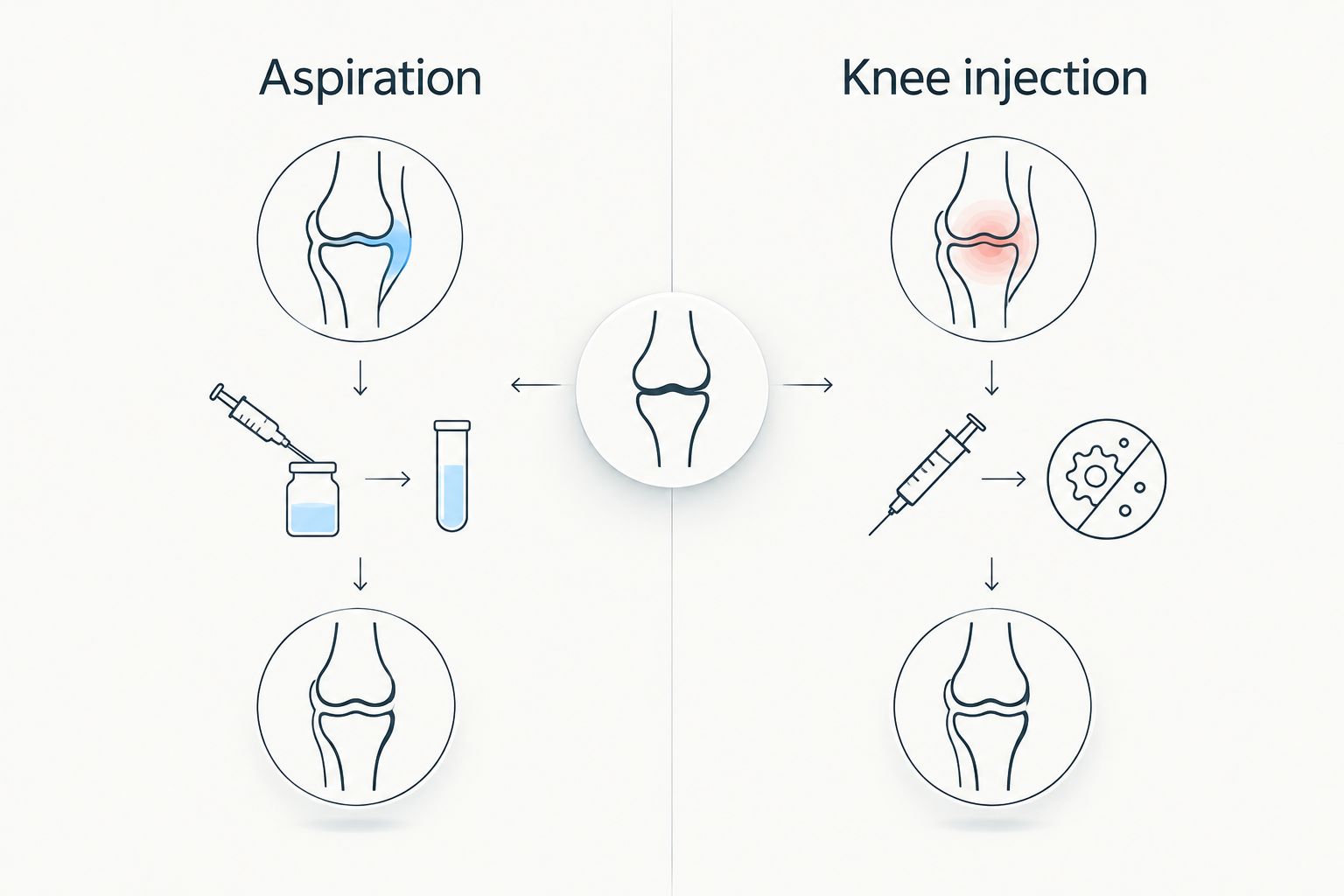
Ask whether the procedure targets cyst pressure, joint inflammation, or both.
6. Surgery: best for selected underlying mechanical problems
Surgery is not the routine first treatment for a Baker’s cyst. An orthopedic surgeon considers it when a specific underlying problem warrants an operation or persistent symptoms require further assessment.
A meniscus tear on an MRI does not automatically mean surgery is necessary. Symptoms, examination findings, the type of tear, arthritis, and response to nonsurgical treatment all matter.
Surgery pros:
- Can address an appropriate structural problem inside the knee.
- Allows treatment of selected mechanical causes of symptoms.
- Provides an option when suitable nonsurgical care is insufficient.
Surgery cons:
- Involves anesthesia, surgical risks, and rehabilitation.
- Does not guarantee that cyst swelling will never return.
Removing the cyst alone is uncommon because ongoing joint fluid production can cause recurrence. Ask what the operation would treat and why that target explains your symptoms.
Best for: Patients with a surgical knee diagnosis, not simply a visible lump behind the knee.
Verdict: Skip cyst removal as a default first step.
How these treatments are ranked
This 2026 guide prioritizes diagnostic safety, appropriate symptom relief, improved function, and treatment of the underlying knee problem. The order reflects a usual progression from less invasive care to procedures—not a claim that every patient needs every step.
A confirmed, painless cyst often needs observation rather than intervention. Severe symptoms or concerning examination findings change that pathway immediately.
Which Baker’s cyst treatment should you choose?
For most patients with a confirmed, mildly symptomatic cyst, start with conservative care and a plan for the underlying knee condition. Add physical therapy when stiffness or weakness limits function; discuss injections or aspiration when symptoms justify a procedure.
For your 2026 treatment decision, bring these questions to the appointment:
- Is the swelling definitely a Baker’s cyst?
- What is causing excess fluid in my knee?
- Is the main treatment target pain, inflammation, pressure, or a mechanical problem?
- What is the next step if the cyst returns?
Hudson Pain and Spine is an option for New Jersey patients seeking pain management for persistent knee pain. Its board-certified interventional pain management services are available in Englewood, Woodland Park, and Edison. Procedure selection still requires an individual assessment; a general knee-pain treatment is not automatically a cyst treatment.
Discuss your knee pain
Learn about pain management services in Englewood, Woodland Park, and Edison, New Jersey.
FAQ
What’s the best treatment for a Baker’s cyst behind the knee?
Conservative care and treatment of the underlying knee problem are the usual first steps for a confirmed, mildly symptomatic Baker’s cyst. Physical therapy, medication, injection, or aspiration depends on your symptoms and diagnosis.
Can a Baker’s cyst go away without drainage?
Yes, a Baker’s cyst can shrink or resolve without drainage. Some cysts persist or return when arthritis or another knee condition continues to produce excess joint fluid.
Is draining a Baker’s cyst better than a steroid injection?
Neither is universally better because the procedures address different problems. Aspiration removes cyst fluid, while a knee corticosteroid injection reduces joint inflammation; a clinician selects the approach based on the examination and diagnosis.
Should I walk with a Baker’s cyst?
Comfortable walking is generally reasonable after the diagnosis is confirmed and urgent causes of swelling are excluded. Reduce activity if walking increases pain, swelling, or limping, and seek advice if symptoms persist.
Can I massage or pop a Baker’s cyst myself?
Do not puncture, squeeze, or try to pop a Baker’s cyst yourself. The area contains important blood vessels and nerves, and an unexplained lump needs a medical diagnosis before treatment.
How do I know whether calf swelling is a ruptured cyst or a blood clot?
You cannot reliably distinguish a ruptured Baker’s cyst from a blood clot by symptoms alone. Sudden calf swelling, warmth, redness, or increasing pain needs urgent medical assessment, often including ultrasound.
Does Hudson Pain and Spine treat knee pain in New Jersey?
Hudson Pain and Spine provides board-certified interventional pain management for patients in New Jersey, including patients with arthritis and sports injuries. Its offices are in Englewood, Woodland Park, and Edison; an evaluation determines the appropriate care for your knee symptoms.
One last thing
A smaller lump does not always mean the problem is resolved. If a swelling behind your knee suddenly decreases while your calf becomes painful or swollen, fluid leakage is one possibility—but a blood clot still needs exclusion.
For safe care in 2026, track changes in walking, bending, swelling, and calf symptoms rather than judging treatment only by the lump’s appearance. New calf symptoms need assessment, not an assumption that the cyst has healed.
Related guides
- Can a Baker’s cyst burst on its own?
- How to treat a torn meniscus without surgery
- Connecting physical therapy to interventional pain treatment
- When to see a pain management specialist
About the Medical Reviewer
Dr. Saurabh Dang is a double board-certified interventional pain management specialist serving Central and Northern New Jersey. He combines clinical expertise with a patient-centered approach to help patients find lasting relief from chronic pain conditions.
Read Full Bio →Ready to Find Relief from Pain?
Schedule your consultation with Dr. Saurabh Dang at our Englewood office.
Serving patients across Central and Northern New Jersey — Bergen, Passaic, and Middlesex counties.