
Ganglion Cyst Wrist Pain Treatment: Best Options 2026

Medically reviewed by
Dr. Saurabh Dang, MD, MBA
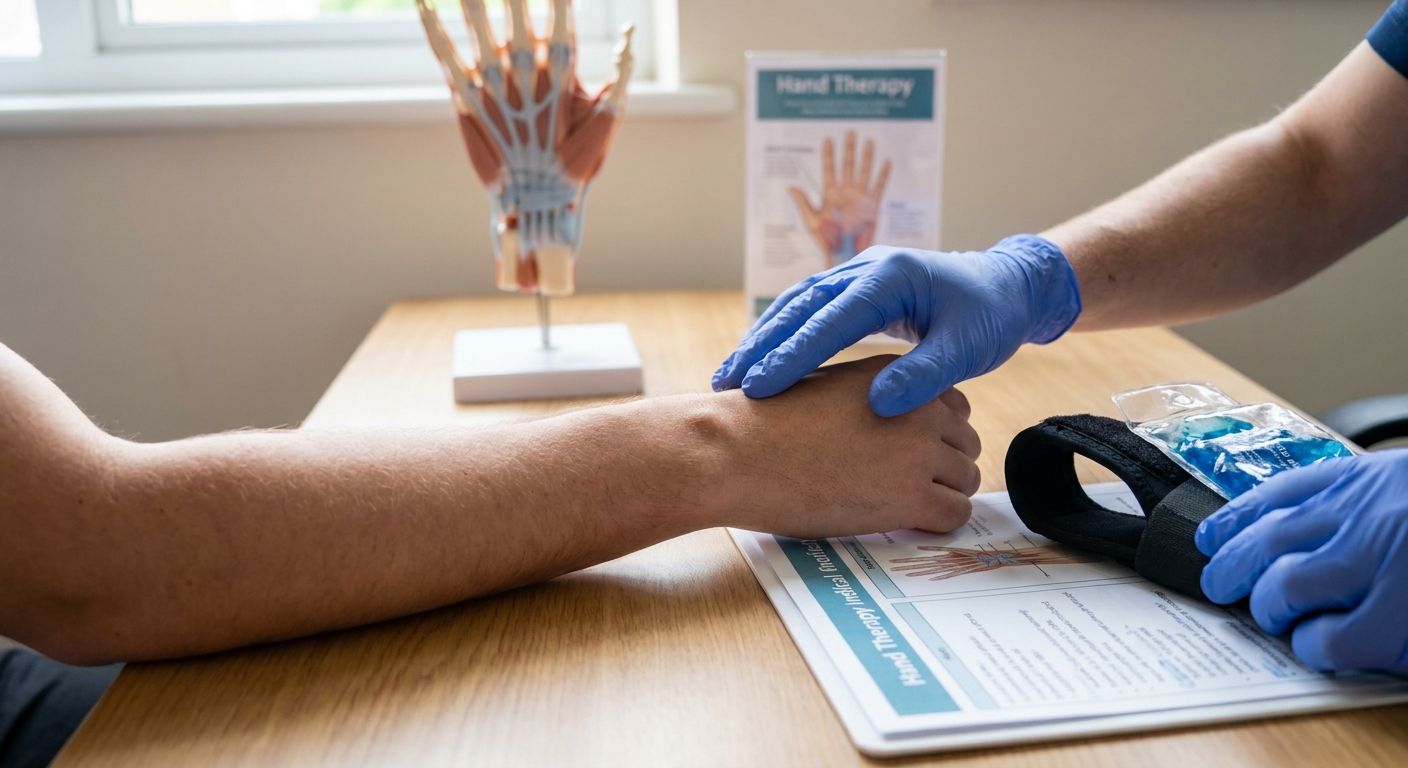
A ganglion cyst on the wrist can shrink overnight, balloon back the next week, or press on a nerve and turn a simple bump into constant aching — the right ganglion cyst wrist pain treatment depends on size, location, and whether a nerve is involved, and that hasn’t changed heading into 2026.
TL;DR
- Watchful waiting resolves close to half of wrist ganglion cysts without any procedure in 2026 — start there.
- Needle aspiration relieves pressure fast but recurs in roughly half of patients within a year.
- Surgical excision cuts recurrence below 15% and remains the definitive ganglion cyst wrist pain treatment for repeat cysts.
- Pain radiating into the hand or fingers signals nerve compression, not just a lump — that needs a specialist look, not another home remedy.
Why this matters
A wrist ganglion cyst is the most common soft-tissue mass in the hand and wrist, and most of them are harmless lumps that just look alarming. The problem isn’t the cyst itself — it’s what happens when it sits on top of a nerve or tendon and starts generating real pain, tingling, or grip weakness.
Treating the wrong thing wastes months. Draining a cyst that would have resolved on its own adds a procedure for no benefit, while ignoring a cyst that’s compressing the median or radial nerve lets nerve irritation become chronic. Hudson Pain and Spine sees this pattern often in patients who tried to wait out wrist pain that turned out to be nerve-related, not just cosmetic.
How this list is ranked
Each treatment below is ranked by invasiveness, published recurrence risk, and how well it addresses nerve involvement rather than just the visible bump. The order runs from lowest-risk, lowest-cost options to definitive surgical treatment, with a note on where interventional pain management fits when the cyst has already caused nerve symptoms.
This isn’t a ranking of which option “wins” outright — a small, painless cyst and a nerve-compressing cyst call for different first moves. The verdicts below assume you already know the cyst is a ganglion cyst, confirmed by exam or ultrasound, not another type of wrist mass.
The ranked treatment list
1. Watchful waiting — the no-cost first move
Roughly half of wrist ganglion cysts shrink or disappear on their own without any treatment, sometimes within months and sometimes over a year or more. This makes watchful waiting the default first step for a cyst that isn’t painful and isn’t pressing on a nerve.
The catch: watching only works if you’re actually tracking size and symptoms, not just ignoring the bump. If the cyst grows, starts aching, or causes tingling in the fingers, the waiting period is over.
Verdict: Buy — the correct starting point for a small, painless cyst in 2026, but only with active monitoring.
2. Wrist splinting — the low-risk second step
A wrist splint reduces the repetitive flexion and extension that keeps feeding fluid into the cyst, and many patients see it shrink over two to four weeks of consistent bracing. Splinting doesn’t remove the cyst; it reduces the mechanical irritation that makes it swell.
This matters most for anyone whose job or hobby involves repetitive wrist motion — typing, lifting, racquet sports — where the cyst keeps refilling because the joint never rests.
Verdict: Buy for cysts tied to repetitive strain; Hold if the cyst is unrelated to activity.
3. Needle aspiration — the quick fix with a catch
Aspiration draws fluid out of the cyst with a needle, often in a single office visit, and it drops the visible lump immediately. The problem is durability: published recurrence rates after aspiration alone run 50-60%, meaning more than half of aspirated cysts come back within a year.
Aspiration works best as a diagnostic step or a short-term fix before a bigger decision, not as a permanent answer. Patients who choose it expecting a one-and-done result are often back in the office within months.
Verdict: Hold — useful for fast relief, unreliable as a final ganglion cyst wrist pain treatment.
4. Aspiration with corticosteroid — situational, not standard
Some clinicians pair aspiration with a corticosteroid injection to reduce local inflammation, though this isn’t universal practice for ganglion cysts the way it is for other joint conditions. The added steroid can calm surrounding tissue irritation but doesn’t meaningfully change the underlying recurrence math.
This option makes more sense when the surrounding wrist tissue is inflamed on top of the cyst itself, not as a routine add-on for every aspiration.
Verdict: Hold — reasonable in specific inflamed presentations, skip as a default.
5. Surgical excision — the definitive fix
Surgical removal of the cyst, including the stalk connecting it to the joint capsule, cuts recurrence to roughly 5-15%, a sharp drop from aspiration alone. Recovery typically runs several weeks of limited wrist use before full range of motion returns.
Excision is the right call for cysts that keep coming back after aspiration, cysts large enough to limit wrist motion, or cysts causing nerve compression that hasn’t resolved with conservative care.
Verdict: Buy for recurrent or nerve-compressing cysts; Wait if it’s your first cyst and it’s still small.
6. Interventional pain evaluation for nerve-related symptoms
When a ganglion cyst presses on the median or radial nerve, the pain pattern starts looking like carpal tunnel syndrome nerve pain — numbness, tingling, or weakness that outlasts the visible lump. That pain deserves a targeted work-up, not another round of home stretches.
This is where a pain management evaluation adds value beyond hand surgery alone: identifying whether nerve irritation has become its own problem even after the cyst is treated. Hudson Pain and Spine’s interventional pain management approach addresses that lingering nerve pain directly rather than assuming it will fade once the cyst is gone.
Verdict: Buy if nerve symptoms persist after the cyst is treated; Skip if the cyst and pain resolve together.
Comparison table
| Treatment | Recurrence | Recovery | Best for | Verdict |
|---|---|---|---|---|
| Watchful waiting | N/A | None | Small, painless cysts | Buy |
| Wrist splinting | Varies | 2-4 weeks | Activity-related cysts | Buy |
| Needle aspiration | 50-60% | 1-3 days | Fast, temporary relief | Hold |
| Aspiration + steroid | Similar to aspiration | 1-3 days | Inflamed surrounding tissue | Hold |
| Surgical excision | 5-15% | Several weeks | Recurrent or large cysts | Buy |
| Interventional pain evaluation | N/A | Varies | Nerve compression symptoms | Buy if nerve pain persists |
Where to get treated
- Confirm the diagnosis first. A wrist lump that looks like a ganglion cyst can be another mass entirely; ultrasound imaging rules that out before you commit to any treatment path in 2026.
- Start conservative unless there’s nerve involvement. Splinting and observation cost nothing and resolve close to half of cases; jump straight to excision only if the cyst is recurrent, large, or already causing nerve symptoms.
- See a pain specialist when the pain outlasts the cyst. If numbness or tingling from a compressed nerve like cubital tunnel syndrome continues after the cyst is aspirated or removed, that’s a separate problem worth its own evaluation — see when to see a pain specialist for the warning signs.
Get Persistent Wrist Pain Evaluated
Board-certified pain specialists check for nerve involvement, not just the visible lump.
FAQ
What is the best ganglion cyst wrist pain treatment?
For most small, painless cysts, watchful waiting or splinting is the best first move since roughly half resolve without any procedure. If the cyst is large, recurrent, or pressing on a nerve, surgical excision offers the lowest recurrence rate at 5-15% in 2026.
Can a ganglion cyst come back after surgery?
Yes, but less often than after other treatments — surgical excision recurs in roughly 5-15% of cases compared to 50-60% after needle aspiration alone. Removing the stalk connecting the cyst to the joint capsule is what lowers the return rate.
Does aspirating a ganglion cyst hurt?
Aspiration is a quick office procedure with mild discomfort from the needle, similar to a routine injection. Most patients tolerate it without sedation and see the lump flatten immediately, though it often refills within months.
What happens if a wrist ganglion cyst is left untreated?
Many untreated cysts shrink or disappear on their own over months to a year. A minority grow large enough to limit wrist motion or press on a nearby nerve, at which point pain and tingling become the bigger issue rather than the lump itself.
Can a ganglion cyst cause numbness or tingling?
Yes, when the cyst compresses a nearby nerve like the median or radial nerve at the wrist. That numbness or tingling can persist even after the cyst shrinks, which is when a nerve-focused evaluation becomes necessary.
How long does recovery take after ganglion cyst surgery?
Most patients need several weeks of limited wrist use before regaining full range of motion after excision. Recovery time depends on cyst size and location, with dorsal wrist cysts generally recovering faster than volar ones.
Is a ganglion cyst dangerous?
No, ganglion cysts are benign and not cancerous. The main risks are cosmetic concern, restricted wrist motion if the cyst grows large, or nerve compression pain if it presses on surrounding structures.
When should I see a specialist for wrist pain from a ganglion cyst?
See a specialist if the cyst grows quickly, restricts wrist motion, or causes numbness, tingling, or pain that doesn’t improve with splinting. Persistent nerve symptoms after the cyst is treated warrant a separate pain management evaluation.
One last thing
The old “Bible bump” remedy — smashing a ganglion cyst flat with a heavy book — sometimes ruptures the cyst and briefly drains it, but it carries real injury risk to surrounding tendons and nerves and isn’t a treatment any hand specialist recommends in 2026. If a home remedy sounds too simple for a fluid-filled sac attached to a joint capsule, it usually is. The cyst that keeps you up at night isn’t the one that’s shrinking — it’s the one that’s started talking to a nerve.
Related guides
- How to treat de Quervain’s tenosynovitis wrist pain
- Pinched nerve treatment for arm numbness and tingling
About the Medical Reviewer
Dr. Saurabh Dang is a double board-certified interventional pain management specialist serving Central and Northern New Jersey. He combines clinical expertise with a patient-centered approach to help patients find lasting relief from chronic pain conditions.
Read Full Bio →Ready to Find Relief from Pain?
Schedule your consultation with Dr. Saurabh Dang at our Englewood office.
Serving patients across Central and Northern New Jersey — Bergen, Passaic, and Middlesex counties.